@antisecto@Dispropoganda Genocide in Galicja and Wołyń US fucking propaganda?
Gloryfying Suchewych, bandera is propaganda?
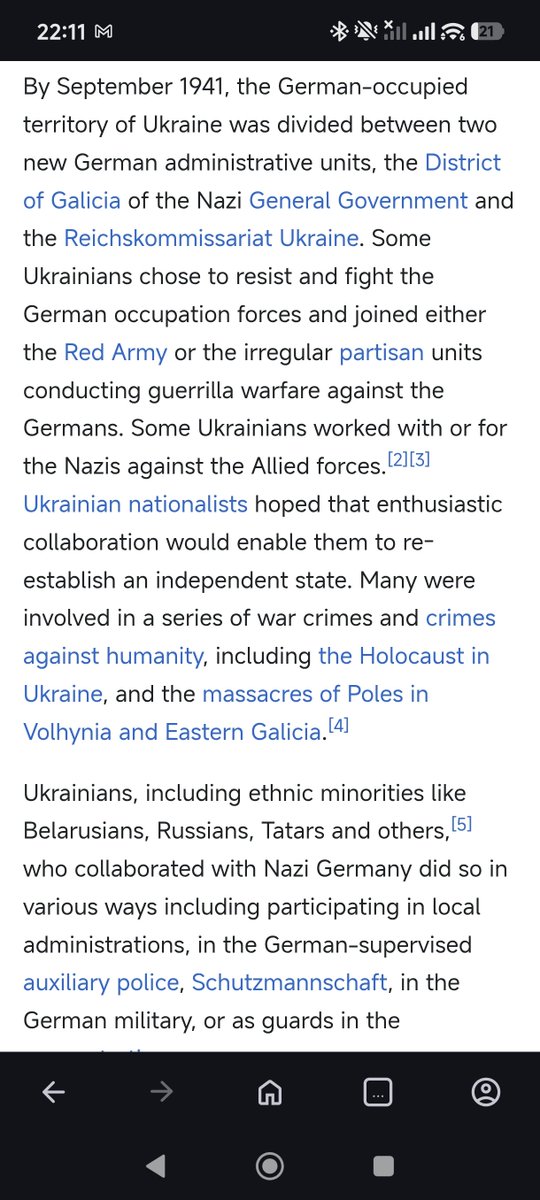
UPA colaborated with nazi germany, and masę SS Galitzien and nichingale, this is propaganda?
Everybody make mistakes, but you guys dont see problem in your behavior.
@Dispropoganda Ale to jest glupek, Ukraina bez innych państw już by nie istniała i teraz bohatera struga.
Po drugie to kurwa może jakieś partnerstwo jeśli się chce budować świat razem z zachodem? Oni są kurwa odklejeni od rzeczywistości.
@barabaca_dog Its russian propaganda that you gloryfying UPA that is responsible for cruelty genocide on POLES?
We just asked for justice.
And you fucked up all the way down, you should gloryfiy nowadays heroes you have but not, you made a false heroes that commited horiffic crimes.. Shame
@bizonol1@EJagiellonians Its not profitable, and this grain it was poor quality.
we just want justice for victims of UPA which was nazi organization and mass murderers that commited genocide in the most cruel way...
@TarasKuzio Rly? Because the germany occupied Poland and forced citizens to join the military.
But your small head cannot comprehend this.
Your nazi nichtingale were volounteers.
See the difrence?
UPA nie była armia wyzwoleńczą, była pospolitą barbarzyńską organizacją dokunajacą czystek etnicznych nie tylko na
Polakach ale też na mniejszościach narodowych zamieszkujących tereny II RP.
Metody stosowane przez te zwierzęta były wyjątkowo okrutne i często wykraczały poza zwykłe zabijanie. Ten powtarzający się wzorzec straszliwego okrucieństwa miał na celu zadawanie maksymalnego cierpienia, terror i zastraszenia. Historycy udokumentowali ponad 100 powtarzających się wariantów tortur i metod mordu, stosowanych w różnych miejscach na Wołyniu i w Małopolsce Wschodniej. Najczęściej używano narzędzi gospodarskich (siekier, wideł, kos, pił, noży), bo amunicji było mało. Mordy często łączyły się z gwałtami, profanacją zwłok i zmuszaniem członków rodzin do patrzenia.
Te metody nie były przypadkowe – często decydowały o nich lokalne „komitety rewolucyjne” OUN. Wiele tortur stosowano demonstracyjnie, by zastraszyć innych Polaków i ukraińskich sąsiadów, którzy próbowali pomagać tym na których wydano wyroki śmierci ze szczególnym okrucieństwem.
Prowokacja @ZelenskyyUa z nadaniem imienia „bohaterów UPA” jednostce wojskowej ukraińskiej armii jest hańba dla narodu ukraińskiego! Precz z kultem morderców! Precz z kultem czystek etnicznych! Precz z kłamstwem historycznym na którym nie da się zbudować uczciwej relacji między naszymi narodowymi!
The Righteous Among Ukrainians
“Za odnoho poliaka holova do pniaka” (“for one [saved] Pole, a head to the chopping block”) - this slogan, popular among Ukrainian nationalists committing genocide in Volhynia, reminds us of the immense courage shown by those Ukrainians who, risking their lives, opposed the criminal ideology. Many of them were murdered as brutally for showing humanity as the Poles they tried to save.
The ideology of Ukrainian nationalism, built from the mid-1920s onwards, assumed the creation of an ethnically homogeneous state, detached from hundreds of years of largely peaceful coexistence of nations and faiths. “The closeness was so great that when the massacres had already begun, in some Polish villages people, contrary to the facts, refused until the very end to believe that anything bad could threaten them from their neighbours,” recalled Fr Mieczysław Albert Krąpiec from Berezowica Mała in Podolia.
Warning others of impending danger was the most common form of assistance. “Run away, because they will be killing today,” one Polish family heard from their Ukrainian neighbour. Hiding Poles in one’s own homes and farm buildings, often for many months, also required extraordinary courage. “He says [to my father]: ‘It’s so good that you’re alive.’, and he took him to the attic and kept him there for two weeks,” recalled one of the survivors.
Being hidden by Ukrainians did not always mean the end of the ordeal. In the archives of the Chief Commission for the Investigation of Crimes against the Polish Nation there is an exceptionally moving account, given in 1985, of the fate of seven-year-old Jadzia Dziekańska, who, despite severe wounds, survived for several days beside the body of her murdered mother. She was found among fields of grain by a Ukrainian family and taken to a nearby village. “In Werbcz, the village council wanted to kill Jadzia because she was a Polish child, but an unknown Ukrainian family defended her, as did a teacher, also a Ukrainian from Werbcz, who could speak fluent Polish, and who won the fight for Jadzia’s life and took her in to raise her,” recalled Franciszka and Roman Piotrowski. After the war ended, Jadzia returned to her father, who had survived.
The UPA (Ukrainian Insurgent Army) carried out numerous murders, including of its own comrades who refused to take part in the cruel killing of their neighbours. In order to combat “desertion”, Bandera’s followers established the Security Service of the OUN (Organization of Ukrainian Nationalists), referred to as the “partisan Gestapo”, which often carried out killings of those who refused to participate in the massacres. The greatest danger, however, awaited those who provided help out of compassion for their neighbours. “Shura Sapozhnik, the prettiest girl in the village, I remember her well, her braids reached all the way to the ground. I also remember how she mourned the death of my sister Wanda together with my mother and sympathised with the Poles. She was murdered in a cruel way. The thugs tricked her into going to the forest [...] under the pretext of dressing the wounds of an injured comrade whom the ‘Lakhs [Poles] had shot’,” recalled a resident of the village of Koszów in Volhynia.
The authors of “The Book of the Righteous of the Eastern Borderlands 1939-1945”, published by the IPN, estimate that at least 1,341 Ukrainians helped Poles despite the threat of reprisals from Ukrainian nationalists. They provided shelter, warned of planned attacks, helped people escape or saved the wounded, risking their own lives and the lives of their families. According to widely varying estimates, at least several hundred of them were murdered by the Banderites (Bandera’s followers). A more precise number of victims among the Righteous is not possible to estimate, among other reasons because of the difficulty of clearly establishing the motives behind the crimes. In some cases, the killings may also have been linked to suspicions of cooperation with Soviet partisans.
Since 2019, the Righteous have been honoured with the Virtus et Fraternitas Medal, awarded by the Witold Pilecki Institute of Solidarity and Valour. So far, it has been awarded posthumously to 27 Ukrainians who helped Poles, as well as to two people who, for decades, preserved the memory of murdered Poles. The Virtus et Fraternitas Medal has also been awarded to two Czechs from Volhynia who helped Poles.
More:
https://t.co/uOlT5sBGC4
https://t.co/jwe6m7ByuS






![ipngovpl_eng's tweet photo. The Righteous Among Ukrainians
“Za odnoho poliaka holova do pniaka” (“for one [saved] Pole, a head to the chopping block”) - this slogan, popular among Ukrainian nationalists committing genocide in Volhynia, reminds us of the immense courage shown by those Ukrainians who, risking their lives, opposed the criminal ideology. Many of them were murdered as brutally for showing humanity as the Poles they tried to save.
The ideology of Ukrainian nationalism, built from the mid-1920s onwards, assumed the creation of an ethnically homogeneous state, detached from hundreds of years of largely peaceful coexistence of nations and faiths. “The closeness was so great that when the massacres had already begun, in some Polish villages people, contrary to the facts, refused until the very end to believe that anything bad could threaten them from their neighbours,” recalled Fr Mieczysław Albert Krąpiec from Berezowica Mała in Podolia.
Warning others of impending danger was the most common form of assistance. “Run away, because they will be killing today,” one Polish family heard from their Ukrainian neighbour. Hiding Poles in one’s own homes and farm buildings, often for many months, also required extraordinary courage. “He says [to my father]: ‘It’s so good that you’re alive.’, and he took him to the attic and kept him there for two weeks,” recalled one of the survivors.
Being hidden by Ukrainians did not always mean the end of the ordeal. In the archives of the Chief Commission for the Investigation of Crimes against the Polish Nation there is an exceptionally moving account, given in 1985, of the fate of seven-year-old Jadzia Dziekańska, who, despite severe wounds, survived for several days beside the body of her murdered mother. She was found among fields of grain by a Ukrainian family and taken to a nearby village. “In Werbcz, the village council wanted to kill Jadzia because she was a Polish child, but an unknown Ukrainian family defended her, as did a teacher, also a Ukrainian from Werbcz, who could speak fluent Polish, and who won the fight for Jadzia’s life and took her in to raise her,” recalled Franciszka and Roman Piotrowski. After the war ended, Jadzia returned to her father, who had survived.
The UPA (Ukrainian Insurgent Army) carried out numerous murders, including of its own comrades who refused to take part in the cruel killing of their neighbours. In order to combat “desertion”, Bandera’s followers established the Security Service of the OUN (Organization of Ukrainian Nationalists), referred to as the “partisan Gestapo”, which often carried out killings of those who refused to participate in the massacres. The greatest danger, however, awaited those who provided help out of compassion for their neighbours. “Shura Sapozhnik, the prettiest girl in the village, I remember her well, her braids reached all the way to the ground. I also remember how she mourned the death of my sister Wanda together with my mother and sympathised with the Poles. She was murdered in a cruel way. The thugs tricked her into going to the forest [...] under the pretext of dressing the wounds of an injured comrade whom the ‘Lakhs [Poles] had shot’,” recalled a resident of the village of Koszów in Volhynia.
The authors of “The Book of the Righteous of the Eastern Borderlands 1939-1945”, published by the IPN, estimate that at least 1,341 Ukrainians helped Poles despite the threat of reprisals from Ukrainian nationalists. They provided shelter, warned of planned attacks, helped people escape or saved the wounded, risking their own lives and the lives of their families. According to widely varying estimates, at least several hundred of them were murdered by the Banderites (Bandera’s followers). A more precise number of victims among the Righteous is not possible to estimate, among other reasons because of the difficulty of clearly establishing the motives behind the crimes. In some cases, the killings may also have been linked to suspicions of cooperation with Soviet partisans.
Since 2019, the Righteous have been honoured with the Virtus et Fraternitas Medal, awarded by the Witold Pilecki Institute of Solidarity and Valour. So far, it has been awarded posthumously to 27 Ukrainians who helped Poles, as well as to two people who, for decades, preserved the memory of murdered Poles. The Virtus et Fraternitas Medal has also been awarded to two Czechs from Volhynia who helped Poles.
More:
https://t.co/uOlT5sBGC4
https://t.co/jwe6m7ByuS](https://pbs.twimg.com/media/HMne4RJWQAABQUB.jpg)


