Europe’s rearmament is not only about higher defence budgets. It is about rebuilding the industrial capacity, speed, and technological sovereignty needed to defend Europe at scale.
I discussed this on @CNN’s Quest Means Business with @paulanewtonCNN.
At @DestinusDefence, we are focused on building scalable European strike and air-defence systems: capabilities that can be produced, adapted, and deployed at the tempo modern security requires.
Europe cannot rely only on legacy stockpiles or external suppliers. Strategic autonomy has to be built in factories, engineering teams, supply chains, and production lines across Europe.
Thank you to CNN International and Paula Newton for the conversation.
#EuropeanSecurity #DefenceIndustry #StrategicAutonomy #Destinus
Proud to support this joint venture between TNO and Destinus. This is exactly how Europe strengthens its defence: by rapidly turning innovation into operational capability. Less talk, more action.
https://t.co/8Jphn9SzzJ
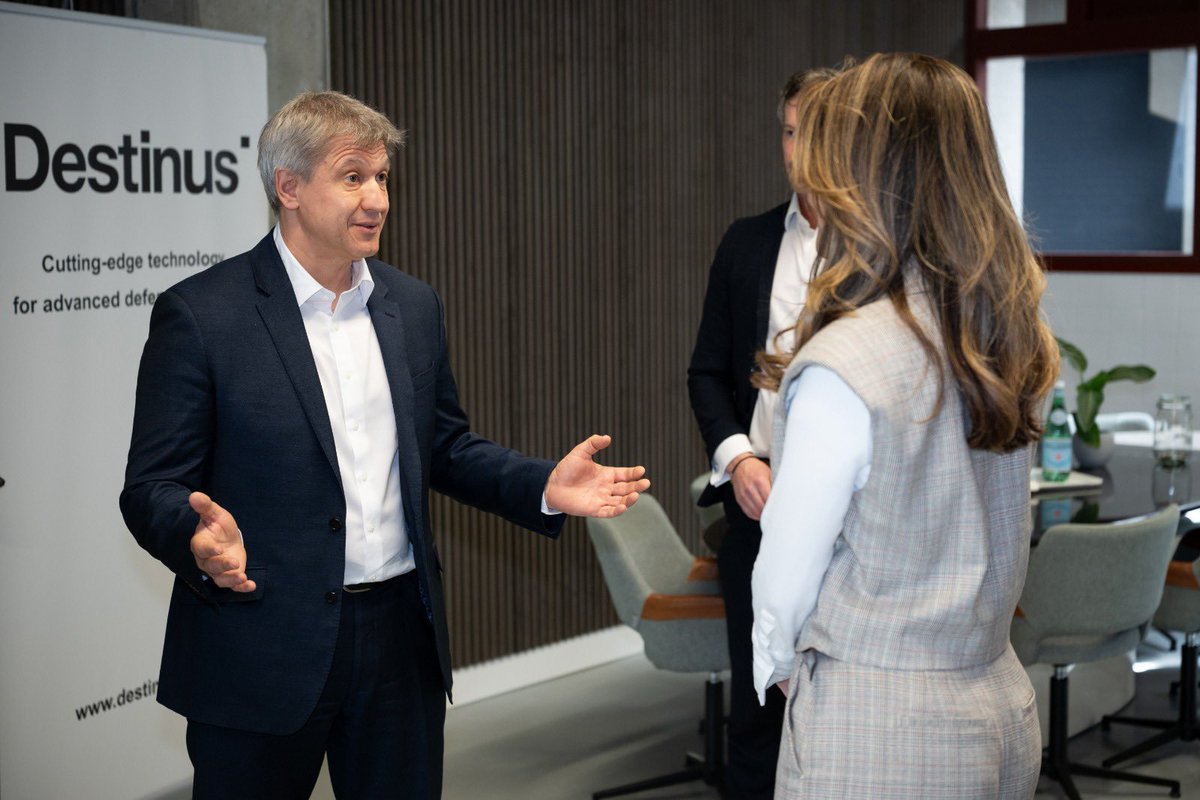
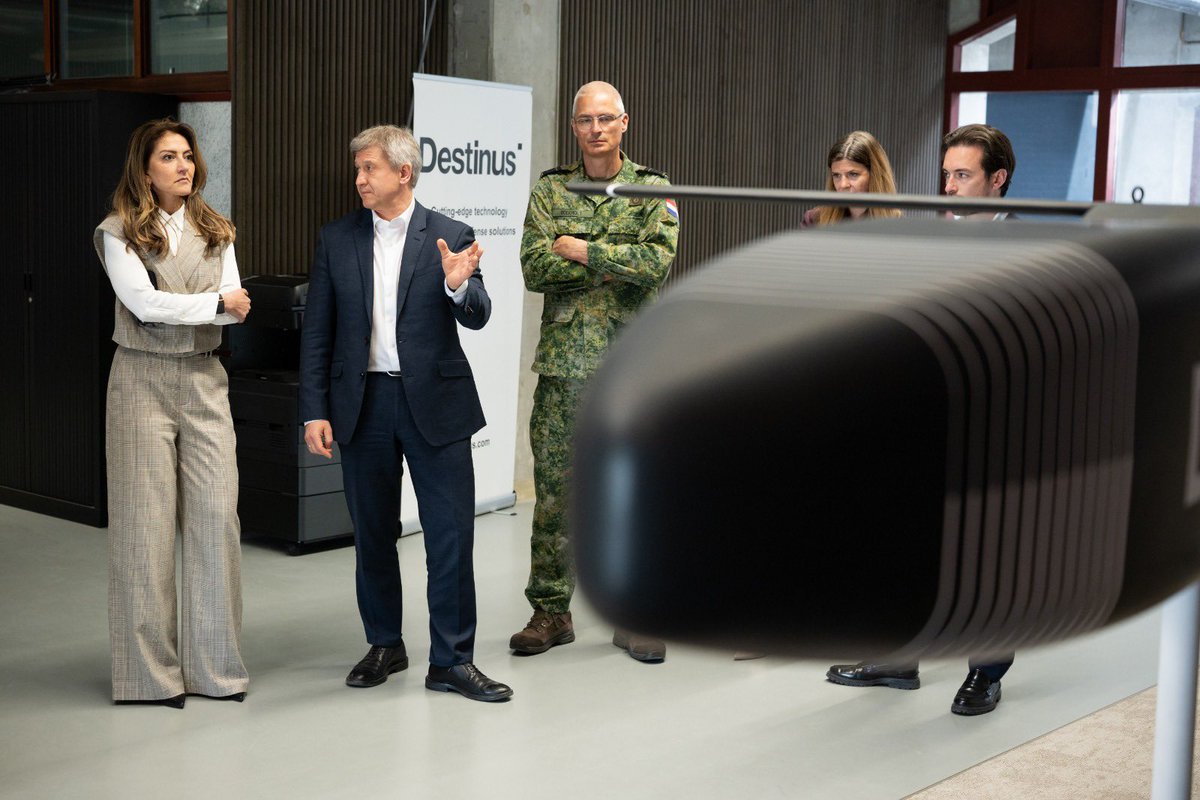
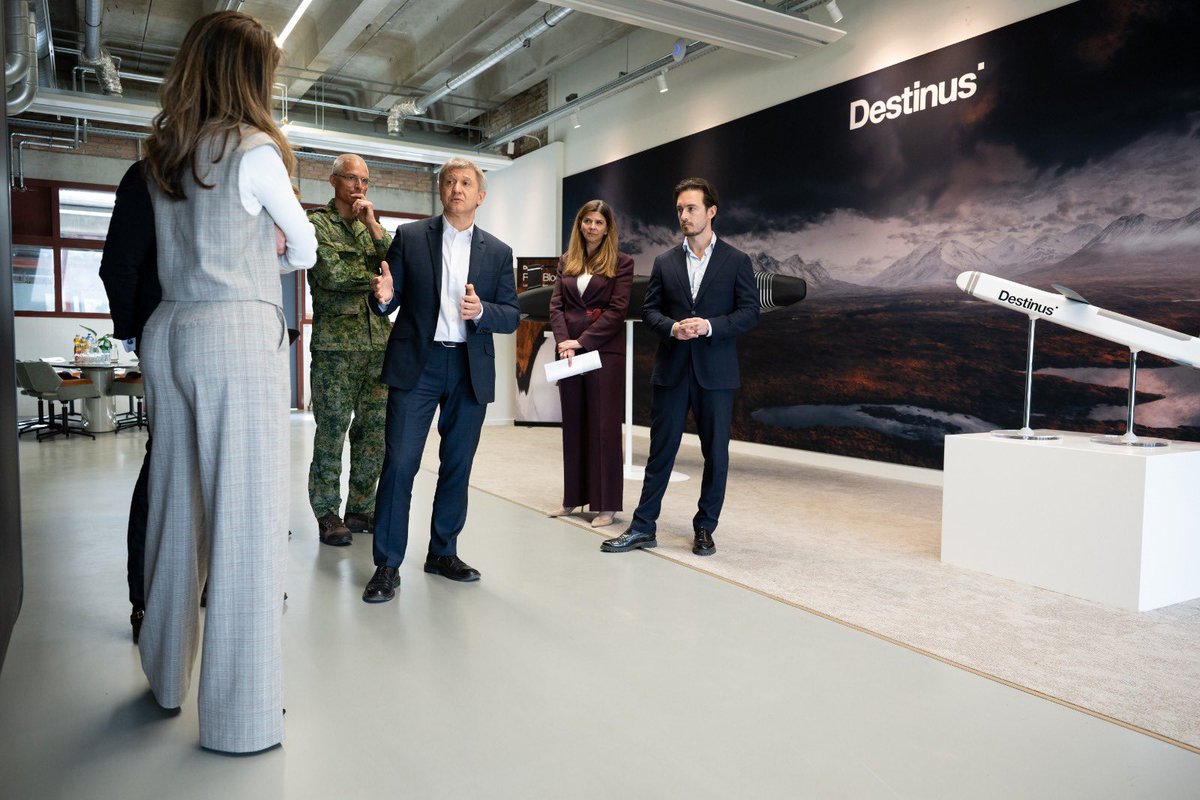
At the invitation of @DefensieMin, visited the Destinus facility, which manufactures the Ruta drone-missiles for Ukraine. Crucial tech that directly empowers our middle-strike strategy, striking Russian military supply lines. Next-gen defense in action.
Range and payload matter. But deployment architecture matters just as much.
Ruta B3 is being developed around a 40-foot container launch architecture. That is not a cosmetic feature. It changes how the system can be deployed, stored, transported, dispersed, and scaled.
A containerised launch system can be compatible with multiple deployment modes: road-mobile, rail-based, fixed-site, and maritime. This gives European customers a much broader operational and industrial logic than a bespoke launcher tied to a single platform.
For Europe, the deep-strike challenge is not only about developing new missiles. It is about building systems that can be produced, replenished, moved, concealed, and deployed at scale across different national infrastructures.
That is the logic behind Ruta B3: long-range strike capability designed for European-controlled production and flexible deployment at industrial scale.
https://t.co/BaAiPG9z6v
#EuropeanSecurity #EuropeanDefence #LongRangeStrike #CruiseMissiles #IndustrialDefence
Europe’s deep precision strike challenge is not only a range gap. It is an industrial-capacity, replenishment and sovereignty gap. Recent conflicts have shown that precision systems are consumed at a scale far beyond traditional European stockpile assumptions.
Onze defensie-industrie laat zich niet intimideren door Rusland. Daarom bezocht ik vandaag Destinus. Destinus produceert drones en raketten voor Oekraïne en maakt daarmee echt verschil. Een belangrijke partner voor Defensie en in de verdediging van onze vrijheid 💪🏼
I also have great respect for what Armin Papperger and the team at Rheinmetall have built. Today’s step makes sense because it follows the same industrial logic. Rheinmetall adds one of Europe’s strongest industrial and qualification platforms in Germany, which is exactly what is needed to turn hard operational learning into durable sovereign capacity.
That does not change where Destinus is built from or how we see the company.
Ukraine shaped the speed, seriousness, and operational standards of what we build. The Netherlands gave us the base from which to build a European company. Germany now adds industrial scale.
That combination makes sense.
Europe does not need more defence slogans, more elegant dependency on other people’s factories, or more concept slides about sovereignty. It needs companies that can design, build, test, improve, and produce real systems at scale.
That is the path we have been on for years. Today’s announcement is one more step on that path.
A lot of people will look at today’s announcement and see one joint venture or one missile programme.
For me, it is part of a much longer story.
Destinus did not begin as a missile company in the narrow sense. We began with high-speed propulsion, difficult flying systems, and technologies linked to hypersonic flight. We started with the belief that Europe should still be capable of building hard things from first principles.
Then the war in Ukraine changed the direction and the tempo of the company.
When the war began, we moved into long-range strike drones for one basic reason: to help Ukraine. That period changed us. It forced speed, honesty, and focus into the engineering process. In Ukraine, a system is not judged by a slide deck, a conference panel, or a long internal review. It is judged by whether it works, whether it can be improved quickly, and whether it can be produced in meaningful numbers.
That learning did not come from war in the abstract. It came from working with Ukrainian operators, engineers, and partners under real conditions. Ukraine compressed the feedback loop between design, testing, production, and operational use far more brutally and honestly than peacetime Europe usually allows. That experience matters more than any theoretical discussion about defence innovation.
From that stage, we moved toward RUTA.
RUTA was not conceived as another limited-batch missile programme. It emerged from urgent wartime requirements from Ukraine and was designed from the outset for serial production. It came from a sequence of hard lessons about range, payload, survivability, deployment speed, navigation in contested environments, manufacturability, and operational use.
It also taught us something even more important: if you want to build a missile that can be produced at real scale in Europe, you cannot depend on others for every critical subsystem.
You need to control more of the critical stack yourself.
That is why, over time, we built more and more of it inside the company: turbojet engines, rocket boosters, navigation, autonomy, warheads, launch systems, manufacturing processes, and test infrastructure. Not because vertical integration is a slogan, but because dependency slows iteration, weakens resilience, and makes scale harder.
None of this was glamorous. It was years of hard work by a large number of engineers, technicians, operators, and production teams across Europe. But that is what it takes to move from an interesting product to a real industrial capability.
And it works. Today, we run an established serial production programme in Europe measured in the thousands of cruise missile systems per year. That is the difference between treating missiles as prestigious hardware and treating them as industrial products.
RUTA also clarified something bigger for us. Once you build the propulsion, boosters, guidance, navigation, warheads, software, launch architecture, and production discipline required for a scalable cruise missile, you are already building much of the technological and industrial foundation for interceptor systems as well.
That is why Destinus is focused on two core verticals: Strike and Air Defence. Not as two unrelated businesses, but as two expressions of the same underlying architecture.
Destinus is a Dutch-headquartered European company: the Netherlands is not just where we are incorporated. It is the base from which we are building a European defence company. It gave us the right industrial logic, the right openness, the right NATO connectivity, and the right platform to scale across Europe.
As the New Year approaches, it’s hard to pretend this was an easy one.
To my Ukrainian friends: may the coming year bring you enough strength to endure, enough stubbornness to survive, and enough future to justify the courage you show every day. Even when support feels slow or imperfect, your resilience is shaping the future far beyond Ukraine.
To my colleagues across European defense and industry: this year reminded us that security is not a theory and not a legacy asset. Helping Europe become stronger, more disciplined, and more responsible is no longer a strategic option. It’s the baseline for the years ahead.
And to Russians living through this dark and confusing time: I hope the next year brings not only an end to fear, but the beginning of reflection. Real change starts when a country finally asks itself why it keeps turning the wrong way, again and again, and why this cycle feels so familiar.
The New Year does not fix things by itself. But it quietly gives another chance to think, to choose, and to act differently.
Wishing everyone resilience, clarity, and a cautious hope that the coming year will be less cruel and more honest than the last.
Scalable autonomy for Ukraine and Europe’s defense.
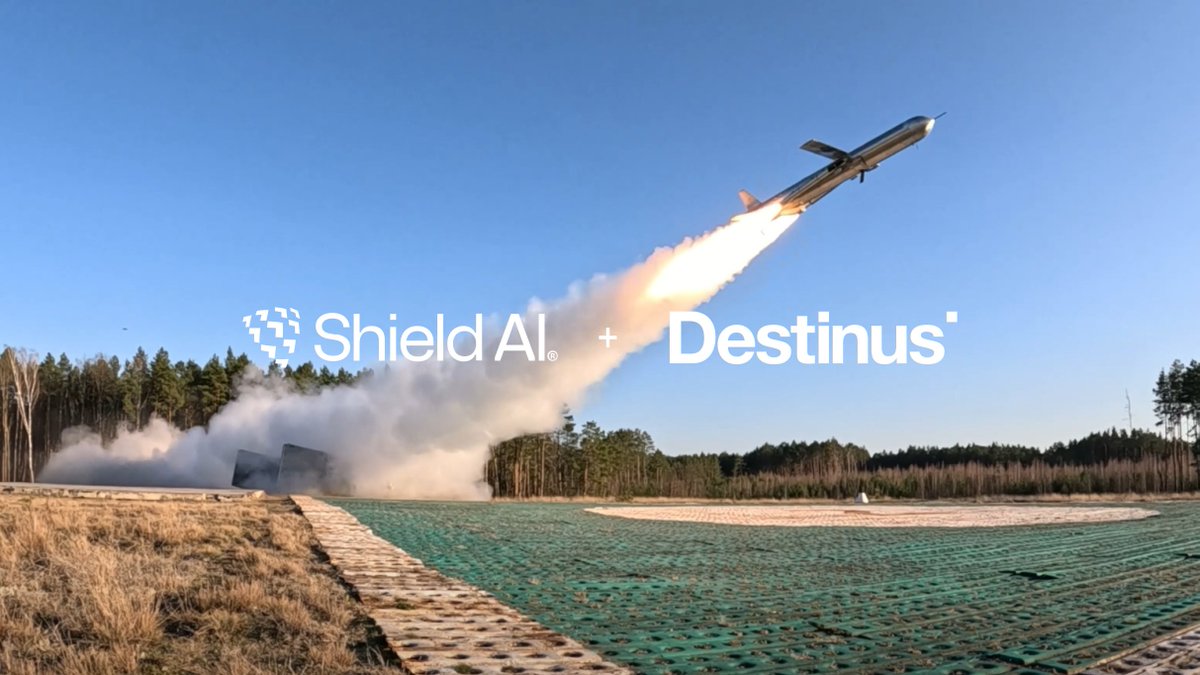
@destinusaero and @ShieldAI_ are partnering to build a unified, cross-platform autonomy architecture for the next generation of defense systems. Hivemind will be integrated onto our RUTA and Hornet platforms, working together with V-BAT to coordinate, adapt, and operate as a distributed, resilient reconnaissance-strike capability.
Grateful to the Shield AI team for the trust and collaboration — and to the Destinus engineers whose work made this possible.
This is another step toward strengthening Europe’s defense ecosystem and accelerating the technologies that will help bring Ukraine’s victory closer.
Shield AI + Destinus: Scalable autonomy for Ukraine and Europe’s defense
We are partnering with @destinusaero to create the first scalable, cross-platform autonomy architecture jointly developed by next-generation defense leaders in Europe and the United States. As part of this collaboration, Hivemind will be integrated onto Destinus’ Ruta and Hornet unmanned aerial systems, working alongside our V-BAT to share data, coordinate behaviors, and adapt in real time — forming a tightly integrated and highly effective reconnaissance-strike capability.
“Integrating Hivemind across diverse aircraft architectures like Ruta, Hornet, and V-BAT demonstrates how a unified autonomy framework can enable distributed mission execution. By allowing platforms to perceive, decide, and act together in real time, Hivemind delivers scalable autonomy that enhances coordination, survivability, and mission success across the battlespace.” - Nathan Michael, Chief Technology Officer and Head of the Hivemind Business Unit.
Read the full press release: https://t.co/zbc2NNq5Z1
+ Come see us at our joint booth, F3.0, tomorrow at Netherlands Industries for Defence & Security's NEDS!
Autonomy for the world. The greatest victory requires no war.
For years, Europe treated defense tech as something outdated or inconvenient. Now reality is changing — innovation, production, and sovereignty suddenly matter again.
Destinus was included in Bloomberg’s list of 8 leading European defense startups. A small sign that the continent is finally rediscovering the importance of building its own capabilities — fast, scalable, and independent.
The FSB of Russia has officially opened a criminal case against me — along with @khodorkovsky_en, @Kasparov63, Sergey Guriev, and many other remarkable people — accusing us of “violent seizure of power” and “terrorism.”
This was long expected.
But I’m proud to be in the same company with those who stand for democracy in Russia, against Putin’s regime, and against the war in Ukraine.
З Днем Незалежності, Україно! 🇺🇦
Моє серце з Україною. Я поруч зі всіма своїми українськими друзями і роблю все можливе, щоб допомогти Україні відстояти свою свободу та незалежність.
Слава Україні! ✊🇺🇦
Героям слава!
⸻
Happy Independence Day, Ukraine!
My heart is with Ukraine. I stand with all my Ukrainian friends and do everything I can to help Ukraine defend its freedom and independence.
Slava Ukraini! ✊🇺🇦
Glory to the heroes!
Putin thought he trapped Zelensky in Alaska with a chess move: agree to “territory swap” and lose the fortress of Donbas, or refuse and anger Trump. A zugzwang, as the chess people say.
But the twist? Now it’s Putin in the trap. Trump believes Putin promised talks with Zelensky within 10 days. Putin can’t risk them — he fears for his life. Refuse, and he angers Trump. Accept, and he sits on the same level as Zelensky.
Classic Trump: in Alaska he echoed Putin, but after meeting Europeans and Zelensky he’s back to demanding direct Putin–Zelensky talks. The man’s like a cooking pot — whoever stirs it last decides what’s inside.
Right now, it looks like the Kremlin just lost its favorite client.
Negotiations with a dictator never lead to peace. They only fuel the dictator’s appetites. All of world history underscores this point. Negotiations with Putin and Russia are completely groundless. The only language Russia should understand is the language of force—because that’s the only thing that can stop them. The latest attack in Sumy demonstrates that every attempt to negotiate results in their readiness to commit even more inhuman and cold-blooded crimes.
Trump made his move. Zelensky sent him back to Putin. Now it’s Europe’s turn. Europe must soon respond not with words but with decisive action, and only this action will clarify history’s final verdict on Zelensky: will he be remembered as a genuine servant of the people or merely the fictional “Servant of the People”?
Can Europe transcend its metaphorical identity as a collective “Maycomb” from Harper Lee’s “To Kill a Mockingbird,” where townspeople outwardly applaud the hero (certainly Zelensky), yet privately depend on the money and influence of figures like Trump, ultimately sacrificing principles for financial comfort?
Zelensky has only one narrow path to navigate safely—if Europe’s deep-rooted anti-American sentiment manages to overpower its equally entrenched conformity. Zelensky has placed an extraordinary bet in this existential casino: wagering lives on the table to secure freedom.
I can’t predict how multipolar our world will become, but it’s already undeniably multi-narrative, opening doors to the most unpredictable future scenarios, including potentially no future at all. Zelensky began his journey as boldly as a Hemingway protagonist stepping into an uncertain battlefield. What matters now is that he ends it just as strongly.