The Republican governor of Wyoming and local election officials were surprised last month when federal agents showed up at the polls on the day of the state’s primary elections and began to confront poll workers in what local officials described as an inappropriate, unlawful, and aggressive manner.
According to poll workers, two Department of Justice officials wanted to examine voting machines and interview voters at the polls. The DOJ officials backed down after a poll worker, who happened to be a former assistant dean of a law school, rejected their requests.
"Having the heavy hand of Washington—even the appearance of the heavy hand of Washington—somehow interfering or meddling in the election process is something I think every American should be concerned about," Wyoming governor Mark Gordon told @thedispatch.
Does the incident tell us anything about what might happen in November?
My latest @thedispatch: https://t.co/KWgeFZVtjk
Florida has 411 cities, towns and villages. Roughly 60% have fewer than 10,000 residents. The median Florida municipality has about 6,500 people.
That raises a question Florida has not seriously considered: What is the minimum viable city?
As Amendment 3 approaches, local governments are answering it in real time through fire assessments, EMS fees, garbage fees, stormwater fees, park fees, parking charges, fuel taxes and public service taxes.
The property tax bill may shrink, but the receipt grows longer.
Every city has fixed costs that remain when property-tax revenue falls: police and fire, roads and stormwater, pensions, debt, insurance, buildings, technology and basic administration.
Scale matters. A city of 5,000 still needs many basic functions of a city of 100,000, yet has far fewer taxpayers to share the costs.
When the math stops working, cities first raise fees, then create assessments, then cut services, then contract them to the county or a neighboring city. Eventually comes the question no one wants to ask: Does this city still make economic sense as an independent government?
Florida’s municipalities range from its largest cities to places like Marineland, with only a handful of residents. Yet Amendment 3 applies essentially the same constitutional formula to all of them.
Some cities will adapt. Some will raise fees. Some will cut services. Some will increasingly rely on their counties. And some may ultimately consolidate or disincorporate.
Florida may need a Minimum Viable City stress test: taxable value per resident, homestead concentration, infrastructure age, debt and pension obligations, fixed costs and projected Amendment 3 losses.
When six out of ten Florida municipalities have fewer than 10,000 residents, this is not a fringe issue. It is structural.
If we permanently change the economics of local government, we should first understand what makes a municipality financially viable.
Florida should not discover the minimum viable city by waiting for the first ones to fail and watching their obligations, services and costs spill across borders to everyone else.
Amazing moment in the final seconds of the Eisenhower-Northwestern girls game as the Wildcats call a timeout to honor official Bernie Mackowski. Tonight was his last varsity game in 51 years of officiating! @PIAASports #thankyouofficials
TIMELAPSE: Tonight's moonrise behind the fully holiday-lit Nubble Lighthouse. This was a photography bucket list item for me. ✅
--
December 17, 2024
York, Maine
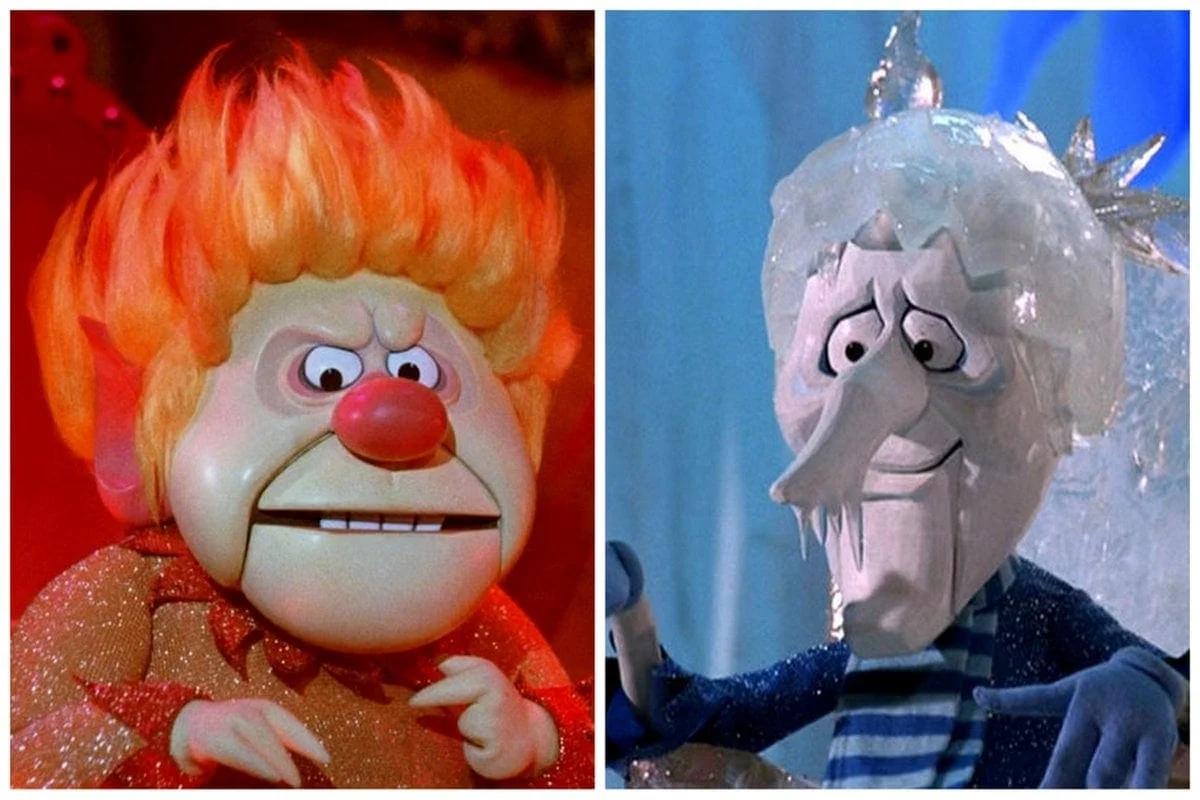
Exactly a decade after Rudolph the Red-Nosed Reindeer, Rankin/Bass created a cult classic Christmas special, The Year Without a Santa Claus.This 1974 ABC Christmas special is famous for the Miser Bros but there's a bit more to the story than their sibling rivalry. Here we go...
Jason Kelce told Melissa Stark The Tush Push could work with her at QB. Was he right?
Cris Collinsworth: Second-and-10.
Mike Tirico: So you're not making any comment on if Melissa could?
Collinsworth: Not a chance.
Tirico: Melissa, I believe in you.
Marc Elias’ take on Donald Trump:
“Donald Trump is not Hitler. He is not Stalin. His vision of America is neither pre-war Germany nor the post-war Soviet Union. The United States is not at risk of falling into totalitarianism.
The United States has its own history and culture. It has a unique way of manifesting its politics. That does not mean, however, that we cannot learn from other places and other times. As Mark Twain, the most American of American writers, wrote: “History doesn't repeat itself, but it often rhymes.”
So, let’s start with what we know. Trump is a deeply unserious man. In a different era, he would have been a carnival barker. If not born to privilege and wealth he would be running a low level scheme or selling supplements on a sketchy website. Instead, he is the president-elect who, in addition to hawking schlocky items on the internet, will soon command the highest, most powerful office on earth.
We know that he admires modern day dictators and strongmen. He seeks their favor and rejoices in their flattery.
He rejects liberalism — things like the rule of law, impartial government and fundamental rights. He has contempt for democratic norms and institutions. Elections are only fair when he wins and rigged when he loses.
For Trump, the presidency exists to exact the spoils of electoral victory rather than a public trust.
Like many of you, I have spent the last few days trying to make sense of things — asking how this happened and what comes next. As for the second question, I have been doing a lot of reading.
It is something that preoccupied the Founders, who were afraid of the reemergence of a king. Decades after the founding, John Adams was still concerned. In 1814 he wrote to a colleague that “democracy never lasts long. It soon wastes, exhausts, and murders itself. There never was a democracy yet that did not commit suicide.”
As part of my processing, I went back and reread several of Hannah Arendt’s works. She is best known for her account of the trial of Adolf Eichmann in which she coined the phrase “banality of evil.” In her telling, the Nazi SS leader was a mediocre joiner. In her words a “clown.”
But, in my opinion, her most important book was The Origins of Totalitarianism, in which she attempts to explain the mechanics of how totalitarian movements come to power. One observation of hers strikes me as most relevant today.
“Totalitarianism in power invariably replaces all first-rate talents, regardless of their sympathies, with those crackpots and fools whose lack of intelligence and creativity is still the best guarantee of their loyalty.”
It is hard to make sense of Trump’s recent cabinet nominations without coming back to this central truth: He is nominating “crackpots and fools” because that is what Trumpism requires. It is required both by Trump himself but also by his followers.
As a narcissist, Trump surrounds himself with people who, like him, reject science, expertise and the idea of objective facts. As a leader, he must continue to promote ever more extremist conspiracy theories to explain why his last conspiracy theory failed to come true.”
🍿
Look at the reaction of grown men who have played football for decades and are at the top of their profession watching Saquon Barkley do something they have never seen before.
If you get an I Voted sticker for voting early, you should be able to scan it on your TV and all political ads should be replaced by normal commercials