NEW: Mobileye has achieved the first inspection certificate from safety auditor TÜV SÜD for its automatic emergency braking (AEB) development.
TÜV SÜD’s inspection certificate provides third-party confirmation that Mobileye’s AEB development process meets the requirements of ISO 21448, the Safety of the Intended Functionality (SOTIF) standard.
It places Mobileye’s longstanding AEB safety-development practices in the framework of ISO 21448, raising the industry standard for safety development processes.
Read more: https://t.co/glFbUFUG2z
The hardest part of scaling autonomous driving is not just collecting more data. It is learning from the rare, safety-critical scenarios that are easy to miss inside massive datasets.
Mobileye’s approach includes Meteor, which uses AI agents and vision-language models to help discover difficult scenarios across our large-scale driving data.
Stay tuned as we explore how Meteor helps turn those discoveries into actionable learning signals.
Learn more: https://t.co/xybzOadQYX
Thanks to @TheRideshareGuy for hosting another great event bringing together the AV ecosystem.
Mobileye was proud to serve as the official technology partner of the Urban Autonomy Summit in Austin this week, joining industry leaders working to bring safer, more efficient autonomous mobility solutions to cities.
Physical AI is quickly becoming one of the most important frontiers in AI, but building machines that can safely operate in the real world takes more than powerful models.
For Mobileye, the foundations of physical AI have been decades in the making through autonomous driving.
In our blog, we explore how the same principles behind safe, scalable AVs are now informing the next generation of intelligent systems, from robotaxis to humanoid robots.
Read more here: https://t.co/Q0xIoYcBgS
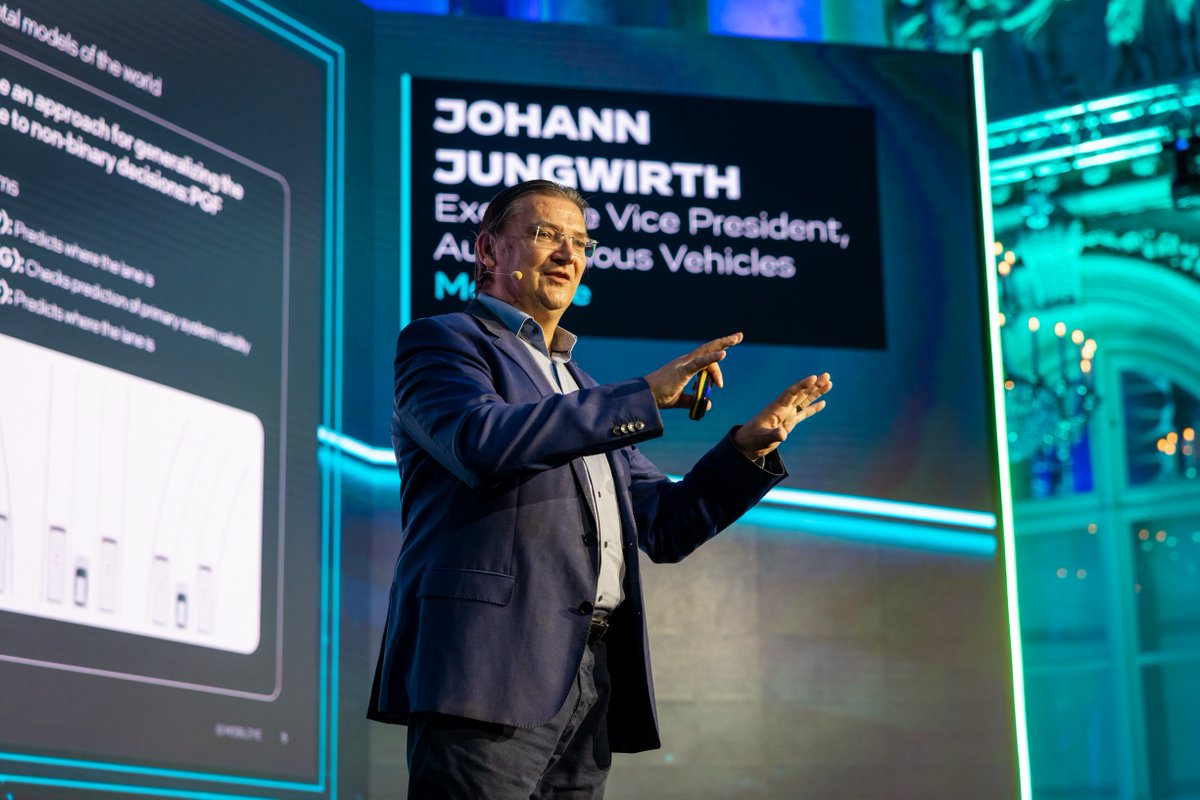
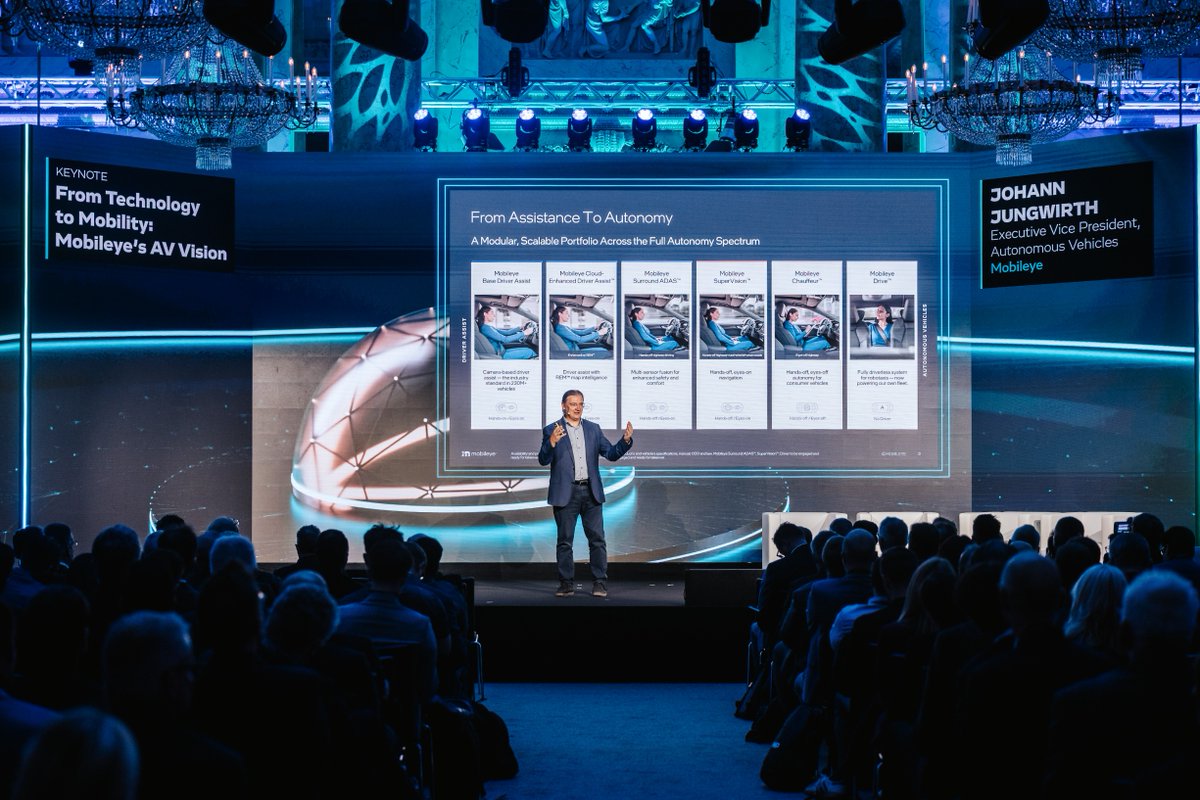
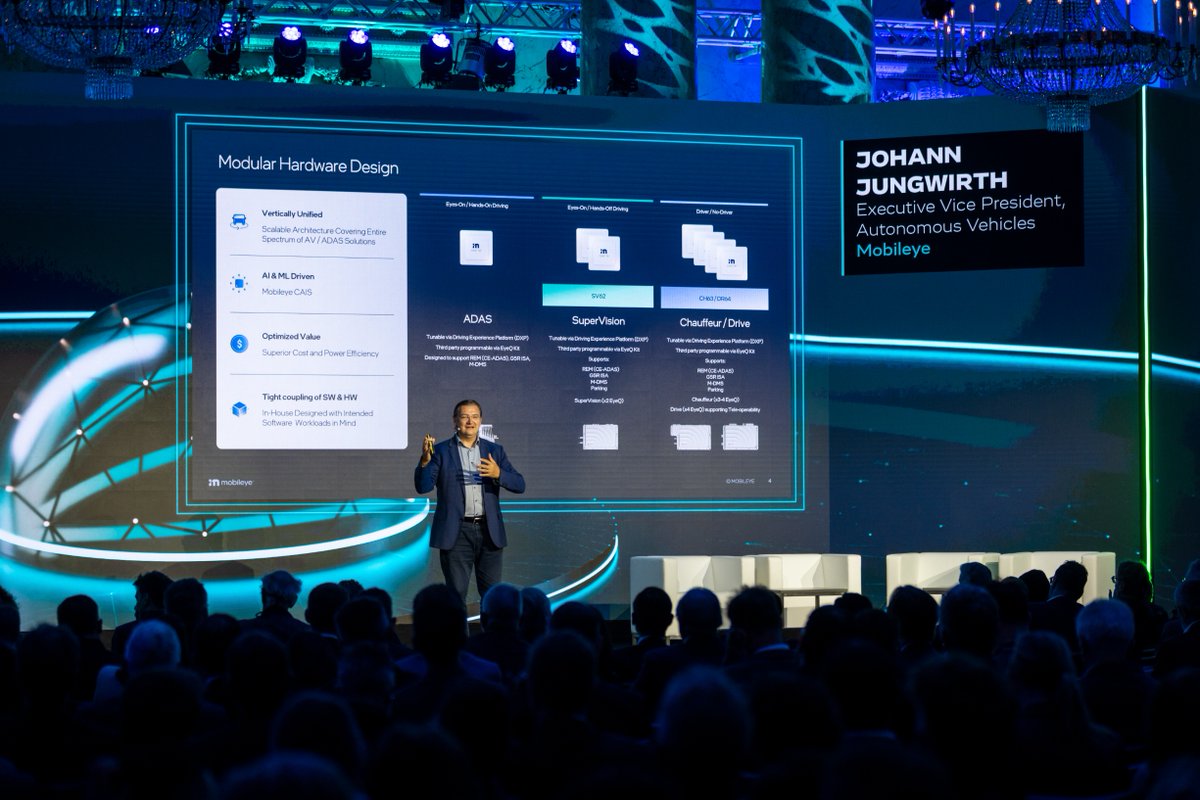
Johann Jungwirth, EVP of Autonomous Vehicles at Mobileye, took the stage at The Autonomous Main Event to discuss what it takes to scale autonomous mobility.
From safety-by-design and redundant systems to fleet operations, regulation, accessibility, and consumer trust, he shared why the next 12–18 months will be critical for moving autonomous mobility from validation to real-world deployment.
Watch the full session to learn more about Mobileye’s vision for safer, scalable autonomous mobility: https://t.co/kZOCYKIRtR
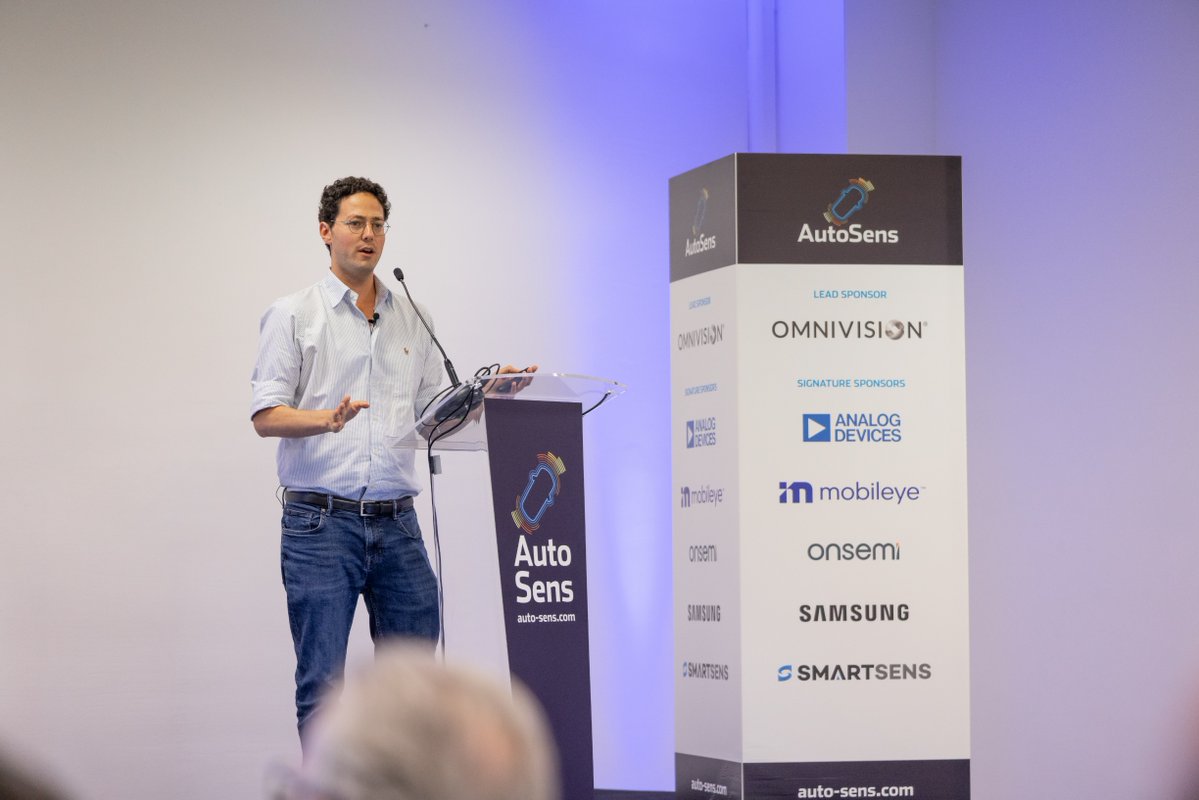
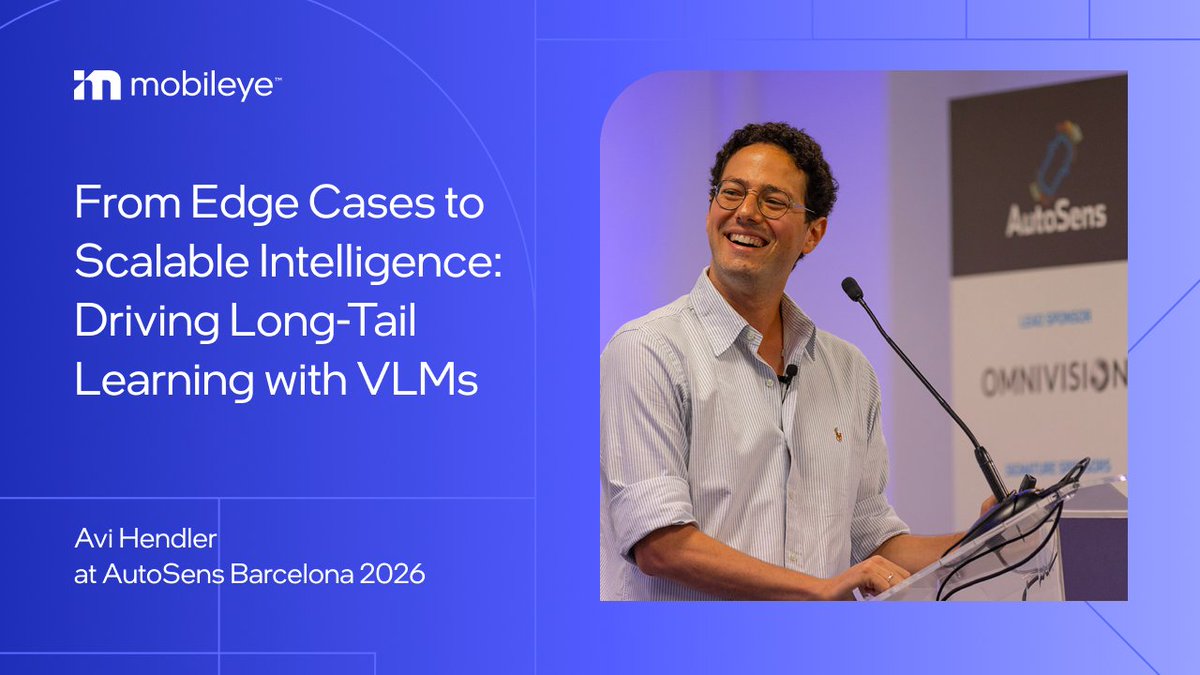
At AutoSens Europe, Mobileye Senior Principal Engineer Avi Hendler unpacked one of autonomous driving’s hardest challenges: the long tail.
The difficult scenarios are not always the obvious ones. They can be rare, unexpected, or simply easy to miss in a dataset, and they often matter most.
In his session, "From Edge Cases to Scalable Intelligence: Driving Long-Tail Learning with VLMs", Avi introduced Meteor, an in-house framework for finding and analyzing long-tail driving scenarios. Using vision-language models, it helps identify rare events, investigate why a network fails, and surface the right examples to bring back into training.
The focus is not simply on adding more data, but on finding the data that can help systems learn and improve at scale.
Watch the full session here: https://t.co/xtau9qQ1JM
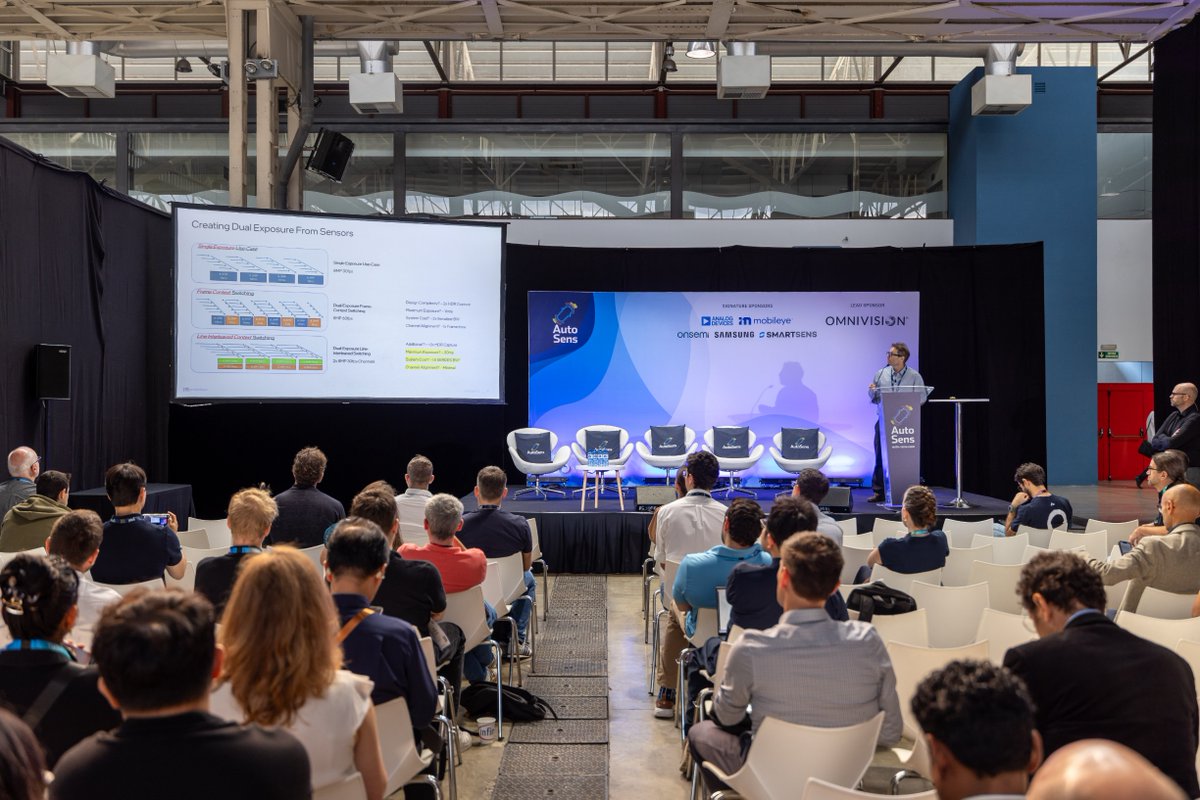
Great to be at @AutoSens_ Europe, where Mobileye experts shared how AI can better understand the complex, dynamic conditions of the physical world.
From evaluating how automotive cameras perform in motion and challenging lighting conditions, to discovering rare scenarios that can have an outsized impact on driving safety, to advancing driver and occupant monitoring beyond compliance—real-world performance matters.
Building safer, more capable driving systems means looking beyond averages: identifying the cases that matter, testing against real-world conditions, and improving how vehicles understand both the road and the people inside them.
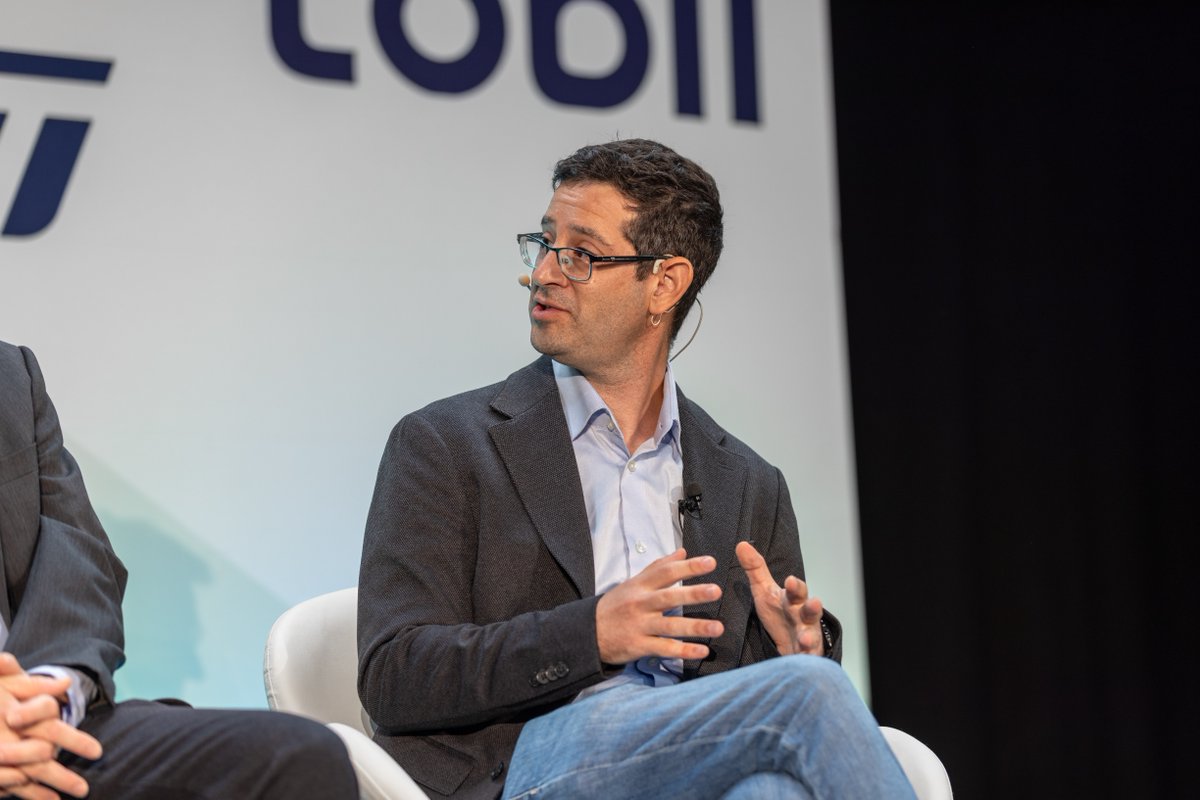
Thank you to everyone who joined Avi Hendler, Gabriel Bowers and Elad Osherov for the conversations.
Approximately 95% of public roads in the U.S. and Europe are covered by Mobileye REM™, with more than 34 billion miles mapped.
Aggregated real-world driving data helps support continuously updated maps designed to support localization, map freshness, change detection, and driving systems as road conditions evolve.
Learn more about Mobileye REM™: https://t.co/8RT5JqNdUw
Physical AI is designed for the real world, where conditions are constantly changing and the complexity of physical environments cannot be fully scripted or predicted.
Mobileye’s approach to physical AI is built on safety by architecture, edge-case led learning, a purpose-built stack, and scale-first engineering.
Together, these principles are designed to enable autonomous vehicles and humanoids to perform in complex physical environments.
Learn more: https://t.co/mKqsexz4sJ
New roads, new driving environments, and real-world validation for hands-free, eyes-on driving. Powered by EyeQ™6H and production-designed hardware, our development vehicle tested Mobileye SuperVision™ across central U.S. urban streets, highways and varied conditions.
We'll be in Barcelona for @AutoSens_ Europe 2026.
Across three sessions, Mobileye experts will be sharing insights on tackling the long tail in autonomous driving, enhancing in-cabin sensing with exterior intelligence, and innovation in automotive imaging.
If you're attending, join us for:
📅 Wednesday, 23 September | 3:20 p.m. CEST
Avi Hendler
From Edge Cases to Scalable Intelligence: Driving Long-Tail Learning with VLMs
📅 Thursday, 24 September | 9:50 a.m. CEST
Elad Osherov
Panel Discussion - Beyond Compliance: The Next Generation of Driver & Occupant Monitoring
📅 Thursday, 24 September | 11:25 a.m. CEST
Gabriel Bowers
Motion-Aware Characterization of Automotive HDR Cameras: Quantifying the Trade-Off Between Flicker Mitigation and Dynamic Resolution
Check out more info here: https://t.co/23UqmLUni7
Germany continues to set itself as one of the leading global markets in autonomous mobility, and Mobileye Drive™ is helping lead the way.
Official KBA data shows that more than 60% of Germany’s valid SAE Level 4 testing permits include Mobileye Drive™, our fully autonomous solution for Mobility as a Service.
As autonomous transportation moves closer to commercial deployment, we’re proud to push for a future of safer, scalable driverless mobility.
Read more here: https://t.co/4ADYfUvM9F
The hardest part of scaling autonomous driving is not just collecting more data. It is learning from the rare, safety-critical scenarios that are easy to miss inside massive datasets.
At @CVPR, Mobileye CTO Prof. @shai_s_shwartz introduced Meteor, Mobileye’s approach to long-tail learning: using AI agents and vision-language models to discover difficult scenarios, identify reproducible failure patterns, and generate targeted variations for training and validation.
Watch the presentation to see how Mobileye is tackling one of autonomy’s biggest challenges: turning edge cases into scalable intelligence: https://t.co/957uvBPdb2
Mobileye’s next chapter in Physical AI is about turning advanced intelligence into robust, useful and economically viable systems in the real world. Humanoid robotics brings that challenge into a new domain.
In an exclusive interview with @IZONmedia, @liorwolf, EVP of Humanoids at Mobileye, explains why Mentee by Mobileye bet on simulation from day one, why it develops hardware and software together to help learned skills transfer reliably into the real world, and what it will take to build a truly general-purpose robot.
He also discusses how Mentee’s startup speed and vertically integrated approach can combine with Mobileye’s experience in productization, supply chain and commercial scale.
Read the full interview here:
https://t.co/NdepEEMFYg
@Frost_Sullivan evaluated ADAS providers across four requirements: scalable architecture, cost discipline, safety credibility, and real-world validation. Their analysis highlights how Mobileye delivers across all four, through a shared technology backbone spanning multiple levels of ADAS.
Read the full report here: https://t.co/FPvd7y1bo2
Drivers are no longer evaluating ADAS only by whether a feature exists. They are judging how it feels.
At the same time, automotive architecture is transforming rapidly. Vehicles are becoming more centralized, with greater compute capacity and more room for software-defined feature growth.
Read more about how hands-free driving is going mainstream: https://t.co/R32pwvmiNq