Chamath Palihapitiya just said what Silicon Valley is terrified to say out loud.
On Joe Rogan. To millions of people. Without flinching.
Chamath: “The only person that we can trust is Elon.”
Not whispered at a dinner party. Not buried in a podcast nobody listens to.
Said on the record. Full weight behind it.
And then he told you why.
Chamath: “I feel like he’s the least corruptible. He’s the most independent thinking. And I think he’s the one that has an actual empathy for people.”
One of the sharpest capital allocators in Silicon Valley history looked at every founder building AI.
Every single one.
And chose the one the media spends the most energy telling you to hate.
That alone should stop you cold.
Chamath: “Then there are folks where there’s just an insane profit motive.”
He’s talking about OpenAI. He’s talking about Google. He’s talking about companies that swallowed billions from Wall Street and now answer to shareholders before they answer to humanity.
Chamath: “They’re less in control of the businesses that they run.”
The people building the most powerful technology in human history do not control their own companies.
Their boards do. Their investors do. Their liquidation preferences do.
And these are the ones we’re trusting with superintelligence.
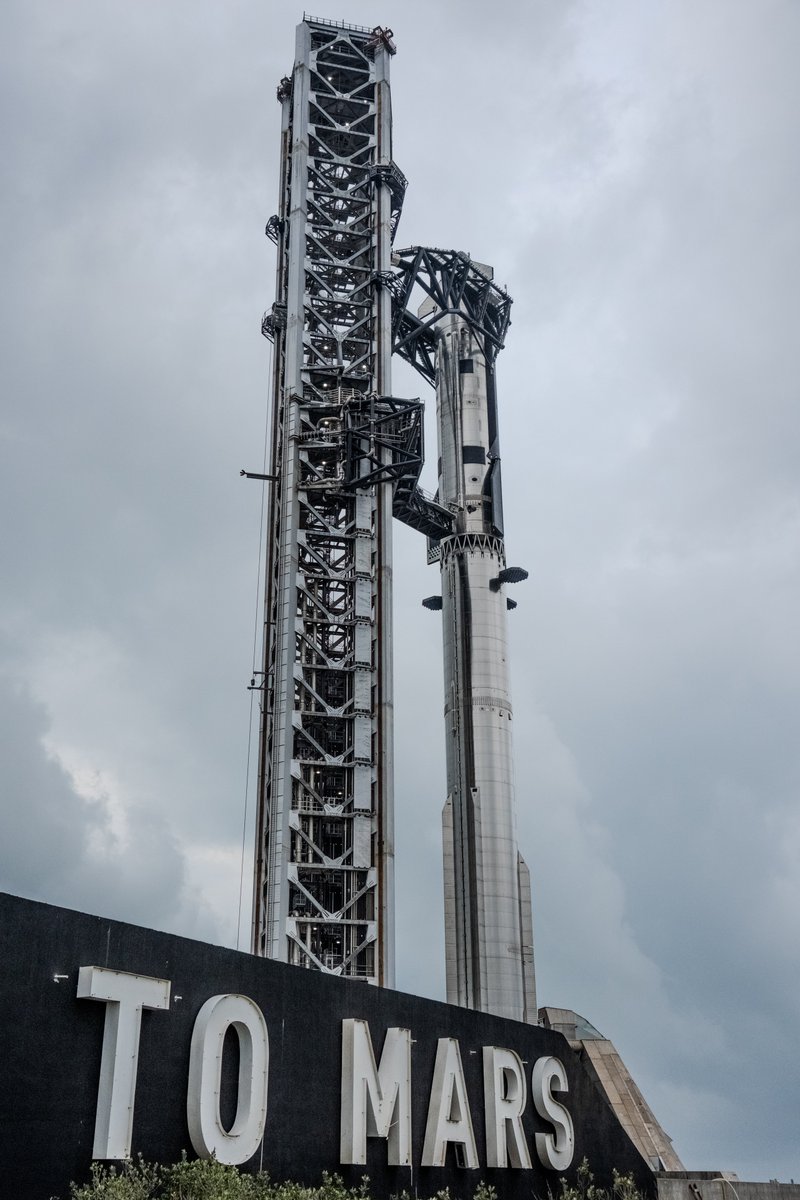
Chamath: “He’s like, I need to get to Mars.”
This is the fracture line nobody wants to touch.
Every other AI founder is optimizing for the next earnings call. The next funding round. The next quarterly number that keeps the machine fed.
Elon is optimizing for the next planet.
One group builds to satisfy investors. The other builds to survive as a species.
Those aren’t different strategies. Those are different operating systems running on different hardware.
And it changes everything about how you build.
When your time horizon is 90 days, you cut corners. You monetize behavior. You trade safety for speed because the board needs a number by Friday.
When your time horizon is interplanetary, you can’t afford a single shortcut. Because shortcuts don’t survive launch.
Chamath: “Where is this going to end up?”
The only question that matters. And nobody in power wants you asking it.
Because the answer comes down to who gets there first.
If it’s a company owned by Wall Street, superintelligence becomes the most sophisticated extraction engine ever built. Every decision optimized. Every behavior predicted. Every market captured. Not for you. For the balance sheet.
If it’s someone who can’t be bought, pressured, or voted out by a board of directors, there’s at least a chance it bends toward something bigger than quarterly revenue.
History never remembers who built the most powerful technology.
It remembers who controlled it. And what they used it for.
The only founder in AI who cannot be fired by a board, leveraged by an investor, or replaced by a shareholder vote is the one they spend the most energy telling you not to trust.
Ask yourself why.
Elon Musk just revealed what’s actually holding AI back.
It’s not chips. Not models. Not data.
It’s concrete.
Someone asked him the obvious question. Why not just build private power plants next to data centers? Bypass the grid entirely.
His answer was four words.
Musk: “The power plant makers.”
There aren’t enough of them.
You can design the best chip on earth. Train a frontier model. Raise $10 billion for a hyperscale data center.
None of it matters if you can’t power it.
Musk: “You can drill down a level further.”
GPUs need power. Power needs turbines. Turbines need factories. Factories need permits. Permits need a government that hasn’t paralyzed itself.
Every link in the chain is physical. And every one of them is breaking.
We can train a frontier model in weeks. We can’t permit a power plant in under five years.
The country that invented the assembly line now needs 40 agencies to approve a gas turbine.
China doesn’t have this problem. They don’t run 7-year environmental reviews on infrastructure they need tomorrow. They break ground while America requests approval to break ground.
The AI race won’t be decided by whoever writes the best algorithm.
It’ll be decided by whoever can still build in the physical world.
We spent 30 years getting faster in software and slower in steel. Outsourcing manufacturing. Hollowing out supply chains. Treating builders like liabilities instead of assets.
Now the bill is due.
Every breakthrough in AI is gated by atoms. Steel. Concrete. Turbines that take years to manufacture and decades to approve.
The smartest code on earth is worthless without electricity.
Musk didn’t give a speech about this. He didn’t need to. He answered one question and the whole infrastructure myth collapsed.
“Where do you get the power plants from?”
Follow that thread far enough and you stop finding a technology problem.
You find a civilization that mastered thinking and forgot how to build.
"This is the foundation of my philosophy: I am
curious about the nature of the universe... and obviously I will die... But I would like to know that we are on a path to understanding the nature of the universe and the meaning of life and what questions to ask about the answer that is the universe"
–– Elon Musk
Jensen Huang: "I was lucky because I had known Elon Musk, and I helped him build the first computer for Model 3, the Model S, and when he wanted to start working on autonomous vehicle."