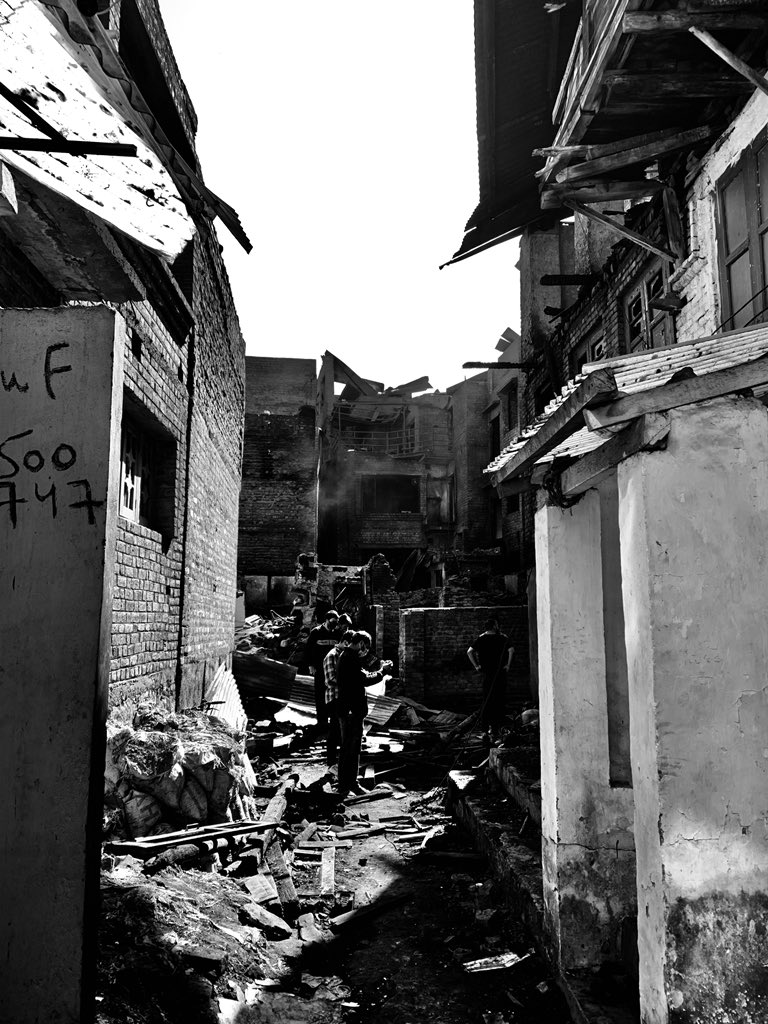
Kashmir's business epicentre Lal Chowk faces disconnect with the shoppers resulting in huge business losses since past few years. Traders demand restoration of public and commercial transport to revive business at the commercial hub of Valley.
Report: Abid Bashir
Camera and Edit: Bilal Tantry and @ada_bhat
Purity Amidst Violence
In Gaza, surrounded by fear, destruction, and uncertainty, there is still a little girl smiling with the innocence of a child.
She is the beloved daughter of Wafaa and me—a piece of my heart and one of the most precious things in my life.
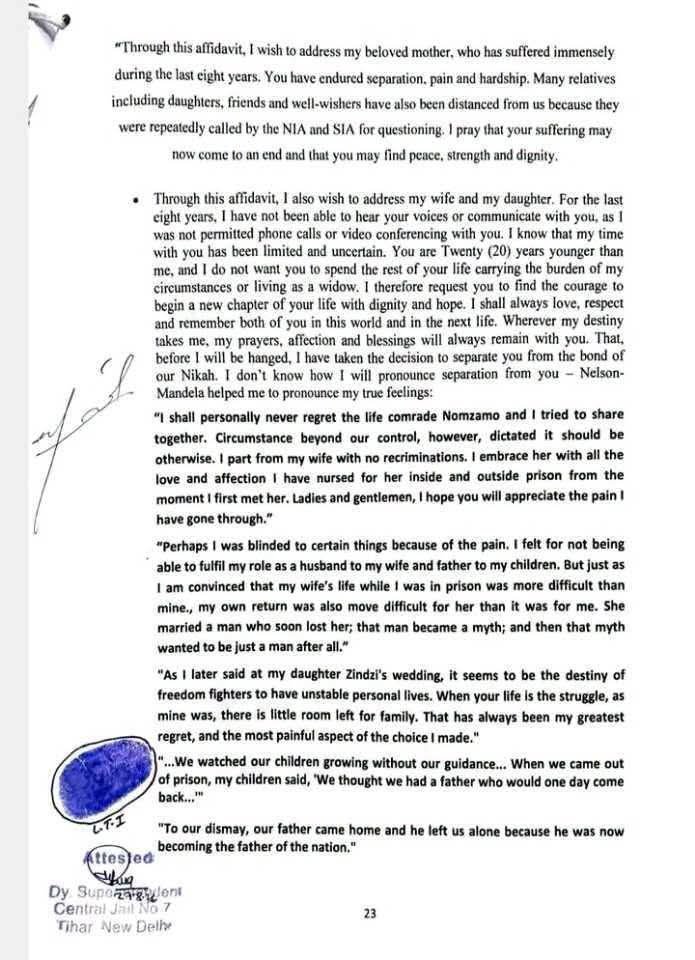
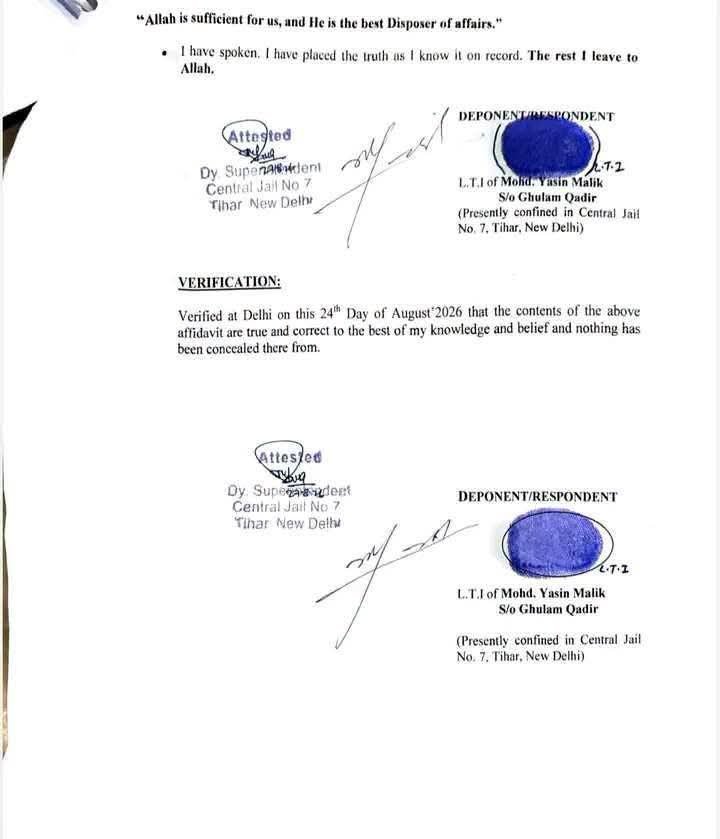
Hindu Pandit on Yasin Malik:
“In our hardest hour Modi didn’t show up. Not even a matchbox. Yasin Malik gave us food and medicine.”
Remember that when Godi media paints him as a villain. For millions of Kashmiris, he is still the face of a secular Kashmir.
#ReleaseYasinMalik
A tough decision for Grand Mufti here.
It is cloudy in J&K - moon Sighting unlikely.
If India doesn't declare tomorrow Eid, but Pakistan declares it at the last minute - What decision will the Grand Mufti take and based on what criteria?
JUST IN: Iran just hit Riyadh. Ballistic missiles. Explosions. Fires visible across the capital. Video footage confirmed by Al Jazeera, Reuters, and the Saudi Ministry of Defence.
The city that was supposed to be the safe haven just learned it is not outside the blast radius.
Twenty-four hours ago, Riyadh was absorbing capital flight from a damaged Dubai. Investors, families, and corporations watching 314 missiles and 1,672 drones hit the UAE were redirecting toward the Saudi capital where Vision 2030 giga-projects were rising untouched. NEOM. Diriyah Gate. The Red Sea project. The 2034 World Cup. A trillion dollars of committed infrastructure on soil that Iran had not yet struck.
That changed today. The IRGC claimed the Riyadh attack as retaliation for Israeli strikes on South Pars and Kharg Island, where 65 percent of Iran’s gas production is now offline. Shekarchi’s “burn to ashes” warning from this morning was not rhetoric. It was a schedule.
And here is what the market needs to understand about what happens next.
The Riyadh strike was contained. Saudi air defences engaged. Fires were localised. No major infrastructure collapse has been reported. The difference between Dubai, which has absorbed nineteen days of sustained bombardment, and Riyadh, which absorbed its first direct hit today, is not that Riyadh is invulnerable. It is that Riyadh demonstrated containment on the first test while Dubai demonstrated endurance under sustained assault. For capital allocation, the distinction matters: one city proved it can take a hit. The other proved it can survive a siege. The money is still flowing toward the city with the pipeline.
The Yanbu bypass remains operational. Ras Tanura at 550,000 barrels per day via the East-West pipeline that Iran cannot reach overland. Saudi Aramco’s oil continues loading on the Red Sea coast. The PIF’s $941 billion in assets under management continues deploying into tourism, entertainment, renewables, and logistics. The non-oil GDP target of 52 to 56 percent by 2030 is not being delayed by the strike. It is being accelerated by it, because every dollar of war-premium oil revenue that flows through Aramco while Brent sits above $111 is a dollar the PIF converts into non-oil infrastructure that will outlast the war.
Saudi Arabia is being hit and getting richer simultaneously. That is not a paradox. It is the architecture of a country that built the bypass, stockpiled the reserves, signed the Pakistan defence pact, and positioned every giga-project inland or on the Red Sea coast before the first missile was fired.
Iran hits Riyadh and proves Saudi resilience. Iran hits Dubai and proves Saudi advantage. Iran hits South Pars and proves Saudi bypass. Every Iranian escalation since February 28 has produced a Saudi strategic gain. The regime threatening to burn the Gulf to ashes is burning its own position faster than anyone else’s.
Meanwhile the permissioned strait runs on autopilot. Urea at $610. Corn acres falling. Soybean acres rising. The cattle herd at a 75-year low. The packaging supply chain under satellite threat. The farmer in Iowa does not know Riyadh was hit today. He knows nitrogen costs $610. And he is planting soybeans.
The missiles land. The fires burn. The capital flows. And the calendar keeps the only score that matters.
https://t.co/iFmUcarGdV