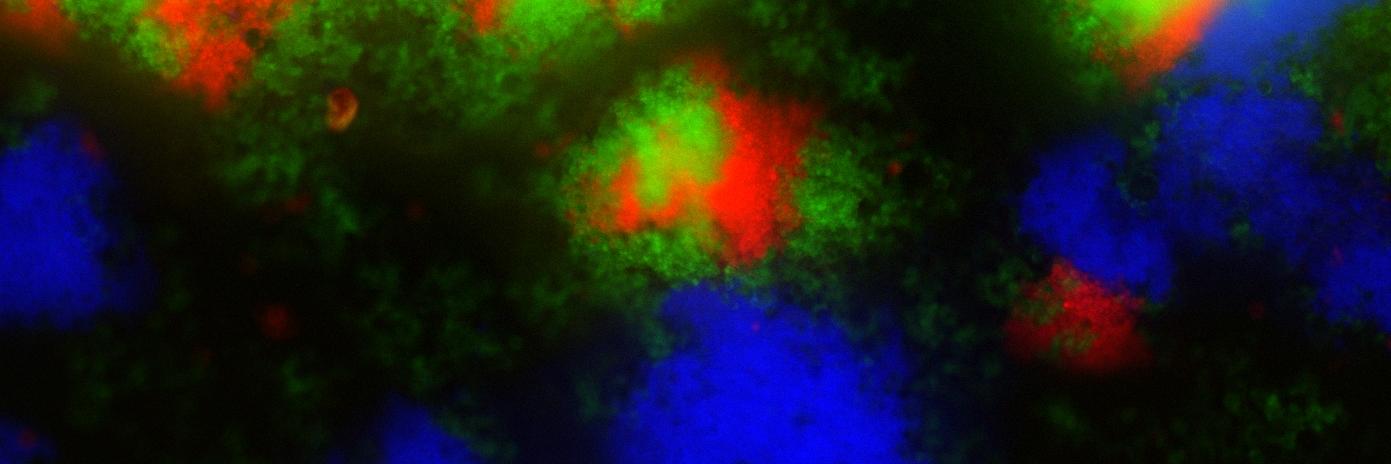
New preprint: When examining microbial interactions, a common challenge is that resource competition cannot be easily separated from the effect of beneficial/harmful compounds produced by partners. Vaishnavi has developed the PRISM assay to address this: https://t.co/0JSCKvSTfs
New manuscript: "Interplay of Spatial Structure and Interactions in Microbial Communities" is now published: https://t.co/xCqtAXeVwe
We share our thoughts on how interactions and spatial organization are intertwined in a spatial context. We hope this initiates more discussions.
BC Microbiome Symposium is happening on Friday, March 27 at Boston College. Trainee participation at all levels is encouraged, with opportunities for oral and poster presentations. To register for the event and submit an abstract (due on March 10), visit https://t.co/YpqdxoQpM7.
Feeding off spent battery waste, a novel bacterium signals a new method for self-sufficient battery recycling, via @EurekAlert! @BostonCollege https://t.co/X64fO1MG9w @Wanggroup_BC@MomeniLab Credit goes to Brooke Elander, Margaret Jiang, Mikayla Fahrenbruch, and Wei Li
Our collaborative work with Dunwei Wang's lab on sustainable Li-ion battery recycling using a modified biohydrometallurgy approach is now published. Shout out to Brooke Elander (Chemistry) and Mengyun (Margaret) Jiang for their dedication and excellence. https://t.co/lt1kDUIrJi
New preprint: Ethan, a talented undergraduate researcher in my lab, has used a consumer-resource model to explain how colonization resistance is affected by community richness and cross-feeding based on the availability and diversity of resources: https://t.co/Lat1NP9d1M
Now published in @SciReports: Work by Dr. Natalie Sandlin shows that diverse bacteria can degrade aflatoxins and that with starch as the primary carbon source, aflatoxin degradation is enhanced and the likelihood of finding good degraders increases. https://t.co/sdQLawZHyr
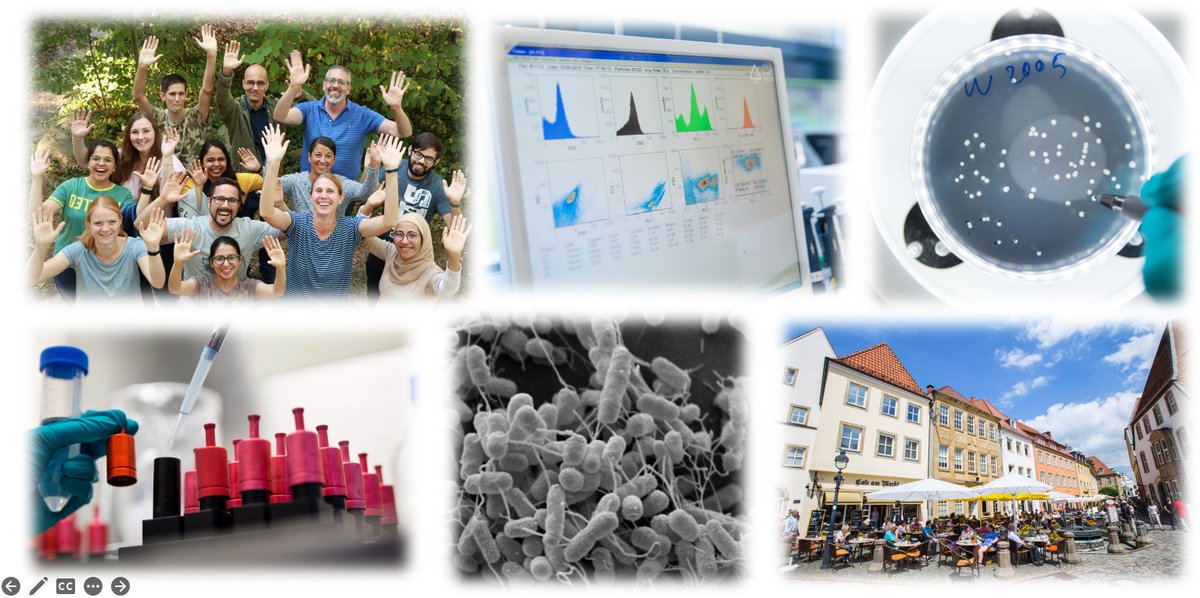
A fully funded (3 year) PhD position is available in my group. The project will focus on analysing how synergistically interacting bacteria coevolve.
Join my vibrant group at @UniOsnabrueck.
Please RT
Deadline: 28.07.2024
More information👇
https://t.co/gdMbN1ItJi
Now published in @PLOSCompBiol: "Revisiting the invasion paradox: Resistance-richness relationship is driven by augmentation and displacement trends". Credit goes to Yu, a talented undergraduate student in the lab (at the time).
https://t.co/kQgHVZorwm
Excited to announce that I have recently joined the Department of Microbiology and Immunology @TheDohertyInst and I am recruiting!
Seeking a highly motivated post-doc interested in bacteriology and host-pathogen interactions. Details https://t.co/K7HawVebEB. Please RT
Our collaborative work on mechanistic examination of spike-receptor binding is now published. We predict protein-protein binding using first-principles modeling and validate the predictions experimentally. https://t.co/YY4av6gtwD
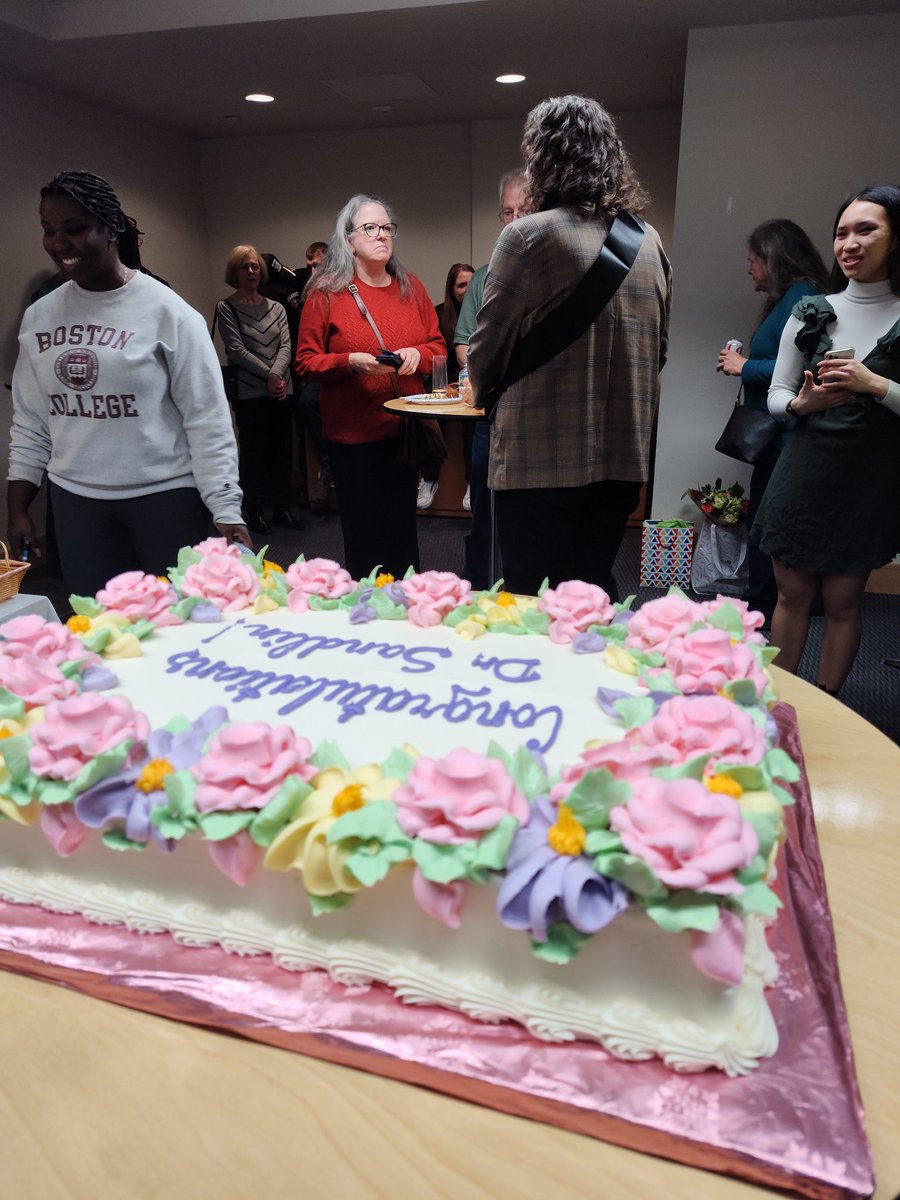
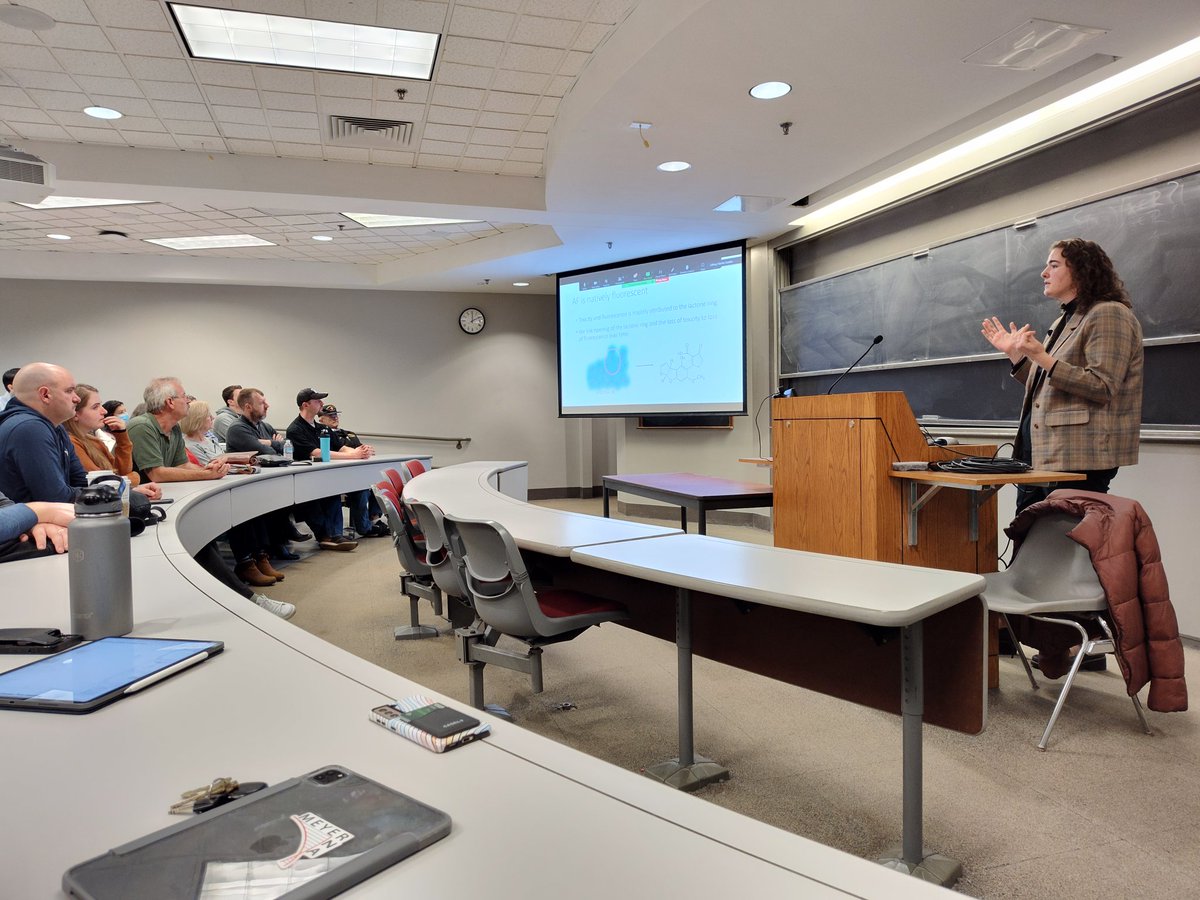
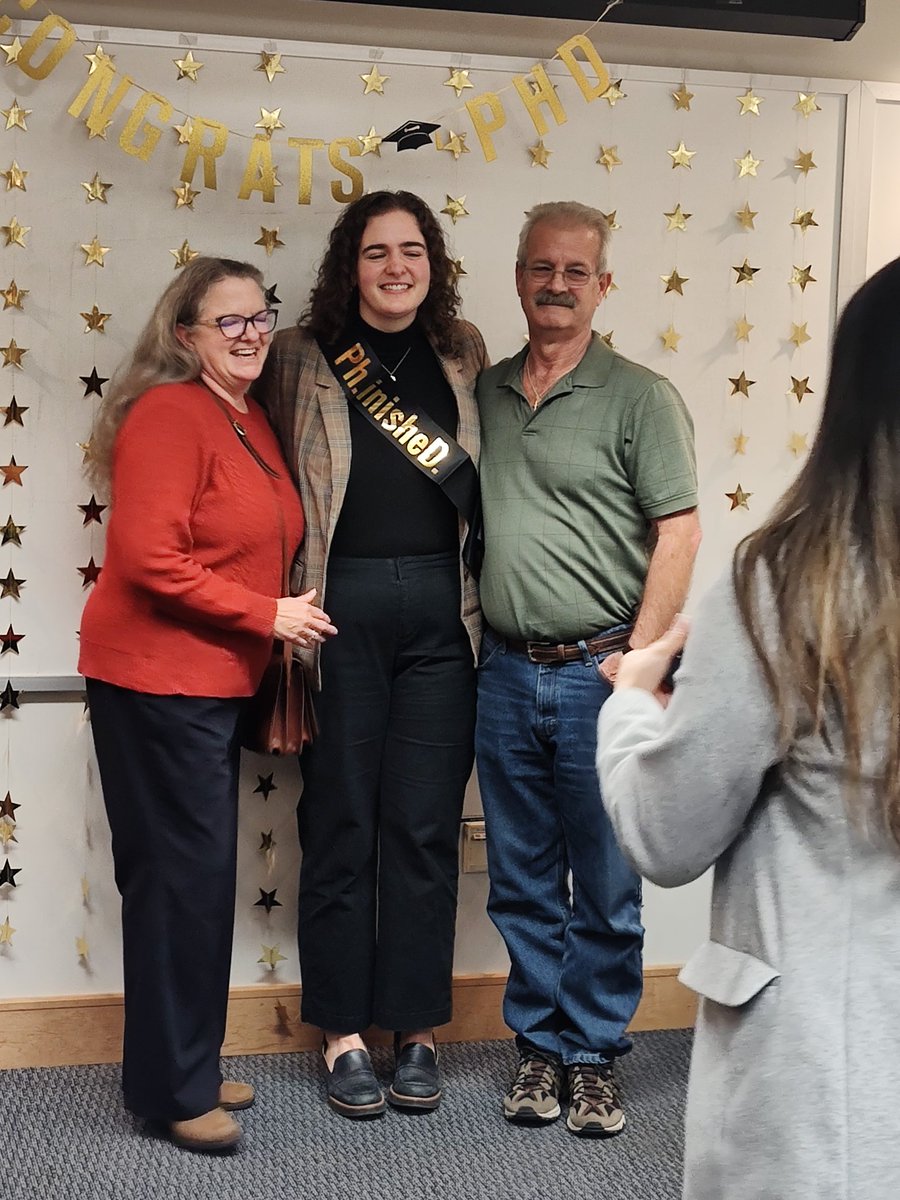
Congratulations to Natalie Sandlin @natlynambrose for successfully defending her PhD dissertation yesterday. Really proud of her. She has been a role model, for her kindness and care for all lab members and the dedication and resilience in her research. #PhD#PhDone#DrSandlin
New preprint alert: Yu Zhu, a talented undergraduate student in our lab (at the time), re-examined the invasion paradox and found that simple trends for augmentation and displacement can explain the non-monotonic relationship between invasion and richness: https://t.co/DAajT9xew6
This beautiful pre-print is a one-man show by @oliMeacock but has already become central to the way we are thinking about interactions in the lab. His new framework that can help predict how interactions between species change over time and space!
New preprint: "Weakly alkaline conditions degrade aflatoxins through lactone ring opening": https://t.co/4lCyQKyGyV. Important for applications: it offers a not-so-harsh path to decontamination. Important for research: often other detox mechanisms are confounded by pH effects.
New preprint alert (by the amazing @natlynambrose)! Searching for bacteria that degrade aflatoxins (AFs), Natalie found that 1) AF degradation is phylogenetically diverse and 2) using starch as C source improves the performance and screening efficiency. https://t.co/1aoTmYXDj1.
I'd like to encourage those broadly interested in microbial ecology & evolution to participate (present a talk/poster or attend invited/contributed talks). The format is intended to be accessible: everyone is welcome in-person or virtually free of charge: https://t.co/JdScmSOJ83
Special invitation to those in Boston and the surrounding area. Our local hub at Boston College welcomes you! We look forward to a lively gathering. Please feel free to spread the word to your colleagues/friends/mentors/mentees who might be interested: https://t.co/pLDJojyczU
Please share: 3 microbiology faculty positions at Texas State University in the general areas of: 1) Microbial Functional Genomics, 2) Microbial Ecology, and 3) Molecular Microbiology. https://t.co/hOAmXEks9n