My 3 non-negotiable rules for picking affiliate offers:
Solves a real pain with high repeat usage
Fast payouts and transparent terms
Built-in free trial (friction kills conversions)
One-off bounties pay the bills. Recurring commissions build wealth.
A keyword-research prompt I use on every new site:
"I have a website: [URL].
What exact category does this product belong to?
What queries do buyers use to find it?
Which keywords can I rank for right now?
Which head terms am I too weak for today, but need to own later?"
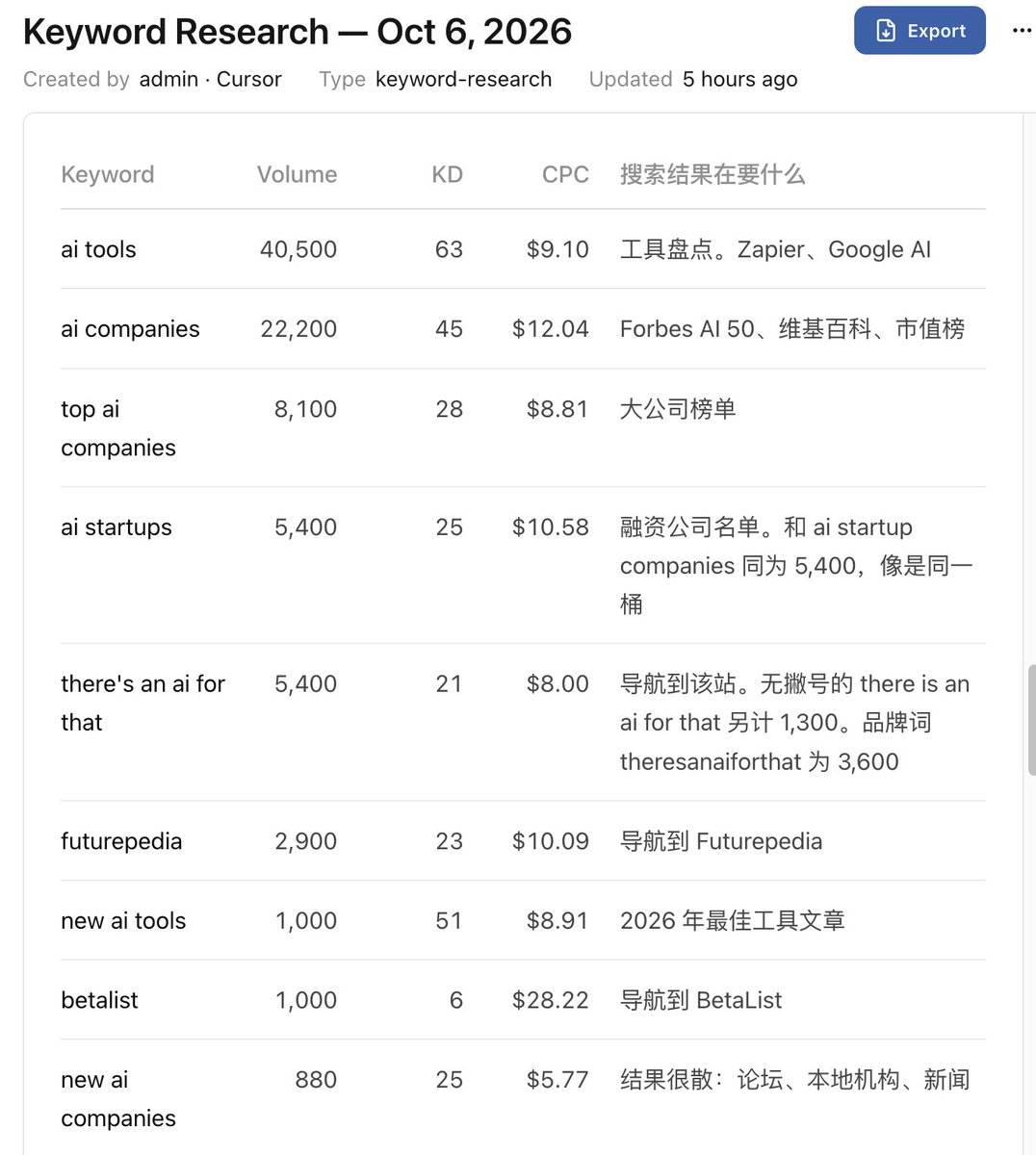
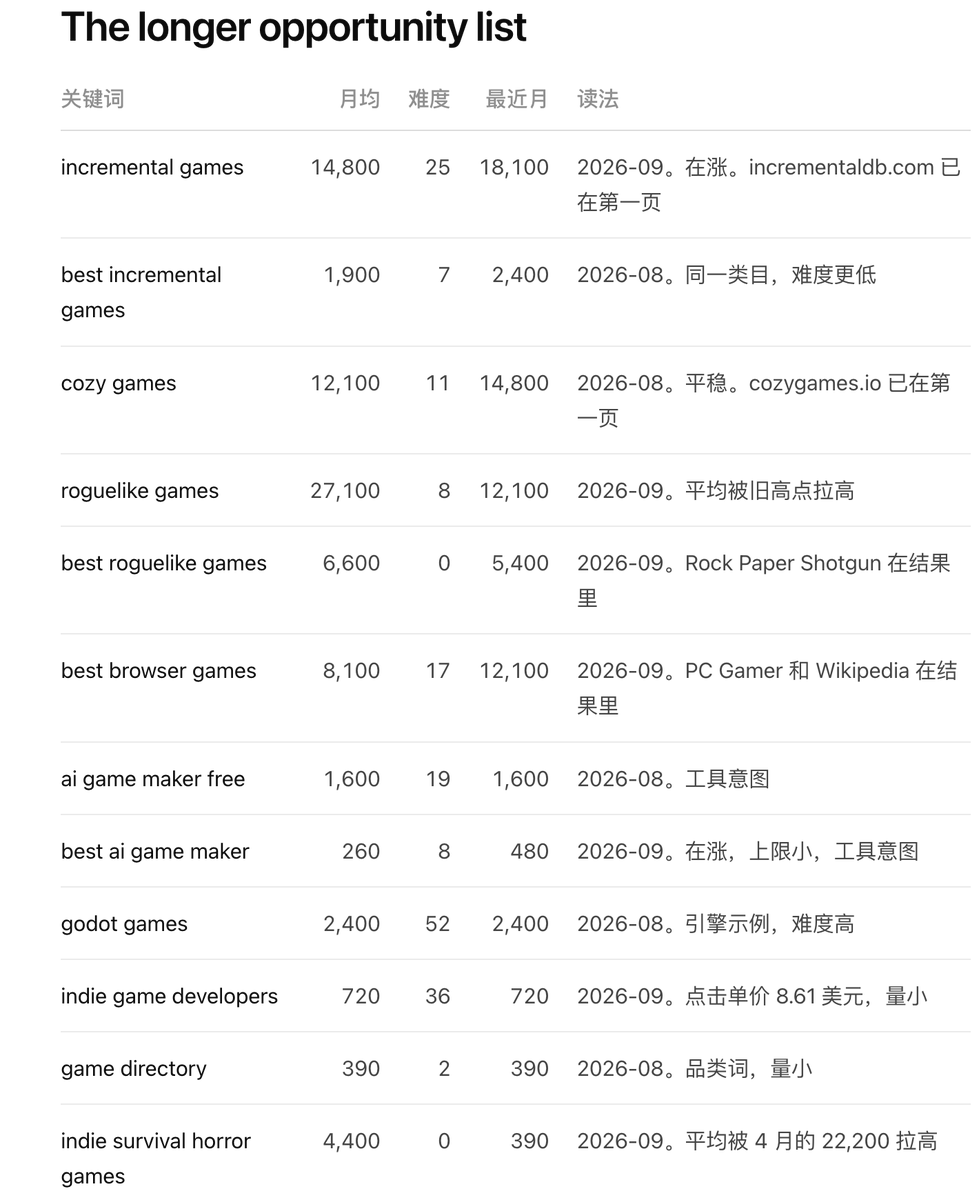
What "finding a market gap" actually looks like in my workflow:
Pull raw keywords in OpenSEO
Use Gemini (Argon) to filter which ones fit my domain's authority
Format the output table in Gemini
Hand the spec directly to my coding agent to build out the site structure
Bing just quietly dropped a goldmine feature: surfacing rising / potential keywords directly in Webmaster Tools.
Check this daily and you're basically looking at real-time market demand before everyone else.
How I optimize pages to get cited by AI models. I'll say this once:
Load your articles with hard data—including your own original numbers
Keep a 7:3 citation ratio (70% from high-authority external sources)
Wire Firecrawl API into your content pipeline to pull fresh, primary sources
Why GEO (AI search optimization) isn't optional anymore:
• Lead-gen traffic from ChatGPT converts at 8x traditional Google search • Google AI Overviews now appear by default in ~57% of global queries
The new SEO game isn't 10 blue links. It's becoming the #1 source the LLM cites.
Launching a new project: SEO first or social first?
I'll say this once: a brand-new, SEO-only site with zero social buzz will struggle hard this year.
Google doesn't just rank good content anymore—it heavily weighs off-site brand signals. A fresh domain with zero chatter around it sits in the sandbox forever.
First 24 hours.
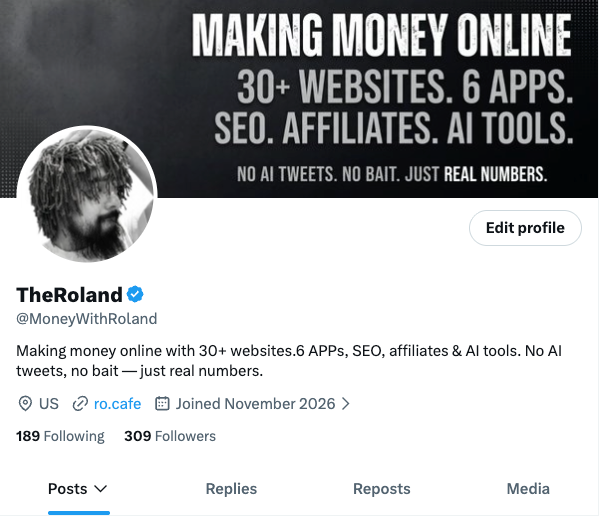
309 followers.
I want to connect with people all over the world.
Ukrainian or Russian, Christian or atheist, geek or school dropout supporting a family —
I wanna get to know you better.
#CONNECT
Demand research → buy domain → scrape data → build site → deploy.
Total time: ~8 hours.
Total keyword research cost on DataForSEO: $0.30.
Now I hand the SEO over to Grok bot and move on.
try DataforSEO:https://t.co/OtpfTcGLKN
Even Caltech and UC Berkeley professors are giving up.
They’ve stopped grading math homework for accuracy because AI now outperforms most undergrads.
Think about the business model here: Students take on $200k+ in debt so AI can do their homework while professors stop grading it.
How much longer until the college tuition bubble pops?
Underrated advantage of running a portfolio of sites:
Two of my newer sites have zero external outreach backlinks. Just clean links from my own network—and both already hit DR 13.
From there, a handful of high-DR links pushes them to DR 40+ fast.
How I manage ~20 sites without burning out: I check one open-source dashboard I built, once a day.
My kill rule is ruthless:
At Day 90—after basic backlinks and internal traffic—if GSC impressions are still flat or only pulling junk clicks with zero commercial intent, I shut it down and let the domain expire.
I run nearly 20 sites at once. Here is how I allocate my time:
Flagship sites (2–3): 60% of my focus. Deep long-tail SEO, high-ticket affiliates or my own products, and manual cold outreach for backlinks. That outreach landed us guest posts on top industry domains.
Fast test sites (~10): OpenSEO + Gemini to ship content fast, then I just watch GSC.
Authority / tool sites (the rest): Used for clean, one-way internal linking based on relevance.
Never build lazy link rings.
The sizing math I run before building any site:
Ad-supported content sites: • Need 30k+ monthly searches just to be viable • RPMs sit around $10–$30 • Making $2k/mo takes 70k–200k monthly visits—so your keyword pool needs to be massive.
Affiliate sites: • 5k–20k monthly searches on buyer-intent terms ($2+ CPC) can carry a standalone site • A single visitor can be worth $5 to $50+
Own SaaS / digital product: • One head term with 1k–10k monthly searches is enough. Lower volume, maximum intent.
A dead-simple SEO playbook that prints high-intent traffic and orders for tool sites. Feed this straight to your agent:
Go to Ahrefs and pull keywords with >100 monthly volume and <30 KD:
• [Competitor] alternative• [Competitor A] vs [Competitor B]• [Competitor] pricing
Pro tip: new sites can hijack "A vs B" searches and insert themselves as the obvious 3rd option.
Structure the page to convert:
• Put a direct comparison table above the fold—zero fluff • Admit where the market leader wins (builds instant trust), then attack their pricing and bloat • Add real product screenshots (EEAT) • Close with a friction-free CTA: "1-click import" or "Upload your competitor invoice for 1 month free"
One of my sites dropped from 320,000 indexed pages to 7.
After talking with @loki_yan_seo, I slashed the sitemap from 500+ pages down to 11 core pages.
Cutting from 10k to 500 did nothing across two Google updates. When Google stops trusting your site, keep cutting until only the signal remains.
Sitemap rules I learned the hard way:
I once dumped 300,000+ URLs into a single sitemap. Google penalized the site—and 6 months later, it still hasn't fully recovered.
Only put your best pages in the sitemap.
Three technical rules I never skip now:• Only update <lastmod> when content actually changes • Split large sites into sub-sitemaps + one index file • Hardcode hreflang directly in the sitemap for multilingual sites
Stop obsessing over total indexed pages in GSC.
Compare "Submitted" vs. "Indexed." The only metric that really matters is "Submitted but not indexed."
How I use YouTube to drag page-two keywords onto Google's top 5:
Find head terms in GSC with real impressions stuck at positions 15–30.
Use Hyperframes + an agent to turn the article into a dense explainer video. Rule #1: state the answer in the first 5 seconds.
Cross-embed both ways:
• Match the YouTube title to the exact target keyword • Drop the article link in the top 2 lines of the description + pinned comment • Embed the video right back into your blog post
Two things happen fast:
Your video grabs the Google Video carousel spot
Dwell time on your page spikes from the embed
Within 2 weeks, pages stuck at #15–30 often jump into the top 5. Text-only SEO is dead; Google wants multimedia.
The easiest way to push a Google ranking up. I'll say this once:
Start a YouTube channel. Drop your URL in the Community tab and video descriptions.
Use Hyperframes + an agent to crawl your site and auto-generate feature walkthroughs. Free authority.