This is how Peter Lynch selects stocks.
No complex models.
No fancy indicators.
Just a simple framework that helped him turn the Magellan Fund into one of the greatest investing records of all time.
He manages 6,000+ crores of money. He has spent nearly three decades in the Indian markets.
He has seen cycles. He has seen bubbles. He has seen crashes.
And after all these years, his biggest lesson is still very simple:
History may not repeat, but it definitely rhymes.
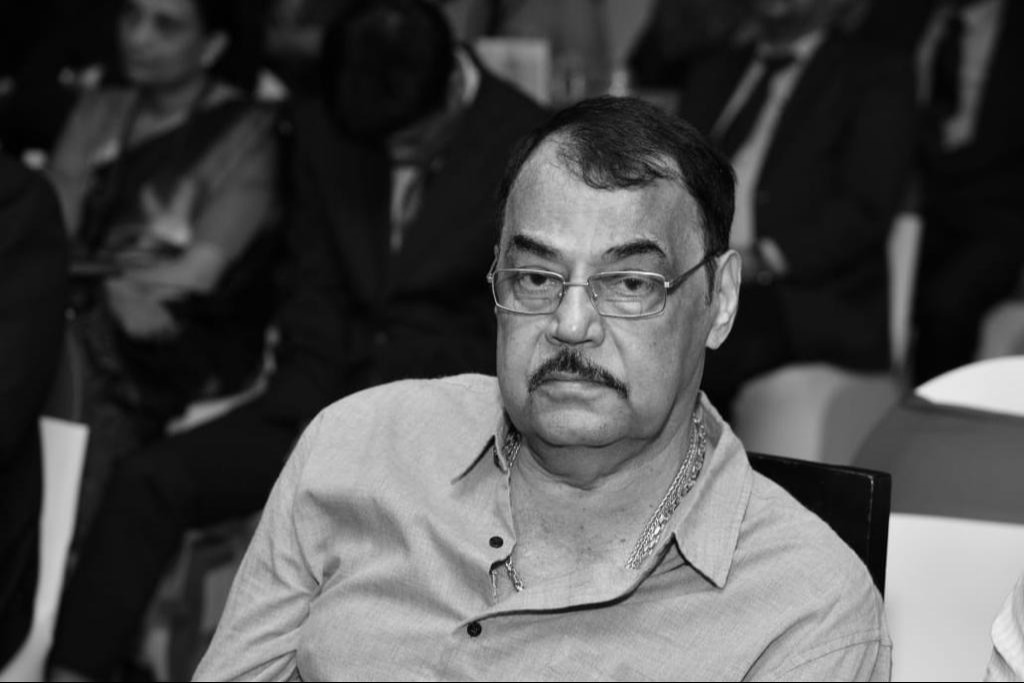
He’s none other than Kuntal Shah, founding partner at Oaklane Capital Management, and one of India’s most respected voices in public markets.
In a world where most investors are chasing the next hot theme, he reminds us that investing is not just numbers, DCFs, ratios, or models.
It is also behaviour.
Greed. Fear. Biases. Stupidity. Conviction. Temperament.
That is what really moves markets.
When everyone is trying to sound intelligent by being bearish, he says something very powerful:
“Optimists make money.”
But his optimism is not blind.
It comes from studying history, understanding cycles, respecting risk, and knowing that India’s long-term opportunity is still intact.
He has a very sharp view on family offices, too.
According to him, many portfolios today don’t look like curated museums.
They look like junk warehouses.
Too many products. Too many managers. Too much diversification. Too little clarity.
His advice is brutally simple:
Know yourself first. Know what not to do.
Do not blindly chase every fashionable asset class.
What makes Kuntal Shah inspiring is not just his market knowledge.
It is his honesty. He openly admits his mistakes.
Premature selling. Acts of omission. Going too deep in some areas while missing the broader picture.
That kind of self-awareness is rare.
Because in investing, ego can be very expensive.
If there has to be someone who reminds investors that wealth creation is not about noise, products, or prediction, but about history, temperament, patience, and humility, it has to be him :)
10 financial rules that change how you think about money:
1. RULE OF 72
Divide 72 by your return rate = years to double your money.
At 8%: 9 years. At 12%: 6 years.
2. THE 4% RULE
Withdraw 4% of your portfolio per year in retirement.
It historically lasts 30+ years.
3. THE 50/30/20 RULE
50% needs. 30% wants. 20% savings.
The simplest budget ever built.
4. THE 100 MINUS AGE RULE
Subtract your age from 100 = your stock allocation.
Age 30: 70% stocks. Age 60: 40% stocks.
5. THE 10X RULE
Your retirement pot should be 10x your annual salary.
At 60. Not 70.
6. THE 3X EMERGENCY RULE
3–6 months of expenses in cash.
Always. Non-negotiable.
7. THE 1% HOUSING RULE
Budget 1% of your home’s value per year for maintenance.
$500k home = $5,000/year reserved.
8. THE 28% MORTGAGE RULE
Never spend more than 28% of gross income on housing.
The bank will let you borrow more.
Don’t.
9. THE RULE OF 1000
To generate $1,000/month in passive income at 4% yield
you need $300,000 invested.
10. PAY YOURSELF FIRST
Save before you spend.
Not what’s left over.
First. Always first.
Save this. Share it with someone who needs it.
What Happens to Your Body When You Quit Sugar for 14 Days?
These 9 astounding changes might shock you.
You May Never Eat SUGAR Again After Seeing This:
1/ Your puffy face and midsection will shrink
It's been a year since my dad passed away. On this occasion, my mom, @nikhilkamathcio, Seema, and all of us at @zerodha are proud to help set up the upcoming IISc Medical School/Bagchi-Parthasarathy Hospital in his memory.
What is critical for the success of a startup - founders' skills or the macros?
I think it's a bit of both. You could be a great founder with excellent execution skills but still struggle in an unfavorable macro environment. Or, you could be an average founder benefiting from the economic momentum of your country and sector.
Every time I think about this, I realize how fortunate we have been in terms of macros, both as a country and through government initiatives. We've benefited from everything that the Government has done—starting with Aadhaar, increasing mobile penetration, Startup India initiatives, and the overall supportive startup ecosystem.
The problem with the Indian stock market is that for the past 3 years,it was like Rajesh Khanna between '70 & '73: back to back, 14 super hits. Uncontested.
Then came a UP ka bhaiya, a classical 4 AM bet: & " Namak Haraam" suddenly made it a 2 horse race.
That bhaiya is China