Functional Neurological Disorder is still too often labelled as “medically unexplained”. That’s outdated. Here are 5 reasons why #FND shouldn’t be grouped under #MUS 👇
A new addition to the BMJ Rapid Recommendations series recommends against spine injections for chronic back pain.
“This will not be the last word, but it adds to a growing sense that chronic pain management needs a major rethink," says this Editorial https://t.co/ZbtEqZUvcO
BPS,@FacultyPainMed, @PhysioPainAssoc , @PatientBps & @Pain_UK have united to publish key messages on the burden of chronic pain in the UK & aiming for consensus and consistency over the facts and figures used. Read the UK Pain Messages 2024: https://t.co/Ll10hnfenO
@orthodontella@minagelina1 @HazelAppleyard_ You’re making some hefty assumptions here, orthodontella.
Any parent of any child could post about struggles with managing behaviour, doesn’t mean that’s the whole picture.
.@adiemusfree on CBT vs ACT:
“[ACT] moves us away from working hard to avoid things we don’t like, and towards things that are rewarding to us. The influence of moving in the direction of things we want has a different flavour from avoiding things we don’t want.”
Boy, does it!
We’re currently advertising a band 8a psychologist or CBT therapist post, .4 or .5 WTE, on the gloriously sunny East Sussex coast.
It’s a varied post with a splendid pain MDT, & great support from a wider Clin Health dept.
@SPFT_NHS@SMSKPE_PainTeam@smskpe@PPT_SPFT
📢Out today in @Lancet: major @msk_health led trial finds #opioids NOT effective for people with acute back and/or neck pain.
This is the largest placebo controlled trial of its kind.
https://t.co/F78sOPf4OW
#OPALtrial#backpain#neckpain
All Wales resources for pharmacological management of pain available now.
👉analgesic stewardship guidance document
👉advice on the pharmacological management of pain
These update and replace the previous ‘Persistent Pain Resources’.
https://t.co/qG398ZGeYL
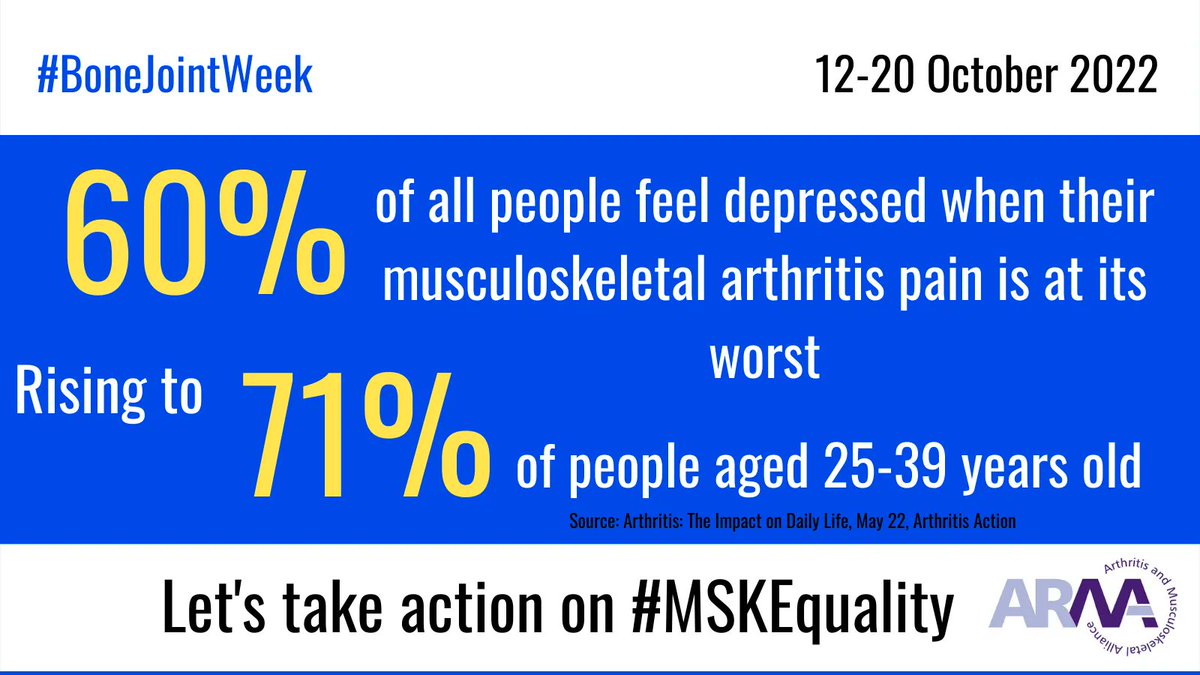
60% of all people say they feel depressed when their musculoskeletal arthritis pain is at its worst, rising to 71% of people aged 25-39.
Every musculoskeletal health pathway should include mental health too.
https://t.co/Y5Pm6rH4To
#BoneJointWeek#MSKEquality