If only Applied Optoelectronics ($AAOI) and Sivers ($SIVE) generated earnings as fast as they issue shares: AAOI’s share count has nearly tripled in the past 5 years, while Sivers’ has doubled. The fastest-growing product line appears to be the float.
High demand for semiconductor production consumables can coexist with lower chip prices and margins. Look at FUSO’s ($4368.T) numbers in 2013-2018, when wafer output was particularly strong, while memory prices round-tripped. Chipmakers now have a lot more cash to burn.
Historically semiconductor multiples come down as margins peak.
Because higher the margins the closer market thinks we are to the peak capex.
It played out same this year.
Multiples compressed before capex estimates are revised downward.
Market was again ahead of the Street.
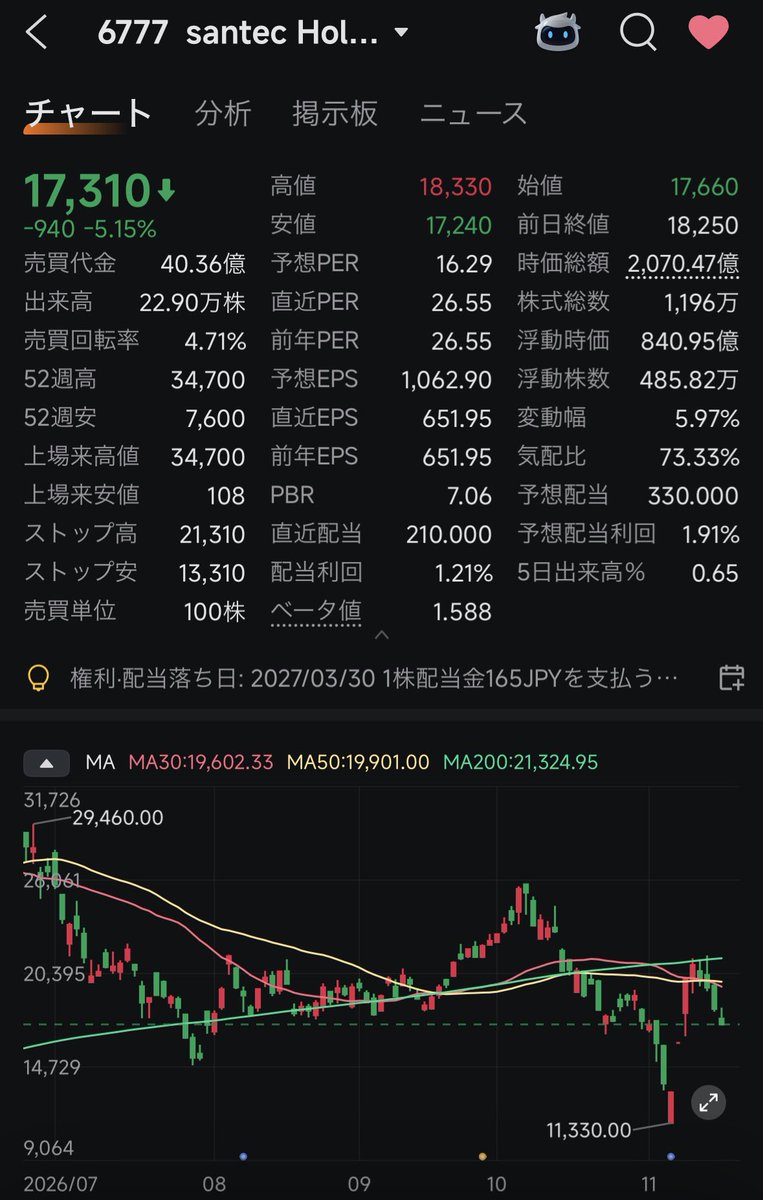
$6777.T I agree that investors are selling Santec along with other AI-related stocks. But you need to acknowledge that, on the way up, management delivered beyond expectations. How many small caps have track records like this? Operating income hasn't declined since 2013.
@Portfoliodiary Potentially lower data center network spending and therefore less demand for optical R&D and testing. This is a knee-jerk conclusion ofc. I would wait for dust to settle before reassessing the situation. The majority of fintwit has no convictions and switches opinions weekly.
@toptickcrypto NVIDIA might lose market share and limit financial backstops for marginal compute buyers of its chips. Core hyperscaler demand and semi production remain resilient throughout. Doesn't seem like a crazy scenario to me.
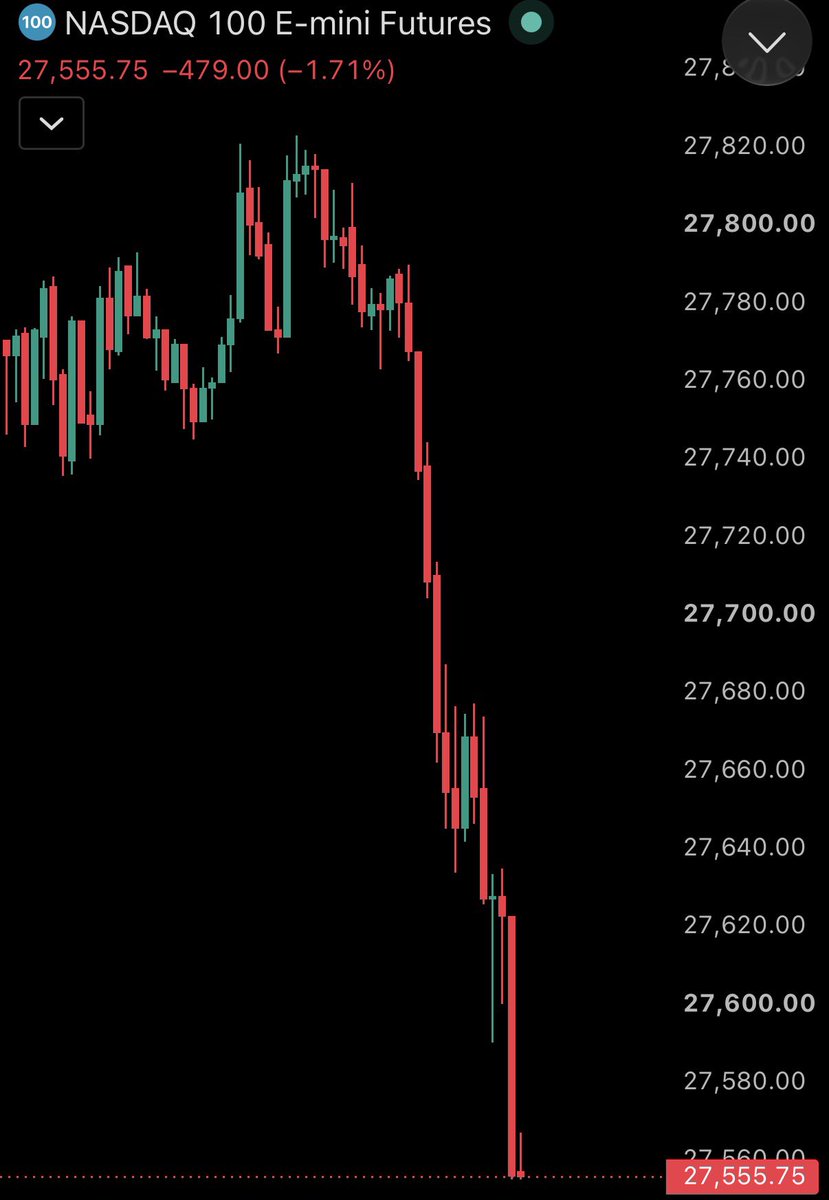
BREAKING: Nasdaq 100 futures extend losses to -1.7% in premarket trading as Nvidia, $NVDA, falls more than -5%.
Nvidia has now erased nearly -$2 trillion in market cap since its peak on October 6th.
One of FUSO's key clients, Fujimi ($5384.T), is almost at full capacity, and its capital intensity is about to explode. This production ramp will be like no other. The end of it will be just as unprecedented.
$4368.T FUSO's results briefing only reinforces the thesis: production is ramping ahead of schedule, price hikes are setting in, and clients are boosting forecasts. TSMC is pushing to accelerate development of silica abrasives beyond A14. I have nothing to complain about.
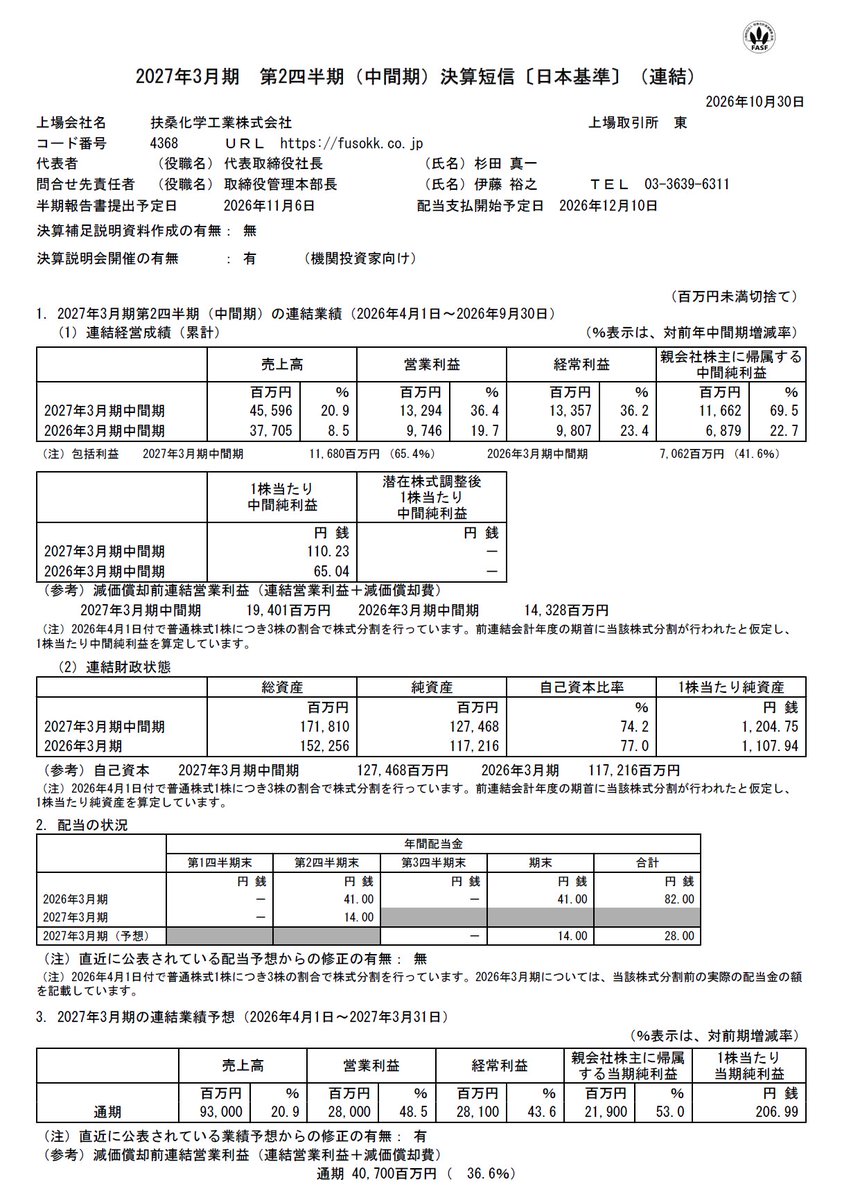
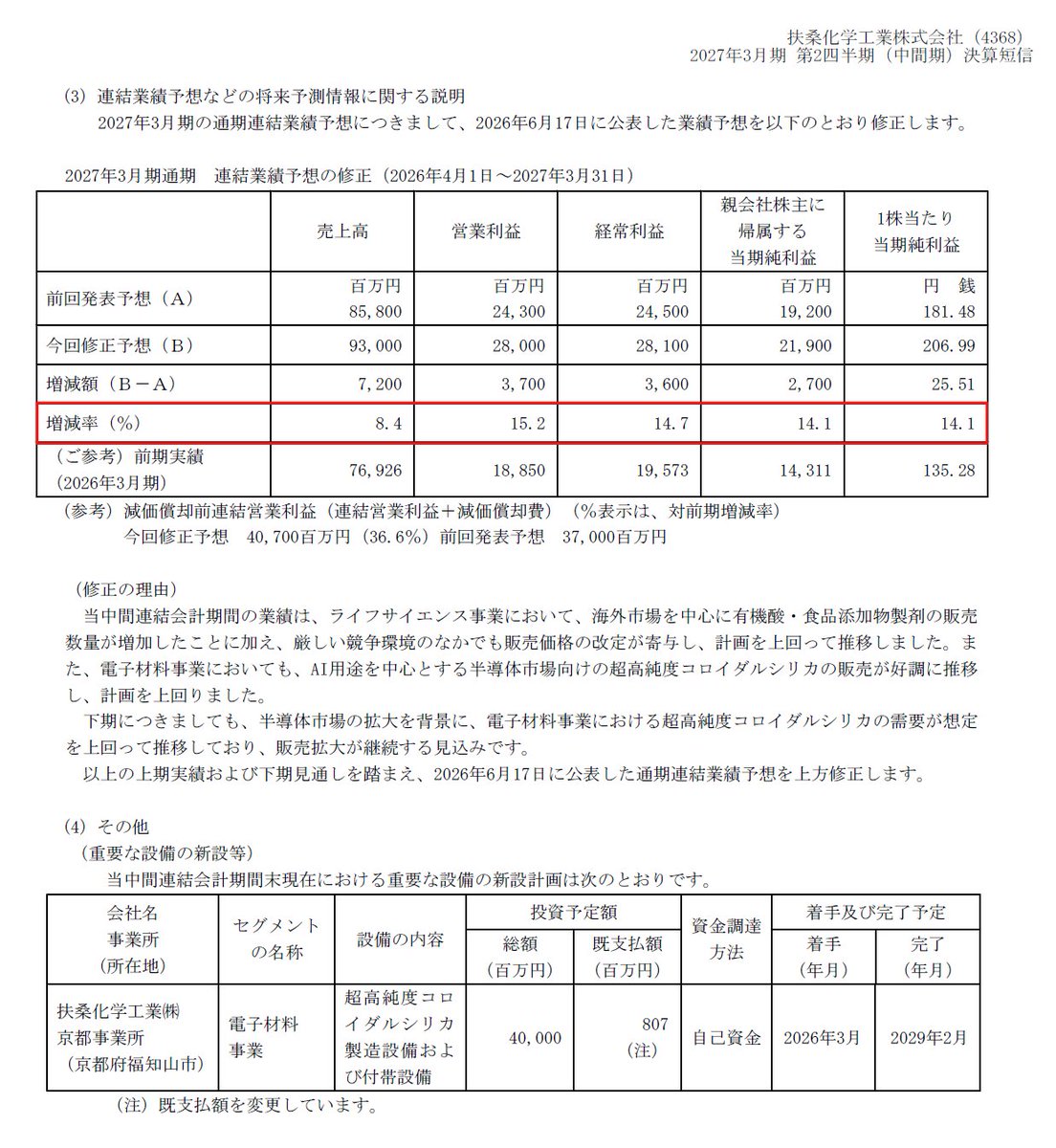
The world is ending, but FUSO Chemical ($4368.T) keeps printing. Last quarter, revenue rose 20%, and operating profit surged 41% YoY, driven by strong silica demand, price revisions, a weak JPY, and fixed-cost leverage. Remarkably, the electronic materials business generated an incremental OP margin of 70%, despite higher depreciation charges on new silica facilities and a small QoQ sales decline. Management again raised revenue and profit guidance for this year, citing resilient demand for semi materials.
I don’t think this gravy train will stop until TSMC factories go dark. FUSO supplies leading-edge CMP process consumables, which grow with wafer output and new CMP applications. FUSO is the largest position in my portfolio. The company trades at ~15 P/E, despite 20%+ earnings growth and high incremental ROIC. I see about 50-60% upside today.
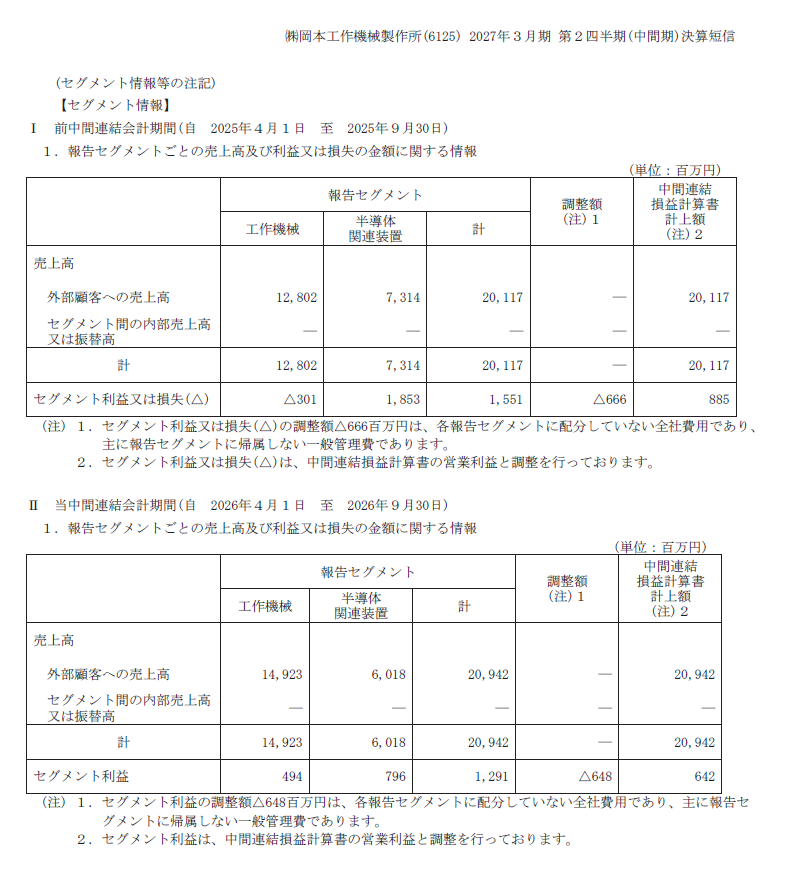
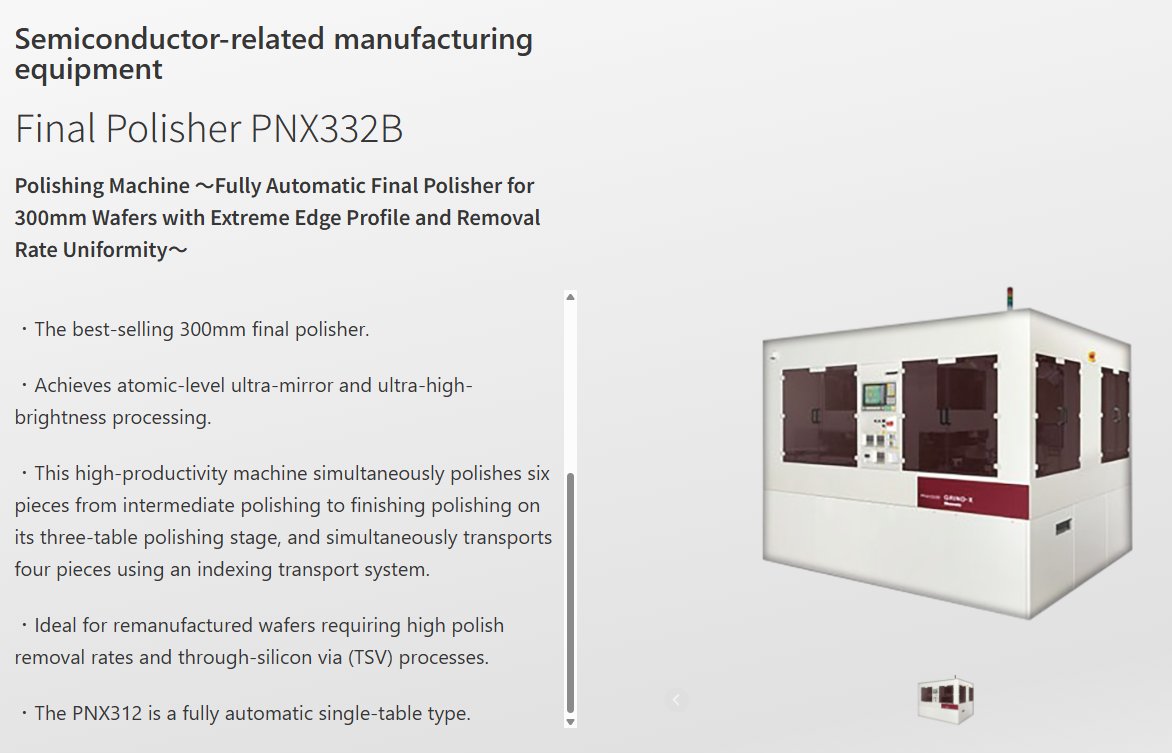
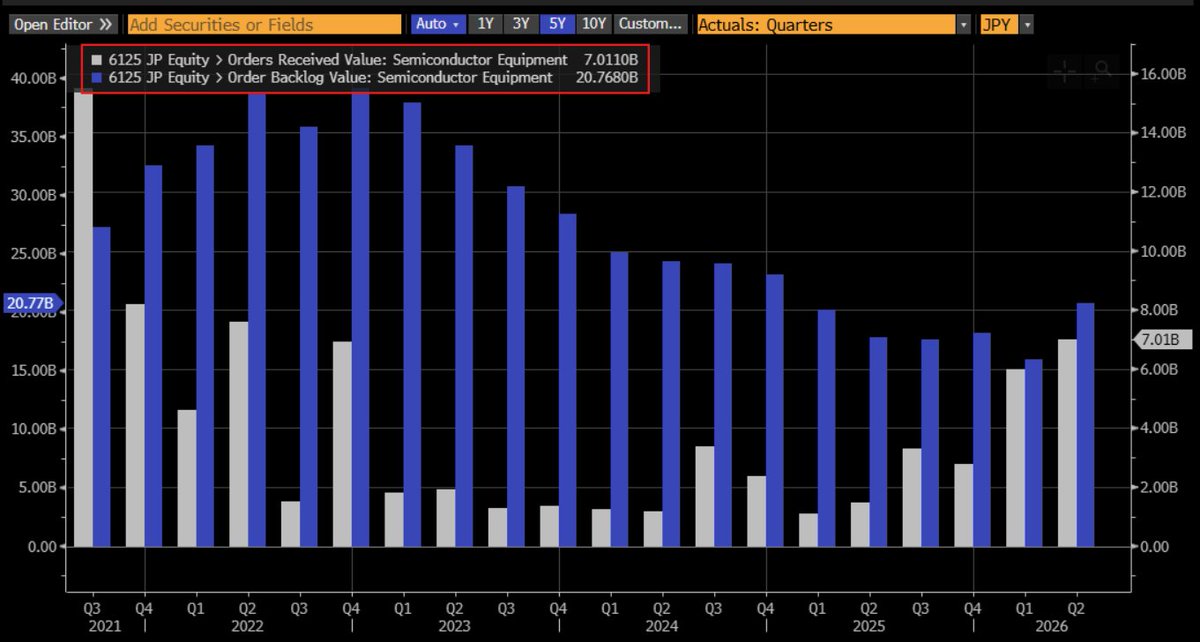
$6125.T Okamoto Machine Tool Works is getting there. Q2 numbers look good: revenue up 12% and operating profit up 38%. The machine tool business is leading the recovery, with operating profit surging 228%. The semiconductor equipment business should start printing from Q3, as it works through the latest orders for wafer grinders and polishers. Leading indicators are moving in the right direction: the semi orders rose 97% YoY, book-to-bill was 1.7, and backlog expanded 13% QoQ. At the same time, wafer producers are reporting tight capacity for 300mm products and are considering production line upgrades with higher wafer prices.
Okamoto shows clear signs of recovery and remains cheap. I will maintain my current position.
The bottom is likely in for Okamoto Machine Tool Works ($6125.T). Capital spending on 300mm wafer manufacturing has already turned a corner: Okamoto posted a 370% YoY jump in wafer polisher orders last quarter, as SUMCO, Shin-Etsu, and GlobalWafers reported tight 300mm wafer capacity and planned production line upgrades. The company’s grinders for packaging applications have also stirred up interest, thanks to Mitsui’s commercial push in Taiwan.
I expect these two product families (wafer polishers and grinders) to power a strong earnings recovery starting this year. With demand stabilizing, the machine tool business should no longer depress margins after hitting its lowest profitability in 15 years. I believe Okamoto’s current valuation offers at least 50% upside. I bought a few thousand shares today.
@apb6wQH6Sn8tdXJ Management said Q1 numbers included some pulled-forward orders and guided toward normalization. Quarter-to-quarter fluctuations in order flow are to be expected. The order backlog, though, should stay large.
$255A.T All right, I must be missing the plot with GLTechno because my position is down 30%, while management is delivering. Last quarter, sales rose 15% and operating profit increased 21%, led by the semiconductor business running at full capacity.
Importantly, the semi's book-to-bill was 1.3, and order backlog expanded 240% YoY and 16% QoQ. The inventory increase was almost entirely raw materials and work-in-progress, consistent with a production ramp-up. The new quartz components factory in Vietnam is almost ready and scheduled to launch in January 2027.
So, the numbers are good, the outlook is positive, and management is adding capacity to capture booming semi demand, and yet the valuation is in the dumpster. What’s the catch? My best guess is that investors doubt (1) the sustainability of semiconductor demand and (2) they heavily discount the capital intensity of the company’s operations.
On the first point, I think the market is too pessimistic: 80% of GLTechno’s semi products are consumable quartz components in deposition and etching machines, which must be continuously replaced as fab utilization rates increase. Wafer output is rising across the board, and I think the risks of a near-term slowdown are low. The company's key clients - Applied Materials, Tokyo Electron, and Kokusai Electric - provide an unusually bullish forecast.
On the second point, I believe investor concerns are somewhat justified, and I underestimated the company's capital intensity. Working capital runs at ~50% of revenue because GLTechno depends critically on a US supplier of quartz ingots and must stock up on inventory to avoid production disruptions. In addition, quartz machining and processing is relatively slow, limiting returns on capital. Still, with operating margins at 20-22%, the semi business should generate a return on capital close to 15%.
Putting it all together, I'm keeping my shares, despite disappointing returns so far. The semiconductor business will likely make lower returns than I previously assumed, but GLTechno's current valuation discounts an unduly pessimistic scenario.
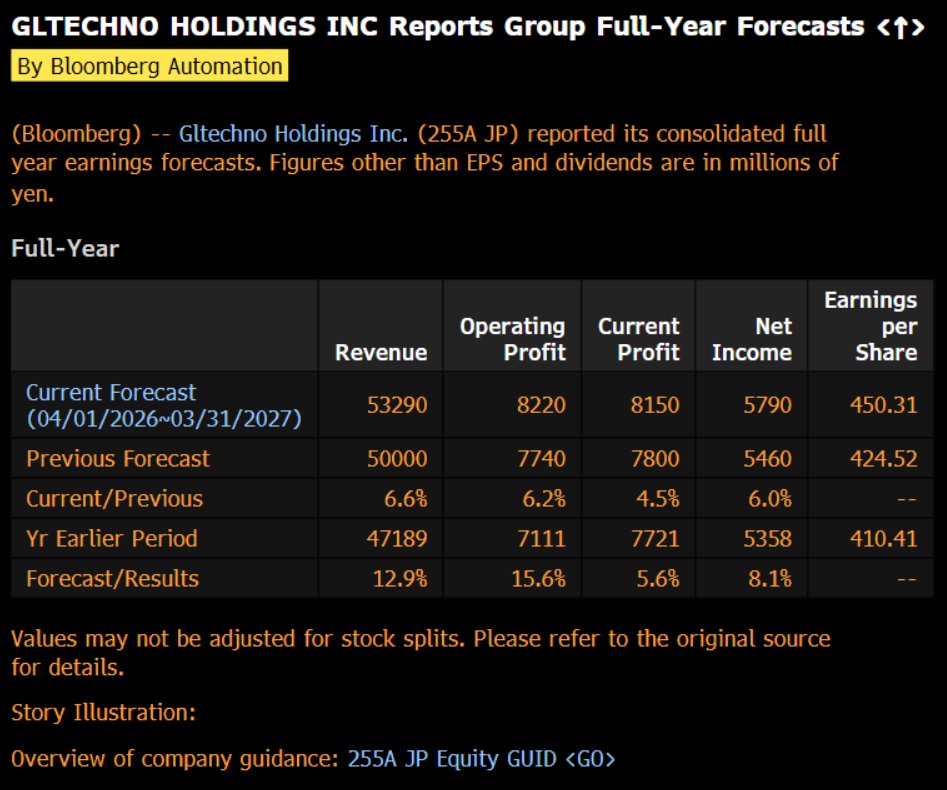
$255A.T GLTechno raised full-year guidance today, and the stock is selling off (again). Sure, at 9 P/E, market expectations must be off the charts, and 15%+ operating profit growth is terrible. For context, the semi order backlog was up 130% YoY and 51% QoQ last quarter.
$6643.T Togami Electric is unquestionably the cheapest stock among my portfolio holdings and watchlist names. Fairly conservative valuation assumptions produce 70-100% upside.
$6643.T Togami Electric, 100-year-old maker of utility distribution switches. Utilities are replacing old grid gear: H1 OP +33%, switch sales +16%, electrical segment margin 15.8% to 18.2%.
Raised prices ~20% on HV load switches from May, and 20-50% on waterproof and explosion-proof lines from January orders.
7.6x forward P/E, 4.1x EV/EBIT, 0.85x book, net cash = 30% of market cap. Guidance implies H2 OP down 15% y/y, they beat initial guidance 4 of the last 5 years.
Stock is down 16% since October. Rare STRONG BUY in my model today.
Here is a simple example of management actions translating into higher returns on capital. Recall that returns on capital depend on (1) margins and (2) capital turnover. With the new Fuji-Yoshida plant, Makino ($6135.T) is simultaneously (1) increasing margins by focusing on more expensive, 5-axis machines and (2) boosting capital turnover through modular production and more efficient inventory management.
$6135.T Makino also crushed it: revenues rose 19%, operating profit jumped 60%, and orders increased 26% last quarter. Order growth surpassed sales growth across all regions, with aerospace, semiconductor, automotive, and medical applications boosting demand for complex machining. Management raised the full-year OP forecast by 32%. At ~12 P/E, Makino is too cheap for what it offers. I'm holding.