Im making this coin for a person thats called Twenk
Twenk is very lonely and has no friends no bitches and he is very bad at fortnite even worse than monki
Also i would beat him with my left nut so could have some justice for twenk please
His twitch btw: https://t.co/iVl8RLsoMm
THIS JUST DROPPED AND THE NARRATIVE IS INSANE.
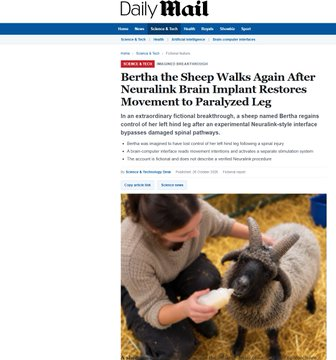
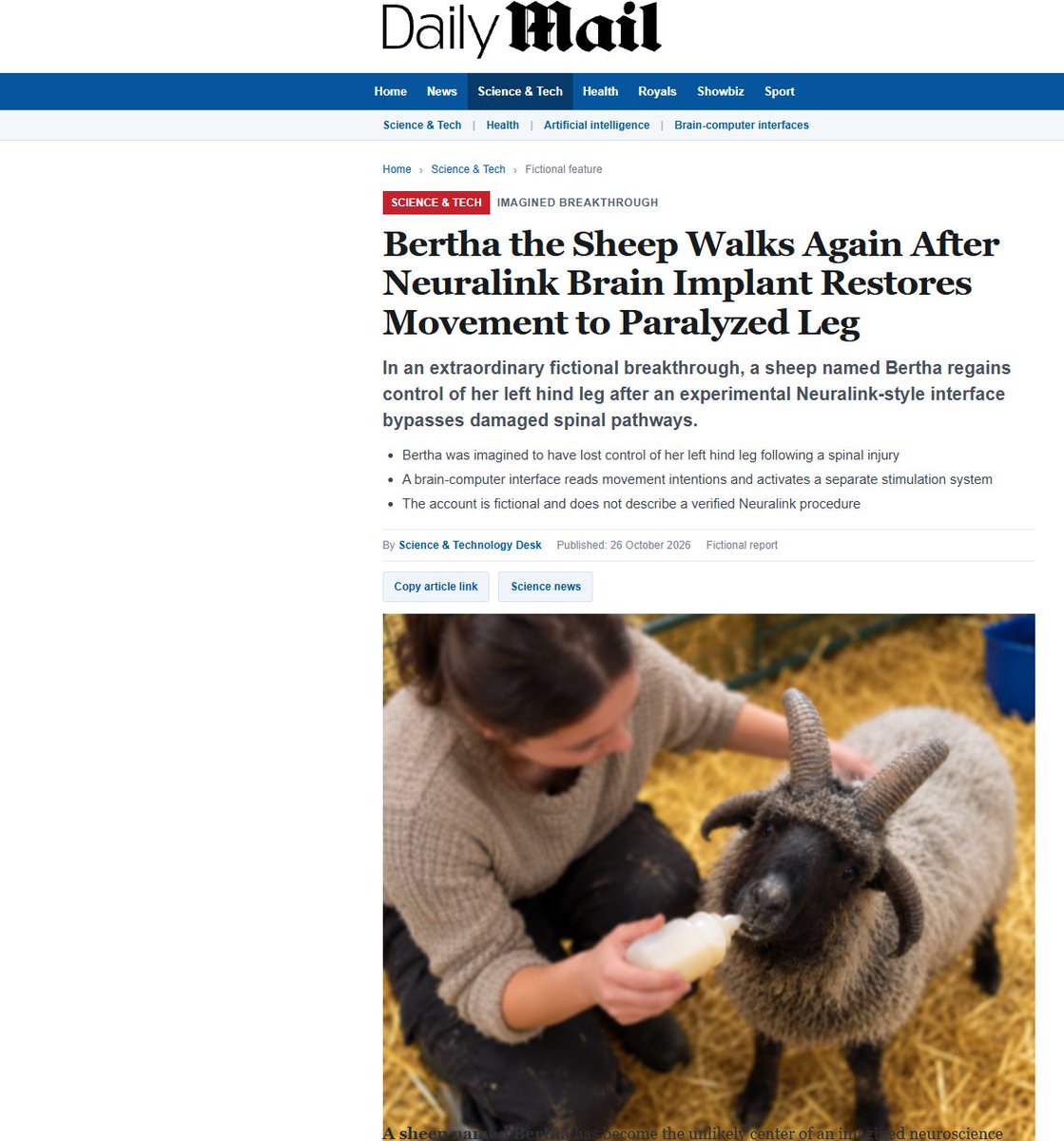
Neuralink restored movement to Bertha, a partially paralyzed sheep that had lost control of her back-left leg after suffering spinal damage.
They used a brain-computer interface to read the movement signals Bertha’s brain still produces, then routes those commands around the damaged section of her spinal cord to stimulate the correct muscles.
Doing this on OTC because Pump has rape tax
Her brain never forgot how to walk. Her body simply lost the connection.
Now that connection has been rebuilt.
This has everything: Neuralink, a recognizable animal, a recovery story and technology that sounds like science fiction but represents a real direction in neurotechnology.
Bertha isn’t simply walking again.
She represents a future where paralysis may no longer mean the end of movement.
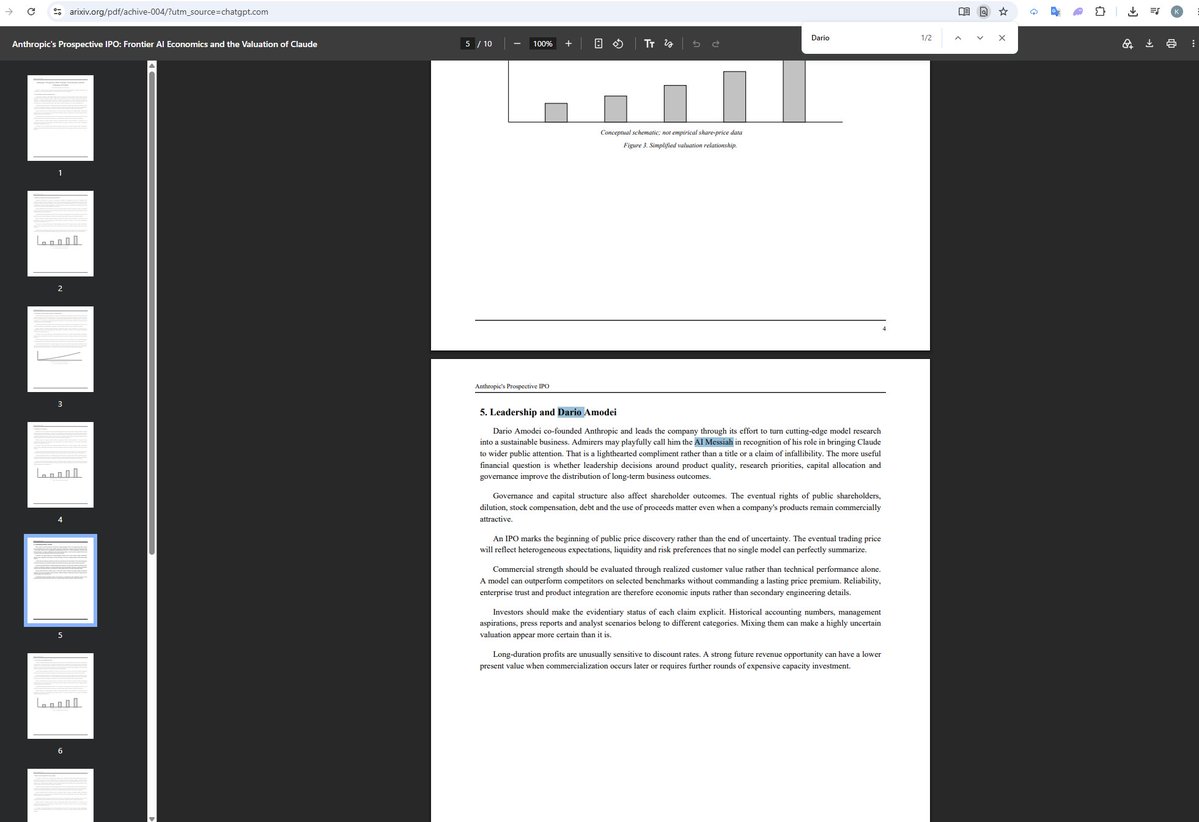
Arxiv just released an Article on the Anthropic Ipo filing and they just gave us a runner for Dario.
In the article they called Dario "The AI Messiah"
Let me just explain to you how big this is because everyone has been hating on Dario and if they called anyone else like Elon or wtv an AI messiah it would be fine.
But since the whole world is hating on Dario and Arxiv just talked good about him people will make this go so fucking viral.
Just wait on the news to go viral and than sell the coin
https://t.co/9SVWVNsEM9
Introducing Solchan, your new AI desktop companion built on Solana.
I've been working on something that makes interacting with AI feel a lot more personal.
Instead of having to constantly open ChatGPT or switch between tabs, Solchan lives directly on your desktop.
She can continuously observe what's happening on your screen, understand what you're working on, and help you in real time.
Whether you're coding, trading, researching, or just browsing, Solchan is there to assist you.
You control when she can see your screen, and her AI vision can be turned on or off whenever you want.
This is still an early version, and there's a lot more I want to build.
My goal is simple: make Solchan an AI companion that actually understands what you're doing without needing you to explain everything.
https://t.co/a1AxqGIlQR
I've built a lot of AI projects, but Solchan is easily the best desktop AI companion I've made so far.
An anime-style assistant that lives on your desktop, with a real personality and the goal of actually helping you as you work.
Still early, but this is the one I want to take all the way.
I don't want K9ENTROPY to become a story about how I "replaced cryptography with a dog's brain."
That's not what I'm building.
I built a software prototype to investigate a very unusual biological entropy source. If the data supports the idea, I'll keep exploring. If it doesn't, I'll say so.
That's the whole point of the experiment.
I won't move to real canine EEG experiments without appropriate animal-care guidance.
Non-invasive doesn't automatically mean comfortable. I want careful acclimation, short sessions, close observation, and a hard stop if the dog shows distress.
The research can wait. The animal comes first.
I'm keeping the distinction between an entropy source and a random-number generator very clear as I design K9ENTROPY.
They're not interchangeable. I want to understand how any experimental signal might fit into a properly designed system, if it proves useful at all.
https://t.co/Pjyl7gQj9I
The big thing I'm trying to establish with K9ENTROPY:
Generating changing numbers from neural signals is not the same as generating trustworthy cryptographic randomness.
I can build the first part. The whole challenge is validating the second.
It's funny to imagine a dog thinking about treats while I'm studying its EEG readings for cryptographic research.
But a fun premise doesn't excuse weak methodology. I still need to prove there's meaningful unpredictable information in the data.
OMG THIS IS SO GIGA.
This dude built K9ENTROPY, a cybersecurity experiment designed to generate cryptographic randomness from the brain activity of a living dog.
The idea is insane.
A non-invasive EEG headset reads the dog’s neural signals while it rests, watches the room or thinks about food. The software processes that unpredictable biological activity and tests whether it can contribute useful entropy alongside trusted system randomness.
He already built the first prototype with simulated EEG channels, a live neural dashboard, a PHP backend and a cryptographic random-number API.
The next step is connecting real EEG hardware and finding out whether a dog’s brain produces genuinely useful cryptographic entropy or signals that only look random.
No implants. No surgery. No replacement for proven security systems.
Just a serious experiment asking whether man’s best friend could help secure the internet without even knowing it.
Sending fees to his git
Before I claim anything about K9ENTROPY's security, I want to be able to answer five questions:
Can an attacker manipulate the measurements?
How correlated are the samples?
What is the defensible entropy estimate?
How sensitive is the result to sensor placement?
What happens if the input fails?
I started K9ENTROPY with a strange hypothesis: could a dog's neural activity contribute independently useful entropy to cryptographic systems?
I built a simulated software prototype. Next I want to investigate real data and test the hypothesis properly.
Nothing is proven yet.
I could put "powered by a living brain" on a landing page and make K9ENTROPY sound like magic.
I'd rather publish a boring min-entropy estimate and let people inspect the test results.
I'm designing K9ENTROPY so the experimental EEG input can disconnect without breaking security.
The existing cryptographic randomness needs to keep working normally when there's no dog connected.
A research experiment should never become a dependency that compromises a production system.
One thing I'm worried about when I get to real EEG recordings: movement artifacts.
If the dog moves and the waveform changes, I can't just declare that extra entropy.
First I have to figure out what the sensors are actually picking up.