If Joseph Smith forged the Book of Mormon, the title page is the one place he should have kept simple. He did the opposite.
He drew attention to the one thing that should have stayed buried.
In his 1841 history, he explained that the title page was not something he composed. It was a literal translation, taken from the very last leaf of the plates, on the left-hand side.
That is a strange thing to admit. In 1829, everyone knew a title page goes at the front. It names the author, the title, the purpose, before you read a word. Joseph moved his to the front for publication because that is what readers expected. But he went out of his way to record that it did not start there. If you were inventing an ancient record, that is exactly the kind of detail a forger keeps to himself.
Here is how scholars think about it.
When you cannot inspect the physical object, you do not authenticate a document by handling it. You authenticate it by reading it. You ask whether the text carries the internal marks of the time and place it claims to come from. Historians call this internal evidence. A document is more likely genuine when it does things people in the forger's world did not know how to fake.
So apply that test to the title page.
First, what ancient records actually looked like. The Western title page descends from Gutenberg, six hundred years ago. Paper pages, a cover, names up front. But for more than a thousand years before that, the ancient Near East organized records very differently. Mesopotamian and surrounding cultures built libraries of tens of thousands of texts, engraved, named, cataloged, and stored for centuries. Their identifying information was placed at the end of a text, in what scholars call a colophon. A finishing statement. The reader confirmed who wrote it, where it came from, and why, after finishing the record, not before starting it.
Little of the detailed scholarship on ancient Near Eastern colophons was available in Joseph Smith’s environment in 1829.
Second, the scribal signature. Ancient colophons identified the scribe with a set formula scholars transcribe as "by the hand of [name]." The Book of Mormon title page uses it twice. "Written by the hand of Mormon." "Sealed by the hand of Moroni." One signature for the man who compiled and abridged the record, one for the son who finished and hid it.
Third, the father-son pairing. Ancient scribes worked in father-son pairs. The father taught the son to write and to archive, and the son named his father in the colophon. They often linked themselves to prestigious ancestors to establish authority. The title page introduces Mormon as the architect and Moroni as the son who completed the work. Elsewhere in the text both men trace their line back to founding figures. Moroni: "I am the son of Mormon." Mormon: "I am Mormon, and a pure descendant of Lehi." The lineage move is straight out of the ancient archives.
Fourth, source and purpose. Colophons named the larger archive a text was drawn from and explained why it was made. The title page says the record was written "upon plates taken from the plates of Nephi." That is technical archival language. It identifies the source collection and the chain of custody. It then states the book is an abridgment, names the principal writers, gives the purpose, and warns that it may contain the errors of men. Line by line, that is classic colophon behavior.
Then the placement detail. Joseph said he found it on the left-hand side of the final leaf. That detail raises the possibility that each leaf was formatted in double columns, like a known ancient bronze plate. He had no reason to include it and no framework to invent it.
And the medium. Critics mocked the "Gold Bible" for decades. But ancient cultures did engrave treaties, laws, and royal records on metal precisely because metal endures when paper, papyrus, and clay do not. Archaeology has since recovered metal plates from the ancient Near East, bound and engraved, reserved for texts meant to last. What once sounded absurd now looks ordinary.
Here is what this leaves you with.
You may not believe the Book of Mormon is what it claims to be. That is a reasonable position. But the title page does the work of an ancient colophon, assembled the way ancient archives were and unknown in the time and place where he lived. The placement is wrong for 1829 and right for antiquity. The signatures, the lineage, the source language, the medium, all converge.
Take any one detail and it proves little. Take them together and a pattern emerges, pointing away from a farm boy in New York and toward something far older.
The easiest forgery would have been a normal title page at the front. Instead we got an ancient colophon hiding in plain sight.
The evidence deserves a fair hearing. But for millions of readers in nearly every country on earth, the Book of Mormon is not a debate they are trying to win. It is the thing that brought them to Christ and opened a deeper life with God.
Source: Authentic: The Book of Mormon, Evidence of a Miracle by Lundwall and Lundwall, chapter 6
Nephi said that the brass plates contained the "FIVE BOOKS OF MOSES."
But some scholars say that the Pentateuch wasn’t compiled until hundreds of years later.
At least, that’s what they used to say.
@nicksortor The frustration for me is the lack of readiness from the Secret Service. They fell asleep at the wheel. Imagine if there were 12 Navy Seal types barging through? This line of defense would’ve been wasted. You gotta be ready for anything!
🔗: https://t.co/wtQcgT2on4
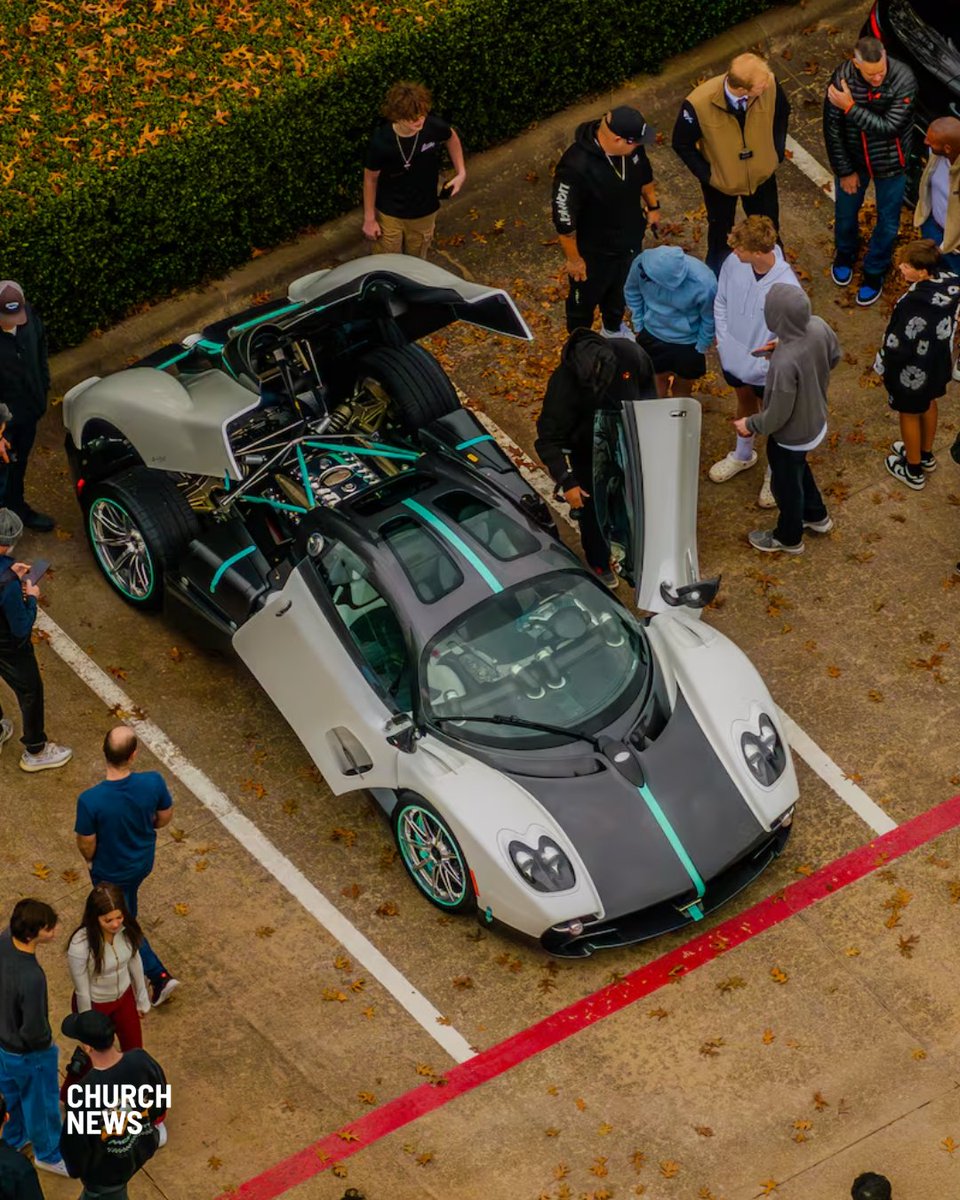
Every month in Plano, Texas, the parking lot of a meetinghouse for The Church of Jesus Christ of Latter-day Saints fills with the sound of engines, conversation and something less expected: discussions of faith.
The event, known as “Cars and Christ,” is a car show that began two years ago with a couple dozen cars. It has now grown into a unique gathering that blends a passion for cars with spiritual connection.
“I feel like it’s brought the Church to the forefront in Texas, in one of the most normal and natural ways,” said Charlie Riska, a member of the Carrollton Texas Stake who helps lead the effort.
Organizers say they see anywhere from 200 to 300 cars on the first Saturday of each month. The event continues to draw a big crowd, many of whom are not members of the Church.
Read more in the link above.
📸: Dan Bledsoe
🌊 A powerful, lesser-known story from LDS Church history in New Zealand (among the Māori people):
This is a little longer, but necessary. I LOVE this story. (Sources in the thread).
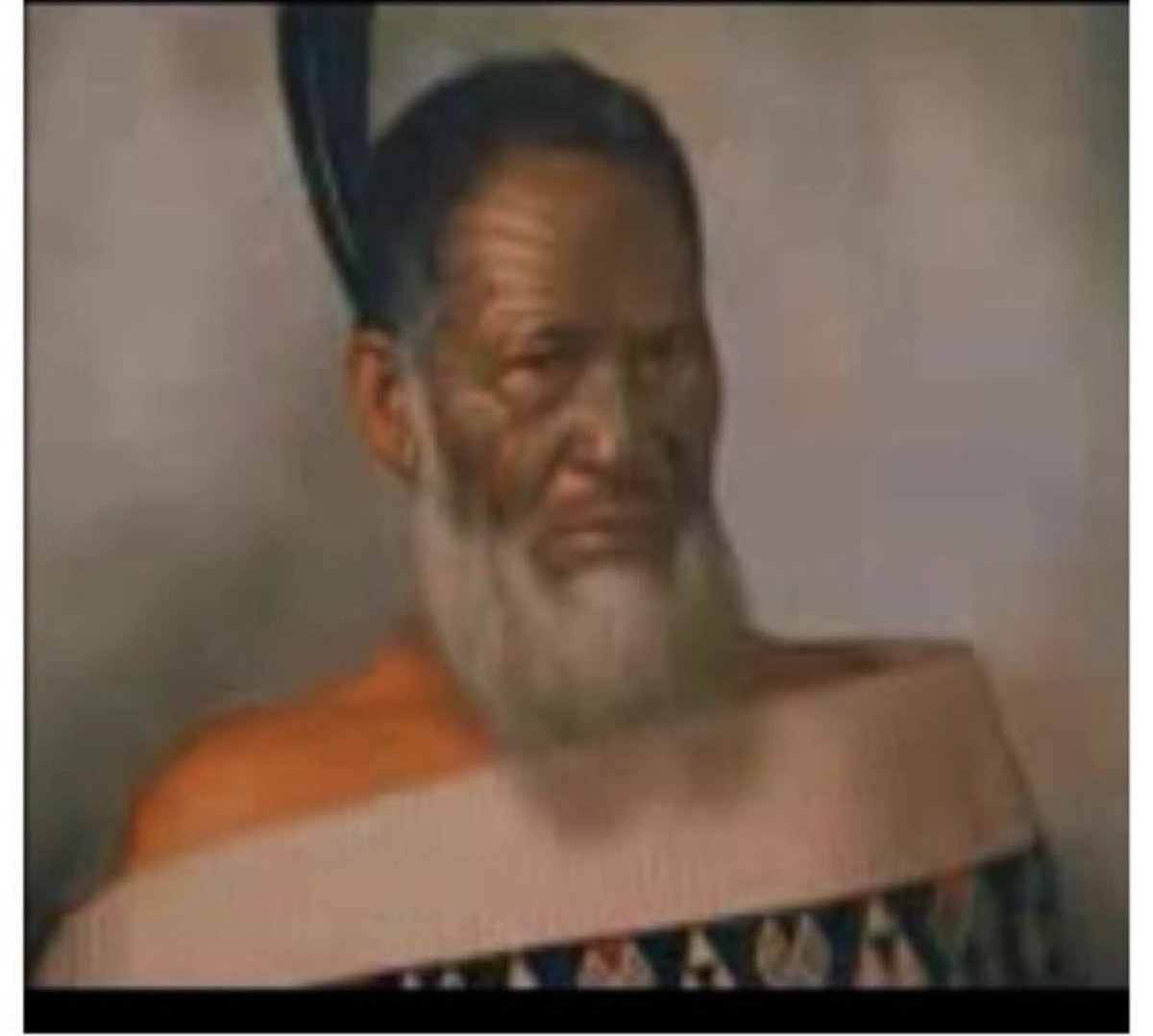
In March 1881, at a large tribal gathering (hui) near Te Ore Ore on New Zealand’s North Island, leaders of the Ngāti Kahungunu were debating which Christian church the Māori should join. Unsure, they turned to a respected chief and spiritual leader named Pāora Te Pōtangaroa (a wise matakite/seer).
Instead of answering right away, Pāora said “Taihoa” or “Wait.” He retired to his home and spent three full days fasting and praying to Jehovah, asking which was the true church for his people.
When he returned to the assembly on March 16, 1881, he declared:
“My friends, the church for the Māori people has not yet come among us. You will recognize it when it comes. Its missionaries will travel in pairs. They will come from the rising sun (from the east). They will visit with us in our homes. They will learn our language and teach us the gospel in our own tongue. When they pray, they will raise their right hands.”
He also spoke of a future “day of the fulness,” a “sacred church with a large wall surrounding it,” and the Māori as part of the lost sheep of the House of Israel. His words were carefully written down by Ranginui Kingi as a covenant for the people to remember.
Pāora died later that year, but just a short time afterward (starting earnestly in 1882–1883), Latter-day Saint missionaries arrived from America. They traveled in pairs, came from the east, lived among the Māori in their homes and villages (not isolating themselves in European-style homes), learned the Māori language, taught the restored gospel directly in te reo Māori, and following the practice of the day, raised their right hands when offering prayers.
Many Māori immediately recognized the exact fulfillment of Pāora’s prophecy. Whole families and branches joined the Church with great conviction. Missionary work among the Māori flourished rapidly on the North Island, and the Saints there embraced the fulness of the gospel, including the idea of temple work with tremendous faith.
This is one of the beautiful “prepared people” stories of the Restoration: the Lord going before His servants through faithful local seekers who were praying and watching for truth. Pāora’s prophecy became a foundational witness for thousands of early Māori converts. ✨
The Kaohsiung Taiwan Temple is currently in the exterior finishing phase, with light-colored cladding being secured to the walls. Scaffolding remains in place around the structure, supporting the installation crews. Across the street from the temple, the Niaosung meetinghouse is also seeing activity, with scaffolding erected around its exterior for renovation work, bringing improvements to both Church-owned sites. (Photo: Peiching Guan) #kaohsiungtaiwantemple #kaohsiungtemple #台灣高雄聖殿 #高雄聖殿
https://t.co/aiD2gZ7dgI
Exterior enclosure work has begun on the Vancouver Washington Temple, located in the community of Camas, as crews install yellow sheathing panels across the structure. Framing materials are staged throughout the site, supporting continued work on the exterior wall systems. On the grounds, asphalt paving covers much of the looping drive and parking areas, with curbing clearly defined. On the west side of the temple, formwork is in place for a large circular plaza. (Photo: Scott Ririe) #vancouvertemple #vancouverwashingtontemple #camaswashington
https://t.co/cbwlmKxukY
The public is warmly invited to tour the newly completed Bacolod Philippines Temple during an open house from Thursday, April 16, through Saturday, May 2, 2026 (excluding Sundays), from 8:00 a.m. to 8:00 p.m. Admission is free. The temple is located at the corner of Bacolod Airport Access Road and Buri Road. During the open house, guided tours of approximately 45 minutes will allow visitors to explore the temple facilities and learn about their purpose. (Photos: Intellectual Reserve, Inc.) #bacolodtemple #bacolodphilippinestemple
https://t.co/6MnNHjN68f
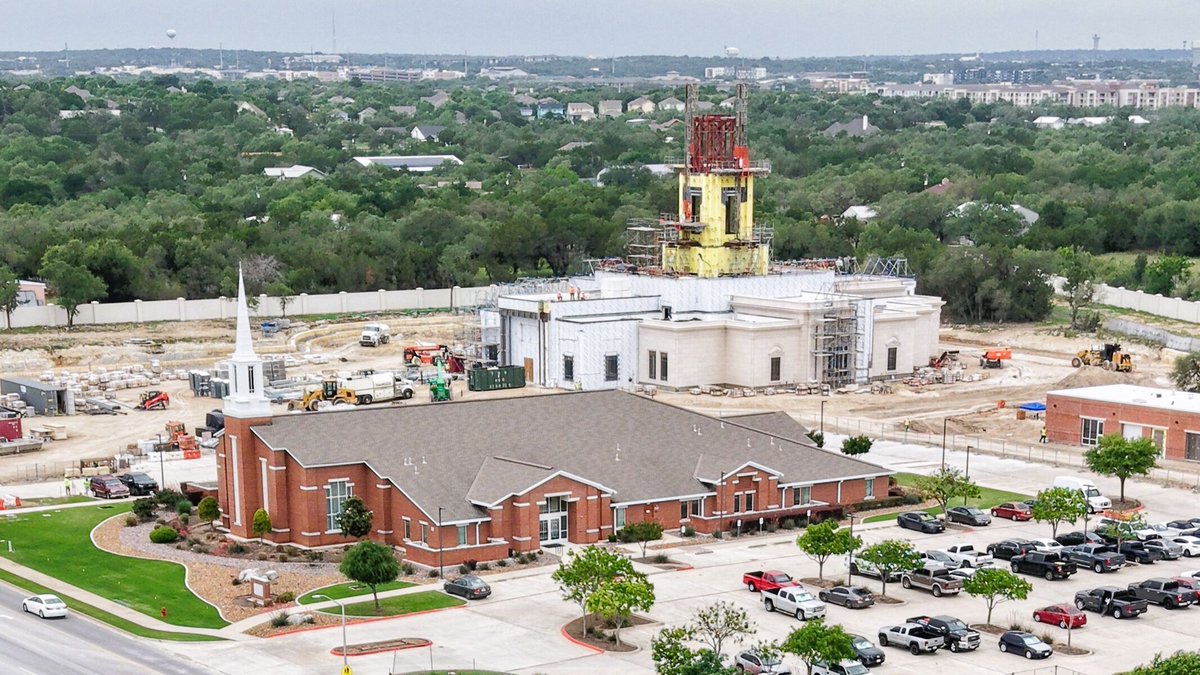
Construction is advancing on the Austin Texas Temple, with exterior work and site development progressing in tandem. Sheathing of the temple steeple is underway, while cladding installation continues across the main body of the structure. To the west of the temple, a second tier of the retaining wall is now under construction, building upon earlier work and helping to shape and stabilize the sloped terrain. (Photo: Dan Day) #austintemple #austintexastemple
https://t.co/m99LdAIMpF
> open gospel library app
> go to April 2026 general conference
> go to the Sunday morning President Oaks talk
> scroll to section III
> read section III
> read this excerpt from a 2014 talk by President Oaks at the Constitutional Symposium on Religious Freedom
> connect the dots
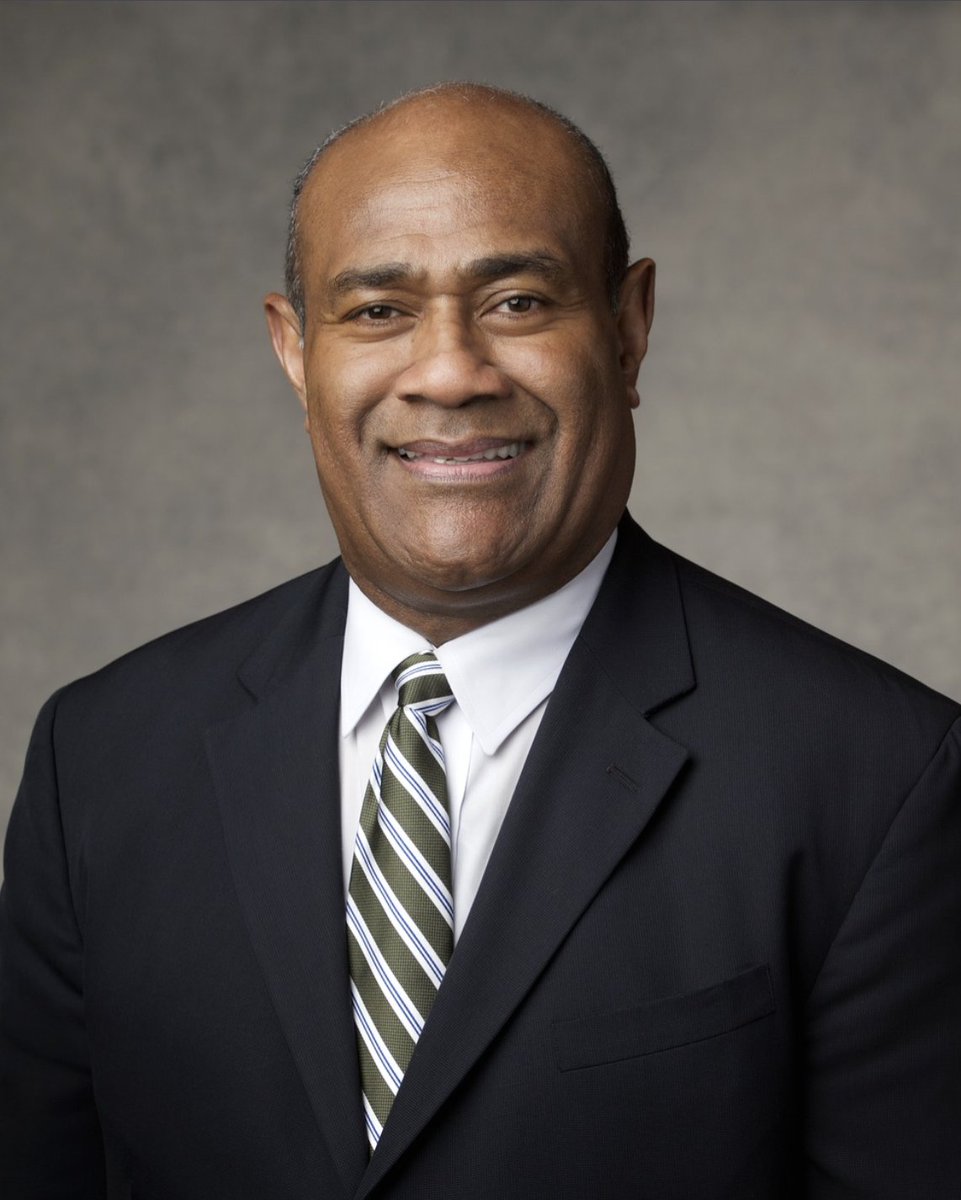
I really loved the personal story that Elder Wakolo snuck into his talk:
“Brothers and sisters, The Lord honors patient faith and it never too late for miracle.
In Fiji, a faithful wife waited eight long years for her husband to join the church. Eight years of attending church alone, while her husband remained uninterested and hesitant. But she did not withdraw her attendance. She served.
When the wife received her patriarchal blessing, she was promised that if she remained true and faithful the day would come that her husband would take her to the temple to be sealed for time and all eternity.
Over eight years and 24 missionaries later, the husband was baptized and the couple was sealed in the house of the Lord. To be clearer, I should say, my wife Anite and I were sealed in the house of the Lord.
My only regret: I wish I had been baptized sooner. Brothers and sisters, God keeps his promises—but in His timing.”😭😭
#LDSConf #GeneralConference