these are some of my 10/10 fragrances I own in my Collection. soon I'll post more, but for now, these are some of my favorites I wanted to share with you all.
#perfumetiktok#fragrance#fragrancetiktok#perfume#fyp
It's been almost a year now since our wedding, and I'm so grateful for all the growth God has led us through this year. I love you with all I have, and I'm so thankful every day for this blessing and this journey.
I've loved Nsync since I was 8 years old, no disrespect meant. I just couldn't help it. And when it hit me, I had to post it before somebody beat me to it
One another. Talking past each other, and hatin one another.
Yes, having lines drawn and having your views and beliefs are important. But there is no healing if we allow media outlets to drive us into fear and separation, instead of conversation.
I've been watching & reading political media quite a bit this year so far, media from both ends of the spectrum, and the center. I find that I've become fairly conflicted on where I stand. I'm fairly mixed on certain topics, but I believe I may shifting.
I realize nobody may ever see this or care, but honestly, the main thing I've learned is the media on both sides heavily wants us all divided. That's not how America moves forward. We may differ, we may agree, but somehow we have to try and communicate instead of fighting
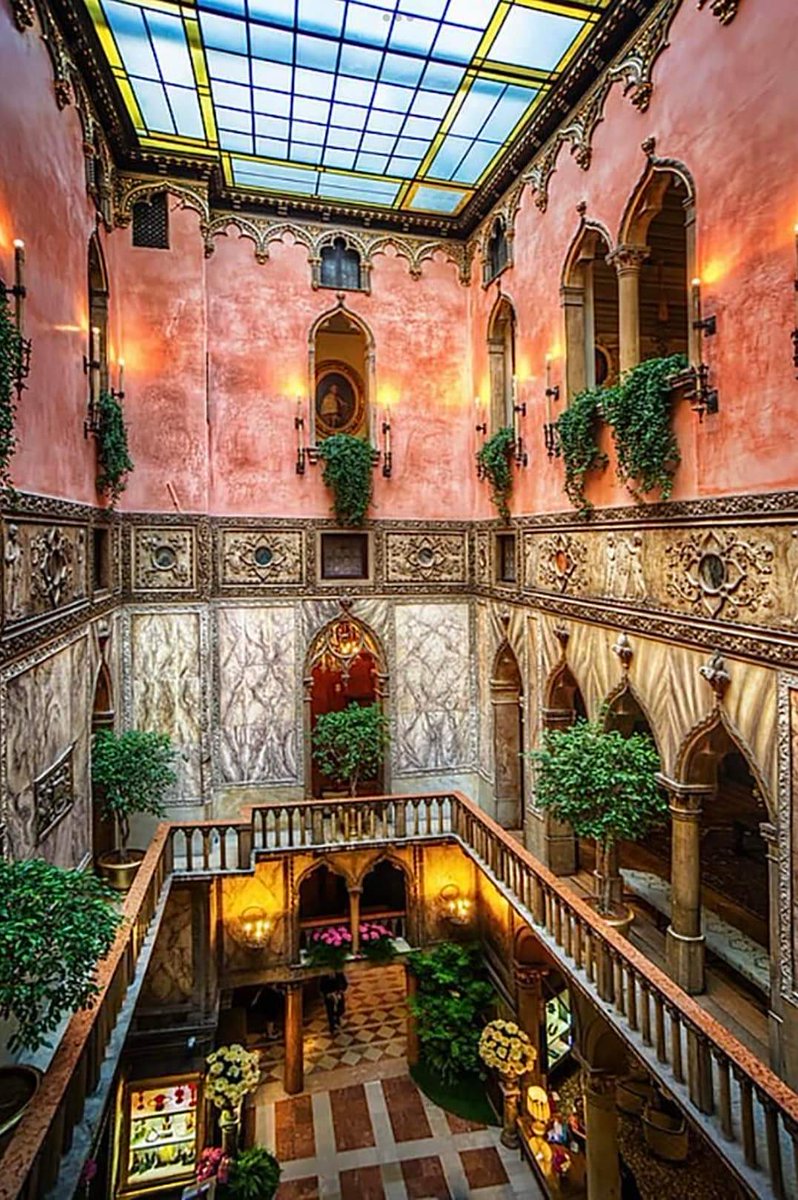
Interior at Hotel Danieli; Venice - Italy :
Interlaced with the rich history of Venice, the splendour of Hotel Danieli is showcased across three inter-connecting palaces that date back to 14th, 19th and 20th Centuries CE.
The oldest of the three palaces – the Venetian Gothic style Palazzo Dandolo – is the former home of the noble Dandolo family. Enrico Dandolo was the first of four Dandolo family members to serve as Doge of Venice, who became most famous after conquering Constantinople in 1204 CE, and returning to the city with gold, marble and Byzantine artwork – much of which was displayed in Palazzo Dandolo.
Second eldest is 19th Century CE, Baroque-style Palazzo Casa Nuova, which was formerly the city’s treasury, while most modern is 20th Century CE, Palazzo Danieli Excelsior (redesigned by Jacques Garcia in 2008). The prominent, central location and grandeur of Hotel Danieli led to popularity amongst notable guests from as early as Prince of Salerno in 15th Century CE, to Charles Dickens in 19th Century CE.
In 1822 CE, the palace was first converted into a hotel by Giuseppe Dal Niel, who renamed the property after his chosen nickname “Danieli”. Electrical power and elevators were first added under new ownership in 1895 CE, before the final structural alternations were completed in 1948 CE, with the addition of Palazzo Danieli Excelsior.
- Subscribe for Detailed Post -
📷 : Trey Redcliff
#archaeohistories
https://t.co/HVB2zIOOZP
I re-edited and fixed up one of our favorite investigations this last year with our dear fwiend Chris Tomb . All in honor of the fact that finally soon we're going go get back out there and back at it. If you haven't yet, please go check this one out. If you enjoy, drop a comment, hit the subscribe button. We just hit a channel total of 300,000 views and 7,350 subscribers, so we're super excited to dive back in.
Also, please do share with us if you know of any supposedly haunted locations. Especially homes of anyone you know who they believe to be haunted or experiencing paranormal activity. We'd love to visit and conduct an investigation if possible. Thank you all. And Much love to you all.
#paranormal #haunted
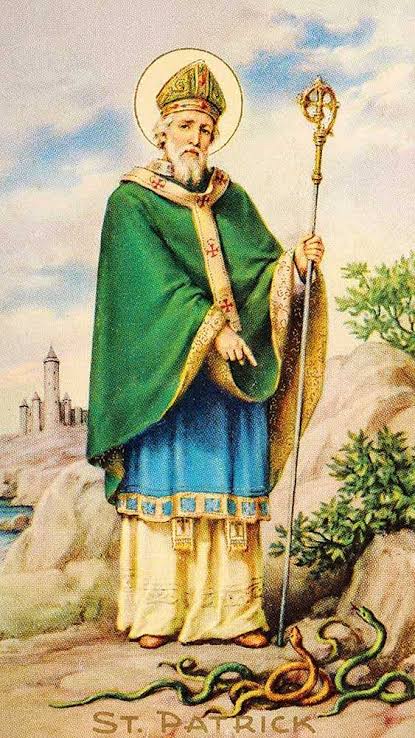
St. Patrick’s Day is celebrated annually on March 17, anniversary of his death in 5th Century AD. Irish have observed this day as a religious holiday for over 1,000 years. On St. Patrick’s Day, which falls during the Christian season of Lent, Irish families would traditionally attend church in the morning and celebrate in afternoon. Lenten prohibitions against consumption of meat were waived and people would dance, drink and feast on traditional meal of Irish bacon and cabbage.
Saint Patrick, who lived during 5th Century AD, is patron saint of Ireland and its national apostle. Born in Roman Britain, he was kidnapped and brought to Ireland as a slave at 16. He later escaped, but returned to Ireland and was credited with bringing Christianity to its people. In the centuries following Patrick’s death (believed to have been on March 17, 461 AD), mythology surrounding his life became ever more ingrained in Irish culture: Perhaps most well-known legend of St. Patrick is that he explained Holy Trinity (Father, Son and Holy Spirit) using three leaves of a native Irish clover, shamrock.
Since around 9th-10th Century AD, people in Ireland have been observing Roman Catholic feast day of St. Patrick on March 17. The first St. Patrick’s Day parade took place not in Ireland but in America. Records show that a St. Patrick’s Day parade was held on March 17, 1601 AD, in a Spanish colony in what is now St. Augustine, Florida. The parade, and St. Patrick’s Day celebration a year earlier were organized by Spanish Colony's Irish vicar Ricardo Artur. More than a century later, homesick Irish soldiers serving in English military marched in New York City on March 17, 1772 AD, to honor Irish patron saint. Enthusiasm for the St. Patrick's Day parades in New York City, Boston and other early American cities only grew from there.
Over next 35 years, Irish patriotism among American immigrants flourished, prompting the rise of so-called “Irish Aid” societies like Friendly Sons of Saint Patrick and Hibernian Society. Each group would hold annual parades featuring bagpipes (which actually first became popular in Scottish and British armies) and drums. In 1848 AD, several New York Irish Aid societies decided to unite their parades to form one official New York City St. Patrick’s Day Parade. Today, that parade is the world‘s oldest civilian parade and largest in United States, with over 150,000 participants.
Today, people of all backgrounds celebrate St. Patrick’s Day, especially throughout the United States, Canada and Australia. Although North America is home to largest productions, St. Patrick’s Day is celebrated around the world in locations far from Ireland, including Japan, Singapore and Russia. Popular St. Patrick’s Day recipes include Irish soda bread, corned beef and cabbage and champ. In United States, people often wear green on St. Patrick’s Day. In Ireland, St. Patrick’s Day has traditionally been a spiritual and religious occasion. In fact, up until 1970s, Irish laws mandated that pubs be closed on March 17. Beginning in 1995, however, Irish government began a national campaign to use interest in St. Patrick’s Day to drive tourism and showcase Ireland and Irish culture to the rest of the world.
One icon of the Irish holiday is the Leprechaun. Original Irish name for these figures of folklore is “lobaircin,” meaning “small-bodied fellow.” Belief in leprechauns probably stems from Celtic belief in fairies, tiny men and women who could use their magical powers to serve good or evil. In Celtic folktales, leprechauns were cranky souls, responsible for mending the shoes of the other fairies. Though only minor figures in Celtic folklore, leprechauns were known for their trickery, which they often used to protect their much-fabled treasure. Leprechauns have their own holiday on May 13 but are also celebrated on St. Patrick's, with many dressing up as the wily fairies.
#archaeohistories
A 2,000-year-old “snake-haired, sharp-toothed female monster” figure adorns the orchestra section of the 3,600-seat Odeon in the ancient city of Kibyra in the Gölhisar district of the southern province of Burdur, Türkiye.
The mosaic depicting Medusa, which was built of colored marbles with the “Opus Sectile” technique in the first phases of 1st Century AD, is situated in the middle of the Odeon, which served as a concert area, parliament, court and a covered theater in the ancient ages.
📷 Mark Meulemans
#archaeohistories