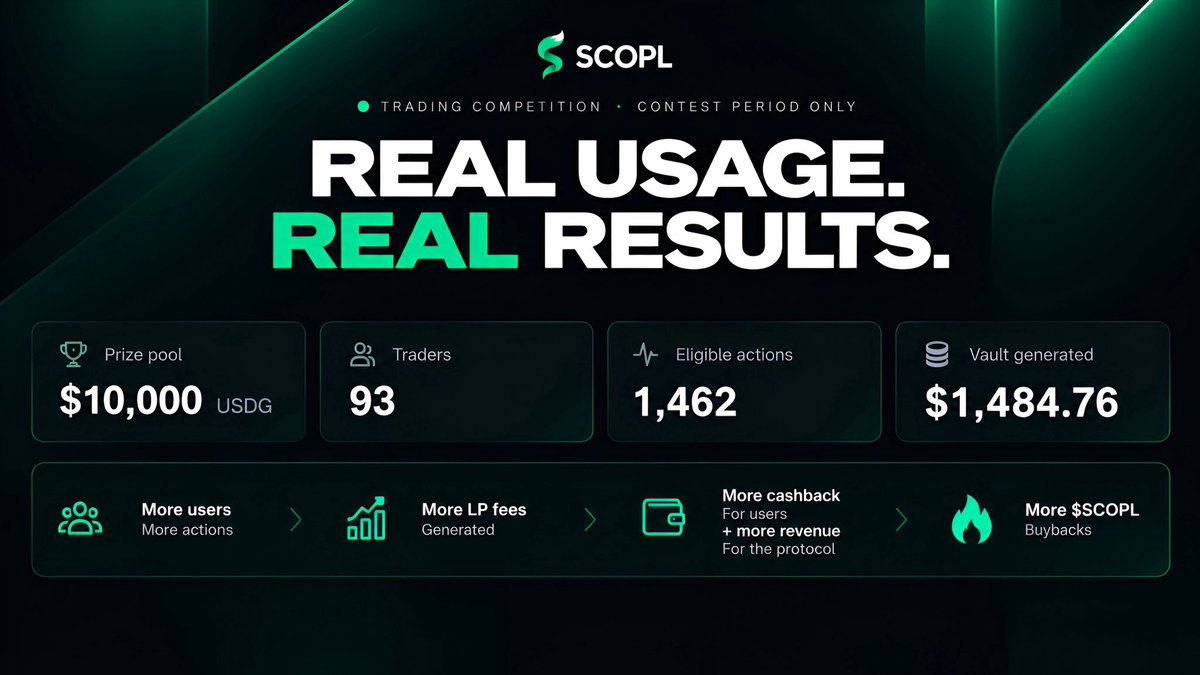
Here’s what happens on SCOPL as usage increases.
This is exactly what we wanted to demonstrate 🦊
More users -> more actions -> more LP fees generated.
More LP fees -> more cashback for users + more revenue for the protocol.
More protocol revenue -> more $SCOPL buybacks.
Usage creates rewards.
Usage creates revenue.
Revenue creates buy pressure.
And the more SCOPL is used, the stronger this flywheel becomes.
To date, $4,170 worth of $SCOPL has already been bought back.
1.372% of the entire $SCOPL supply is now permanently locked in the Buyback Vault, unable to ever return to circulation.
It’s almost time to take this to the next level 👀
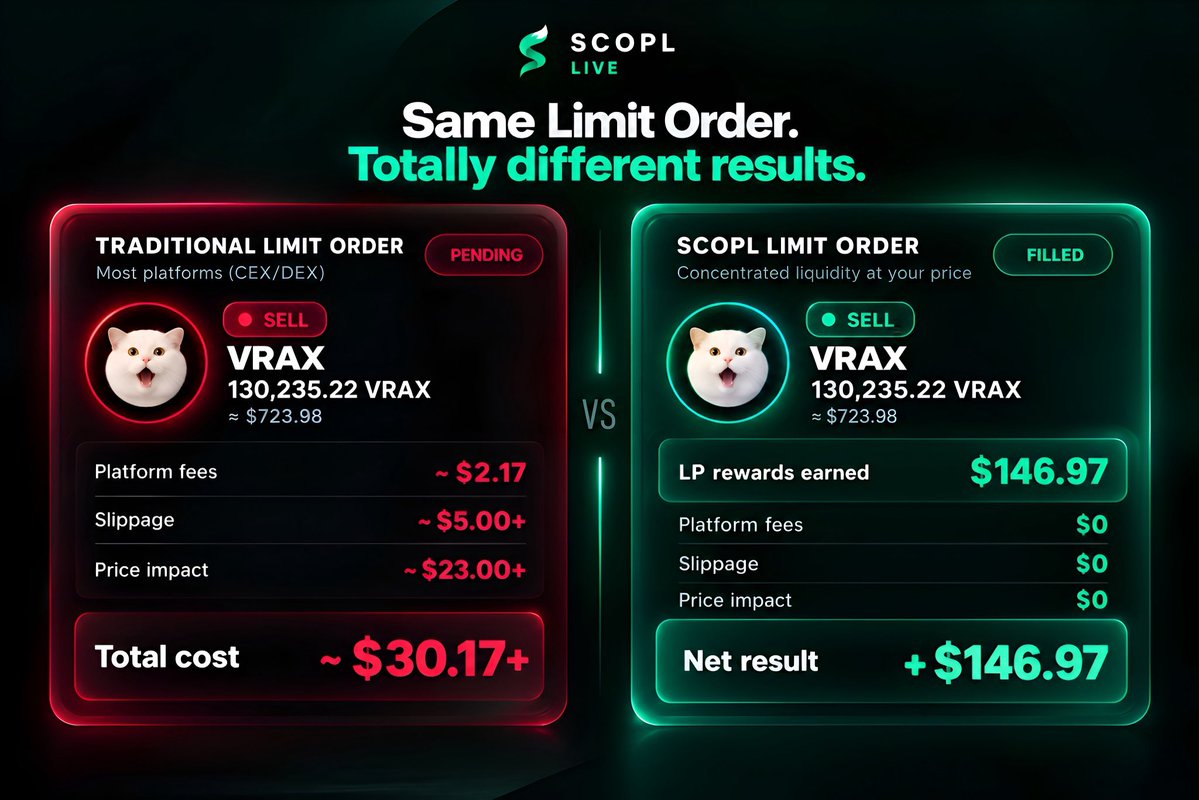
How can a user earn this much just from executing a SCOPL Limit Order?
Because on SCOPL, a Limit Order doesn’t just wait to be filled.
It becomes concentrated liquidity at your target price, generating LP fees while it works.
Your capital isn’t sitting idle anymore.
It works while it waits.
0% platform fees.
0 slippage.
0 price impact.
LP rewards.
We created the most rewarding Limit Orders in DeFi. 🦊
🏆 SCOPL Trading Competition extended to Oct 15, 8PM UTC.
Trading conditions on Robinhood Chain were less favorable than expected during the contest, with lower onchain activity and fewer participants than we initially anticipated.
So we’re extending it and improving the rules.
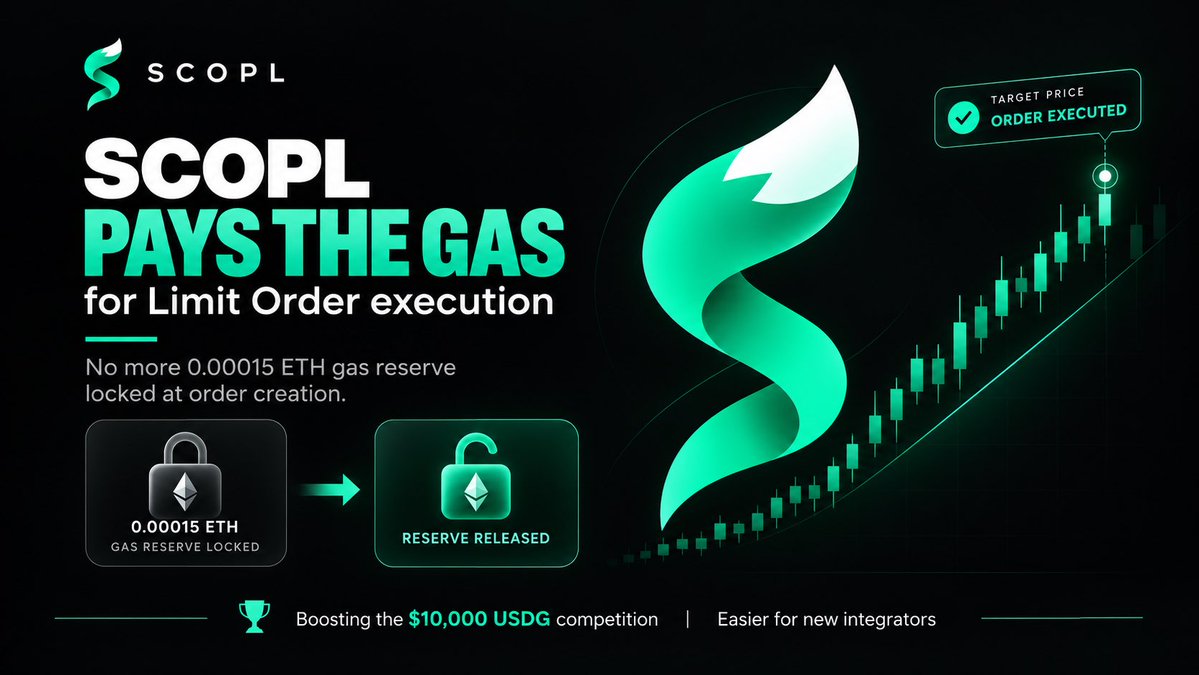
We recently made Limit Orders even easier to use by having SCOPL cover the execution gas, removing another layer of friction.
And we’re adding the missing viral piece: Referral Points.
Refer a trader and earn 15% of the points they generate.
Referral bonuses can account for up to 20% of your final score.
Referral Points go live on Oct 1 at 8PM UTC, exactly when the competition was originally scheduled to end.
There is no retroactive referral attribution. All activity before that cutoff remains unchanged, and previous contributions without a referrer stay permanently unassigned.
More time. Less friction. More ways to climb the leaderboard.
$10,000 USDG is still up for grabs. 🦊
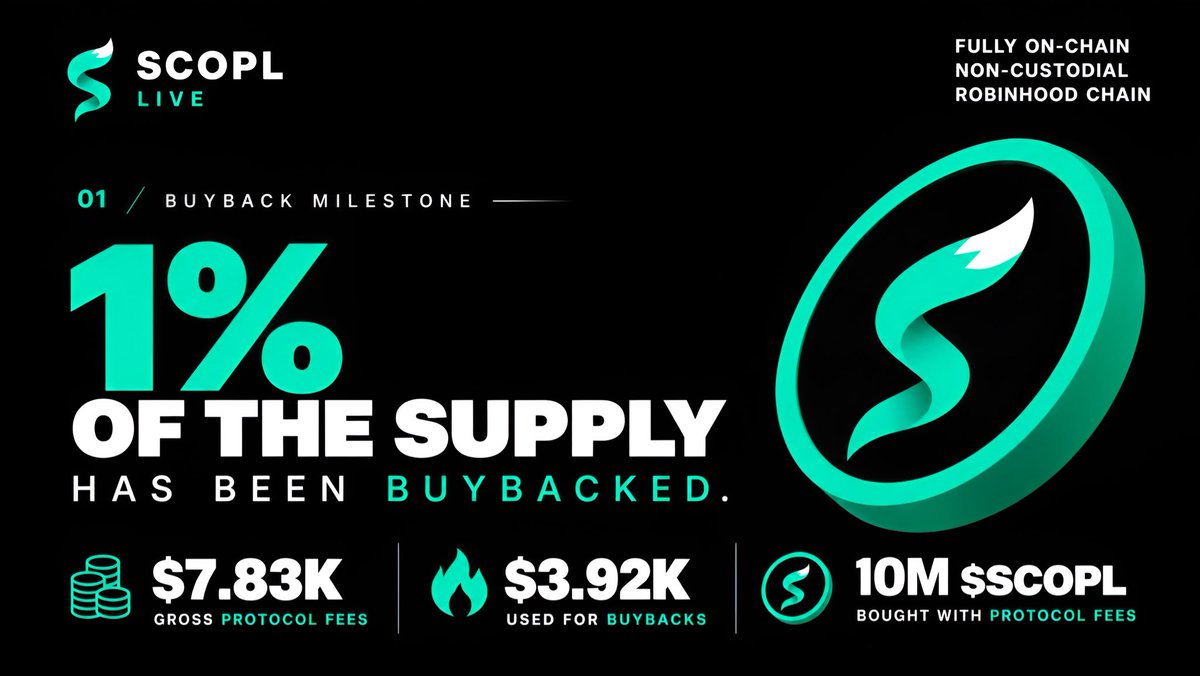
1% of the entire $SCOPL supply has now been bought back and permanently locked in the Buyback Vault. 🦊
$7.83K in protocol revenue generated.
$3.92K already deployed into buybacks.
10M $SCOPL bought back.
Real protocol activity.
Real revenue.
Real buy pressure.
And the most interesting part?
All of this while SCOPL is still at the very beginning of its adoption.
More users → more volume → more revenue → more buybacks → more $SCOPL permanently locked.
1% is only the first milestone.
MASSIVELY UNDERRATED.
RHC Traders will be ripping their eyes out for fading $SCOPL at current mcap. Limit orders on exchanges would never give you a penny. You are the one that pays, with $SCOPL you get a PAYDAY.
This literally just happened on SCOPL. 🤯
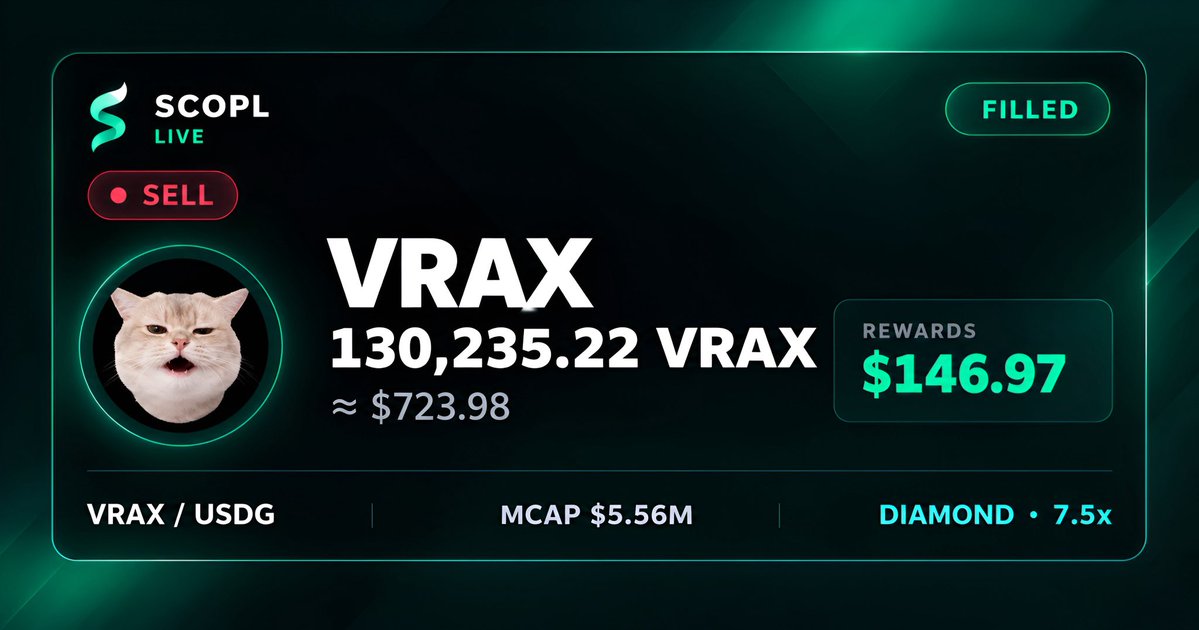
$723.98 Limit Order on $VRAX.
$146.97 in rewards generated.
That’s 20.3% of the entire order size in rewards 👀
No staking. No farming.
Just a Limit Order working directly in the liquidity as it fills.
Why pay to trade when your trade can pay you? 🦊
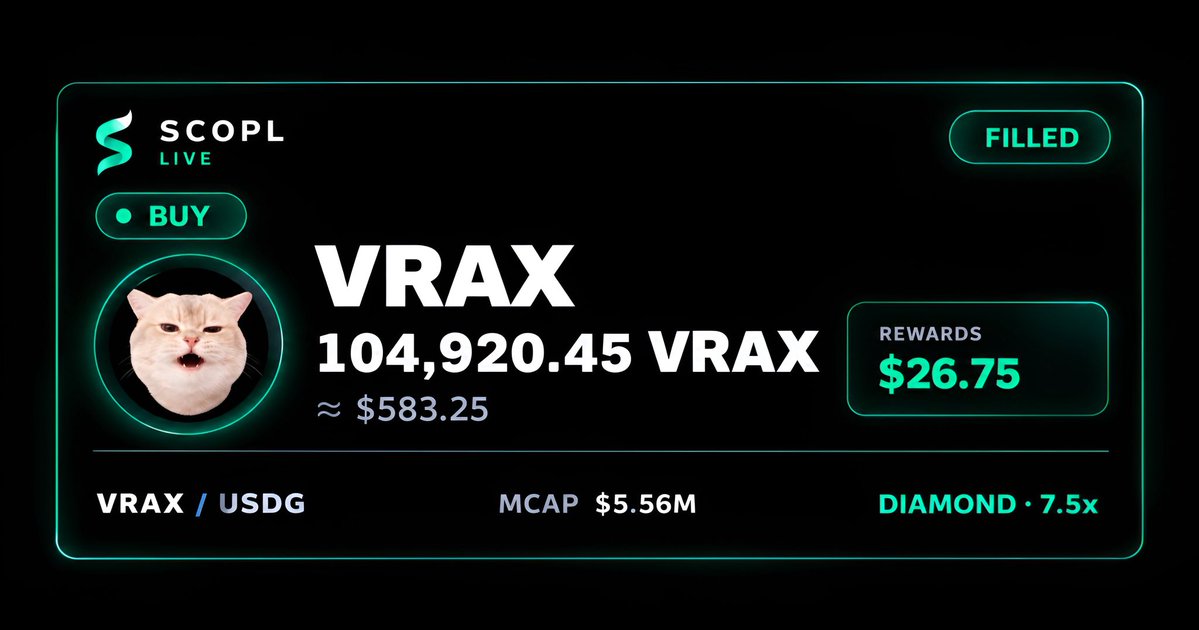
On this $VRAX Limit Order on #RH
$583.25 executed
$26.75 in rewards.
That’s 4.59% of the entire order size.
And our users are starting to understand what this really means.
You shouldn’t have to pay to trade anymore.
0 platform fees.
0 slippage.
0 price impact.
You should be getting paid to trade.
Choose your token.
Choose your price.
Get paid while you wait. 🦊
That’s what a SCOPL Limit Order is all about.
Another friction point removed.
Until now, creating a Limit Order required locking 0.00015 ETH, around $0.40, as a gas reserve.
If you cancelled the order, you got it back. If the order executed, that reserve was used for execution.
Now, SCOPL covers the execution gas for you.
No gas reserve to lock. Just set your target price, let your order work onchain, and we handle the execution when it fills.
We’re rolling this out to give our current $10,000 USDG trading competition an extra boost, while making SCOPL even easier for new integrators building innovative trading experiences on top of our infrastructure.
Less friction. More orders. More builders. ⚡
This literally just happened on SCOPL. 🦊
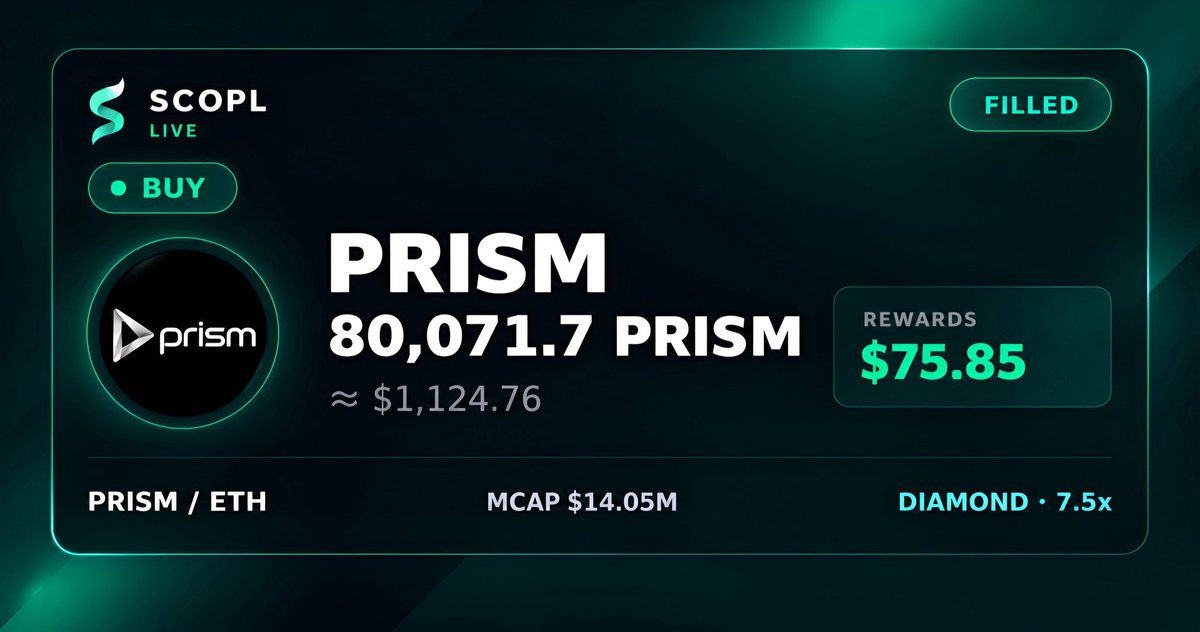
A user filled a $1,124.76 $PRISM Limit Order and earned $75.85 in LP rewards.
That’s 6.74% of the entire order size in rewards from a single trade. 🤯
0% platform fees.
0 slippage.
0 price impact.
The user wanted to buy PRISM anyway.
Instead of paying to trade, they got paid to trade.
And that’s just the buy.
Now let’s see how much more they earn when they sell. 👀
Another SCOPL Limit Order filled. 🦊
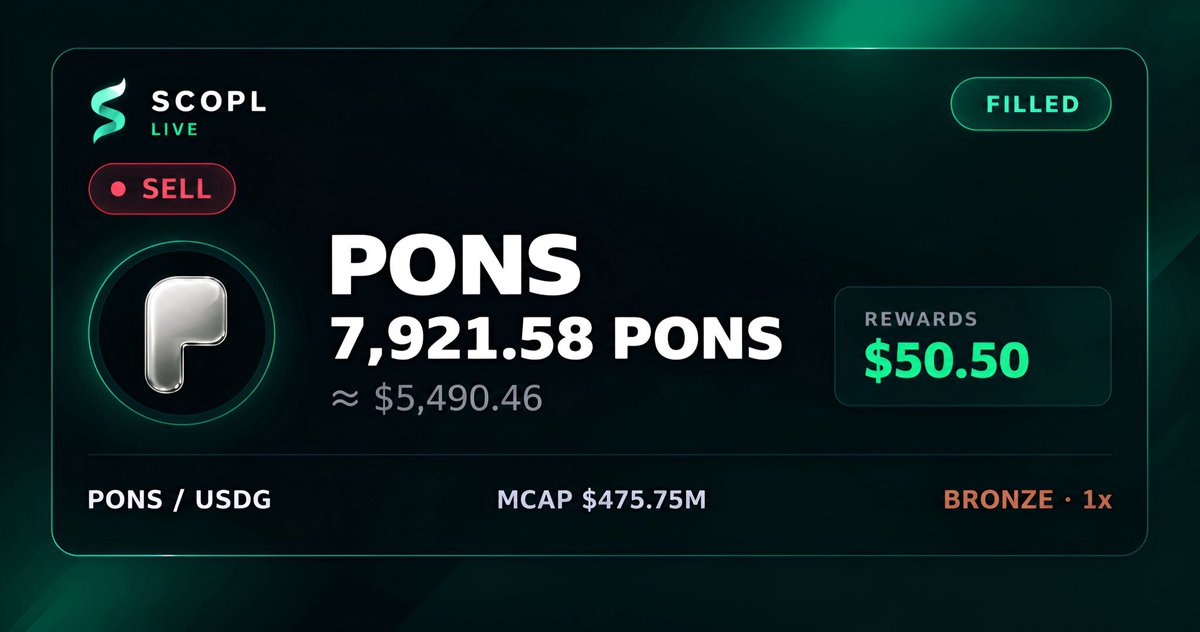
7,921.58 $PONS sold for $5,490.
0% platform fees.
0 slippage.
0 price impact.
And while executing the trade, the order generated $50.50 in LP rewards.
Compared to a regular market swap charging a 1% platform fee, and based on the available liquidity with an assumed 0.5% slippage, the estimated difference comes to:
+$50.50 in LP rewards
+$54.90 in platform fees avoided
~$10.98 in estimated price impact avoided
~$27.45 in estimated slippage avoided
≈ $143.83 in total estimated advantage.
That’s roughly 2.62% of the entire trade.
The user was going to sell anyway.
Instead of simply waiting for execution, their Limit Order became concentrated liquidity in the existing pool and generated rewards along the way.
Same trade. Better order.
Really interesting thread, especially the idea that liquidity itself becomes the moat.
It also raises an interesting question: how much potential liquidity already exists simply through trading intent?
Every user waiting for a better entry or exit already has capital ready to be deployed. Usually, that capital simply sits there waiting for execution, or the user ends up swapping once the price reaches the level they were targeting.
Concentrated liquidity opens up another possibility: turning that intent to buy or sell into liquidity at the exact price the trader is targeting.
That’s exactly one of the things we’re exploring with SCOPL.
A Limit Order becomes a concentrated liquidity position directly on the existing pool, at the chosen price level. While the market trades through that zone, the order can generate LP fees as it fills, while executing at the price the user originally targeted.
No separate orderbook. No fragmented liquidity. The trading intent itself contributes to the existing liquidity.
And in the context of the stock pairs you described, I think this becomes particularly interesting.
Not every holder wants to actively manage LP positions or become a market maker. But many are naturally willing to say: “I’ll buy here” or “I’ll sell here.”
If those intentions can become liquidity, even temporarily, traders can contribute to market depth simply by trading the way they would have anyway.
Trader ->Limit Order ->Concentrated Liquidity ->Execution.
It’s still early, but your thread perfectly illustrates why we believe there’s still so much left to explore around this model onchain.
People who assumed they were wrong on $SCOPL -you were not wrong just very early.
Once there's enough exposure the complete order book will look like flood with volume. Hopefully Robinhood Stock whales start placing orders worth thousands generating fees on their limit orders or start using any other features in app. 100 mil project instantly
Want to understand what SCOPL is really about?
Here’s a real example :
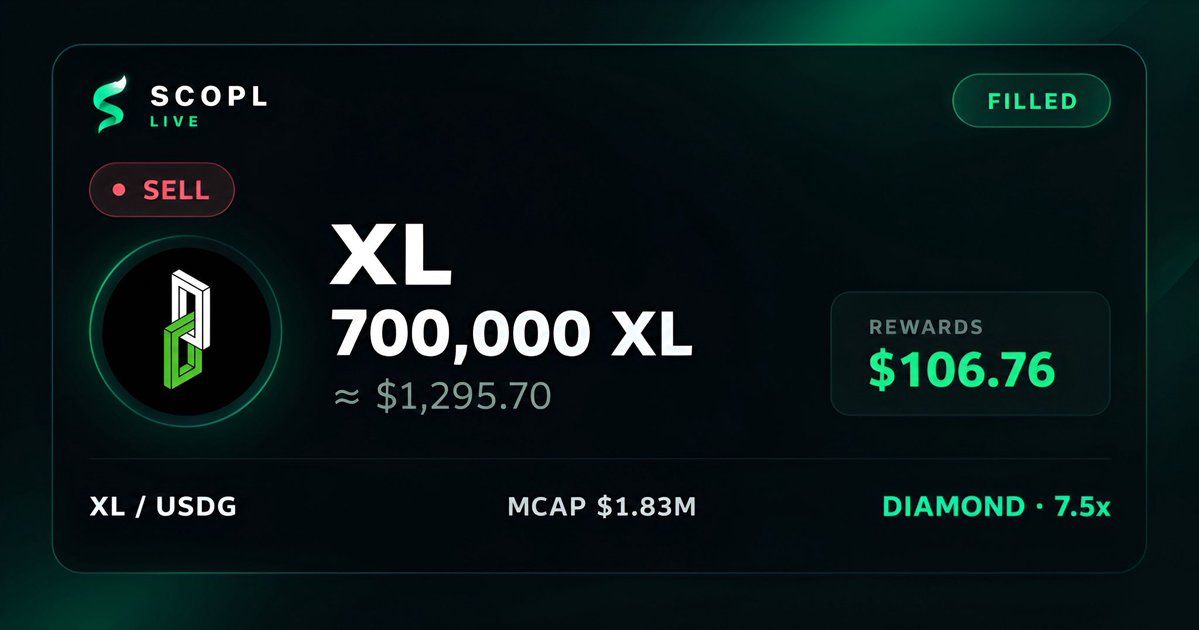
A user executed a $1,295.70 sell order on $XL.
0% platform fees. 🦊
0 slippage. 💸
0 price impact. 📉
But here’s the best part: $106.76 in rewards, 8.24% of his order size, without even counting the PnL on the trade itself.
As a Diamond holder (+1M $SCOPL),
that $106.76 represents 75% of the fees his order generated, paid directly back to him.
On top of that, the same order generated ~$35.59 for the protocol, with 50% going directly to the #Buyback Vault.
Now imagine this mechanism with $10K,$100K+ orders 🐋
You were going to trade anyway. So why not get paid to do it? 💵