🚨 BREAKING: Claude can now build you a full AI YouTube channel like a $10,000/month creator agency.
For free.
Here are 7 prompts to go from 0 → monetized AI channel in 90 days:
Canva + a laptop + an internet connection + just 60 minutes a day could help you build a profitable online skill.
I normally sell this step-by-step guide for $87, but for a limited time, you can get it completely free.
Like this post and comment "Canva", and I'll send the full guide straight to your DM.
Make sure you're following me so I can deliver it.
Free for the next 48 hours only.
Prompts to Elevate Your Website Design with AI 🚀
Stop using generic prompts for web design. If you want a site that actually looks premium and converts, you need a strategic design system.
Here is the 7-step prompt framework to build better digital experiences:
Check comment
Everything you need to know about AI Agents in 2026 🧠✨
AI is shifting from passive assistants to active agents capable of running code, fetching data, and triggering real-world actions across software tools.
💬 Save this post for reference!
#AI#TechGuide#Infographic
🚨 BREAKING: Claude can now help you build a CHROME EXTENSION that generates passive income every month.
Most people are sleeping on this completely.
Here are 8 prompts to build yours:
(🔖 Save this)
🚨 BREAKING: Claude can now help you build an entire mobile app like a professional development team—for free.
Use these 8 powerful prompts to plan, design, code, test, and launch high-quality mobile apps in a fraction of the time.
🔖 Save this before your next app idea.
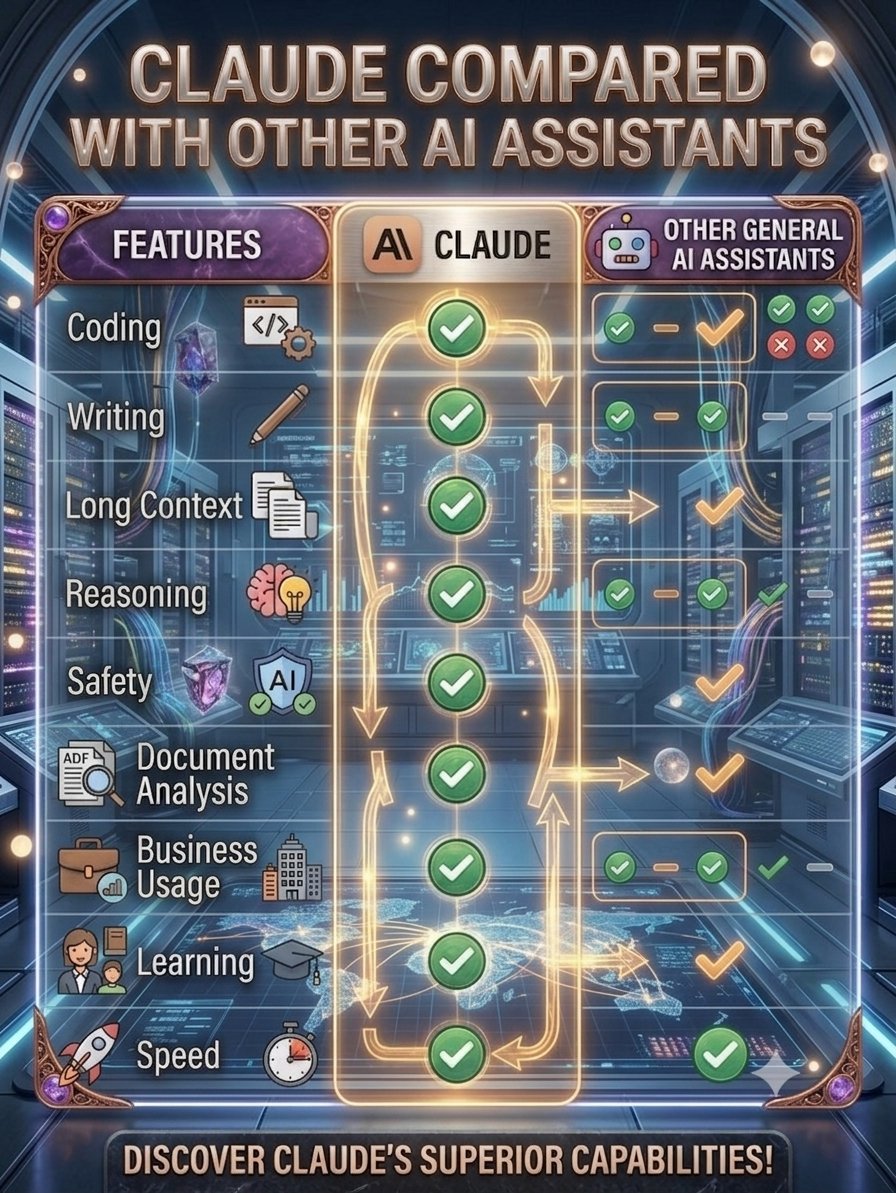
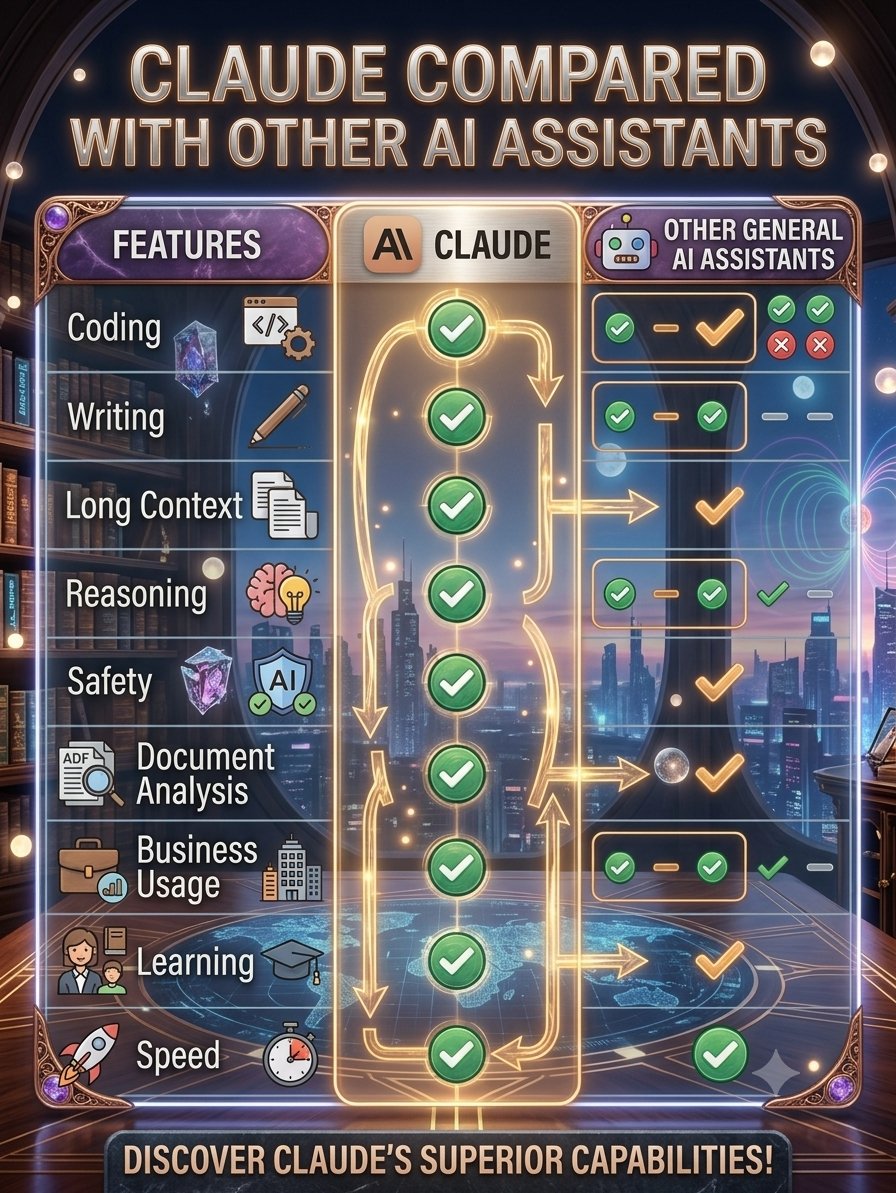
Why choose Claude over other AI tools? 🚀
From coding & reasoning to long context & top-tier safety, Claude delivers all-around perfection! 💡
Check out the chart to see how it dominates the competition.
#ClaudeAI#AIAssistant#TechNews#ArtificialIntelligence
Building software faster is only half the job.
Making sure it's secure before it goes live is just as important.
I like that @boltdotnew now handles security checks, fixes common issues, verifies the build, and even creates a rollback point during publishing.
That kind of built-in workflow helps developers ship with a lot more confidence.
🚨 ANTHROPIC JUST RELEASED A FREE 27-MINUTE CLAUDE PROMPTING WORKSHOP
Taught by the people who built Claude.
Free.
No registration.
No paywall.
I've seen $300 courses that don't cover what they teach in the first 8 minutes.
Bookmark it and watch it today before someone takes it down.
Shipping fast is great.
Shipping secure is even better.
That's why I like what @boltdotnew is doing. Instead of treating security as something you handle later, it checks for issues while you're building.
The less time developers spend worrying about security, the more time they can spend creating great products.
future is AI.”
“Learn AI, lead tomorrow.”
“AI is the new power.”
“Think smart. Think AI.”
“Step into the AI era.”
“AI: Work smarter, not harder.”
“Upgrade your mind with AI.”
“AI is changing everything.”
“Create the future with AI.”
“Start learning AI today.”
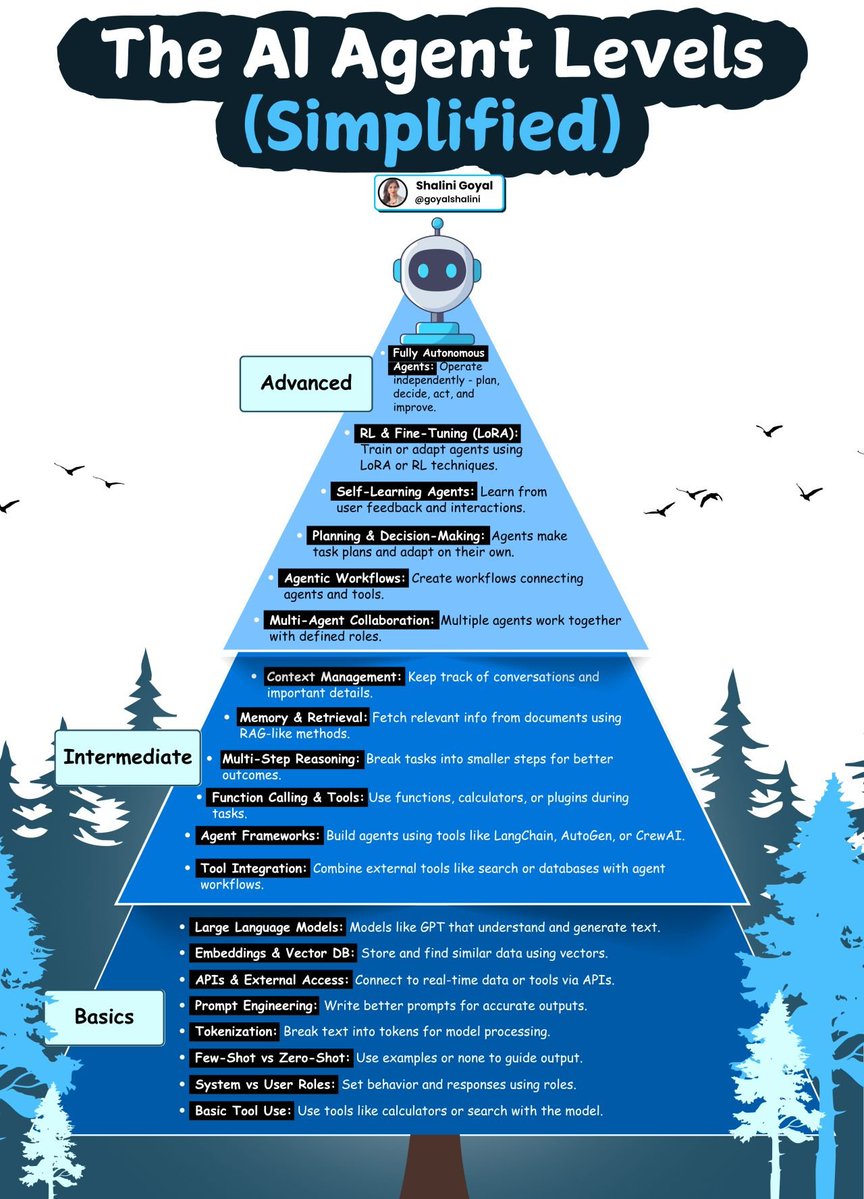
Want to get a quick idea about the different levels in AI Agents ?
Here’s a breakdown of AI agent capabilities into 3 clear levels, from basic to fully autonomous.
Let’s simplify it:
1. Basics
Start here if you’re new.
Understand how LLMs like GPT work, use prompt engineering, APIs, and simple tools like calculators or vector search.
2. Intermediate
This is where agents get smarter.
They start using functions, calling tools, managing memory, and reasoning through multi-step tasks. Frameworks like LangChain come into play here.
3. Advanced
At this level, agents act almost human.
They plan, self-learn, adapt through reinforcement learning, and collaborate in multi-agent workflows, working toward complete autonomy.
AI agents are evolving fast. Knowing where you (or your tool) stand on this pyramid helps you build, evaluate, and scale smarter AI solutions.
Agentic AI vs Traditional AI – What Sets Them Apart? Let's explore -
The future of AI is evolving from static tools to dynamic, autonomous agents.
Here’s a detailed breakdown of what makes Agentic AI the next big leap:
1. What is Traditional AI?
These systems follow fixed rules for narrow tasks like spam filtering or image classification.
They lack memory, can’t adapt, and require constant human input.
2. What is Agentic AI?
Agentic AI can reason, plan, act, and adapt.
It breaks tasks into subgoals, collaborates with tools and agents, and works independently to achieve outcomes.
3. Workflow Comparison
Traditional AI gives a one-off answer based on input.
Agentic AI follows a goal-driven cycle: plans the process, uses tools, refines output using memory and feedback - just like a human team would.
4. Agentic AI Components
Powered by LLMs like GPT-4 and Gemini, agent frameworks (LangChain, CrewAI), vector memory (Weaviate, Redis), and tools like code interpreters, APIs, and browsers.
5. Core Differences
Agentic AI is autonomous, dynamic, memory-based, and tool-integrated.
Unlike Traditional AI, it can handle complex workflows and collaborate in teams of agents.
6. Why Agentic AI Is the Future
It minimizes manual prompting, automates multi-step tasks, and works in real-time - paving the way for AI co-workers and full-scale enterprise automation.
Agentic AI isn’t just smarter - it's built to think, act, and adapt like a real assistant.
Why choose Claude over other AI tools? 🚀
From coding & reasoning to long context & top-tier safety, Claude delivers all-around perfection! 💡
Check out the chart to see how it dominates the competition.
#ClaudeAI#AIAssistant#TechNews#ArtificialIntelligence