Dear Bitcoiners,
headlines like "Bitcoin fans are psychopaths who don't care about anyone, study shows" create a bad image of #Bitcoin and its supporters. We are convinced that this image is undifferentiated and hope to be able to refute this by means of a study. 1/
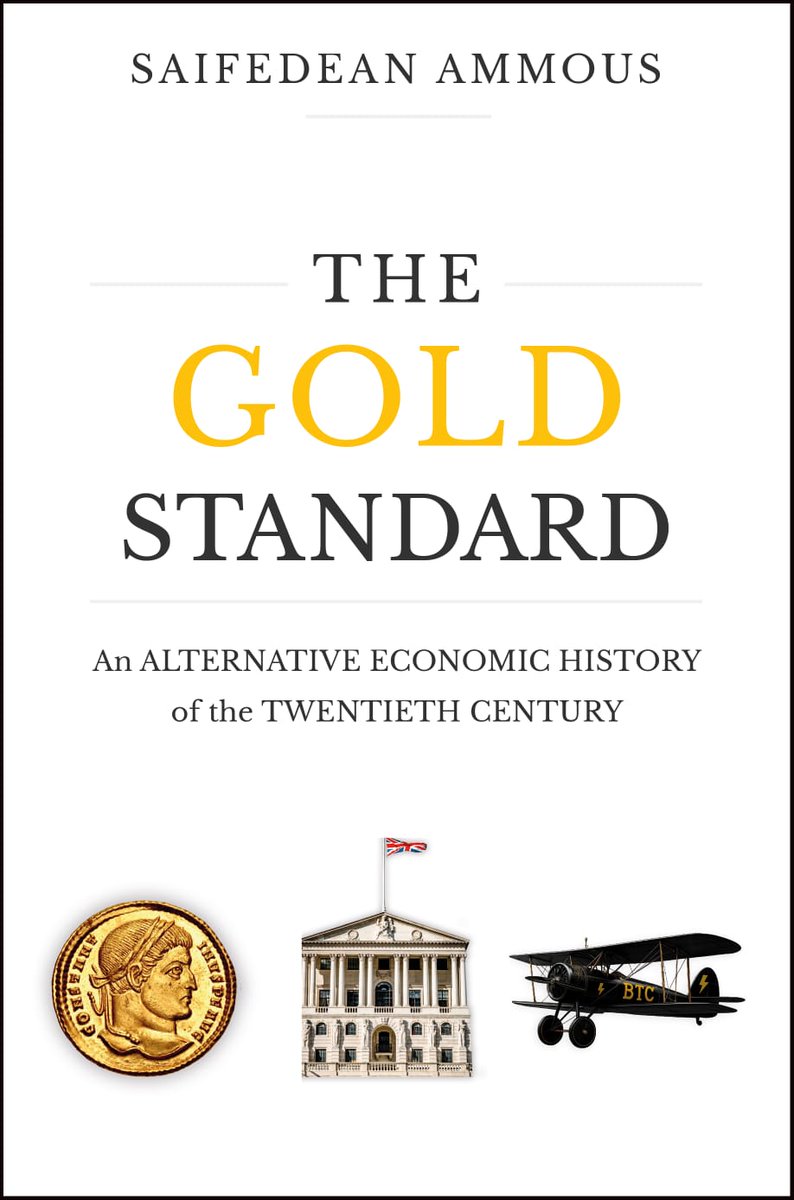
My new book, The Gold Standard, will be out on November 14!!
You can get your high-quality cloth hardcovers from https://t.co/QVUhWYnJ67 (pre-order available now), or a paperback from Amazon. Audiobooks and ebooks will be available, too!
Retweet and follow for a chance to win a free copy!
What would the twentieth century have looked like on a gold standard? What would have happened to the state without its money printer? What would have happened to prices, wages, living standards, capital markets, politics, energy production, technology, and education?
In The Gold Standard, I answer these questions with a unique alternative history that is one-third history, one-third novel, and one-third economic analysis.
In 1911, French aviation pioneer Louis Blériot partners with the Wright brothers to build the Blériot Transport Corporation (BTC), an airplane-based decentralized peer-to-peer gold-settlement network.
Dismissed by economists and the press as a doomed eccentricity, BTC alters world history in 1915 when it offers Europeans the chance to escape central bank war inflation by exporting their wealth to neutral countries, triggering a global financial panic that bankrupts the world’s major central banks and destroys their currencies. The World War comes to an abrupt end, and the fiat money experiment is strangled in its crib.
A new world order emerges around a free-market decentralized gold standard, and an entirely different twentieth century unfolds. Hard-money savings make capital plentiful and cheap, accelerating technological progress and increasing energy production. The death of central banking and the emergence of a free market in banking force banks to become safer and more responsible. Governments become accountable service providers, while their citizens become customers who expect, and get, better service at a lower cost year after year. Much more unfolds in this gripping, serious, and provocative thought experiment written in Ammous’s trademark engaging style.
Pre-order now at https://t.co/I7zjpi8xO2
Kindle version available for preorder on Amazon.
@zerohedge True.
That is why Bitcoin is based on energy: you can issue fake fiat currency, and every government in history has done so, but it is impossible to fake energy.
Die USA müssen dieses Jahr 7-9 Billionen Dollar refinanzieren.
In „Der Bitcoin Podcast“ haben wir vor Wochen darüber gesprochen, dass das Ziel Nr. 1 der USA ist, die Renditen für langfristige Staatsanleihen zu drücken.
Wir haben auch darüber gesprochen, dass das nur funktioniert, wenn Leute Staatsanleihen kaufen.
Höhere Nachfrage nach Staatsanleihen = geringere Rendite.
Wie kriegt man höhere Nachfrage für Staatsanleihen?
Indem man im Rest vom Markt Unsicherheiten schürt, wie z. B. mit Zöllen.
Anleger werden sich sich aus Aktien und anderen Risiko-Assets raus bewegen und dann in „sichere“ Staatsanleihen flüchten → Rendite runter.
Seit seiner Amtszeit wurde dadurch die Rendite um 0,8 % reduziert.
Bei 8 Billionen Dollar spart sich die USA damit 64 Milliarden pro Jahr.
Das Ziel wird es sein, dies weiter zu drücken.
Im Klartext bedeutet das: Wir sind in einem Porzellandladen, und der Elefant im Raum sind die staatlichen Schulden.
Der Elefant ist riesig. Die Zinskosten allein sind der größte Posten im US-Budget – höher als Sozialausgaben oder Verteidigung.
Das ist eine logische Konsequenz aus einem schuldenbasierten Fiat-System.
Dieses System wird alles dafür tun, um so lange wie möglich am Leben zu bleiben.
Zölle etc. wirken kurzfristig. Langfristig bleibt dem System nur eine Möglichkeit, das Unvermeidbare abzuwenden: Inflation.
Inflation reduziert die reale Schuldenlast für einen Staat, kommt aber mit einem hohen Preis für die Bürger.
Wer diesen Preis nicht zahlen will, hält souveräne Assets, die nicht inflationierbar sind: Gold und Bitcoin.
Die ganze Welt weiß, dass Gold genau diese Funktion hat. Daher die Höchststände von über $3.000.
Was meinst du, passiert, wenn die Welt lernt, dass Bitcoin 10x besser ist als Gold?
Wer versteht, was er hält, lässt sich von kurzfristiger Volatilität nicht beeindrucken und genießt den Frühling.
Die Ampel ist Geschichte und hier habe ich das Wichtige für euch zusammengestellt:
"Inflation und Steuern, liebe Freunde, sind Raub. [...] Wir brauchen #gesundesGeld." - @JoanaCotar#Bitcoin
Top!
Unsere Regierung verpennt es, Unternehmen handeln.
Die Deutsche Telekom Tochter @Telekom_MMS startet gemeinsam mit dem @BankhausMetzler ein Pilotprojekt, um eine #Bitcoin-Mining-Infrastruktur auf Basis überschüssiger Energie zu betreiben. Das Mining soll zukünftig mit dem Strom aus erneuerbaren Energiequellen betrieben werden, der sonst ungenutzt bleiben würde.
"Durch die flexible Last könnten Bitcoin-Miner in Zukunft eine wichtige Rolle beim Ausgleich von Angebot und Nachfrage im Energienetz spielen."
Sagen die Bitcoiner seit Jahren!
Gut, dass man jetzt auch in Deutschland vermehrt zuhört.
Quelle: https://t.co/ieFCyMYwhS
We are pleased to inform that our study "Individual differences in Bitcoin investment: The role of personality, attitudes, and knowledge" has finally been published. #Bitcoin
All data are accessible open source: https://t.co/FjbUgjWX7E
@blocktrainer@thecoinspondent@NikoJilch
Key findings:
-Investment in Bitcoin cannot be predicted by personality or reward sensitivity.
-People who invest in Bitcoin prefer meritocratic over welfare-oriented justice.
-The amount of Bitcoin owned is related with knowledge in this domain.
A discussion with @BlockTrainer on the evolution of economics into a science, the limitations of conventional investment theory, the digital transformation of capital, the physics of money, a 21-year macro forecast, and how #Bitcoin can improve the world.
Überschüssiger Strom aus erneuerbaren Energien wird in Deutschland zunehmend zum Problem. Bitcoin-Mining könnte eine Lösung dafür sein, aber es gibt auch Herausforderungen. https://t.co/aQUsplX4Zy
Deutschland verliert seine ökonomische Basis und hat vergessen, was es stark gemacht hat. Kann man das Ruder noch rumreißen -und welche Rolle kann #Bitcoin spielen?
Vielen Dank für das spannende Gespräch an @NikoJilch#Deutschland#Wachstum#Wohlstand
https://t.co/Qy2eY3ofxB
Bitcoin wird häufig mit anderen Kryptowährungen in einen Topf geworfen und dann auch noch gegen Gold ausgespielt. Das ist unredlich. Ein Kommentar. https://t.co/kmII1HgGvx