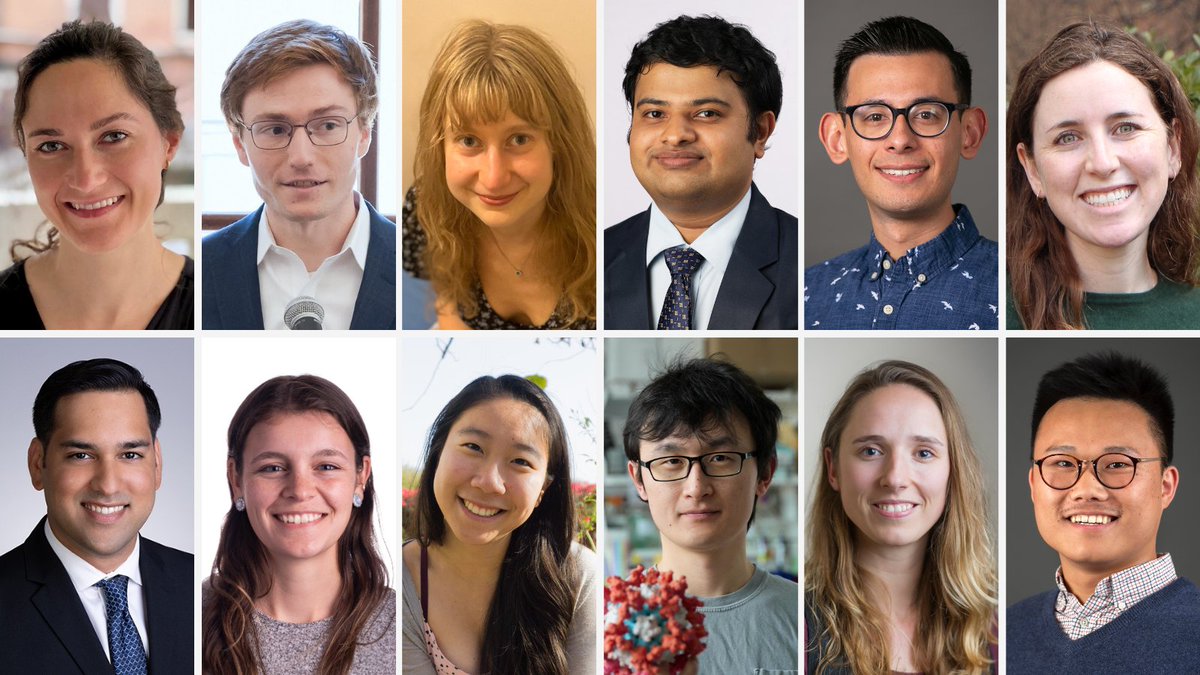
We are excited to announce our 2025 Schmidt Science Fellows! 32 early career researchers, nominated by the world’s leading research universities, who will take an interdisciplinary approach to advancing discovery https://t.co/rB1faqzYY0
Our recent piece: Transcending the hegemony of the molecular machine through an organic renewal of biology and biomedicine. Here, Alan covers the State of Science in biology and biomedicine, why it has stagnated, and where it needs to go. https://t.co/N7Zjb33xzj
4/4 Focusing on the supracellular scale, we articulate how holistic biophysical thinking provides an expanded view of three key concepts in biology (epigenetics, mechanism, and regulation).
1/4 In our new concept paper in @BiolTheory, we elaborate an investigative approach that prioritizes the art of careful observation, the biological whole, and physical thinking in order to develop novel biological theories of morphogenesis. https://t.co/GY89aJKkHL
3/4 We discuss that, while underrepresented, holistic biophysical thinking is not new and was apparent in the approach of two notable 20th century theorists of morphology, D’Arcy Thompson and Pere Alberch.
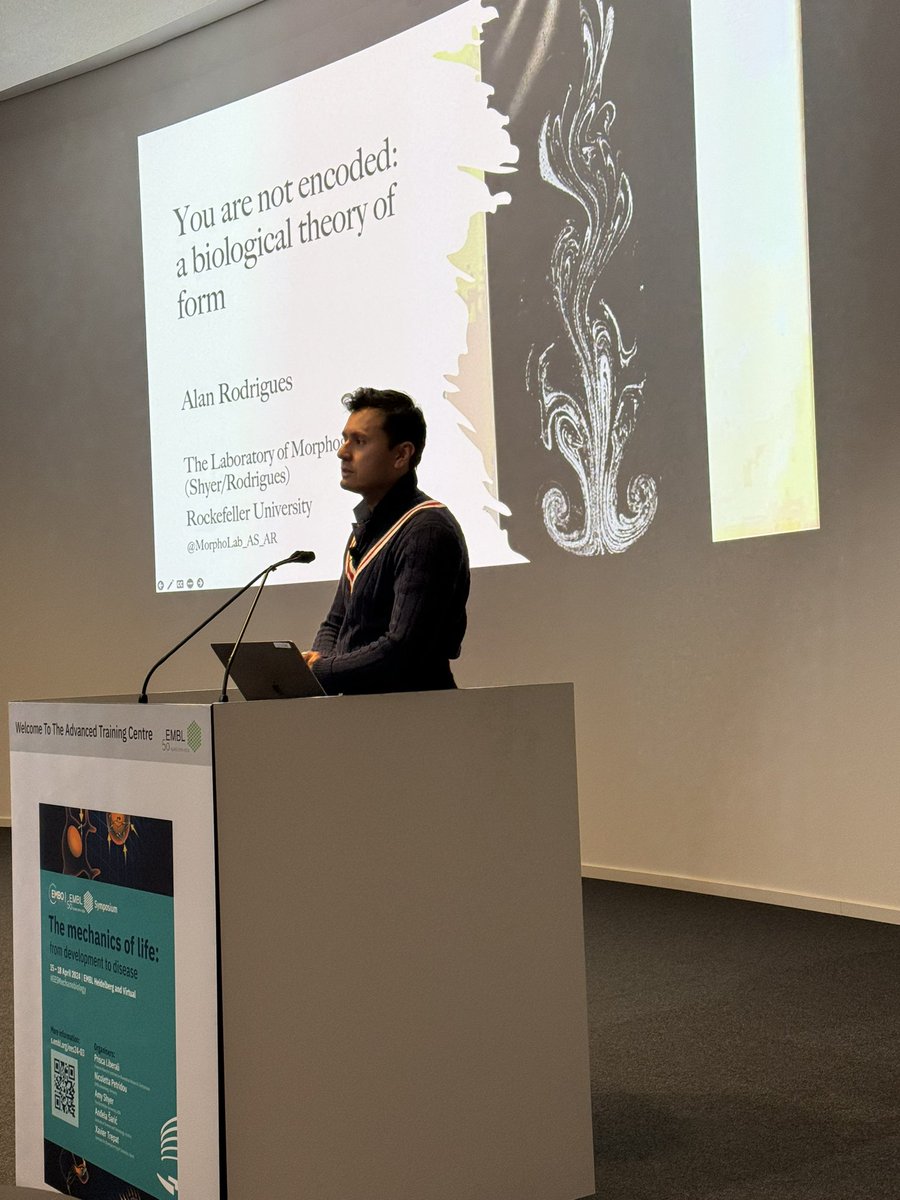
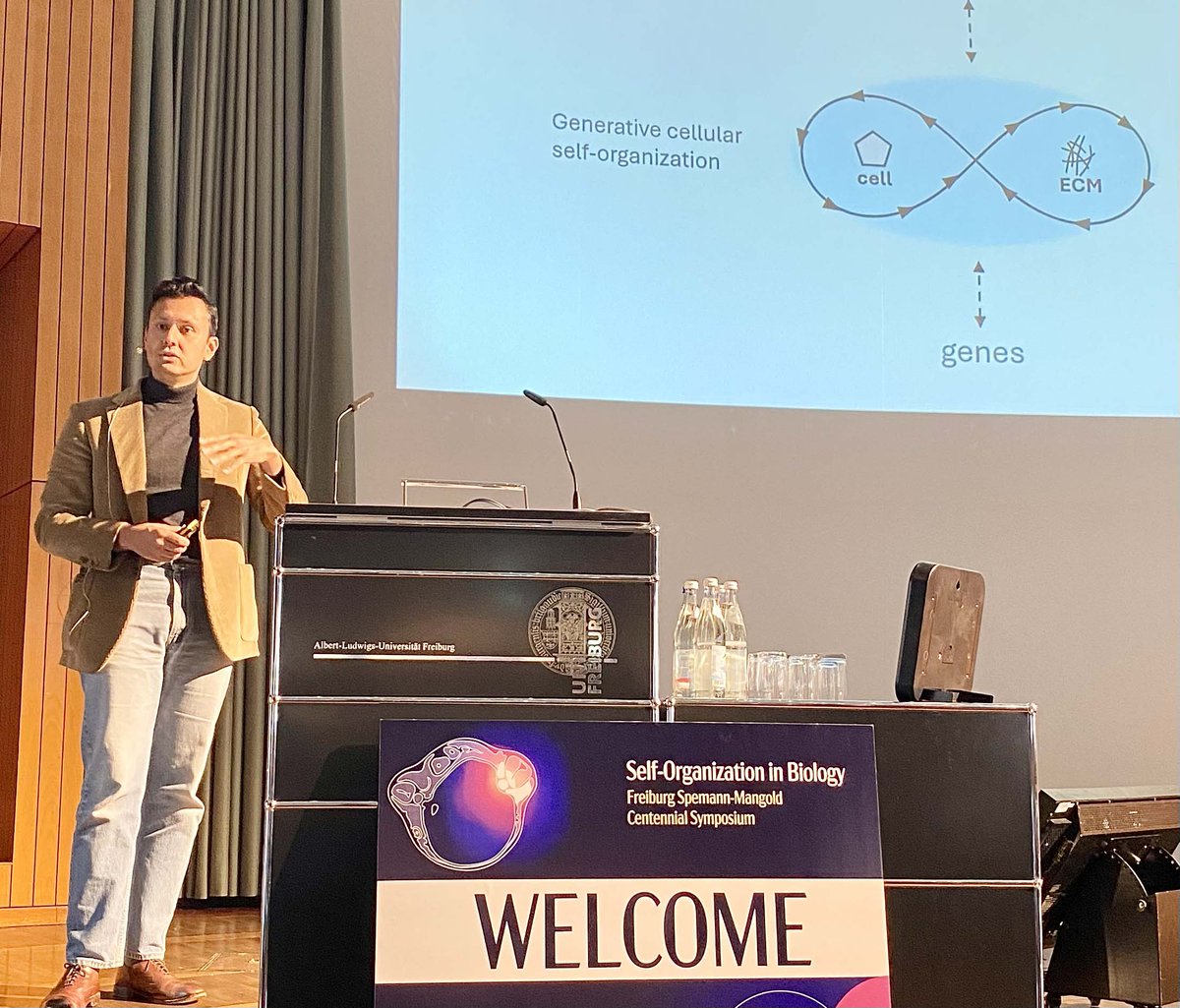
@MBLScience Embryology alumna Amy Shyer & Alan Rodriguez from @RockefellerUniv kick off the first afternoon session
Amy puts forward a different way of thinking about morphogenesis not as a machine but as a consequence of reciprocal causality
https://t.co/EHCuI1PDid
https://t.co/WiXLuaeCzk
Alan, in turn, describes experimental approaches to test this model
https://t.co/rKx8UDzEY6
https://t.co/T2ju2hZRzb
#spemannmangold2024 @UniFreiburg
Our seminar at the Cambridge Morphogenesis Seminar Series is available online! Feel free to take a look if you are interested in attempts to transcend reductive machine thinking through an organic revival of morphogenesis.
https://t.co/Xti5mvqk8n
Congrats to @karl_palmquist for winning the Weintraub Graduate Student Award! We were very fortunate to work with Karl and are immensely grateful for the conceptual openness and intellectual bravery he exhibited throughout his time in the lab.
A huge congratulations to the recipients of the 2024 @FredHutch@WeintraubAward! These twelve exceptional graduate students exemplify the bold, creative, and pioneering spirit embodied by Dr. Hal Weintraub: https://t.co/Sg5A7C3ZQ4
@Amro_Hussien@CellCellPress Thank you for bringing this up to my attention, It is a very good discussion, probably the best I know of, on the topic of #SelfOrganization in the Developmental Biology
4/Simultaneous causal influence between separate entities—aka reciprocal causality—empowers self-organizing systems to create form. From this outlook, we review recent studies where self-organization at the supracellular scale drives creative processes during organ morphogenesis.
3/For example: interacting components at a low length-scale give rise to complex patterns at a higher scale. At the same time, the self-organized order at the higher scale influences the low-level components, establishing a self-perpetuating system. New forms emerge.
By focusing on the emergent features of cell collectives, instead of individual cells, scientists in the @MorphoLab_AS_AR forge a new path for understanding how organs develop their architecture. #RockefellerScience
https://t.co/oIp3l7WRIn
10/We are very grateful to graduate students Sichen Yang and @Karl_Palmquist for leading this project. In addition, we had the good fortune of collaborating with applied mathematician Pearson Miller, who created the insightful quantitative biophysical models in this study.
When it comes to understanding morphogens, have we been missing the forest for the trees? By focusing on the emergent features of cell collectives, instead of individual cells, here we endeavor to make sense of how morphogens morph! (1/10)
https://t.co/N3yt18PjNB
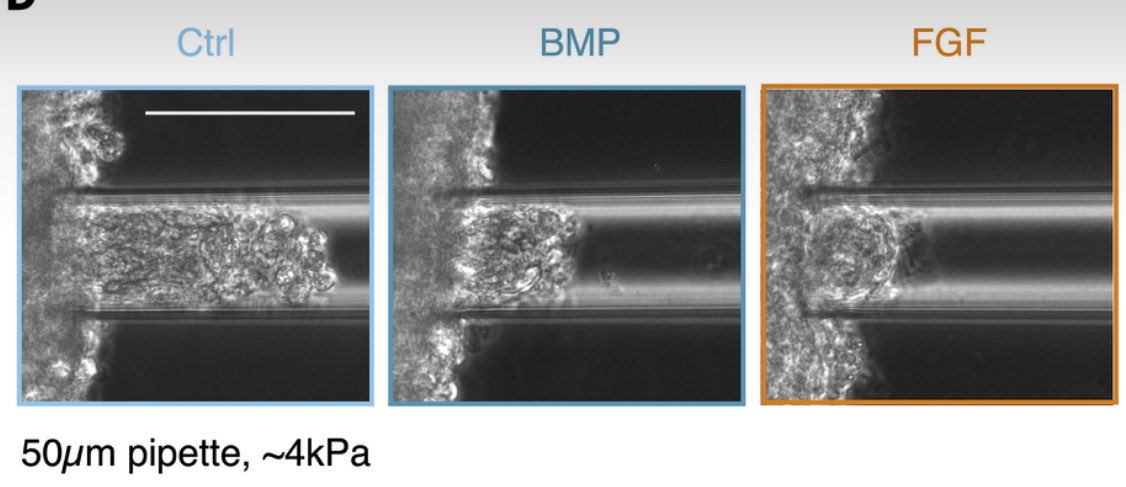
9/This study suggests that the subtle tuning of hundreds of genes at the individual cell scale can coalesce into emergent and discrete material and mechanical properties that are ultimately responsible for the creation of organ morphologies.