A collaboration between the Brain, Language, & Acoustic Behavior Lab (Carrie Niziolek) and the Speech Motor Action + Control Lab (Ben Parrell) at UW-Madison
@parrell & @carrieniziolek's latest publication found that speakers will increase their speech contrast when receiving vowel-centering auditory feedback. Read the full article at: https://t.co/LqQJLhtbx4
#ArticlesInPress "Increased speech contrast induced by sensorimotor adaptation to a non-uniform auditory perturbation"
Benjamin Parrell and Caroline Niziolek
#speech#adaptation#neuroscience
https://t.co/k3BXYHge1r
@RPKarlinguist@parrell And last but not least on Thursday at 10:20 (clinical phonetics 2) postdoc @AnnekeSlis will talk about the possibilities and challenges of using MFCCs and unsupervised clustering on simple motor speech assessments to find subtypes of ataxic dysarthria
We've got three talks this week at #ICPhS2023! They cover a wide spread of the kinds of research we do at the SMAC Lab. Come check out some of our projects! 👇
@RPKarlinguist On Tuesday at 15:40 (special session) @parrell will talk about how we can use computational models to better understand the underlying mechanisms of different perceptual symptoms in people with motor speech disorders, with a case study focusing on variability in ALS
New TMS review paper out in @ExpBrainRes: https://t.co/ZKGWjWT2B8; if you are interested in the behavioral and neuropsychological effects of different TMS protocols over somatosensory areas, check it out~
With @parrell and @carrieniziolek ; @MotorSpeech
We know speakers adapt to altered auditory feedback by opposing the perturbation. But how many times do they need to hear the perturbation before they change?
1️⃣ !
Our latest on "one-shot" formant adaptation in eLife: https://t.co/BamF2MUEex
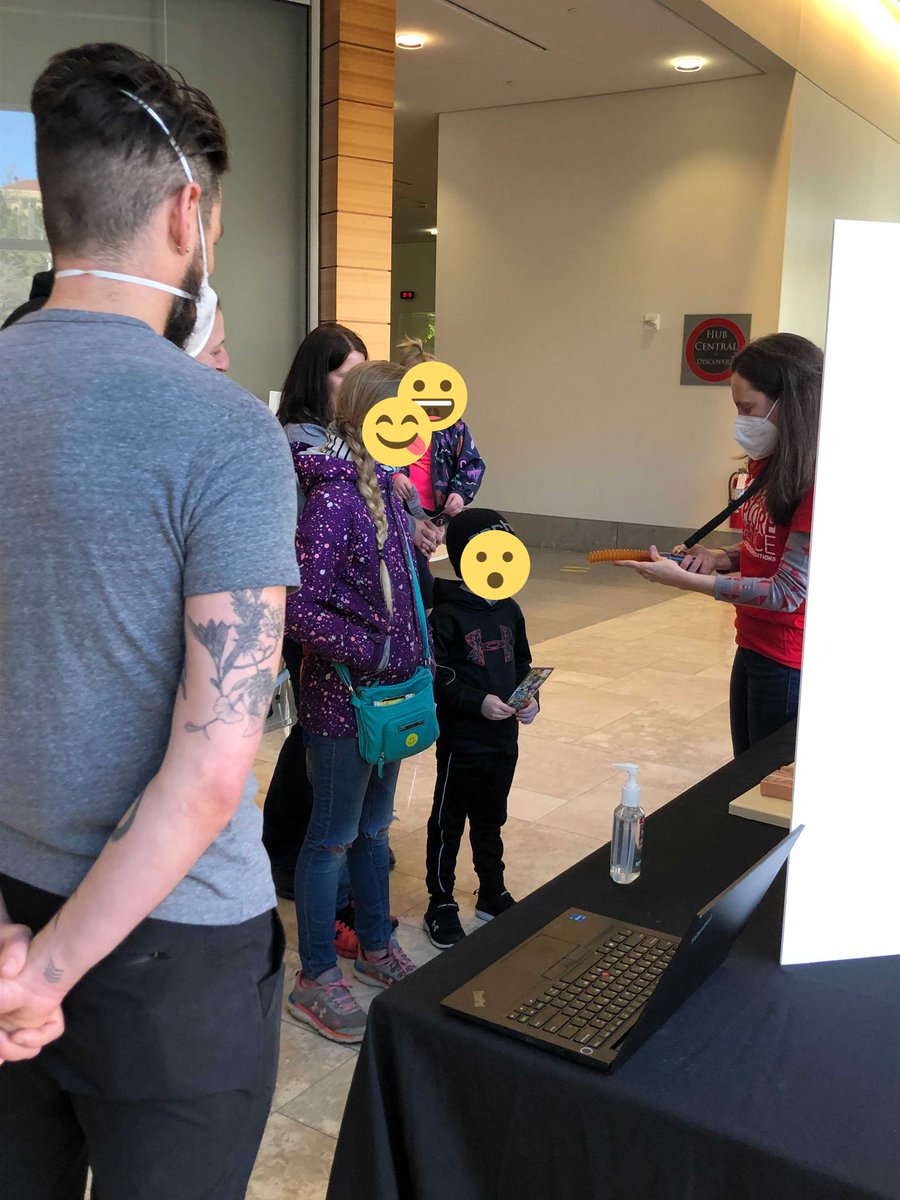
Thanks to everyone who visited our exhibit How Our Senses Help Us Move at #UWScienceExpeditions this weekend! We had a blast showing folks that playing cornhole with prism glasses on is hard at first, but it gets easier pretty quickly. Thanks, feedback-based motor control system!
Congrats to our undergrads Katie Zettel (BLAB) and Bailey Meyers (SMAC) for receiving a Hilldale Research Fellowship from UW-Madison! 🎉 We look forward to working with you on your projects next year 🗣
https://t.co/REOmWRQc1T
New preprint up https://t.co/wpDUhLtuVb with @parrell and @carrieniziolek! We examined whether and how variability may be regulated during speech production. Summary below—comments are welcome.
We are hiring! @MotorSpeech is looking to fill TWO research positions for NSF and NIH-funded work. Ideally at the postdoc level but we are open to new grad students or hiring staff researchers with a Masters or Bachelors as well. Details attached. Please share!
In more great @MotorSpeech lab news, @RPKarlinguist just received the NOA for her F32!!! She’ll be examining cerebellar regulation of timing across speech and manual control. Not only is it a great project, Robin’s is the first external grant for the lab! This also means... (1/3)
Congrats to two of our outstanding undergraduate students, Sophie Johnson & Jenna Krakauer, who have both been awarded Hilldale Undergraduate Research Fellowships @UWMadison ! Looking forward to continuing our work with them in 2021-2022.
https://t.co/RNWZ2voNjM
Next week at #NCM2021, Postdoc @DinglanTang1 will be giving a ⚡️Blitz talk ⚡️on movement variability regulation in speech - listen in on April 20th at 12pm CDT (5pm UTC)!!
New work from Waisman investigator @carrieniziolek's BLAB Lab & @MotorSpeech is the focus of our latest #waismancenterslideoftheweek. Check our their work on 'responses to auditory feedback manipulations in speech' here:
https://t.co/Eyr595Glq2
Does syllable stress impact how speakers correct for auditory feedback errors? Check out @BakstSarah & @carrieniziolek's new publication available today on @ASA_JASA
https://t.co/SrNciD5H12