Warren Buffett’s Financial Statement Rules of Thumb:
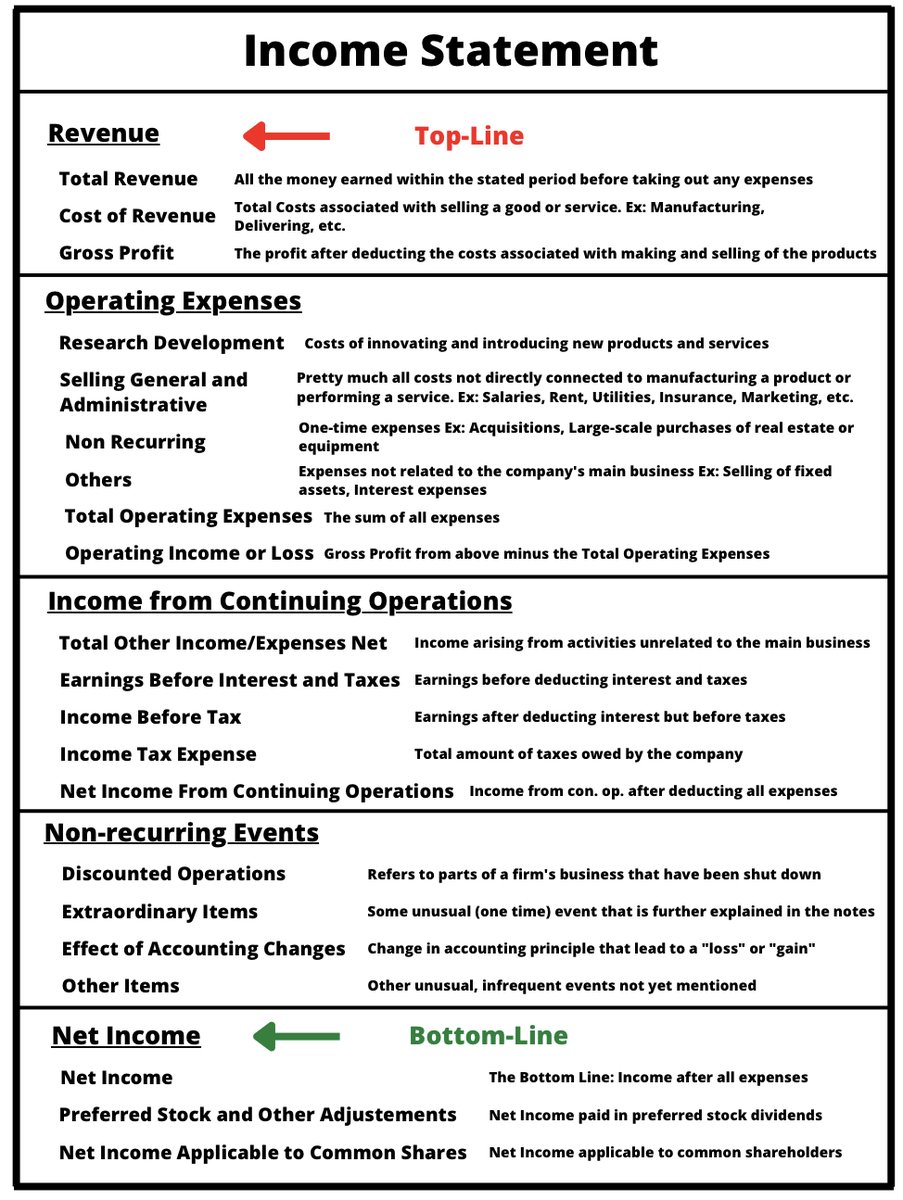
INCOME STATEMENT RULES OF THUMB:
1: Gross Margin
→Equation: Gross Profit / Revenue
→Rule: 40% or higher
→Logic: Signals the company isn’t competing on price.
2: SG&A Margin
→Equation: SG&A Expense / Gross Profit
→Rule: 30% or lower
→Logic: Wide-moat companies don’t need to spend much on overhead to operate.
3: R&D Margin
→Equation: R&D Expense / Gross Profit
→Rule: 30% or lower
→Logic: R&D expenses don't always create value for shareholders.
4: Depreciation Margin
→Equation: Depreciation / Gross Profit
→Rule: 10% or lower
→Logic: Great businesses don't need a lot of depreciating assets to maintain their competitive advantage.
5: Interest Expense Margin
→ Equation: Interest Expense / Operating Income
→ Rule: 15% or lower
→Logic: Great businesses don’t need debt to finance themselves.
6: Income Tax Expenses
→ Equation: Taxes Paid / Pre-Tax Income
→ Rule: Current Corporate Tax Rate
→Logic: Great businesses are so profitable that they are forced to pay their full tax load.
7: Net Margin (Profit Margin)
→ Equation: Net Income / Sales
→ Rule: 20% or higher
→ Logic: Great companies convert 20% or more of their revenue into net income.
8: Earnings Per Share Growth
→ Equation: Year 2 EPS / Year 1 EPS
→ Rule: Positive & Growing
→ Logic: Great companies increase profits every year.
⚖ BALANCE SHEET RULES OF THUMB:
9: Cash & Debt
→ Equation: Cash > Debt
→ Rule: More cash than debt
→ Buffett's Logic: Great companies don't need debt to fund themselves.
10: Cash & Debt
→ Equation: Cash > Debt
→Rule: More cash than debt
→Logic: Great companies generate lots of cash without needing much debt.
11: Adjusted Debt to Equity
→Equation: Total Liabilities / Shareholder Equity + Treasury Stock
→Rule: < 0.80
→Logic: Great companies finance themselves with equity.
12: Preferred Stock
→ Rule: None
→ Logic: Great companies don't need to fund themselves with preferred stock.
13: Retained Earnings
→ Equation: Year 1 / Year 2
→ Rule: Consistent growth
→Logic: Great companies grow retained earnings each year.
14: Treasury Stock
Rule: Exists
→ Logic: Great companies repurchase their stock.
💸 CASH FLOW STATEMENT:
15: Capex Margin
→Equation: Capex / Net Income
→ Rule: <25%
→ Logic: Great companies don't need much equipment to generate profits.
Caveats:
1️⃣ There are plenty of exceptions to these rules.
2️⃣ CONSISTENCY IS KEY!
Want to go deeper into analyzing financial statements?
Join me tomorrow (Thursday, Oct 12th) for a FREE webinar.
Topic: How to analyze unprofitable business.
RSVP here: https://t.co/TqIhUAp2C3
Follow me @BrianFeroldi for more content like this.
What "rule of thumb" do you like best?
Aswath Damodaran is the ‘Dean of Valuation.’
For almost 4 decades, he has been teaching valuation at NYU.
He also teaches millions of people online.
Here are 7 Key Valuation Lessons from the Dean👇🏼
(+PDF of his Class Presentation)