The two leagues are in the process, as previously reported, of submitting to Senate staff members their suggested revisions to the legislation. The revisions were expected by today.
The revisions are believed to be critical in garnering the support of the conferences.
House R's pushing the SCORE Act also blasted the Cruz-Cantwell effort. Big 10 and SEC came out against the bill yesterday, too.
It'll be tough to get any NIL bill through either chamber right now.
Sen. Cruz: "This is a time when both political parties are battling like crazy... I hope and pray and I'm encouraged that this is a moment where we can come together." He praises Sen. Cantwell, saying, "We have spent hundreds if not thousands of hours negotiating this bill." He called it "excrutiating."
"When we had moments when everything broke down, I did have my staff bring in Cuban coffee."
Sankey’s response to catch-all product (albeit a noble effort) reflective of *intense* negotiations. Bill’s nothing without SEC + Big Ten buy-in & meaningful tweaks to the private right of action provisions.
Still, Cantwell’s flip on antitrust protections is SOMETHING.
Virginia Tech is voting June 1 to create Hokie Ventures LLC 👀 Here’s the full breakdown from my POV:
The structure splits the job in two. The AD manages coaches, athletes, and general operations. The CEO of Hokie Ventures runs the commercial side: sponsorships, multimedia rights, naming rights, and donor engagement.
It will be governed by an independent board, not the university, giving it flexibility to operate like a business.
Virginia Tech is capitalizing it with $15.2 million from the $229.2 million “Invest to Win” plan approved last fall.
The person presenting the plan to the Board is Brandon Hall, Virginia Tech’s athletics CFO. He was Clemson’s CFO when Clemson Ventures launched in 2024. He’s bringing the blueprint with him.
They also built in the option to convert to a for-profit structure down the road to manage NIL and attract private capital.
This is also happening as Virginia Tech simultaneously searches for a new AD, a new university president, and a new Hokie Club director. The LLC is part of a complete reset of how the institution approaches athletics commercially.
Clemson, Kentucky, Michigan State, and Texas Tech have all moved in this direction. The separation of commercial operations from traditional athletic department functions is becoming the standard.
I have spoken to Maria Cantwell’s team on many occasions, and find myself a little bit more concerned each time. Somehow they seem to have lost part of the message about free labor markets. I don’t know who else has their ear, but someone clearly does.
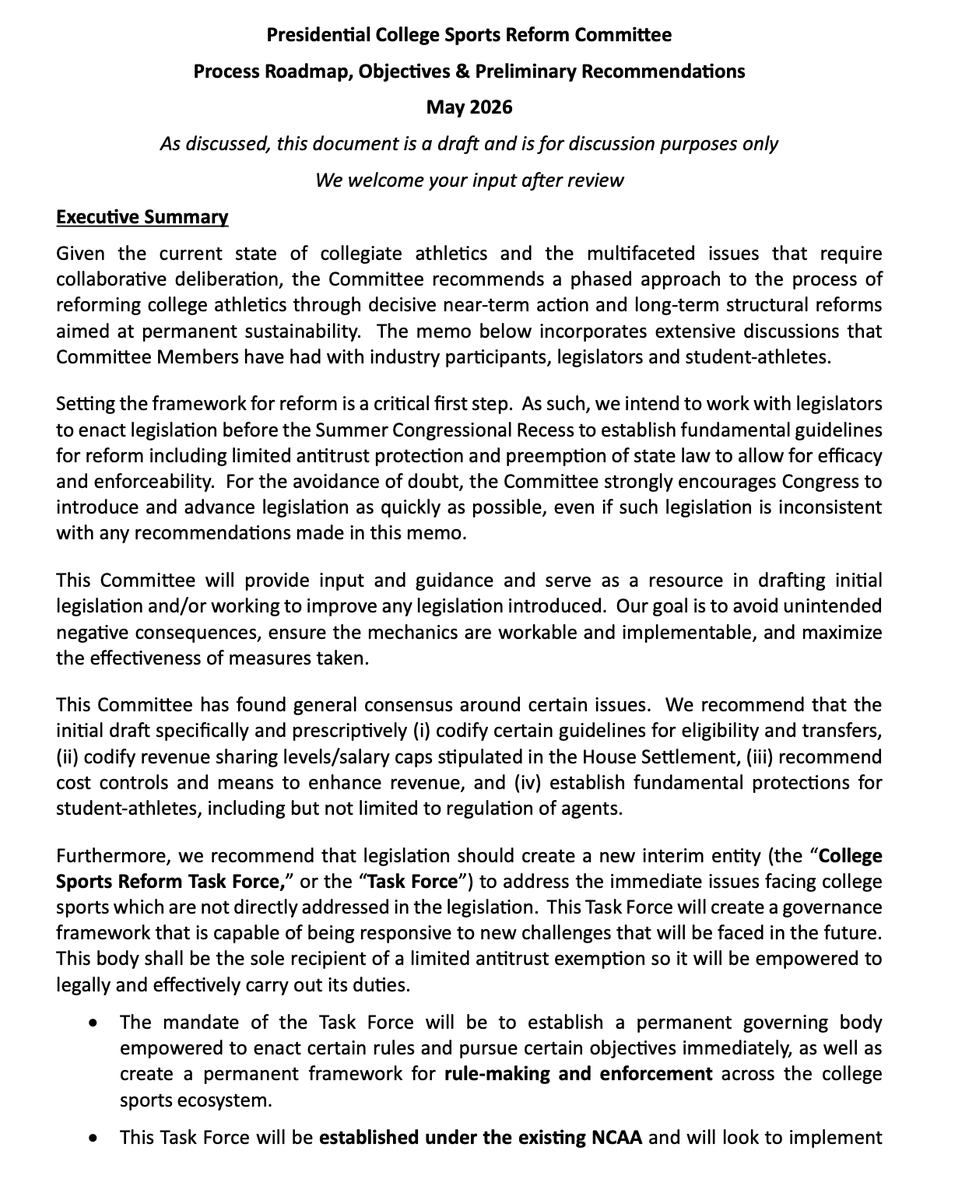
“Discussion draft” for a reason. No one involved believes there’s a silver bullet solution here. The goal now is to regain momentum before lawmakers fully shift into campaign mode and the issue gets punted until next year.
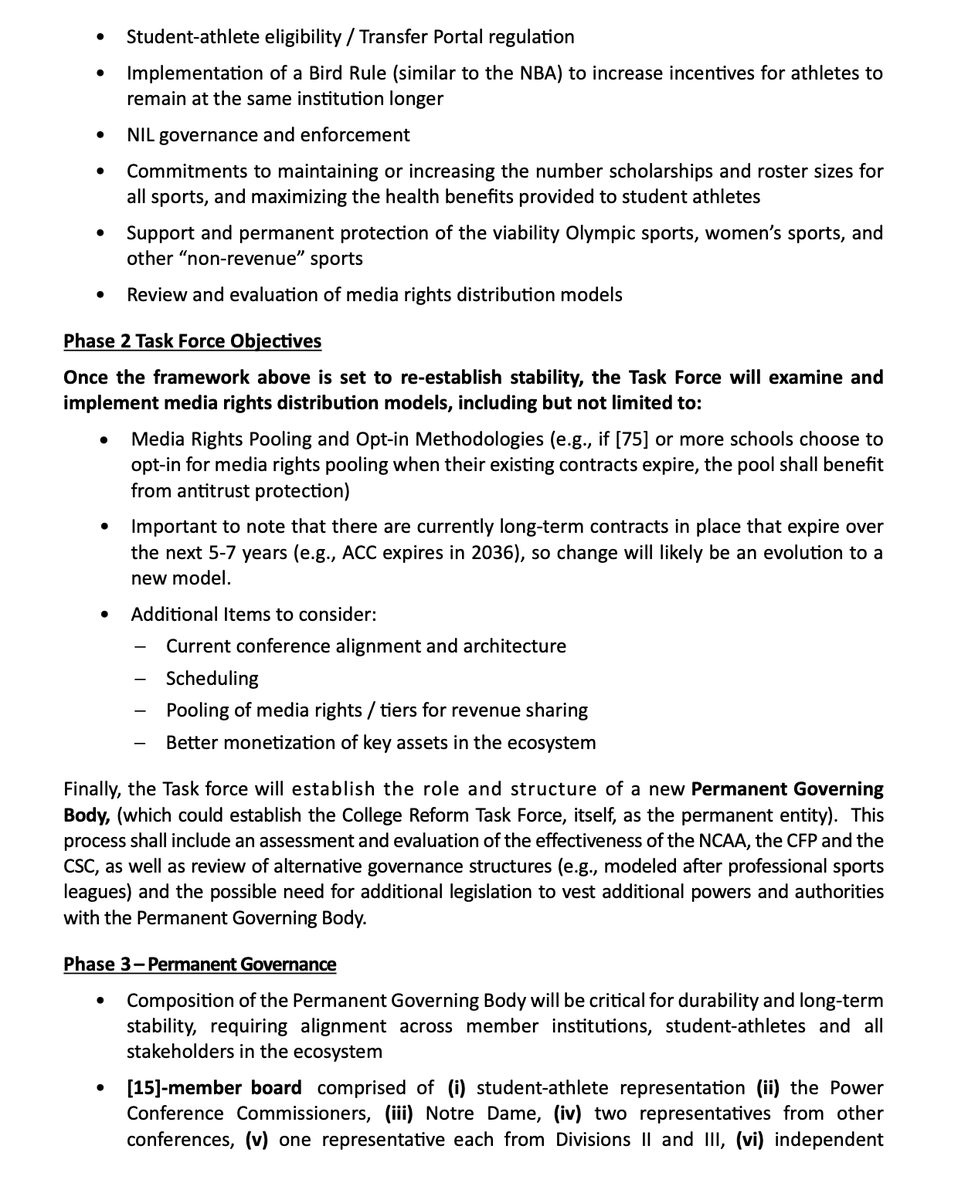
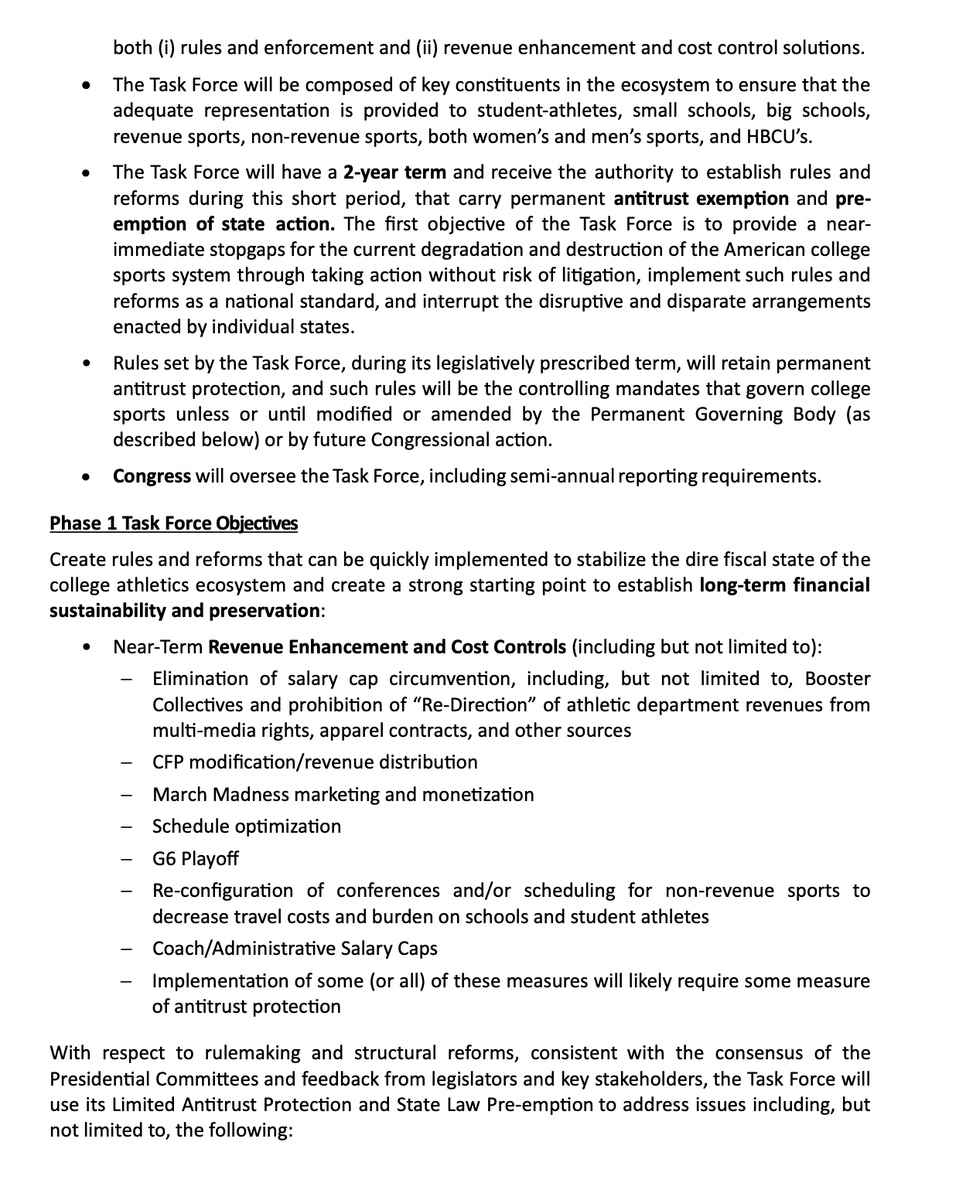
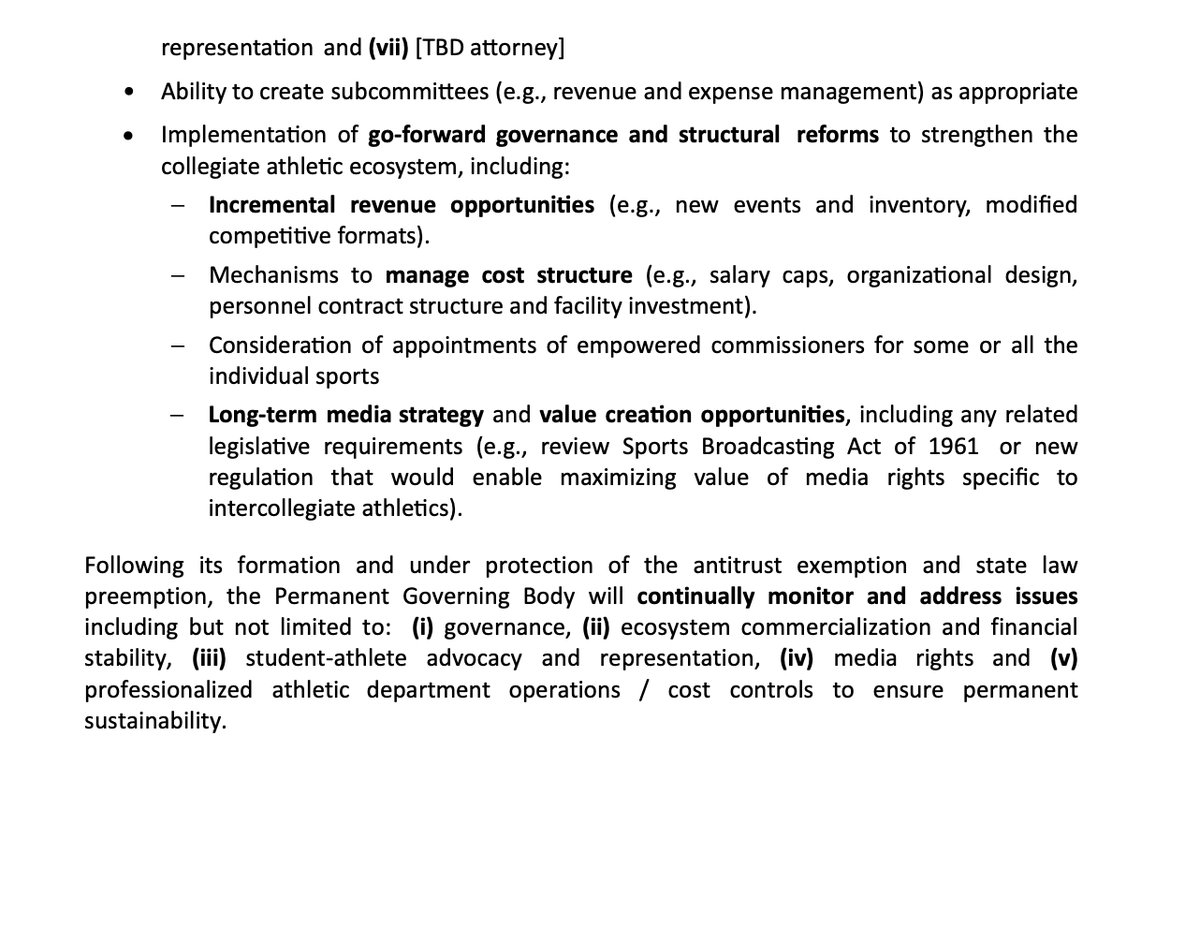
The college sports presidential committees have produced a draft of preliminary “ideas,” including establishing a new governing entity; strict cap circumvention; G6 playoff; regionalizing Olympic sports; capping coach/AD salaries; eligibility/transfer standards; pooling TV rights
Notable timing by RedBird / Weatherford — all unfolding amid active policy conversations in Washington.
This partnership, alongside TPG/Learfield, underscores how quickly the business of college athletics is evolving.
Big 12 has approved its private capital deal with RedBird Capital - the first such arrangement from a major NCAA conference.
Schools have a choice to opt in for ~$30M in capital and league gets at least a $12.5M infusion as part of a strategic partnership
https://t.co/7wtCwe9s0p
When compensation is driven by bidding dynamics rather than performance or development, it distorts the university model.
Applying that logic to athletes does not fix anything. It risks undermining both player development and the academic mission.
Good for Kalen DeBoer! That’s market forces at work. He’s getting $12.5 million per year because Alabama believes that’s his worth. The school is the arbiter of fair market value and there’s no third party that can reject the deal.
Yet, athletes must submit deals to a College Sports Commission so that it, which has no basis for making “fair market value” determinations, can unilaterally and arbitrarily decide whether deals are accepted or rejected.
It’s such a perverse system.
@HeatCulture13 It’s primarily a talent issue. Despite the lack of it, Heat have still overperformed in recent years because they’re well-coached. The problem rests squarely with management missing on the Lillard-like pairing w / Bam and Jimmy/Tyler. Need complimentary talent, not just hustlers
Mullins returning is huge for college basketball. NIL has clearly emerged as a real counterweight to one-and-dones.
It also raises the price of staying—forcing these questions sooner rather than later.
Braylon Mullins’ decision to return to UConn is one of many examples that resoundingly refutes the narrative that NIL is bad for college athletics. Change is uncomfortable but when you have players turning down the chance to be first round draft picks to be college sophomore everyone wins.
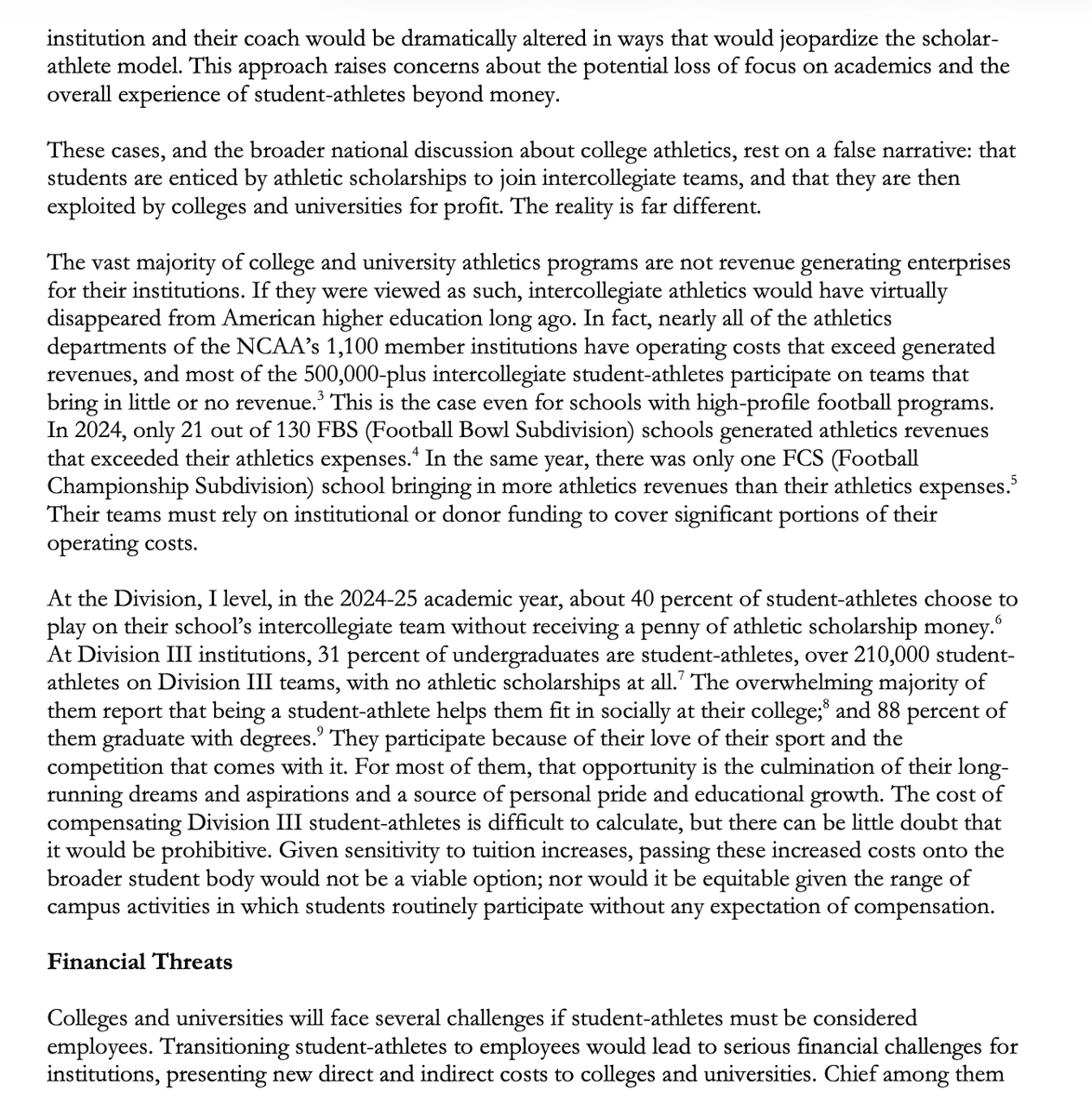
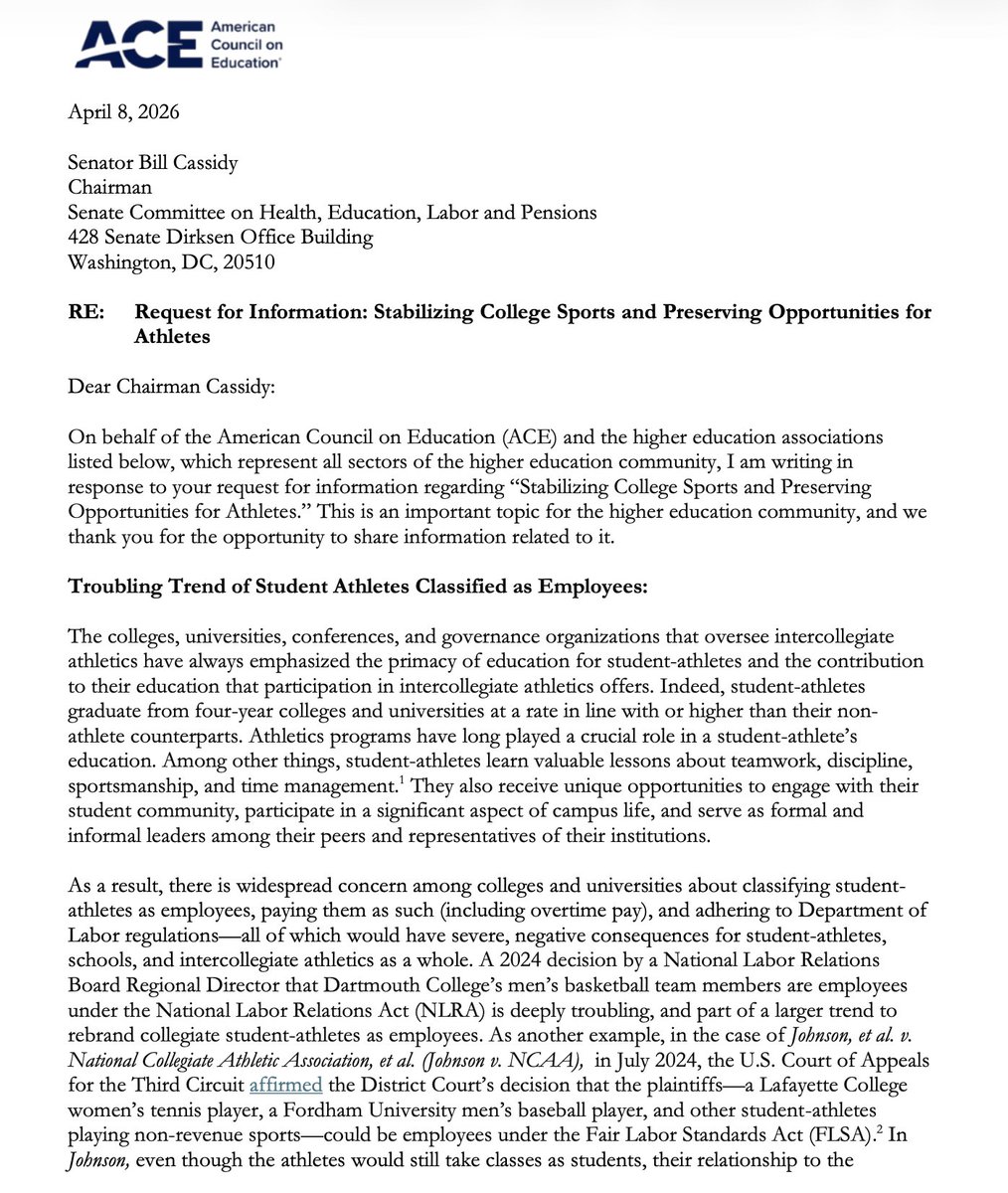
The American Council on Education along with several other higher ed associations penned a letter to Sen. Bill Cassidy, the chair of the Senate HELP Committee, arguing against college athlete employment as “potentially devastating” to the higher education system in America.
Agree with this. If anything, this deal may serve as a proof point that PE can operate around college athletics (media, sponsorship, data) before moving into the core.
The real inflection comes if schools start internalizing these functions and pair them with capital.
I think the big source of anxiety and uncertainty re: PE in college sports is the potential shift in influence and control.
But TPG buying Learfield doesn't really contribute to that shift. Learfield was already PE owned. Playfly is also PE owned (Access Holdings).
These are still ultimately service providers. Little risk to the school and no influence on governance.
What does have more capacity to shift influence?
Moving on from third-party MMR, taking private capital to bolster revenue generation, and bringing those functions in house.
The Learfield deal doesn't really shift the battle lines toward more private capital in college sports immediately. But I will be curious to see if TPG focuses more on:
• Making the company more competitive to prevent disintermediation from private capital
OR
•Positioning Learfield to be a better complement/partner to those schools taking private capital and the firms offering it.
Peeling this back:
We’ve created a hybrid system—pro-level economics within an amateur framework.
That brings opportunity, but also greater exposure to outside influence (boosters, gambling, etc.) and new risks that are often overlooked.
Policy hasn’t caught up to reality.
College Athletics is now Professional Sports w/an Educational Component.
Although the industry does need some structure, it’s only right that the athletes participate at a high level from the monetization of the college game.
There is no College Athletics w/o College Athletes!
The transfer portal hasn’t “screwed up college sports.” Failing to negotiate terms with the athletes (the labor) has made it uncomfortable for certain college sports executives.
Tommy Tuberville’s bill is simple: Place anticompetitive restrictions on athletes and let the rich (coaches, athletic directors, etc.) get richer.
This will “fix” the issues of control that leaders should have never possessed absent bargaining with athletes.