Mostly true. What matters is securing the long-term future of consciousness, both on Earth and other heavenly bodies.
We cannot just focus on Earth, because there are irreducible external (eg massive meteor) and internal (eg global nuclear war) cataclysmic risks.
The Moon is faster to make self-growing, but is more susceptible to problems on Earth. Mars will take longer to make self-growing, because it is so hard to reach, but is more secure from Earth disasters for that same reason.
Both the Moon and Mars should have self-growing civilizations. Making this happen is the prime directive of SpaceX.
Today, we remember a legend.
On this day in history, Harambe would have celebrated another birthday. An icon that became part of internet history, American culture, and an entire generation’s timeline.
Tomorrow marks 10 years since we lost him. Ten years since the moment the world stopped scrolling and collectively mourned something bigger than a meme.
He became a symbol of loyalty, strength, chaos, unity, and the strange beauty of the internet bringing millions of people together for one cause: never forgetting Harambe.
Everyone remembers where they were when they heard the news. And somehow, a decade later, his legacy still lives on.
Gone, but never forgotten.
Rest easy to a true patriot. 🕊️🇺🇸
May 27, 1999 — May 28, 2016
Forever in our hearts.
SpaceX has almost finished writing V1.0 of an in-house AI training stack in C that exact-maps to 220k GB300s with 800G NICs, making heavy use of pipeline parallelism and getting as close to bare metal as possible.
The potential speed improvement vs JAX for large training runs is over an order of magnitude.
Next will be writing the inference stack in C for simultaneous high-speed RL across a large block of GB300s.
(We do use a little C++ tbh, but not much)
ANNOUNCEMENT: WE’RE SAVING SCIENCE!
We’re often told that science is “self-correcting.”
But that’s not really true.
Science doesn’t correct itself like a thermostat adjusting the temperature in your house. Science is a human institution run by human beings. And human beings are vulnerable to career incentives, groupthink, moral fads, political pressure, and fear.
And when those forces capture academic journals, peer review stops being a filter for bad ideas and starts becoming more of a credentialing system for fashionable nonsense.
This isn’t exactly new.
In 1996, the physicist Alan Sokal managed to publish a totally gibberish article in the journal Social Text full of trendy postmodern jargon. His point was simple: if you flatter the ideological commitments of certain academic editors, nonsense can pass as real scholarship.
Two decades later, @ConceptualJames, @HPluckrose , and @peterboghossian pulled off the “grievance studies” hoax, placing over a half dozen absurd papers in peer-reviewed journals. One paper used dog parks to analyze rape culture and queer performativity. Another rewrote parts of Mein Kampf in the language of feminist theory.
The problem wasn’t just that fake papers got published. It was that they were completely indistinguishable from the real thing.
And today, the problem is even worse.
We now have serious SCIENCE journals publishing papers about feminist lesbians marrying brine shrimp. We have disturbing papers that aim to “queer” and sexualize infants. We have scholarship on “lesbian-queer-trans-canine relationalities” and “trans-dog intimacies.”
But while Clown World papers are concerning because it makes a complete mockery of academia, the same broken, ideologically captured system is also publishing research in legitimate science and medical journals that pushes sex and gender pseudoscience, relies on deeply flawed data, and influences policies on the medical transition of children and young adults.
That’s not funny. That affects real people. It affects medicine. It affects law. It affects children.
And when critics try to respond, they often discover there’s no serious mechanism for correction. Submitted Letters to the Editor often go completely ignored. Contrary evidence is rejected without comment. As a result, the best critiques are often relegated to personal blog posts, social media threads, or newspaper op-eds, while the original paper remains in the literature wearing the armor of “peer review.”
That is untenable.
So Kevin McCaffree, editor-in-chief of Theory and Society (@Theory_Society), and I decided to do something about it.
Today, in the Wall Street Journal, we announced a first-of-its-kind article type called “Peer Review.”
The idea is simple: publication should be the beginning of academic scrutiny, not the end of it.
A Peer Review article can critique a paper from any scholarly journal. It can address problems with methods, evidence, logic, definitions, theory, or interpretation. But it has to focus on the claims and arguments, not personal attacks.
Submissions are capped at 2,500 words and go through a straightforward merit review instead of endless gatekeeping and ideological screening. We ask just one basic question: Is this critique coherent, serious, reasonable, or even popular enough to deserve scholarly attention?
If yes, it gets published.
And the authors of the original paper get a built-in right of reply, so readers can see the critique and the response in a legitimate academic venue.
That’s how science is supposed to work.
Science becomes self-correcting only when real people build the mechanisms that allow correction to happen.
That’s what we’ve done.
Now it’s time for academics to use it.
Read our announcement on the @WSJ below.
🔗https://t.co/gqkDE7aaDC
"This is the foundation of my philosophy: I am
curious about the nature of the universe... and obviously I will die... But I would like to know that we are on a path to understanding the nature of the universe and the meaning of life and what questions to ask about the answer that is the universe"
–– Elon Musk
There is all the difference in the world between takers and makers.
Production never even crosses their minds. Like parasites, socialists exist solely to take and consume, never to create or contribute.
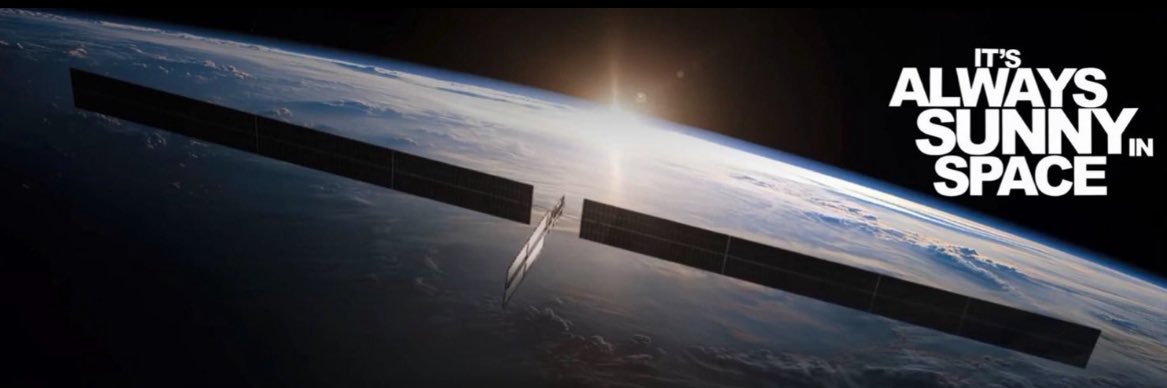
Starlink just hit all-time high speeds in the US according to Ookla
We are talking real broadband performance now - actually faster or matching cable for millions of Americans who used to have no good options
→ Blazing Speeds: Median download speeds of 100+ Mbps in 49 U.S. states
→ FCC Standards: Upload speeds now hitting the 20 Mbps threshold in 22 states
→ Dropping Latency: Multi-server latency under 40ms in 10 states
→ Massive Scale: A constellation of ~10,300 satellites powering over 12 million active global subscribers across 160+ countries, territories and markets
SpaceX added a million users in just 53 days. Next-gen satellites are coming with 100x the data capacity and gigabit speeds on the horizon
Now are targeting 25 million users by the end of this year
SpaceX is leading the broadband race, reaching places no one else can