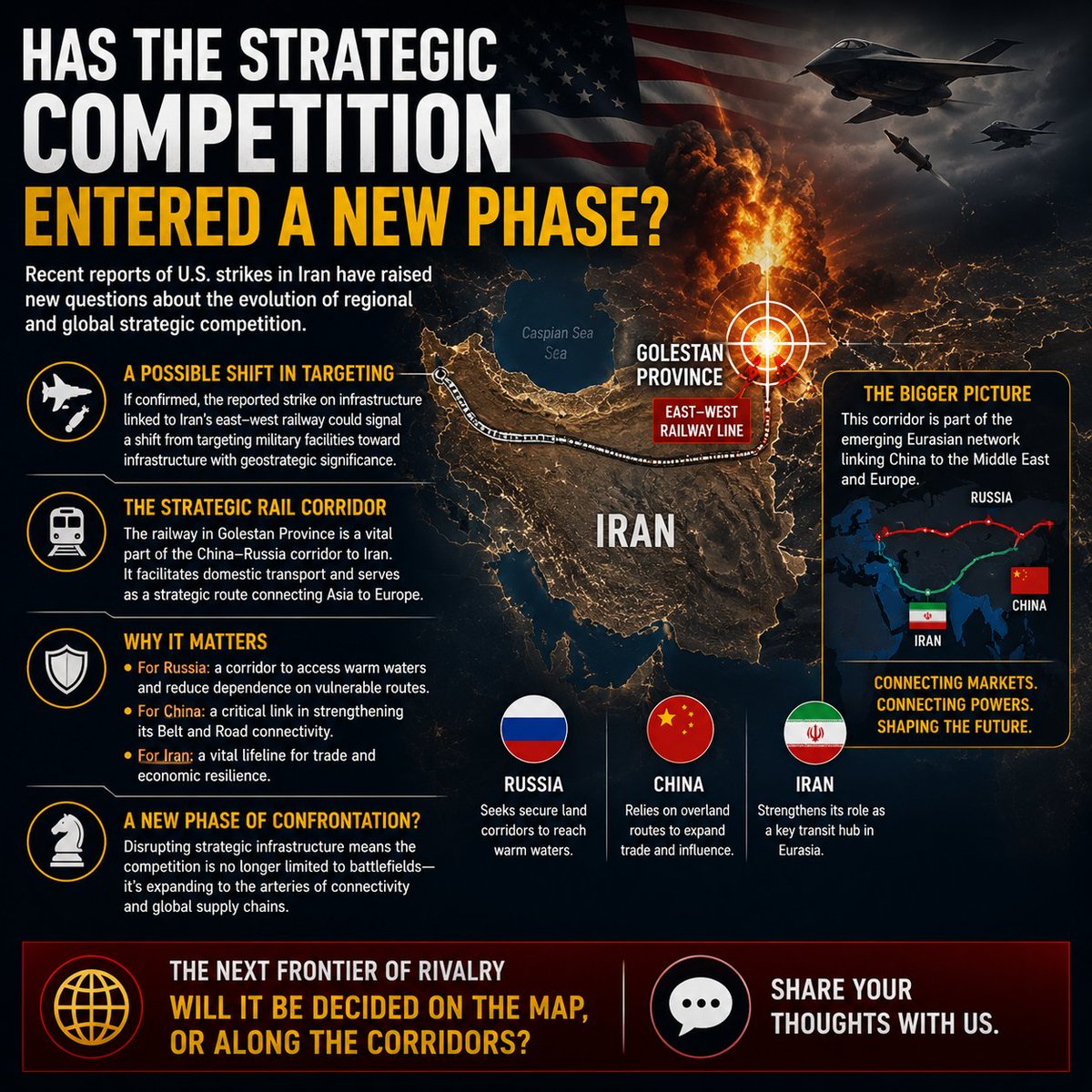
Has the strategic competition entered a new phase?
U.S. strikes in Iran may have affected infrastructure linked to key Eurasian transport routes.
If . Iran's transport corridors are important to both Russia's regional connectivity and China's overland trade ambitions.
#politic
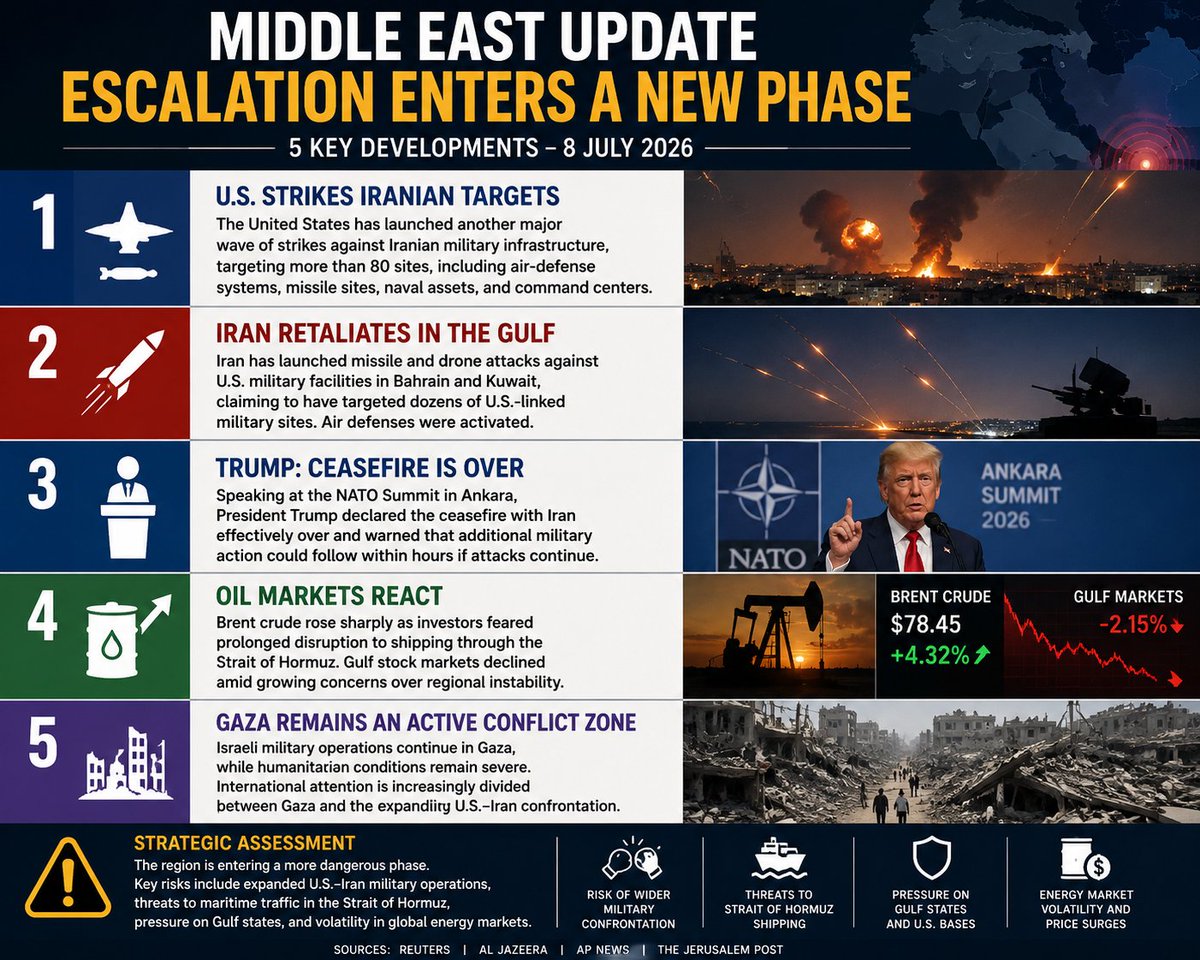
Today's NATO Summit in Ankara marks another step in the alliance's transition from strategic declarations to practical implementation. The agenda is increasingly focused on defense readiness, industrial capacity, military interoperability, and long-term resilience in an era of renewed great-power competition.
Turkey's strategic importance continues to grow. Positioned at the crossroads of Europe, the Black Sea, the Caucasus, and the Middle East, Ankara has become an indispensable NATO ally through its geography, military capabilities, and expanding defense industry. While the alliance has not assigned Turkey a new formal role regarding Iran, its importance on NATO's southeastern flank is steadily increasing.
For Europe, deeper cooperation with Turkey is also becoming more valuable as NATO members seek to strengthen defense production, secure supply chains, and enhance collective deterrence.
Beyond regional security, the summit sends a broader strategic message. As Russia and China deepen aspects of their cooperation, NATO is placing greater emphasis on unity, preparedness, and collective defense to maintain stability across the Euro-Atlantic region.
The geopolitical balance is evolving—and today's decisions may shape the alliance's strategic posture for years to come.
#NATO #AnkaraSummit #Turkey #EuropeanSecurity #DefenseIndustry #Geopolitics #Russia #China #StrategicAffairs #CollectiveDefense
Automation is no longer just about replacing manual labor—it's becoming the foundation of economic power and industrial competitiveness. The convergence of AI, robotics, autonomous systems, IoT, and advanced manufacturing is reshaping how nations produce, innovate, and compete.
Opportunities
1.Higher productivity with lower operational costs.
2.Smarter factories powered by AI and real-time analytics.
3.More resilient supply chains through intelligent automation.
4.Faster innovation cycles and greater global competitiveness.
5.Rising demand for high-value skills in AI, robotics, and digital engineering.
Threats
1.Disruption of traditional jobs and widening skills gaps.
2.Escalating cybersecurity risks across connected industries.
3.Greater dependence on digital infrastructure and critical technologies.
4.Increasing technological inequality between leading and lagging economies.
5.Complex ethical and regulatory challenges surrounding autonomous systems.
Strategic Insight
The next industrial leaders will not be those with the largest workforces, but those with the most intelligent factories, the most advanced automation ecosystems, and the fastest capacity to innovate. In the coming decade, automation will become one of the strongest indicators of economic strength, industrial resilience, and geopolitical influence.
#InsightAxis #Automation #Industry40 #FutureOfWork #Geopolitics #TechTrends #SmartManufacturing #EconomicPower
Germany & Poland: Europe's New Military Frontline
Europe's security architecture is undergoing a historic transformation. Germany and Poland are leading the continent's largest military buildup since the Cold War, driven by growing concerns over Russia's long-term strategic ambitions.
Germany has dramatically increased defense spending and accelerated military modernization, while Poland is rapidly expanding its armed forces with advanced tanks, fighter jets, missile defense systems, and artillery. At the same time, NATO is reinforcing its eastern flank through larger troop deployments, military exercises, and strengthened logistics.
These developments do not necessarily signal an imminent war. Instead, they indicate that European leaders increasingly view strategic competition with Russia as a long-term reality requiring sustained deterrence and military readiness.
#Geopolitics
#EuropeanSecurity
#DefenseStrategy
#NATO
#MilitaryModernization
The Rise of Smart Factories: How Automation Is Reshaping Global Manufacturing 🤖🏭
Automation is transforming the manufacturing industry at an unprecedented pace. By integrating industrial robots, artificial intelligence, machine vision, and autonomous systems, manufacturers are increasing productivity, reducing costs, improving quality, and addressing labor shortages. The factory of the future is becoming a fully connected, data-driven ecosystem.
Several global manufacturers are leading this transformation:
🇩🇪 BMW and Mercedes-Benz use AI-powered robotics and digital twins to optimize vehicle production.
🇯🇵 Toyota continues to pioneer advanced automation while combining robotics with its world-renowned lean manufacturing system.
🇺🇸 Tesla has built highly automated "Gigafactories," where thousands of robots assemble electric vehicles and battery systems.
🇰🇷 Samsung Electronics and Hyundai Motor Group are integrating AI, collaborative robots (cobots), and smart logistics into next-generation factories.
🇨🇳 BYD, Foxconn, and Huawei are rapidly expanding smart manufacturing capabilities, using automation to support large-scale production in electric vehicles, electronics, and telecommunications.
The race for industrial leadership is no longer driven by low labor costs alone. It is increasingly determined by who can deploy the most advanced automation technologies, AI-driven production systems, and intelligent supply chains. Countries and companies that lead in smart manufacturing will define the next era of global industrial competitiveness.
#Automation #SmartManufacturing #Industry40 #AI #Robotics #Tesla #Toyota #BMW #MercedesBenz #Samsung #Hyundai #BYD #Foxconn #Huawei #FutureOfWork #Manufacturing #IndustrialAutomation #InsightAxis
The Middle East's Biggest Renewable Energy Projects: The Race Is Already Underway 🌍⚡
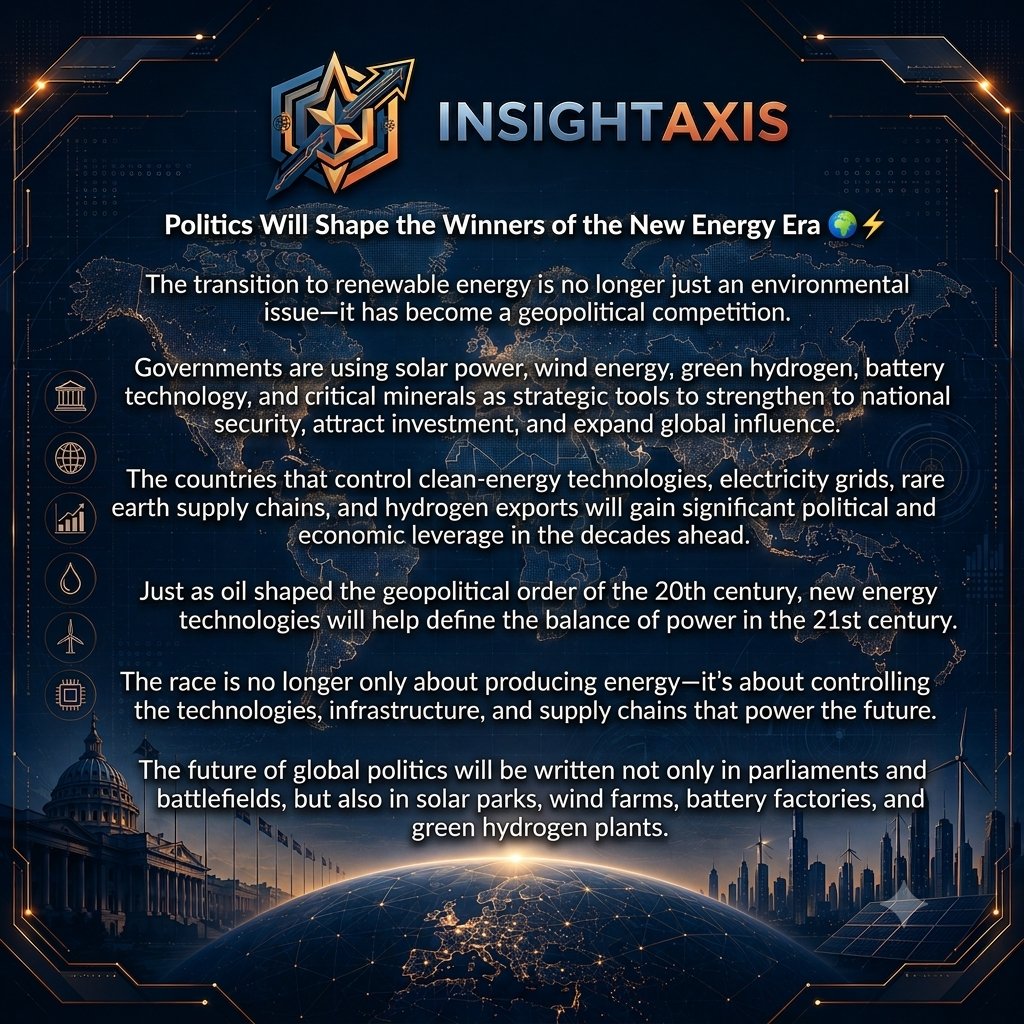
The Middle East is witnessing one of the world's largest renewable energy construction booms. Governments are investing hundreds of billions of dollars in solar, wind, and green hydrogen projects to secure leadership in the post-oil energy era.
🇸🇦 Saudi Arabia – NEOM Green Hydrogen Project (4 GW renewable power), Sudair Solar PV, Al Shuaibah Solar, and multiple new utility-scale solar parks under Vision 2030.
🇦🇪 United Arab Emirates – Mohammed bin Rashid Al Maktoum Solar Park, Al Dhafra Solar PV (one of the world's largest single-site solar plants), Noor Abu Dhabi, and the new Al Ajban Solar Project.
🇹🇷 Turkey �� Karapınar Solar Power Plant (Europe's largest solar park), expanding wind farms across western Anatolia, and new multi-gigawatt solar projects supported by international investment.
🇪🇬 Egypt – Benban Solar Park, Gulf of Suez Wind Farm, and large-scale green hydrogen projects in the Suez Canal Economic Zone.
🇴🇲 Oman – Green Energy Oman, HYPORT Duqm, and other green hydrogen developments that combine massive solar and wind generation with hydrogen exports.
🇶🇦 Qatar – Al Kharsaah Solar Power Plant and the ongoing Mesaieed and Ras Laffan solar expansion projects, supporting the country's energy diversification strategy.
🇯🇴 Jordan – Tafila Wind Farm, expansion of the Baynouna Solar Plant, and additional solar and wind projects that continue to increase renewable electricity generation.
The competition has already begun. The next regional leaders will be determined not only by oil and gas production, but by who builds the largest renewable energy ecosystems, green hydrogen industries, and clean technology supply chains.
#RenewableEnergy #MiddleEast #SaudiArabia #UAE #Turkey #Egypt #Oman #Qatar #Jordan #GreenHydrogen #SolarEnergy #WindEnergy #EnergyTransition #Geopolitics #InsightAxis
Is the Strait of Hormuz the Ultimate Proof of the "Clash of Civilizations"? 🌍���
The recent military escalations in the Strait of Hormuz have resurrected Samuel Huntington’s famous 1990s thesis: that post-Cold War conflicts would be driven by cultural and religious fault lines rather than politics or economics.
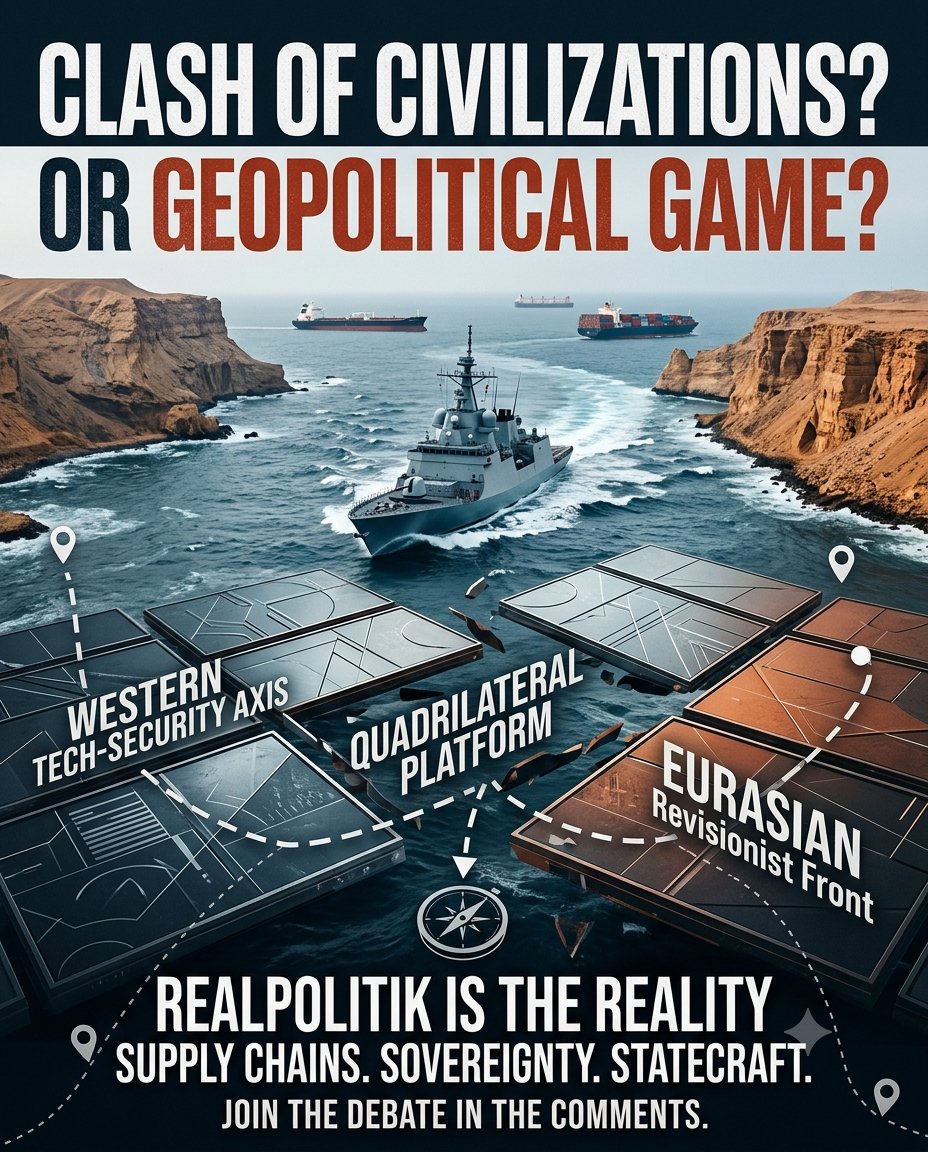
On the surface, a high-tech Western axis (US/Israel) clashing with Iran looks exactly like Huntington's theory in real-time.
But look closer—the "Clash of Civilizations" theory actually breaks down in 2026:
1️��� A Fractured Region: There is no single "civilizational" bloc. The UAE is integrated into the US-Israel tech axis, while a powerful new middle-power alliance—the Quadrilateral Platform (Saudi Arabia, Turkey, Egypt, Pakistan)—is charting an independent path.
2️⃣ The Eurasian Pivot: Iran’s actual survival lifeline isn't cultural; it's pragmatic. Tehran has bound its security to the Eurasian "CRINK" axis (China, Russia, North Korea) for hardware and economic backing.
3️⃣ The Sovereign Neutralists: Oman leverages deep, traditional ties with the UK to maintain absolute neutrality, proving that state survival matters more than picking an ideological side.
The Verdict:
The Hormuz crisis isn't a clash of cultures. It is a hyper-modern clash of sovereignty, supply chains, and statecraft. Culture is just the rhetoric; realpolitik is the reality.
💬 What's your take? Is Huntington's theory still relevant, or are modern alliances purely transactional? Let’s debate in the comments.
#Geopolitics #StraitOfHormuz #InternationalRelations #PoliticalTheory #MiddleEast #InsightAxis
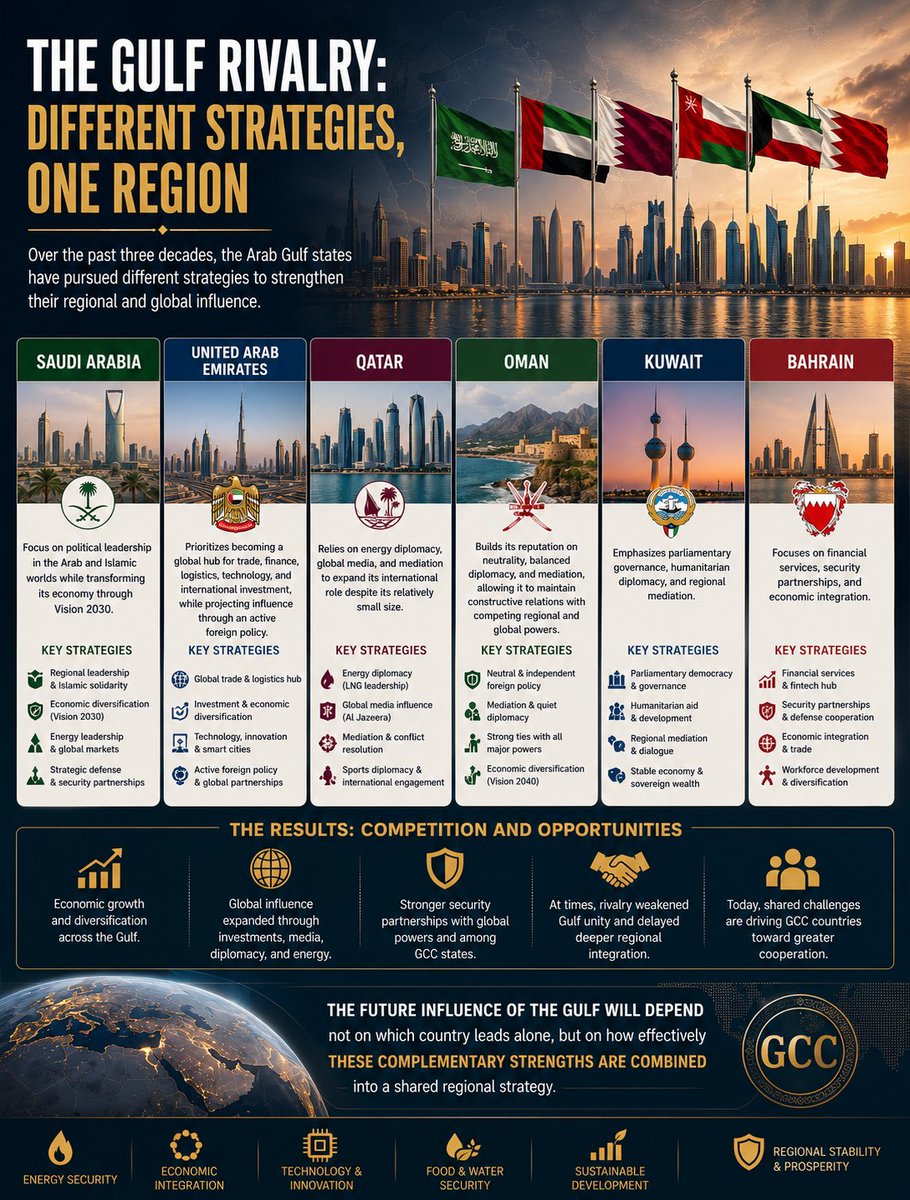
The Gulf Rivalry: Different Strategies, One Region
Over the past three decades, the Arab Gulf states have pursued different strategies to strengthen their regional and global influence.
Saudi Arabia has focused on political leadership in the Arab and Islamic worlds while transforming its economy through Vision 2030.
The United Arab Emirates has prioritized becoming a global hub for trade, finance, logistics, technology, and international investment, while projecting influence through an active foreign policy.
Qatar has relied on energy diplomacy, global media, and mediation to expand its international role despite its relatively small size.
Oman has built its reputation on neutrality, balanced diplomacy, and mediation, allowing it to maintain constructive relations with competing regional and global powers.
Kuwait has emphasized parliamentary governance, humanitarian diplomacy, and regional mediation, while Bahrain has focused on financial services, security partnerships, and economic integration.
These different approaches have created both competition and opportunities. At times, rivalry weakened Gulf unity and delayed deeper regional integration. Yet today, growing geopolitical uncertainty, technological competition, and economic transformation are pushing GCC countries toward greater cooperation.
The future influence of the Gulf will depend not on which country leads alone, but on how effectively these complementary strengths are combined into a shared regional strategy.
#GCC #SaudiArabia #UAE #Qatar #Oman #Kuwait #Bahrain #MiddleEast #Geopolitics #RegionalSecurity #InternationalRelations #Vision2030 #Energy #GlobalAffairs #InsightAxis
Are the Global and Middle Eastern Balance of Power Equations Changing?
Recent developments suggest that the Middle East may be entering a new phase of geopolitical realignment.
Three countries—Iran, Iraq, and Turkey—are emerging as the region's primary pressure points. Iran remains at the center of regional rivalries, domestic challenges, and global tensions. Turkey is balancing its role within NATO while managing growing competition in the Eastern Mediterranean and the Caucasus. Iraq, positioned as Iran's western gateway, faces mounting political instability, anti-corruption campaigns, and the persistent influence of armed proxy groups.
The coming months could prove decisive. Long-standing disputes may finally be addressed, or dormant conflicts could reignite with greater intensity. Either outcome could reshape the regional balance of power.
This summer is likely to bring significant political developments in both Iraq and Turkey—developments that could redefine the strategic landscape of the Middle East for years to come.
#MiddleEast #Geopolitics #Iran #Iraq #Turkey #NATO #InternationalRelations #ForeignPolicy #RegionalSecurity #PoliticalAnalysis #GlobalAffairs #WorldOrder #Geostrategy #InsightAxis
Is Iraq's Anti-Corruption Campaign About More Than Corruption?
The recent anti-corruption crackdown in Iraq may have implications that extend beyond domestic politics.
Several of the officials under investigation have reportedly been linked to networks accused of facilitating oil smuggling, financial corruption, and support for Iran-aligned armed groups. At the same time, Washington has been increasing pressure on Baghdad to strengthen state institutions, reduce the influence of Iran-backed militias, and bring all armed groups under government control.
From a geopolitical perspective, one possible interpretation is that Iraq is being reshaped into a more neutral—or more Western-aligned—security environment. If the United States or Israel were to increase pressure on Iran in the future, weakening Tehran's political, financial, and proxy networks inside Iraq could reduce Iran's strategic depth and complicate its ability to respond through Iraqi allies. This would be consistent with broader efforts over recent months to curb the operational freedom of Iran-backed militias.
However, this remains an analytical hypothesis rather than a confirmed strategy. Iraq's campaign can also be explained by domestic political objectives, public anger over corruption, and the government's need to restore credibility and attract foreign investment.
The coming months will reveal whether these arrests remain an anti-corruption initiative—or become part of a broader regional realignment in the strategic competition between Washington and Tehran.
#InternationalRelations #PoliticalAnalysis #StrategicAffairs #NationalSecurity
The global race for AI dominance is no longer a prediction—it's happening now.
The United States continues to lead with massive investments from both government and technology giants. China is rapidly expanding its AI capabilities through national strategies, state-backed funding, and industrial policy. Meanwhile, countries such as Saudi Arabia, the United Arab Emirates, Singapore, the United Kingdom, France, South Korea, Japan, and Canada are investing billions in AI infrastructure, research, talent, and innovation.
These nations understand a simple reality:
The future will not be dominated only by those with the strongest economies or the largest militaries, but by those who build the most powerful AI ecosystems.
Artificial Intelligence is becoming the foundation of economic growth, military modernization, cybersecurity, healthcare, education, scientific discovery, and geopolitical influence.
The question is no longer whether AI will reshape the global balance of power.
The real question is: Which countries are investing enough today to lead the world tomorrow?
#ArtificialIntelligence #AI #Geopolitics #Future #Innovation #Technology #DigitalTransformation #GlobalPower #AIEconomy #MachineLearning #Leadership #AIStrategy #FutureOfWork #AIInfomax
The World's Strategic Data Corridors
Just as oil pipelines and shipping lanes shaped the industrial era, data corridors are shaping the digital economy.
Today, global data flows through an extensive network of subsea fiber-optic cables, terrestrial fiber networks, hyperscale data centers, internet exchange points (IXPs), satellite communications, and cloud infrastructure. Together, these systems form the backbone of the global internet and digital commerce.
Some of the world's most strategic data corridors connect:
North America and Europe across the Atlantic.
Europe, the Middle East, and Asia through the Mediterranean and the Red Sea.
Asia and North America across the Pacific.
The Gulf region with Europe, Africa, and South Asia through emerging digital connectivity projects.
As artificial intelligence, cloud computing, and digital services continue to expand, these corridors are becoming as strategically important as traditional energy and trade routes.
In the digital age, data corridors are no longer just communication networks—they are critical infrastructure for economic growth, innovation, and national security.
#ArtificialIntelligence #DataCorridors #DigitalInfrastructure #SubseaCables #CloudComputing #CyberSecurity #BusinessIntelligence #DigitalEconomy #Innovation #StrategicForesight #FutureOfTechnology
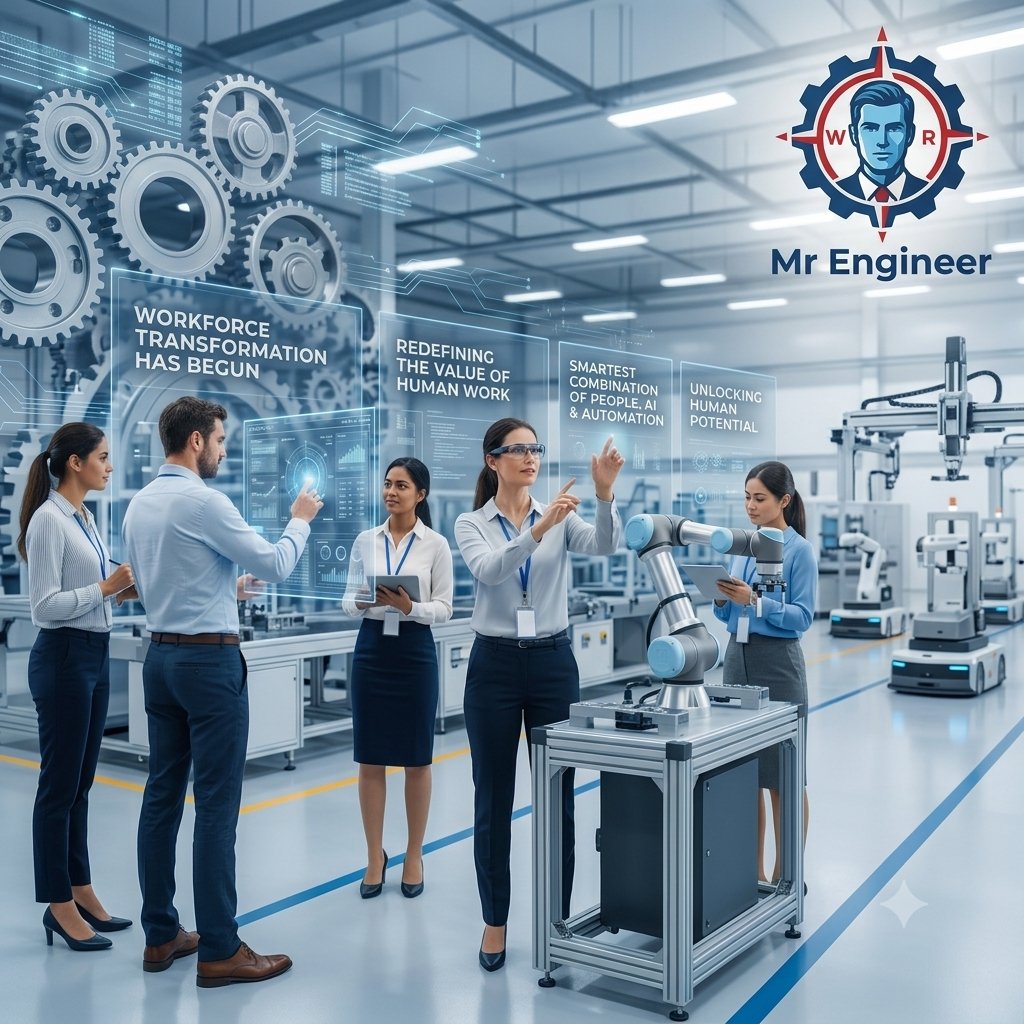
🚨 The biggest workforce transformation in history has already begun.
The question is no longer whether automation will change industry—it's how quickly companies can adapt.
Artificial Intelligence, robotics, and automation are taking over repetitive tasks at unprecedented speed. But this isn't simply about replacing jobs—it's about redefining the value of human work.
Tomorrow's most successful employees won't be those who perform routine tasks. They will be the people who can think critically, solve complex problems, lead innovation, and collaborate with intelligent machines.
At the same time, businesses that fail to embrace automation risk becoming slower, more expensive, and less competitive in an AI-driven economy.
The winners of the Fourth Industrial Revolution won't be the companies with the largest workforce—they'll be the ones with the smartest combination of people, AI, and automation.
Automation doesn't eliminate human potential—it unlocks it. The future belongs to those who learn to work with intelligent machines, not compete against them.
#ArtificialIntelligence #Automation #FutureOfWork #Industry40 #Robotics #DigitalTransformation #Innovation #BusinessStrategy #Leadership #AI #Technology #SmartManufacturing #Productivity #Future