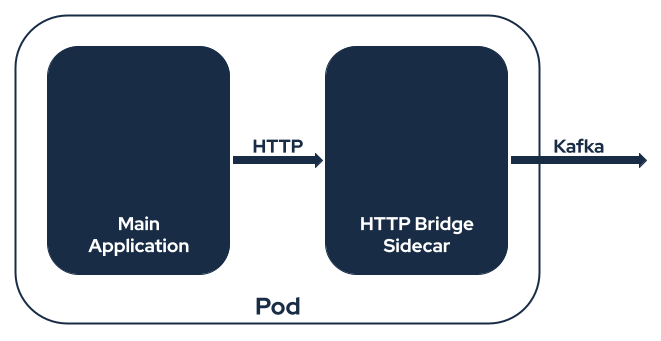
There are several different ways to use the #Strimzi Kafka Bridge to produce and consume #ApacheKafka messages using the HTTP protocol. One of them is to follow the #Kubernetes sidecar pattern. Learn more about it in our new blog post from @scholzj: https://t.co/Vdy0BR2YxK
Strimzi 0.25.0 has been released 🎉: https://t.co/g4rdD3YWLJ
We also created a video 🎬 covering the main changes and new features of this release: https://t.co/Tav5TwUsV7 Let us know if you like it and if we should do this for every release 😉.
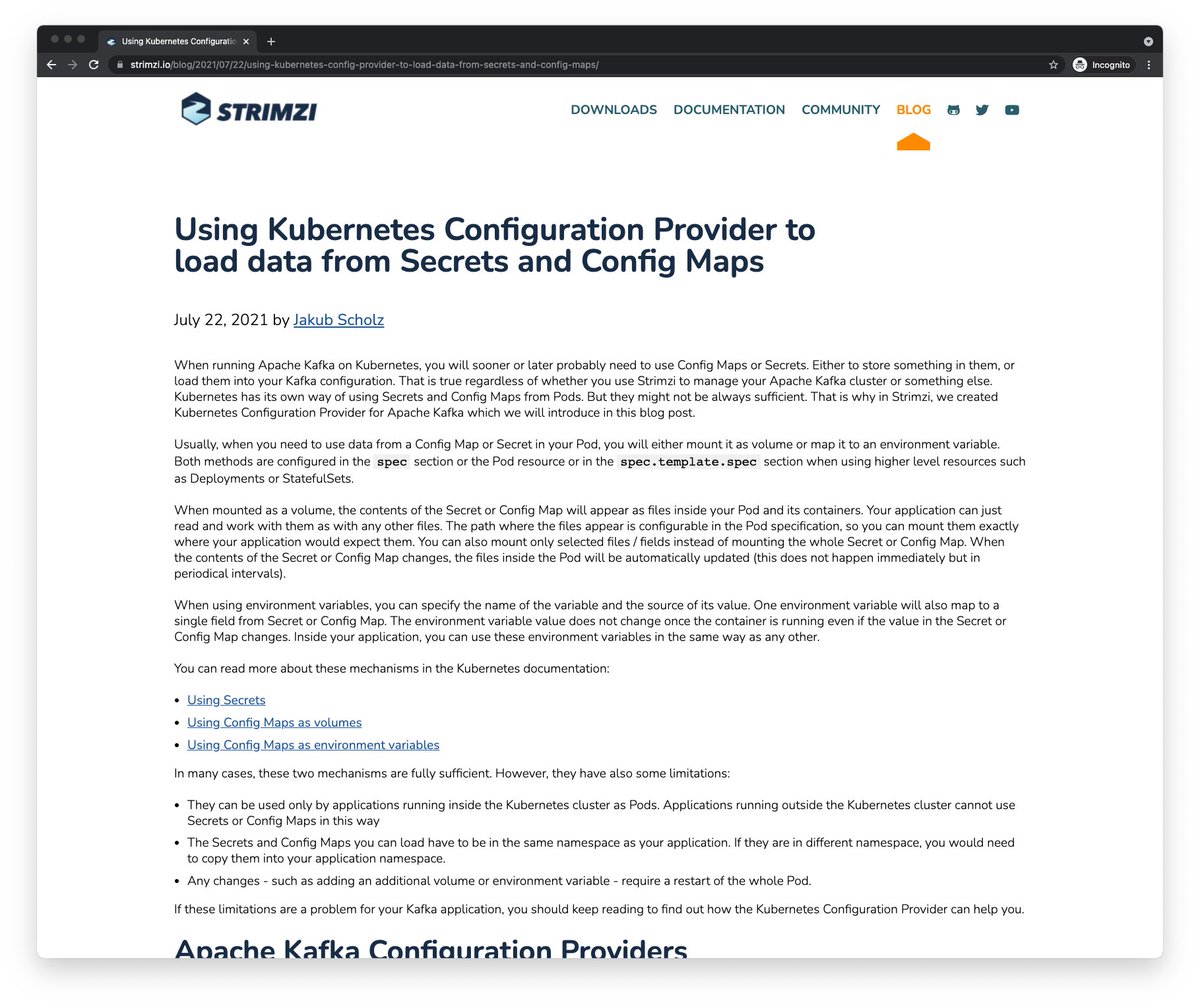
In #Kubernetes, you can mount Secrets and Config Maps as volumes or map them to env vars. But with our new configuration provider, your #ApacheKafka clients or connectors can load them directly from the Kubernetes API. Learn more in our new blog post: https://t.co/TxSKm7vEfe
Over the last few releases, we worked hard to refine our upgrade process and make it easier to upgrade #Strimzi operator as well as #ApacheKafka. Read more about the different improvements in our new blog post by @MrFrawless: https://t.co/AmDZ9e48Nd
It took me quite a long time to collect the energy to write a new blog post. I hope that this one about deploying #ApacheKafka on #Kubernetes with Let's Encrypt certificates is worth the wait ... https://t.co/piaVJFmU1H
Kubernetes 1.22 will stop serving v1beta1 Custom Resource Definitions (CRDs) and we want to make sure Strimzi is ready for it. Read more about the related changes in our new blog post from @MrFrawless: https://t.co/qMOViW8JoW
Have you ever tried to connect #amqstreams or @strimziio metrics into the existing #openshift monitoring stack by using #prometheus user-workloads? With @Kornyss we tried it and we put together a blog post on how to do it! https://t.co/RtIHzxPkXx
Nice post by my colleagues Jakub S. and @Kornyss showing how to connect #AMQ#Stream to the #OpenShift 4 monitoring stack. #k8s#kafka
https://t.co/mutqhskITV
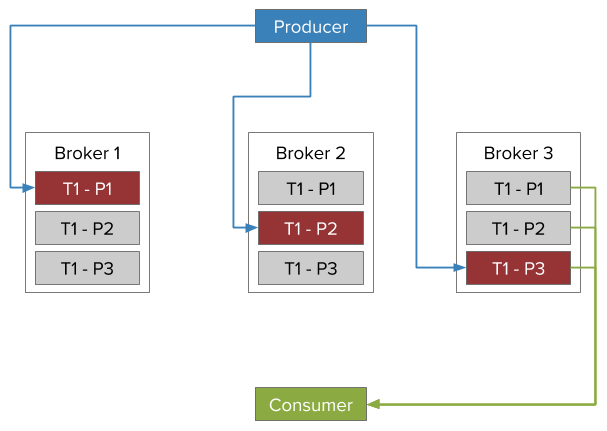
For a long time, consumers in @ApacheKafka were allowed to consume messages only form the leader replicas. But since Kafka 2.4.0 you can consume also from follower replicas. Read more in my new blog post on the Red Hat Developer blog: https://t.co/zoVZrSLEAe