@portlandbbclub The worst part is that the closed period for OSAA starts this week, so HS teams can’t organize throwing. Kids are on their own. You hope they find a way.
We all know it’s NIL, it’s the devaluation of bowl games, it’s the decimation of regional conferences, it’s the portal / free agency.
Hard to swallow paying 💰 to attend a game if your team isn’t contending for the CFB playoff. Feels like there’s no reason to go anymore.
Okay, but for real. I feel like I've been seeing/hearing this more often than normal this football season. Attendance down at alot of big-name college football schools.
Anyone have a REAL reason why? Thoughts?
Same concept of HS sports applies for other similar endeavors (DECA, marching band, etc.). You learn something about yourself and how to be accountable to people who rely on you in a way that just can’t be replicated in a traditional classroom setting.
High school sports don’t get nearly enough credit in the K-12 system. Seeing seniors whose seasons just ended post about the teamwork, work ethic, and character those sports instilled in them is a powerful reminder of how much they truly matter.
What class is this taught in?
PART TWO — THE SYSTEMATIC DISMANTLING OF PROFESSIONAL BASEBALL
After reading the responses to Part One, it’s typical of what baseball has become. A generation that knows every algorithm but has lost sight of the game itself. Instead of addressing the issue, everything becomes manufactured outrage and one big pity party.
Baseball has always been the ultimate numbers game. But somewhere along the way, the propeller heads became more fascinated with WAR, launch angles, exit velocity, and creating new algorithms than understanding the game itself. Every new formula became another opportunity to pat themselves on the back.
They’ve become so obsessed with measuring baseball that they’ve forgotten how to understand it.
And that’s where professional scouting has been gutted.
Scouting was built on experience. Years of evaluating talent, understanding makeup, recognizing weaknesses, and knowing what separates a good player from a winning player. Now organizations are pushing experienced evaluators out and replacing them with college graduates armed with spreadsheets but little professional baseball experience.
They’ve confused analyzing statistics with scouting baseball players.
AND THEN THERE’S ADVANCE SCOUTING.
One of the most important jobs in professional baseball. A good advance scout spends a week watching your next opponent, using relationships established over years in the game to gather information no spreadsheet can provide. Who’s struggling physically? Who’s making adjustments? What are their current tendencies? Former players who’ve competed at that level recognize things because they’ve lived them. That knowledge goes into the scouting report your club receives before the series.
You don’t get that sitting at home or in an office staring at a computer screen.
Now we’re seeing college graduates announcing titles like “Associate Advance Scout.” Spare me the lectures about what “associate” means. If advance scouting isn’t part of their responsibilities, why is it in the job title? And if it is, organizations are putting inexperienced people into one of the most important areas of professional baseball.
And what about mentorship? Young scouts once learned from veterans. That knowledge was passed down through generations. Now organizations are eliminating those experienced people and losing that knowledge with them.
Technology should have made experienced scouts more valuable, not expendable. Instead, veteran scouts who dedicated decades to baseball are being shown the door, losing their livelihoods and health coverage while organizations celebrate their supposed progress.
And here’s the other part of this nonsense. They’ve convinced themselves that their algorithms and technology have somehow created a superior generation of baseball players. The technology is better, absolutely. But better technology doesn’t mean better talent. Great players, average players, and fringe players have existed in every generation. Even velocity comparisons get distorted when people ignore how and where pitches were measured in different eras.
They’ve confused better technology with better baseball, just as they’ve confused analyzing statistics with understanding the game.
They call it progress. I call it the systematic dismantling of a profession.
#MLB #Baseball #ProfessionalScouting #AdvanceScouting #SheGone03 #TheHugeShow
@VandyonTigers To quote a book I’ve read to my son a thousand times, “nobody heard (or nobody cared).”
Our methods matter, usually more than the actual point we’re trying to make.
Always has been. Fond memories singing Rascal Flatts songs on long bus rides with him.
He was also a defensive cheat code behind the dish in HS. Just a quick *almost* glance your way meant you’d better have your ass on the base by the time the pitch hit his glove because a backpick was incoming.
My 7-year-old picked out this ballparks book today at B&N. What are the chances that my high school teammate Rocky Gale, who played 14 games for the Padres, ends up as a featured pic in the San Diego section? Unreal.
Book idea: what happens after a mid-season trade. Interview players (and their spouses and kids) from all major sports who were dealt during the season. How do they handle it? How does it affect the family?
I’m not writing it. But someone should 😂
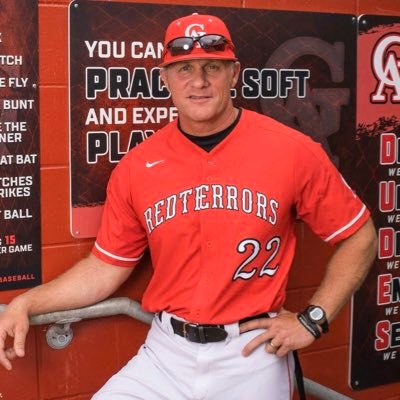
Just finished my 46th consecutive home football game spent running our baseball-owned concession stand alongside 120+ parent volunteers.
I’ve now personally cooked & wrapped over 9,000 hot dogs in that time span.
Just one of my many strange duties as a head coach 🤣
@coachmarker We stopped tracking data during tryouts a few years ago for this exact reason. Metrics can be misleading in isolation, and the time constraints for tryouts creates a potential for issues.