🧠 Metacognitive thinking routines have helped pupils to think more deeply about what they are reading, explains this Year 5 teacher
https://t.co/PHkHzAIQnJ
Please not learning styles again!
Jenkyns, a former Conservative skills minister and now Reform’s mayor of Greater Lincolnshire, said:
“Children learn kinaesthetically, visually, auditorily, and I think we’ve got to get the basics right.”
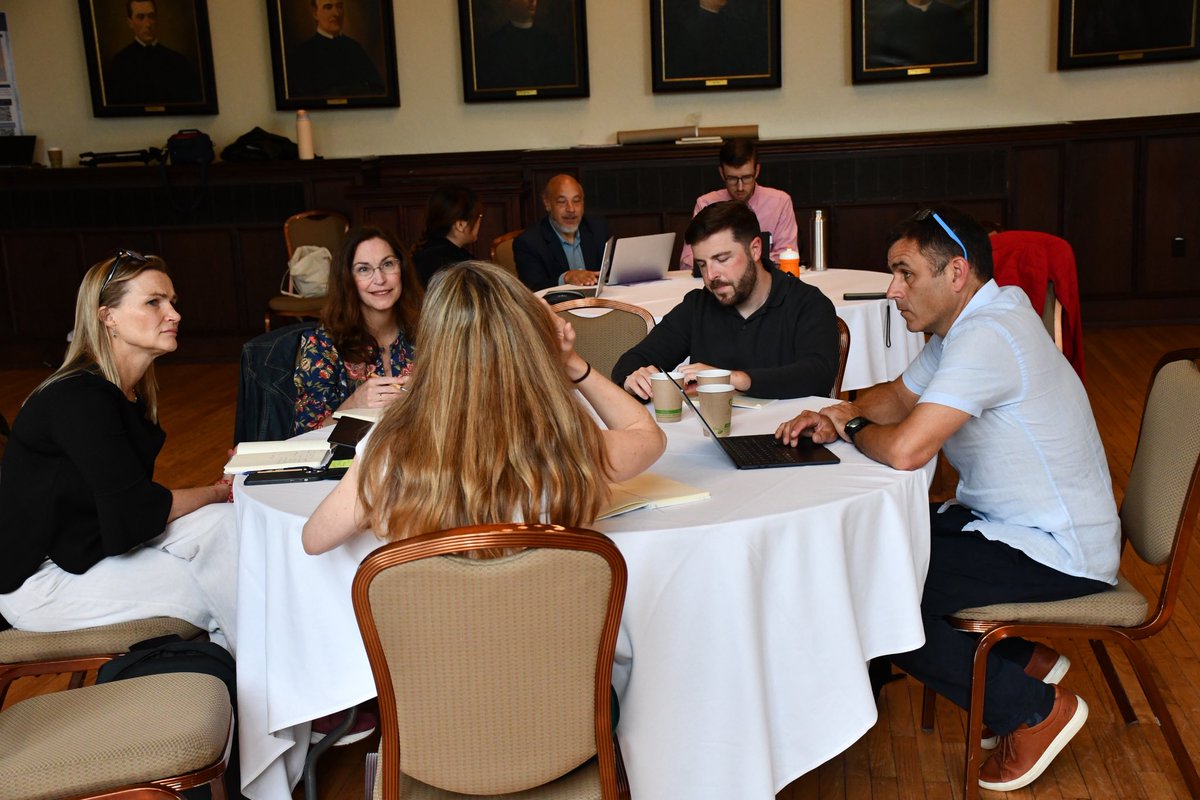
I had the privilege of presenting my action research at Nord Anglia Education’s first-ever Metacognition Research Conference. My research focused on how Thinking Routines impact the reading outcomes of prediction and inference in middle-attaining Year 5 students.
In my recent article I’ve shared how we’re embedding learner ambitions and thinking routines to nurture reflective, compassionate thinkers who are equipped for an ever-changing world.
https://t.co/VUIaGLjrBi
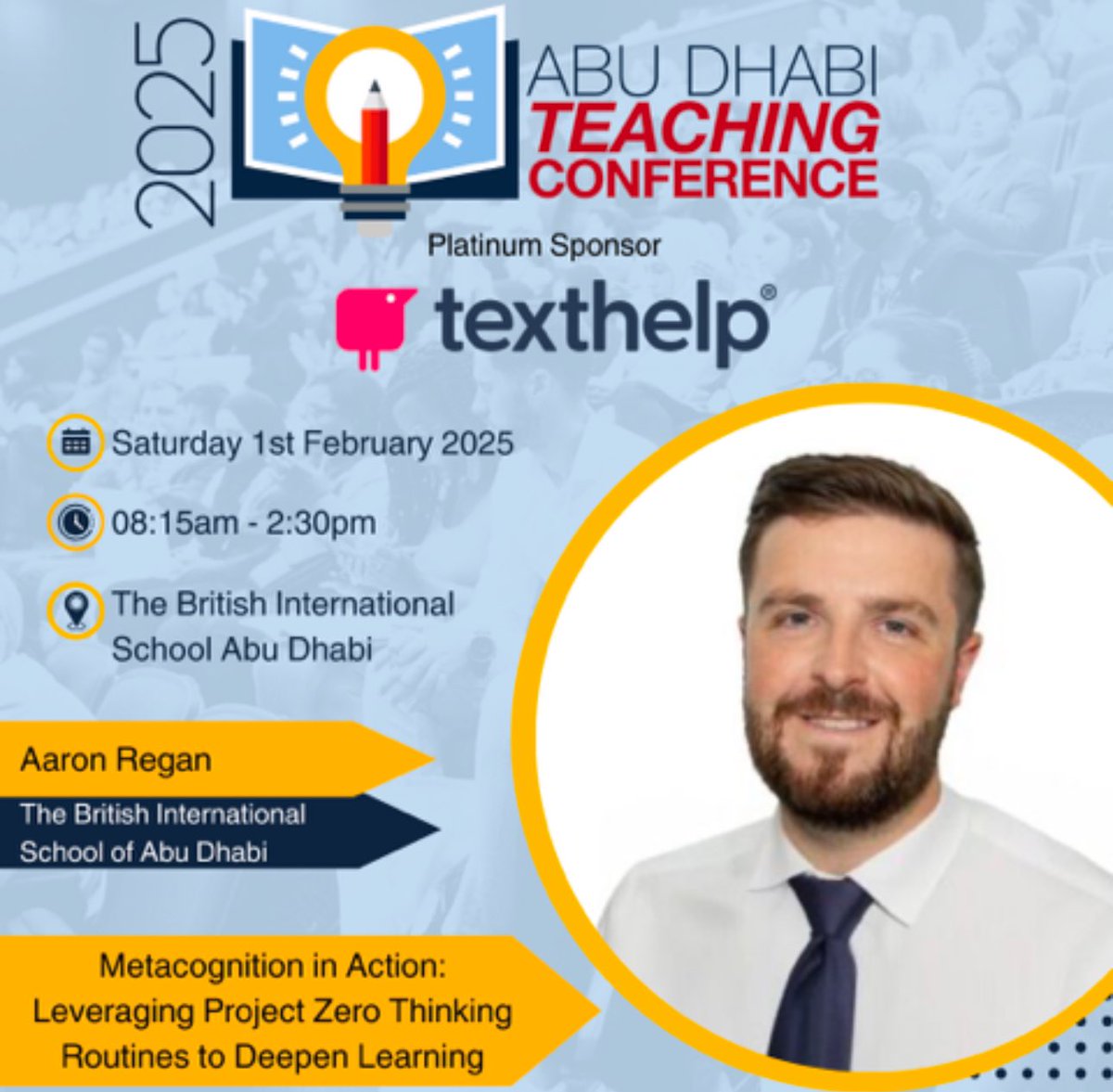
I’ll be delivering a practical and insightful session on the using Project Zero Thinking Routines at the Abu Dhabi Teaching Conference next weekend. Hopefully everyone will walk away with something they can use in their classrooms! 🧠
Teachers should consider seating pupils in rows more often for academic learning. Blake sets out the evidence: “students in rows, facing the teacher, tend to be more focused and engaged,” boosting learning outcomes. This layout helps maximise attention and minimise distractions.
Applications for September 2025 open tomorrow!
Whether you’re a complete career changer or a recent graduate, we are looking for people who are passionate about teaching & want to make a difference in children’s lives!
#MBITT#SCITT#initialteachertraining#primaryeducation
Applications for September 2025 open tomorrow!
Whether you’re a complete career changer or a recent graduate, we are looking for people who are passionate about teaching & want to make a difference in children’s lives!
#MBITT#SCITT#initialteachertraining#primaryeducation
Enjoyed chatting to Yalla Abu Dhabi about how we use AI to enhance education and discuss the digital transformation of education 📚
https://t.co/oNy613jYbO
One of the most amusing errors in teaching is asking students to perform activities that leverage a non-existent knowledge base.
Students can't have productive discussion if they have no idea what they're talking about. At best, you're training them how to bluff a job interview.
How do you build up the knowledge base? Not through discussion.
You know what happens when someone has no idea what they're talking about, and keeps refining/solidifying their baseless perspective? They turn into a crank.
Instead, the way to build up a knowledge base is direct/explicit instruction.
Now, it's true that many highly skilled professionals spend a lot of time discussing and solving open-ended problems, and in the process, discovering new knowledge as opposed to obtaining it through direct instruction...
But students are NOT experts!
And they are subject to the expertise reversal effect, a well-replicated phenomenon that instructional techniques that promote the most learning in experts, promote the least learning in beginners, and vice versa. https://t.co/8ExvKSD7LJ
@P_A_Kirschner & @C_Hendrick sum it up well in their recent book How Learning Happens. The whole book is well worth a read with numerous insights, scientific references, and practical recommendations for the classroom, but here are some of my favorite quotes on this topic in particular (2024, pp.67-68,76):
"As the novice is not a miniature expert, it’s important to realize that what may work very well for an expert (e.g. discovery learning, problem-based learning [in the sense of working in groups to solve an open-ended problem], inquiry learning) usually doesn’t work well or is even harmful and counterproductive for the novice (and vice versa).
...
While an expert can be given a problem to be solved after having been taught a certain technique or principle, a novice should be given a more structured approach to using that principle for solving the same problem, for example in the form of a worked example.
...[I]f you want your students to learn to solve problems, they first need both the declarative and procedural knowledge within the subject area of the problem in question. This is also true if you want to teach them to communicate, discuss, write, or whatever twenty-first century skill people are talking about. You can’t communicate about something, write about something, discuss or argue about something, etc., without first knowing about that something and then also knowing the rules (i.e. the procedures) for doing it."
For the past few years I’ve spent a large amount of time researching, digesting and learning how to best teach a classroom full of students.
Largely, in my own time.
If we really want to close the attainment gap and level up or whatever…
In summary:
Give teachers time and the resources required to understand how our students learn and the best evidenced approaches to help them learn.
Then sit back and watch how everything improves
Thrilled to kick off my first action research project on metacognition with @BostonCollege and @NAEducation today! 🚀 Ready for the challenging yet exciting journey ahead in education research. 🧠











![justinskycak's tweet photo. One of the most amusing errors in teaching is asking students to perform activities that leverage a non-existent knowledge base.
Students can't have productive discussion if they have no idea what they're talking about. At best, you're training them how to bluff a job interview.
How do you build up the knowledge base? Not through discussion.
You know what happens when someone has no idea what they're talking about, and keeps refining/solidifying their baseless perspective? They turn into a crank.
Instead, the way to build up a knowledge base is direct/explicit instruction.
Now, it's true that many highly skilled professionals spend a lot of time discussing and solving open-ended problems, and in the process, discovering new knowledge as opposed to obtaining it through direct instruction...
But students are NOT experts!
And they are subject to the expertise reversal effect, a well-replicated phenomenon that instructional techniques that promote the most learning in experts, promote the least learning in beginners, and vice versa. https://t.co/8ExvKSD7LJ
@P_A_Kirschner & @C_Hendrick sum it up well in their recent book How Learning Happens. The whole book is well worth a read with numerous insights, scientific references, and practical recommendations for the classroom, but here are some of my favorite quotes on this topic in particular (2024, pp.67-68,76):
"As the novice is not a miniature expert, it’s important to realize that what may work very well for an expert (e.g. discovery learning, problem-based learning [in the sense of working in groups to solve an open-ended problem], inquiry learning) usually doesn’t work well or is even harmful and counterproductive for the novice (and vice versa).
...
While an expert can be given a problem to be solved after having been taught a certain technique or principle, a novice should be given a more structured approach to using that principle for solving the same problem, for example in the form of a worked example.
...[I]f you want your students to learn to solve problems, they first need both the declarative and procedural knowledge within the subject area of the problem in question. This is also true if you want to teach them to communicate, discuss, write, or whatever twenty-first century skill people are talking about. You can’t communicate about something, write about something, discuss or argue about something, etc., without first knowing about that something and then also knowing the rules (i.e. the procedures) for doing it."](https://pbs.twimg.com/media/GXNHh4HXgAAIEs-.jpg)