Look at the contempt in the eyes of the civil servants. They are stunned that they’re being questioned “why can’t a combat engineer change a lightbulb?”.
This is an example of why we know government spending is the most wasteful and unproductive use of funds in the economy.
Hard working people pay a fortune in tax so these bureaucrats can cook up insane spending programs.
If you’re a tax payer, watch this video and consider how little they care about the money they take from you.
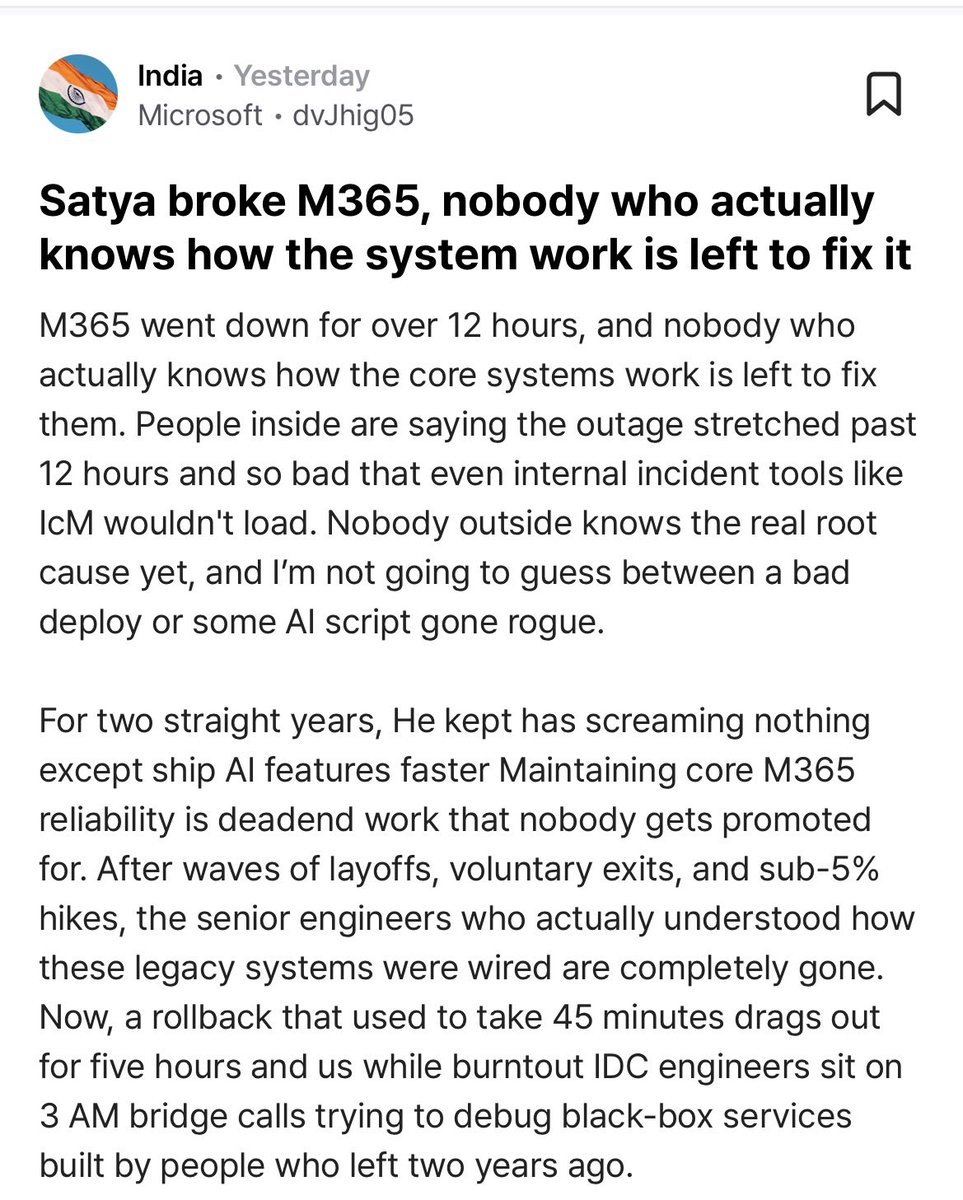
Apparently @Microsoft made an update that switched all my files to OneDrive, and then started uploading everything on my computer, bogging down my network connection! I don’t want all my files on OneDrive! What are you doing!!!
I feel for Steph Curry.
It cannot be easy watching your wife become the punchline of so many lewd jokes.
And while I understand his instinct to defend her, I wanted to address something that has bothered me about Ayesha Curry's public conduct over the past two years, and why I believe Steph, despite his admirable intentions, has fundamentally misunderstood the criticism.
First, a few things worth establishing.
I don't believe men should control their partners' career decisions, dictate their ambitions, or police their public speaking engagements. I'm also a film director who has directed 13 films, so I'm well aware that actors sometimes have to kiss other actors. It's part of the profession. Anyone scandalized by that fact probably doesn't understand the profession very well.
But my criticism has very little to do with the kiss itself.
It has to do with something considerably more troubling: the increasingly blurred distinction between autonomy and vanity, between ambition and envy, and between the pursuit of one's own greatness and the resentment of someone else's.
And despite Steph's valiant efforts to defend his wife, I suspect he may look back on this period ten years from now and feel rather differently.
Let's start with the film.
Part of the reason people are mocking it is that it looks like AI slop in human form. A lazy script, dreadful lighting, uninspired cinematography, recycled plotlines, and acting that oscillates between bland and genuinely uncomfortable.
Anyone insisting that Ayesha Curry deserves to be taken seriously as an actor on the strength of this performance needs to have their head examined.
But the film itself is almost beside the point.
To me, it represents a recurring theme in Ayesha Curry's public persona over the past two years: vanity masquerading as autonomy.
And there's an important distinction between the two.
On Red Table Talk, Ayesha spoke about wanting more male attention and validation, particularly in the context of the enormous attention her husband receives from women.
Now, I don't pretend to know the inner workings of their marriage. But I do find the psychology of that admission revealing.
Because beneath the desire for validation lies a potentially destructive belief: that the admiration your partner receives somehow diminishes your own worth.
That love is a competition. That attention is a finite resource. That one person's ascent necessarily represents another person's descent.
Nietzsche might have recognized in this the beginnings of ressentiment: the tendency to measure oneself against another person's success, and eventually to experience that success not as something to celebrate, but as an indictment of one's own inadequacy.
And this is where I believe the distinction between genuine independence and performative independence becomes critical.
On Call Her Daddy, Ayesha spoke about her ambitions to be a career woman and how marriage and motherhood altered the trajectory she had imagined for herself.
There is nothing inherently wrong with that admission. Plenty of people struggle to reconcile the lives they imagined with the lives they ultimately chose.
But when placed alongside her earlier comments, a recurring sentiment begins to emerge:
"I'm more than just Steph Curry's wife."
And of course she is.
But here's the question: Why does being Steph Curry's wife need to be framed as something to overcome?
Why must proximity to greatness become a burden rather than a blessing?
Why must an identity be established in opposition to the very person one has chosen to love?
There is something profoundly unhealthy about treating your partner's extraordinary achievements as an obstacle to your own self-realization.
And I suspect this is why so many people, including those in the so-called manosphere, have rallied to Steph's defense.
Continued below ⬇️⬇️⬇️
Hasan Piker hits a wall when he tries to tell a man born in the Soviet Union that Americans are just as controlled as people under communism.
Konstantin Kisin shuts down the comparison and lays out the difference.
When he’s done, even Piker admits he’s right.
HASAN PIKER: “A lot of people think, well, as long as I can eat a Big Mac, you know, as long as I can watch TV, as long as I can consume porn [...] then, you know, things are probably fine.”
“It’s a different mechanism of control that makes you think that you are actually an active participant in this.”
Kisin isn’t buying it.
KONSTANTIN KISIN: “The difference between those countries is not that they can’t eat a Big Mac.”
“The difference is that if they criticize the government, in Russia today even, but of course in the Soviet Union previously, you’re going to get killed, right? In America, that’s not what happens, right? In America, you don’t get put in jail.”
HASAN PIKER: “We don’t know yet.”
That’s his whole defense: what MIGHT happen in America.
So Kisin makes it personal.
KONSTANTIN KISIN: “You in China or in the Soviet Union would be killed if you were critical of that regime.”
HASAN PIKER: “I would definitely be jailed, for sure.”
And there it is. Piker makes Kisin’s argument for him.
KONSTANTIN KISIN: “So that’s the difference between these countries and America. It’s not a Big Mac, it’s freedom.”
Only in a free country can you build a career telling people they aren’t free.
CONTEXT: Communist regimes don’t just jail their critics.
Under Stalin, the Soviet secret police executed 681,692 people in two years, by the regime’s own records. That’s more than 900 a day.
Under Mao, the Great Leap Forward killed at least 45 million people in four years, per historian Frank Dikötter.
Under Pol Pot, nearly a quarter of Cambodia’s population was dead within four years.
David Robinson was the first pick in the 1987 NBA draft and he did not play a game until 1989, because he had a job.
He was a lieutenant junior grade in the United States Navy.
He turned up at the Naval Academy in 1983 at six foot seven.
The height limit for a midshipman at the time was six foot six.
The Superintendent of the Naval Academy signed a waiver so that he could come in anyway.
Then he kept growing. By his second year he was seven feet. He finished at seven foot one.
At seven feet he could no longer serve as an unrestricted line officer, which is the job that puts you on a ship. The Navy had admitted a man by waiver who was now too tall to go to sea on one.
He had a way out. He could have left the academy, transferred somewhere else, sat out a year and been in the NBA in 1988.
He stayed.
The Secretary of the Navy at the time, John Lehman, worked out an arrangement. The five year commitment every graduate owes was cut to two years of active duty.
So San Antonio used the number one pick in the entire draft on a 21 year old who was contractually unavailable until the fall of 1989, and then waited for him.
He spent those two years at the submarine base at Kings Bay, Georgia, as assistant resident officer in charge of construction.
Jos Joseph of We Are The Mighty got him talking about that posting years afterward, and the piece of it he reached for first was not the submarines or the base or the uniform.
"Doing street lights for a new community."
He had not even been a starter as a freshman at Navy. He averaged 7.6 points that year.
Over the next three he won 82 games and was named the best player in college basketball.
He got to the Spurs in the fall of 1989, at 24, two years behind everybody drafted with him.
He was the rookie of the year. He played fourteen seasons, all of them in San Antonio, and he is in the Hall of Fame.
They call him the Admiral, which was never his rank. He left the Navy as a lieutenant junior grade and he has never once corrected anybody about it.
He has been asked ever since what the Navy gave a man who would have been fine without it, and the answer has not moved in all that time.
"The number-one lesson was the importance of teamwork."
"There's just such a pride in working together and serving a cause bigger than yourself."
Today is Veterans Day. The best college basketball player in America spent the two years after his draft running construction jobs on a submarine base in Georgia, because he had said he would.
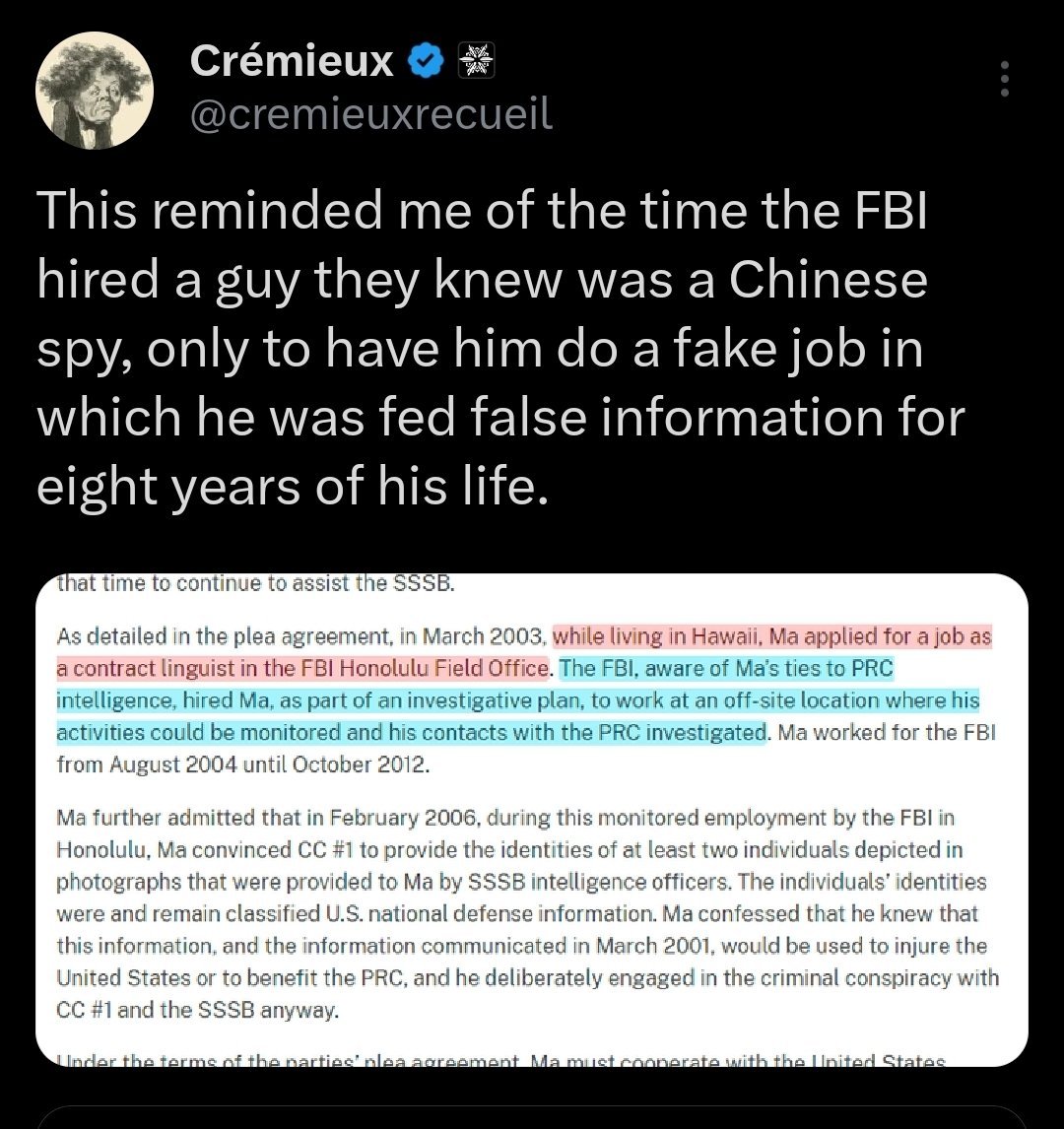
Now seems like a good time to remind people that a bit over ten years ago, China compromised a network of CIA sources, hunted them down, and executed them.
https://t.co/JlyENCR2Hf
Friends, please pray for the entire Kirk family, who learned they'll wait until at least June 2028 for justice, news likely made doubly painful by remarks about Charlie this week that are beneath contempt.
On the “I’ve Had It” podcast, so-called culture commentators Jennifer Welch and Angie Sullivan laughed at the idea of digging up Charlie’s body and “doing it again.”
Then Dave Chappelle told a sold-out Madison Square Garden that “life got better” after Charlie was murdered, and that Charlie is now “looking up, laughing so hard he can’t breathe.”
I have often defended comedians, and I understand that pushing the boundaries of what's acceptable is part of the gig. But this is different.
This is laughing at the murder of a young husband and father of two small children, who was killed with a microphone in his hand, inviting those who disagreed with him into honest, respectful dialogue. Shame on you.
There have always been people in the fever swamps who cheer when someone dies. What is new is that it now comes from the main stage and is met with applause.
How did we get here?
This is what a culture looks like when it drifts away from God. Remove God, and with him any sense of the transcendent and the sacred, our objective sense of what is true and good is left in ruins.
What remains is relativism, “my truth” and “your truth,” and finally a game of power: my team against yours. In a world like that, a man's death can become a punchline.
Charlie understood this cultural disease and spent much of his life trying to heal it. It's why he went onto hostile campuses to sit with young people, many of them unmoored and unaffiliated, and make the case for God, for truth, and for a moral order beyond themselves. He listened patiently, argued charitably, and spoke openly about Jesus Christ.
It is my hope, then, that many more will take up this vital part of Charlie's work.
여섯번째 생존법.
재난이나 전시 상황에 도시를 탈출(Bug Out)하려던 사람들의 80%는 목적지에 도착하기도 전에 길 위에서 죽습니다.
영화 속 주인공들은 차를 타고 유유히 교외로 빠져나가 시골 은신처에 도착하지만, 현실의 피난길은 가장 처참한 약탈과 조난의 무덤입니다.
이번 사례는 우크라이나와 러시아를 참고했습니다.
문명이 붕괴하는 순간, 도시를 벗어나기 위해 반드시 알아야 할 5대 피난·탈출 생존 철칙입니다.
1. 재난 터지자마자 차를 몰고 고속도로로 나가지 마라
재난 사이렌이 울리는 순간, 수백만 명이 동시에 차를 끌고 나옵니다. 도심 주요 간선도로와 고속도로는 1시간 안에 '움직이지 않는 거대한 철창'으로 변합니다.
- 도로가 막히면 유턴도, 후진도 불가능합니다.
- 히터를 틀다 연료가 바닥나면, 영하의 도로 한가운데에 버려진 금속 관 속에 갇히는 꼴이 됩니다.
- 차량 탈출은 재난 경보 후 '단 1~2시간 이내'에 도시 외곽을 완전히 통과할 수 있을 때만 유효합니다. 그 타이밍을 놓쳤다면 차라리 튼튼한 오토바이, 산악자전거, 또는 도보가 10배 안전합니다.
2. 밀리터리 전술 배낭을 메는 순간 당신은 1순위 표적이 된다
카키색, 카모플라주 무늬의 몰리(MOLLE) 전술 배낭에 전투화를 신고 나서는 것은, 약탈자들에게 "내 가방에 비싼 생존 장비와 비상식량이 가득하다"고 광고하는 자살행위입니다.
- 극한의 혼란 속에서는 누구의 눈에도 띄지 않는 '회색 인간(Gray Man)'이 되어야 합니다.
- 낡고 평범한 학생용 백팩, 허름한 스포츠 가방, 때 묻은 비닐 쇼핑백에 장비를 나누어 담으세요.
- 겉모습은 누구보다 가난하고 절박해 보여야 약탈자의 표적에서 벗어납니다.
3. '시골 친척 집'이라는 막연한 탈출은 노숙자로 가는 지름길이다
미리 연료, 식량, 방어 수단을 완벽하게 비축해 둔 '검증된 베이스캠프'가 없다면 무작정 도시를 떠나지 마세요.
- 평소 연락도 없던 시골 친척이나 지인의 집은 당신의 피난처가 되어주지 않습니다. 그곳 사람들도 이미 자원 고갈과 침입자 공포로 극도로 예민해져 있습니다.
- 연고도 없는 시골로 향하는 것은 스스로 자원이 고갈된 채 길거리 노숙자가 되겠다는 선언입니다.
- 확실한 목적지와 도달 경로, 예비 루트(Plan B)가 없다면 무리하게 길을 나서지 마세요.
4. 가장 강력한 탈출 무기는 총이 아니라 '신발과 양말'이다
피난길에서 당신을 살리는 것은 고가의 장비가 아니라 당신의 '발'입니다. 도로가 마비되면 결국 수십 킬로미터를 걸어야 합니다.
- 평소 신지 않던 새 등산화나 군화를 신으면 5km도 못 가 발뒤꿈치가 까지고 물집이 터져 그 자리에 주저앉게 됩니다.
- 완전히 발에 길들여진 편안한 트레킹화나 러닝화를 신으세요.
- 그리고 반드시 '여분의 울(양모) 양말 3켤레'와 물집 방지용 바셀린, 테이프를 챙기세요. 발이 망가지는 순간 당신은 이동력을 잃고 그 자리에서 낙오자가 됩니다.
5. 골든타임 2시간을 놓쳤다면, 탈출을 포기하고 실내를 요새화하라
재난 발생 직후 2시간이 지나면 도로는 패닉에 빠진 군중, 버려진 차량, 경찰의 바리케이드로 아수라장이 됩니다. 이때 뒤늦게 짐을 싸서 거리로 뛰쳐나가는 것은 무법지대 한복판에 맨몸으로 뛰어드는 짓입니다.
- 초반 골든타임을 놓쳤다면, 무리한 탈출을 포기하고 즉시 집 안으로 후퇴(Bug In)하세요.
- 문과 창문을 굳게 걸어 잠그고, 물을 최대한 받아두며, 초기 72시간의 대혼란과 군중 패닉이 가라앉을 때까지 조용히 숨죽이고 버텨야 합니다.
- 탈출은 도로의 혼란이 정리되고 군경의 통제가 시작되거나, 혼란이 진정된 이후에 시도해도 늦지 않습니다.
최고의 탈출은 영웅처럼 길을 뚫는 것이 아니라, 군중의 패닉에 휩쓸리지 않는 냉정함입니다. 가족의 안전을 위해 이 글을 북마크해 두세요.
Food stamp advocate SELF-DESTRUCTS as Rep. Brandon Gill presses her on why taxpayers pay for Coca-Cola.
She tries to dodge the question. Then Gill pulls out the receipts, and she sits there in stunned silence.
GILL: “Should SNAP dollars be spent on sodas?”
WITNESS: “I am happy to talk about hunger and nutrition, but not dictate what Americans should or should not eat or may have access to.”
GILL: “I’m asking if tax dollars should be used to pay for sodas.”
“Do they need sugary sodas to survive?”
WITNESS: “Some of them do…”
GILL: “You think they need Coca-Cola to survive?”
“I’m giving you the opportunity to say yes or no.”
WITNESS: “I will not answer for individuals and their… choices.”
GILL: “What does SNAP stand for?”
WITNESS: “It’s a Supplemental Nutrition Assistance Program.”
GILL: “What’s nutritional about Coca-Cola?”
WITNESS: “I am not a nutritionist.”
Then Gill asks who’s paying her, and she freezes like a deer in headlights.
GILL: “Is your organization funded by organizations that make money from food stamps?”
[awkward silence]
GILL: “Do organizations who profit off of food stamps fund your organization or businesses?”
WITNESS: “I mean, in the, in the, I, I can’t comment to that.”
GILL: “Does General Mills fund your organization?”
WITNESS: “I don’t have access to that information.”
GILL: “I do. It’s right here. They do fund your organization. […] Yes, and they’re profiting off of your advocacy. Do you think that that’s a conflict of interest?”
[more silence]
GILL: “I think most people think that’s a conflict of interest. I know you don’t want to answer.”
Always follow the money.
CONTEXT: USDA’s own study found soft drinks were the #1 purchase in SNAP households, beating milk, ground beef, and everything else in the store.
Tooth & Nail, Forefront, Sparrow, Squint provided this in the 90s/00s. They were vital because they had the money & credibility to push more creative artists into the CCM mainstream. Labels today don’t care about that, so the best Christian artists now must dwell in obscurity.
Amazing dialogue on CNN.
"The Black fatherlessness rate is the worst out of all the demographics in this country, unfortunately"
"Excuse me, that's a false steroetype Black fathers are in the household more than any other race."
"What are your facts on that?"
"I had a father in my home."
"That's called anecdotal, but that's ok"