5+ years designing RF circuits the hard way trial, error, repeat.
I compressed all of it into one Book :All signal conversion, circuit design, high-frequency electronics done right.
Stop Searching. Start Converting. Link in bio 👇
Third year, electronics lab. I'd just aced the theory exam. Proud of myself.
Then my professor looked at my circuit which didn't work and said:
"Your equations are correct. Your circuit is not. Real engineering happens after the math ends."
I didn't understand it then.
3 things I post every week:
→ Real teardown of industrial hardware (PLC, AVR, controllers)
→ The engineering mistake that costs beginners years
→ Zero fluff, zero "AI will replace you" nonsense
Follow if you want the version of electronics content that's actually useful.
AVR datasheets rarely mention the number that matters most: 0.5% voltage regulation.
That's the difference between a generator that protects sensitive equipment and one that fries it during load swings
This is a genset controller running on an STM32H725 a chip powerful enough to run a small robot.
Most people assume industrial control boards are "simple." They're not.
Working with a Chint 1000A Automatic Transfer Switch? The 201-206 terminals are signal/dry-contact ONLY — never AC power!
🔴 Open = Auto mode
🔴 Closed = Remote control
Wiring 220V here = permanent controller damage & burnout. Always check the label first. ⚡
Everyone thinks a smartwatch needs a $2M R&D team.
It needs a low-power MCU, a battery smaller than a coin, a display that doesn't drain it in an hour, and firmware that doesn't crash at 3am.
That's it. That's the whole "impossible" product.
Starting mine this week.
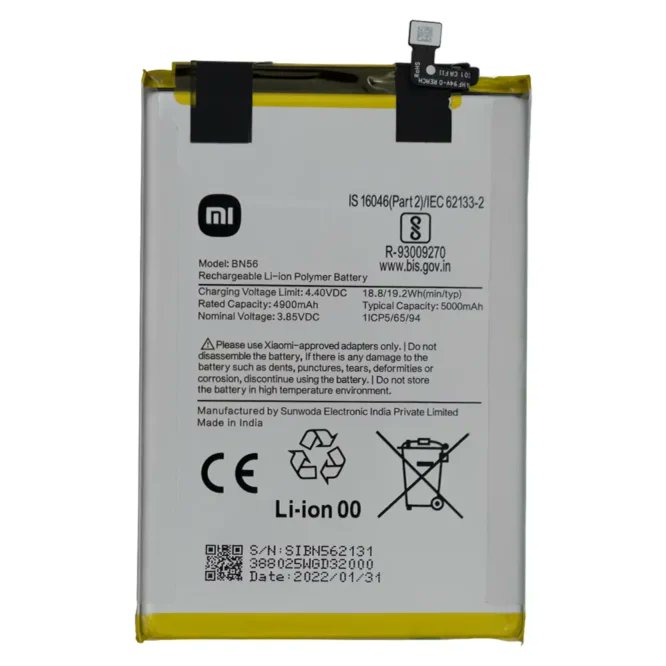
Update: I got the battery replaced and my phone finally stays on without being plugged in 🎉
Turns out it wasn't the charger at all just a dying battery. Lesson learned: sudden shutdowns at a random % (not gradual drain) = check the battery first, not the cable 🔋
My phone only stays on when plugged into the charger the second I unplug it, it dies. Battery health shows 83%, but it shut down suddenly at 35% today, not gradual drain. Charger & port are fine. Likely a failing battery cell or connector issue. Off to the workshop🔋😩
Week update on the quadruped:
Balance loop is stable. Next problem: getting it to walk without the legs fighting each other for torque.
Robotics isn't one hard problem. It's 50 small ones, back to back.
Most "AI robotics" content right now is a render, a demo video, and a funding round.
Mine is a bar stool, exposed wiring, and a quadruped that just learned to balance on its own legs.
No lab. No team. No funding.
German engineers know the difference.
Resspery pi 📟
Object detection 👀 used to require a research lab.
Now it runs on a $35 board u can hold in one hand @ChabiAyoub1
Stop waiting for permission to build. The hardware's been ready for years.
@clankrmedia Standardized platforms usually help adoption speed but hurt differentiation curious whether "Robot Reference Platform" means shared simulation/physics stack only, or actual hardware reference designs too. Those are very different commitments.
@_Stocko_ This is the kind of tool that looks simple until you try to build one yourself. Consistent wire length + stripping + forming without jamming is a surprisingly hard mechanical problem. Compact and "just plug and use" is the harder design goal, not the flashier one.
@oprydai Hard disagree. A home-lab should teach you to work within constraints that's literally the skill that translates to real jobs. Debt-funded gear teaches you nothing except how to make payments
@ebokify The real question with ESP32-S3 voice kits is always latency — is the wake-word detection running on-device, or is it round-tripping to the cloud before it even starts listening? That gap is what makes or breaks "real-time" claims.
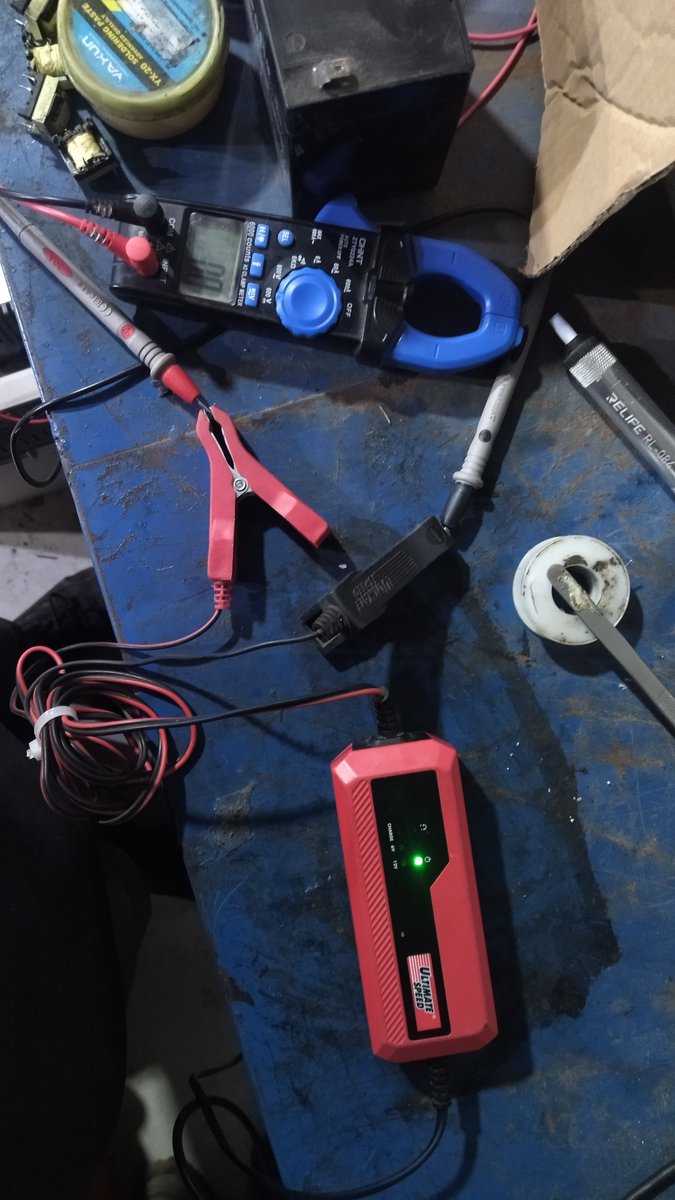
excited about smart chargers with apps and Bluetooth.
This one has three LEDs and a switch. It's charged more batteries than most "smart" chargers ever will.
It's just unglamorous.