🦏 Why Are African Rhinos Being Dehorned?
In 2024, 516 rhinos were poached across Africa. About 81% of those killings happened in South Africa. By 2025, South Africa still lost 352 rhinos to poaching.
🦏 Why remove the horn?
Rhino horn is the main reason poachers target rhinos.If the horn is safely removed, the rhino may become a less attractive target because there is less horn to steal.
But dehorning is not a magic solution.
⚠️ What happens to the rhino?
A rhino can survive without its horn, but the horn has important natural uses.
It helps with:
🛡️ Defence
🌿 Digging
🥊 Fighting other rhinos
🐾 Social interactions
Research on black rhinos has also found changes in behaviour and movement after dehorning.
And there is another problem:
The horn grows back. So dehorning may need to be repeated every 1–2 years.
🦏 The bigger picture
Africa had about 22,540 rhinos at the end of 2024—but poaching continues to threaten them.
In South Africa, poaching fell from 420 rhinos in 2024 to 352 in 2025, but the situation varied greatly by area. Kruger National Park, for example, saw poaching rise from 88 in 2024 to 175 in 2025.
🦏 Indian Rhino Poaching: The Numbers Behind the Fight
India is home to the greater one-horned rhinoceros (Rhinoceros unicornis), one of the world's largest rhino species. The species is classified as Vulnerable.
📊 The latest numbers
🇮🇳 3,323 greater one-horned rhinos were estimated in India in 2024.
🌏 India + Nepal together had about 4,075.
Between January 2021 and December 2024, 9 Indian rhinos were illegally killed in India.
🦏 Why Are African Rhinos Being Dehorned?
In 2024, 516 rhinos were poached across Africa. About 81% of those killings happened in South Africa. By 2025, South Africa still lost 352 rhinos to poaching.
🦏 Why remove the horn?
Rhino horn is the main reason poachers target rhinos.If the horn is safely removed, the rhino may become a less attractive target because there is less horn to steal.
But dehorning is not a magic solution.
⚠️ What happens to the rhino?
A rhino can survive without its horn, but the horn has important natural uses.
It helps with:
🛡️ Defence
🌿 Digging
🥊 Fighting other rhinos
🐾 Social interactions
Research on black rhinos has also found changes in behaviour and movement after dehorning.
And there is another problem:
The horn grows back. So dehorning may need to be repeated every 1–2 years.
🦏 The bigger picture
Africa had about 22,540 rhinos at the end of 2024—but poaching continues to threaten them.
In South Africa, poaching fell from 420 rhinos in 2024 to 352 in 2025, but the situation varied greatly by area. Kruger National Park, for example, saw poaching rise from 88 in 2024 to 175 in 2025.
One of Nature’s Most Brutal Battles
When lions fight, it can be a fight for territory, dominance and control of a pride.
Powerful jaws, claws and sheer strength make these clashes extremely dangerous.
A fight can end with one lion seriously injured or even dead.
In the wild, victory can mean survival.
Panama Canal’s New Water Crisis: Why Ships Are Being Restricted
▶️The Panama Canal is facing another serious water problem in 2026. After the severe drought of 2023–24, lower-than-expected rainfall and the return of El Niño are again reducing the freshwater available for canal operations.
🌧️ What is happening?
The Panama Canal does not simply use seawater to move ships.Its lock system depends heavily on freshwater stored in Gatún and Alajuela lakes. Each ship passing through the locks requires a large amount of freshwater, which ultimately flows toward the sea.
▶️In 2026, rainfall in the canal watershed has been much lower than normal. Between May and August 2026, rainfall was about 34% below the historical average, while watershed inflows were about 44% below average.
☀️ Why is rainfall falling?
A major factor is the developing El Niño event.El Niño changes atmospheric and rainfall patterns across the region.
▶️Panama is experiencing hotter and drier conditions, reducing the amount of water flowing into the lakes that feed the canal.
🚢 What does this mean for ships?
Less water means the Canal Authority has to save freshwater.From September 2026, daily transit capacity was reduced:
🌍 Why does the world care?
The Panama Canal connects the Atlantic and Pacific oceans and handles roughly 5% of global maritime trade. When fewer ships can pass, vessels may have to wait or take much longer alternative routes.
#PanamaCanal
A Mother’s Love Knows No Fear: Elephant Saves Her Calf from the Raging Koshi River
Elephants are among the most social and family-oriented animals, protecting, caring for and supporting their herd members.
🐻 In the forests of India lives a bear with a remarkable way of protecting its young.
When danger approaches, a mother sloth bear may carry her cubs on her back. The cub climbs onto her shaggy back and holds on tightly while the mother moves quickly through the forest.
Unlike many mammals, sloth bear cubs can spend considerable time riding on their mother's back—an extraordinary adaptation that helps protect them from predators and other dangers.
The Sloth Bear is found mainly in the Indian subcontinent, especially in dry forests, grasslands and scrub habitats. It is listed as Vulnerable on the IUCN Red List, with habitat loss, human–wildlife conflict and historical exploitation among its major threats.
#SlothBear #Wildlife #Biodiversity #Conservation #India
🐊 When Crocodiles Eat Their Own Young
In the wild, survival can be brutal.
A large adult crocodile may sometimes eat a juvenile crocodile of its own species. This is called cannibalism.
Why does it happen?
▶️When food becomes scarce, a small crocodile can become an easy meal. Juveniles are also vulnerable when they enter the territory of a much larger adult.
▶️ Territorial aggression can lead to an attack, after which the adult may consume the juvenile.
▶️But there is an interesting side of crocodile behaviour: crocodile mothers also protect their young. They may guard nests and help hatchlings reach the water.
▶️So, the same species can show both parental care and cannibalism—depending on the situation.
🧬 Evolution doesn't make crocodiles “want” to eat their own kind. It favors survival strategies. When an easy food opportunity appears, an opportunistic predator may take it—even if the prey is another crocodile.
🦏 Why Are African Rhinos Being Dehorned?
In 2024, 516 rhinos were poached across Africa. About 81% of those killings happened in South Africa. By 2025, South Africa still lost 352 rhinos to poaching.
🦏 Why remove the horn?
Rhino horn is the main reason poachers target rhinos.If the horn is safely removed, the rhino may become a less attractive target because there is less horn to steal.
But dehorning is not a magic solution.
⚠️ What happens to the rhino?
A rhino can survive without its horn, but the horn has important natural uses.
It helps with:
🛡️ Defence
🌿 Digging
🥊 Fighting other rhinos
🐾 Social interactions
Research on black rhinos has also found changes in behaviour and movement after dehorning.
And there is another problem:
The horn grows back. So dehorning may need to be repeated every 1–2 years.
🦏 The bigger picture
Africa had about 22,540 rhinos at the end of 2024—but poaching continues to threaten them.
In South Africa, poaching fell from 420 rhinos in 2024 to 352 in 2025, but the situation varied greatly by area. Kruger National Park, for example, saw poaching rise from 88 in 2024 to 175 in 2025.
@convey_nkuna Some countries destroy confiscated rhino horns. Kenya, for example, has used crushing and burning to destroy seized rhino horns, preventing them from returning to the illegal market.
A Mother’s Love Knows No Fear: Elephant Saves Her Calf from the Raging Koshi River
Elephants are among the most social and family-oriented animals, protecting, caring for and supporting their herd members.
Panama Canal’s New Water Crisis: Why Ships Are Being Restricted
▶️The Panama Canal is facing another serious water problem in 2026. After the severe drought of 2023–24, lower-than-expected rainfall and the return of El Niño are again reducing the freshwater available for canal operations.
🌧️ What is happening?
The Panama Canal does not simply use seawater to move ships.Its lock system depends heavily on freshwater stored in Gatún and Alajuela lakes. Each ship passing through the locks requires a large amount of freshwater, which ultimately flows toward the sea.
▶️In 2026, rainfall in the canal watershed has been much lower than normal. Between May and August 2026, rainfall was about 34% below the historical average, while watershed inflows were about 44% below average.
☀️ Why is rainfall falling?
A major factor is the developing El Niño event.El Niño changes atmospheric and rainfall patterns across the region.
▶️Panama is experiencing hotter and drier conditions, reducing the amount of water flowing into the lakes that feed the canal.
🚢 What does this mean for ships?
Less water means the Canal Authority has to save freshwater.From September 2026, daily transit capacity was reduced:
🌍 Why does the world care?
The Panama Canal connects the Atlantic and Pacific oceans and handles roughly 5% of global maritime trade. When fewer ships can pass, vessels may have to wait or take much longer alternative routes.
#PanamaCanal
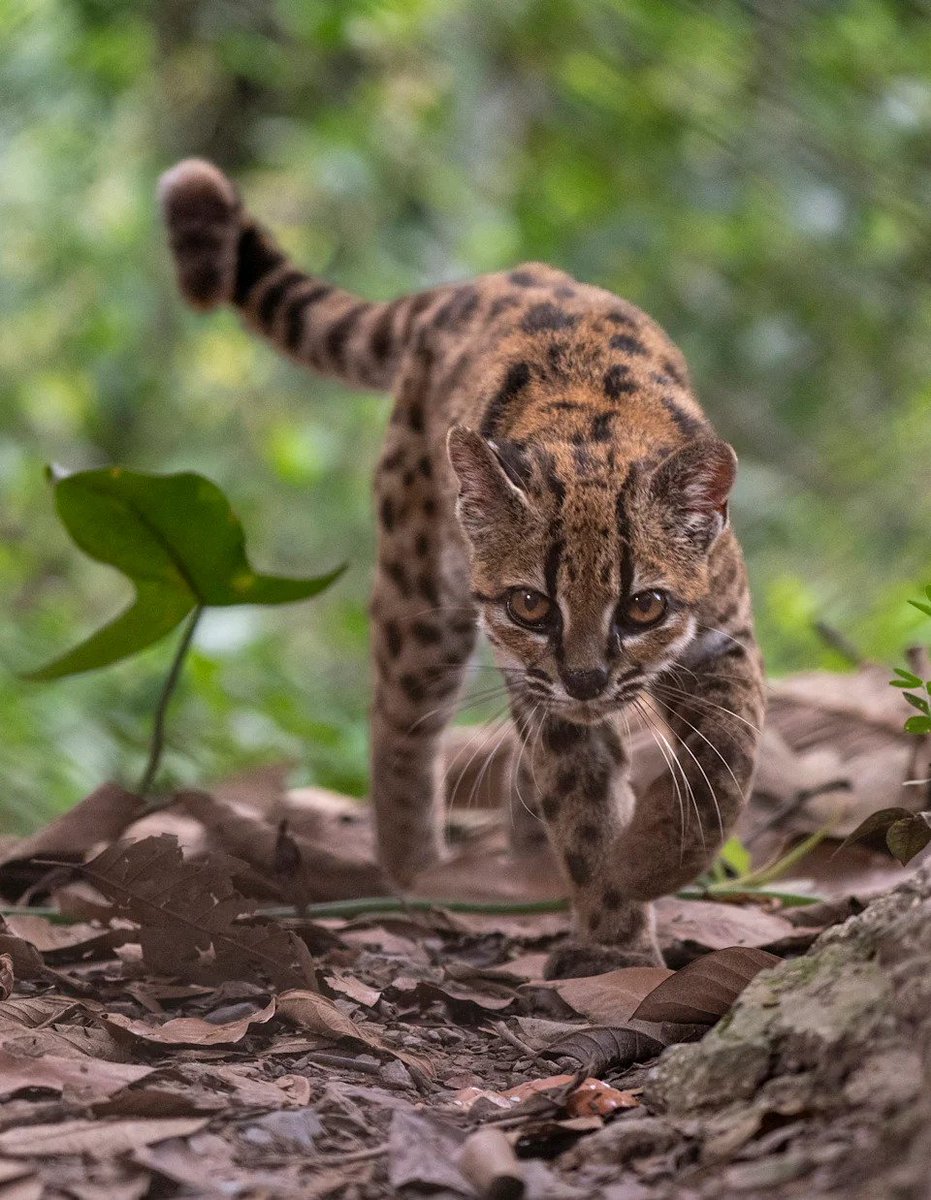
🐆 A New Wild Cat Has Been Discovered After More Than 100 Years! 🌿
Deep in Bolivia’s Yungas cloud forests, scientists have identified a previously unknown wild cat — Leopardus tilcayo, also called the Tilcayo.
The story began in 2016, when researchers noticed a strange-looking cat at a wildlife sanctuary. At first, they thought it was an already-known tiger cat.
But something was different.
🧬 Genetic testing revealed the surprise:
The Tilcayo is genetically distinct from other tiger cats and appears to have evolved separately for about 1.4 million years.
🐾 Meet the Tilcayo
📍 Home: Yungas cloud forests, Bolivia
⚖️ Weight: About 1.4–2 kg
🐈 Size: Smaller than an average domestic cat
🟤 Appearance: Light-brown coat with dark rosettes
The wild still has secrets—and sometimes, we discover them only when we look closer. 🐆🌎
#Tilcayo
🦏 Indian Rhino Poaching: The Numbers Behind the Fight
India is home to the greater one-horned rhinoceros (Rhinoceros unicornis), one of the world's largest rhino species. The species is classified as Vulnerable.
📊 The latest numbers
🇮🇳 3,323 greater one-horned rhinos were estimated in India in 2024.
🌏 India + Nepal together had about 4,075.
Between January 2021 and December 2024, 9 Indian rhinos were illegally killed in India.
🇺🇸🇮🇳 Trump Signs Law That Could Bring 100% Tariff on Indian Goods
▶️Why is India facing this threat?
The reason is Russian oil.
▶️The new Lindsey O. Graham Sanctioning Russia and Iran Act of 2026 gives the US President authority to impose tariffs of up to 100% on countries that are among the five largest buyers of Russian crude oil or natural gas. India and China are currently among those countries.
⚠️ The 100% tariff is NOT automatic.
The law gives Trump the power to impose it. The actual tariff, if imposed, would depend on how the administration uses the new authority.
🛢️ Why is the US targeting Russian oil buyers?
▶️The law is designed to put more economic pressure on Russia, particularly its energy revenues, because of the war in Ukraine.
▶️It also targets Russia's so-called “shadow fleet”—tankers and related networks that Washington says help Russia continue exporting oil despite sanctions.
#Trump #Tarrif
🐝 India’s New “Bee Corridors”: Turning Highways into Lifelines for Pollinators 🌿
Imagine travelling along a highway and seeing not just trees, but continuous stretches of flowering plants designed to feed bees and other pollinators.
That is the idea behind India’s new Bee Corridor initiative.
In February 2026, the National Highways Authority of India (NHAI) announced plans to develop dedicated pollinator corridors along national highways.
🐝 What is a Bee Corridor?
A Bee Corridor is a green strip along roads filled with nectar- and pollen-rich plants.
The aim is simple:
🌸 Flowers → 🐝 Bees → 🌱 Pollination → 🌾 Better crops & biodiversity
Instead of planting trees only for beautification, NHAI wants highway plantations to also serve an ecological purpose.
🌼 How will it work?
Different plants will flower in different seasons, creating a near year-round food supply for bees and other pollinators.
NHAI plans to plant around 40 lakh trees along national highways in 2026–27, with about 60% planned under the Bee Corridor initiative.
🐆 INDIA’S CHEETAH STORY JUST CROSSED ANOTHER MILESTONE 🇮🇳
Four years ago, India began bringing back a species that had been extinct in the country since 1952.
Today, India has 52 cheetahs. 🐆
📍 49 in Kuno
📍 3 in Gandhi Sagar
🐾 32 born in India
A species once lost from India is now raising its next generation here.
🐆 From extinction to a new beginning.
🐆 A New Wild Cat Has Been Discovered After More Than 100 Years! 🌿
Deep in Bolivia’s Yungas cloud forests, scientists have identified a previously unknown wild cat — Leopardus tilcayo, also called the Tilcayo.
The story began in 2016, when researchers noticed a strange-looking cat at a wildlife sanctuary. At first, they thought it was an already-known tiger cat.
But something was different.
🧬 Genetic testing revealed the surprise:
The Tilcayo is genetically distinct from other tiger cats and appears to have evolved separately for about 1.4 million years.
🐾 Meet the Tilcayo
📍 Home: Yungas cloud forests, Bolivia
⚖️ Weight: About 1.4–2 kg
🐈 Size: Smaller than an average domestic cat
🟤 Appearance: Light-brown coat with dark rosettes
The wild still has secrets—and sometimes, we discover them only when we look closer. 🐆🌎
#Tilcayo