1/
As institutions increasingly turn to blockchain for real-world infrastructure in 2026, @iota is delivering where it matters most: live trade digitization, verifiable data, and solid network fundamentals.
Here’s a clear snapshot of the current staking and network health 👇
🚢 IOTA already has eBL live on mainnet — and this changes global trade.
For the first time in history, an eBL (electronic Bill of Lading, the document that gives ownership rights over cargo) runs as a digital RWA on a decentralized network and becomes programmable property.
What does this mean?
Ownership of cargo no longer depends on paper or intermediaries, but can be transferred as a digital asset with full control, traceability, and automatic verification in seconds, without fraud or loss, where trust is replaced by rules executed on-chain, pulling along the digitalization of a large part of global trade documentation.
The document no longer travels.
⚡ Ownership moves on the network.
And most importantly: what the Digital Container Shipping Association (DCSA) has been trying to standardize for years without success is already being achieved quietly by IOTA in maritime trade (TWIN + ADAPT + AfCFTA).
#IOTA #TWIN #AfCFTA #ADAPT #eBL #RWA #DCSA
👇 See for yourself
https://t.co/bzsyJK8mvT
BREAKING: Republican Senator Kennedy just blamed Trump the government shutdown!
"The Democrats have offered to open up everything but ICE. Ted Cruz and I said, ‘OK let’s accept their offer…’ Senator Thune submitted that to President Trump. As is his right, [Trump] said ‘No! No deals with the Democrats.’ It would have worked. We could have had TSA paid by the end of the week but the President said ‘no deal.’”
This is the DONALD TRUMP SHUTDOWN!
Even Republicans are acknowledging it.
IOTA and TWIN Strike Again The Nigeria Deal Shows What Is Already Being Built Behind the Scenes
At first glance, the new £746 million UK-Nigeria deal to modernize two key trading ports in Lagos is mainly about one thing: a major infrastructure project, a record-breaking contract for British Steel, and a clear geopolitical signal of strengthening trade relations between the United Kingdom and Nigeria.
But anyone reading between the lines will notice something else.
Because projects like this are exactly the kind of foundation that many in the IOTA and TWIN community have been watching for months: the quiet but steady digitization of global trade infrastructure. And once again, there are strong indications that TWIN is becoming relevant precisely where real economic impact is created not in theory, but at the critical nerve centers of global trade.
Two Ports, Hundreds of Millions And the Real Leverage Lies in Digitization
The official announcement focuses on the modernization of the Lagos Port Complex (Apapa Quays) and the TinCan Island Port Complex. The goal is to upgrade Nigeria's maritime infrastructure, accelerate processes, and significantly improve operational efficiency across its port system.
What stands out most is the language used in the announcement:
- digitalized and automated processes
- fewer paper-heavy procedures
- greater transparency
- faster handling of imports and exports
- lower logistics and demurrage costs
- improved predictability of cargo movement
This is where things get interesting.
Because when ports are not only modernized physically but also restructured at the process and data level, it is no longer just about cranes, steel, and concrete. It becomes about trusted data, interoperable trade processes, digital credentials, cross-border documentation, and an infrastructure that must move information as efficiently as it moves goods.
And that is exactly the terrain where TWIN can demonstrate its value.
Why This Deal Fits the TWIN Narrative So Well
Officially, neither IOTA nor TWIN is named in the government statement. That should be stated clearly. But anyone who has been following TWIN's development over the past months will immediately understand why this announcement is drawing attention in the community.
TWIN is not a standalone product for a narrow niche use case. It is designed as digital trade infrastructure, especially relevant wherever multiple stakeholders, countries, authorities, ports, logistics firms, and financing structures come together. In other words, exactly where traditional systems are often slow, expensive, fragmented, and difficult to integrate.
And that is precisely what we see here:
- an internationally financed infrastructure program
- state and quasi-state actors
- supply chains involving British industrial companies
- strategically important port locations
- and a clear objective to digitize and automate operations
This is not just any project. It is exactly the kind of project where digital trade networks can prove their value in the real world.
The Key Point: This Is Very Likely Not Just a One-Off Win
Perhaps the most important takeaway for anyone following IOTA and TWIN is this:
This Nigeria project does not look like an isolated event. It looks like another building block in a much larger development that is already taking shape behind the scenes.
That is what makes this announcement so significant.
Because while many are still waiting for one big headline moment, something far more substantial seems to be unfolding in reality: an entire pipeline of projects, partnerships, and trade corridors being prepared, connected, and gradually operationalized.
The signals are becoming harder to ignore.
Earlier this week, it was already noticeable that TradeMark Africa, a known IOTA partner, was supporting a trade corridor in the Democratic Republic of the Congo. Now more signals are emerging that point to additional regional connections and strategic corridor development. This also fits perfectly into the broader picture: the focus is not on one isolated pilot, but on the gradual buildout of a network of real-world use cases across supply chains, borders, and trade routes.
That is the real heart of the story.
Not "one port project here, one corridor there," but the slow emergence of an infrastructure layer that is already being assembled behind the scenes.
Why Africa Matters So Much in This Context
West and Central Africa are among the most exciting regions when it comes to the future of digital trade processes. The need is enormous:
- more efficient border procedures
- less bureaucratic friction
- better traceability
- more secure documentation
- faster financing and cross-border transaction handling
When governments, port authorities, trade organizations, and international financing partners begin working together to address exactly these issues, a market begins to emerge in which solutions like TWIN are not just "nice to have," but structurally valuable.
Port modernization is especially important because ports are natural hubs. This is where physical goods flows, regulatory requirements, customs processes, financing logic, and international data flows all intersect. Whoever improves efficiency there improves efficiency for entire regions.
And that is exactly why Nigeria is likely much more than a standalone announcement.
British Steel Is the Headline But Data Infrastructure May Be the Bigger Long-Term Story
Of course, the record-breaking contract for British Steel is politically and economically significant. 120,000 tonnes of steel billets, a contract value of £70 million, and strong support for British industrial jobs are major news.
But for those watching IOTA and TWIN, the more interesting long-term perspective may lie elsewhere.
Because steel modernizes the ports physically.
Digital trade infrastructure modernizes them operationally.
The real lever for the coming years lies in how efficiently goods can be documented, verified, cleared, financed, and tracked across borders. That is where it will be decided whether modernization was merely expensive - or whether it truly delivered lasting productivity gains.
And that is where the real TWIN logic begins.
The Market Still Underestimates What Is Being Built
Many investors and observers are still focused on individual names, isolated announcements, or explicit official references. But the larger development is unfolding differently.
It is taking shape through:
- MoUs
- infrastructure finance
- trade corridors
- public-sector partnerships
- standardization
- and real operational problems that need to be solved.
That also means not every project will be announced with full branding clarity from day one. But the patterns are becoming increasingly visible. And those who recognize those patterns understand why announcements like this generate so much attention within the community.
Because the point is not only that two ports are being modernized.
The point is that exactly the kind of environment is emerging in which TWIN becomes an increasingly logical trust and data layer for trade.
Conclusion
The £746 million deal between the United Kingdom and Nigeria is far more than just a traditional infrastructure story. It is a signal for the next phase of modern trade architecture: physical renewal combined with digital transformation.
And that is exactly why many see it as another indication that IOTA and TWIN continue to gain ground behind the scenes.
Not every connection has been officially spelled out yet. But the direction is becoming difficult to ignore.
- More digitization
- More automation
- More transparency
- More trade corridors
- More international coordination
And above all: more real-world projects.
Nigeria is therefore probably not the whole story. It is more likely the next visible piece of a much larger puzzle that has already been moving in the background for some time.
#IOTA and #TWIN are therefore not approaching a breakthrough in just one place they appear to be becoming part of an entire network, step by step.
🔥BOOM. USDT0 just landed on IOTA Rebased.
Live since 04:21 UTC.
Stable liquidity changes everything.
New phase begins.
IOTA’s financial layer for AfCFTA & upcoming countries 😉 is about to go live.
#IOTA #USDT0 #IOTARebased #AfCFTA #SALUS
https://t.co/8Jm18n1li6
We’re excited to welcome @iota as an Official Stand With Crypto EU Partner.
IOTA is an open-source distributed ledger network bringing real-world infrastructure on-chain, from digital identity and tokenization to trusted data for global trade and supply chains.
For nearly a decade, IOTA has worked with enterprises, governments, and international institutions to deploy blockchain solutions that support secure data exchange, transparent supply chains, and more efficient cross-border trade, including initiatives such as TWIN, the Trade Worldwide Information Network.
• Collaborations across trade, supply chains, and digital identity
• Infrastructure for enterprises building decentralized applications
• Delivering real-world DLT infrastructure since 2015
With IOTA on board, we’ll help policymakers understand how blockchain infrastructure is already powering the real economy across Europe.
IOTA stands with crypto in the EU.
European Cargo is already flying air freight to @TeesAirport for the #TWIN digital trade testbed to work with. Their schedule is very fluid at the moment due to winter storms in China!
I think the testbed has worked with @FedEx air freight since day 1. https://t.co/jLDThJGXSD
🚨 IOTA is already testing something that could change how RWA are financed.
Full securitization infrastructure is already being tested directly on IOTA. In simple terms, securitization is the process of pooling real assets like loans or invoices and turning them into investable financial instruments. Could this be the beginning of the financial layer of the SALUS Platform? Or perhaps some financial infrastructure for ADAPT / TWIN connected to trade within AfCFTA? Too early to say — but the architecture appearing in the code fits surprisingly well with those kinds of applications.
What’s interesting is that this entire process could run directly on IOTA. What appears in the code doesn’t look like a single financial application, but something deeper: the base infrastructure for structuring and managing real-world assets directly on the network.
In other words, portfolios of real-world assets could be transformed into digital financial structures where different investors participate depending on their risk profile.
The architecture being tested mirrors the classic structure used in traditional structured finance:
💎 Senior — lower risk, first priority on repayments
💎 Mezzanine — intermediate risk
💎 Junior — higher risk, higher potential return
If this infrastructure evolves, it could enable something quite ambitious: turning real-world assets into programmable financial instruments that live directly on blockchain.
That could apply to things like:
💎 invoice factoring and trade finance
💎 SME lending and productive financing
💎 equipment leasing or energy infrastructure
💎 digital capital markets for RWA
Maybe we’re only seeing the first pieces of the puzzle…
But this increasingly looks like the financial infrastructure of a new digital economy being built on IOTA. 👀
https://t.co/LvdPsmKeO0
#IOTA #AfCFTA #ADAPT #TWIN #RWA #DeFi
The era of "Soon" is over! 🛠️💎
@Siemens launches its first IOTA-powered #DPP for refurbished softstarters.
✅ No PoC: Commercial product.
✅ Compliance: Meeting EU ESPR via @iota.
✅ Scale: Millions of industrial assets + TX.
Industrial IOTA is live! 🌐🏗️
#IOTA#Siemens#Web3
🔥Seems Siemens is putting the work $IOTA has done with EU into official production
We know 2 key things about IOTA:
• Siemens has multiple patents referencing IOTA
• EU Commission has tested Digital IDs on IOTA
Now both these connections are coming together.
Siemens is now expanding and building around circut protection devices.
And they're doing so with Digital Product Passports.
This is a concept that many in the IOTA ecosystem are likely familiar with from a few years back.
As we had seen IOTA used as infrastructure for these Digital Product Passports carried out by the EU.
In short these are Digital IDs for items such as electronics, textiles, etc.
It directly plays into the EU's initiative of supply chain tracing and sustainability.
And as we can see... The work with IOTA over the past few years wasn't just theory.
But we're seeing direct live integrate from a F500 like Siemens which will now directly leverage IOTA.
🚨 IOTA and SIEMENS. This is NOT a research paper. This is a SIEMENS press release.
Today Siemens confirms that its upcoming Digital Product Passport architecture will integrate:
🔹 Asset Administration Shell (AAS)
🔹 Distributed Ledger Technology: IOTA
Each industrial device will have a QR-linked digital identity, enabling full lifecycle traceability, refurbishment tracking and auditable sustainability data, aligned with the EU Ecodesign for Sustainable Products Regulation (ESPR).
The press release literally says:
"…a data architecture currently under development, using Asset Administration Shell (AAS) and Distributed Ledger Technology (DLT:IOTA), paves the way for a Digital Product Passport (DPP) in line with the EU's Ecodesign for Sustainable Products Regulation (ESPR)."
At the same time, Siemens is expanding its semiconductor-based SENTRON electronic circuit protection, capable of switching up to 1,000× faster than traditional systems, and introducing circular refurbished industrial soft starters with ~50% lower CO₂ footprint.
Real industrial infrastructure. Real adoption.
#IOTA inside Siemens Smart Infrastructure. ⚡🌍
#IOTA #Siemens #DDP #ESPR
https://t.co/YiBgnuoF8l
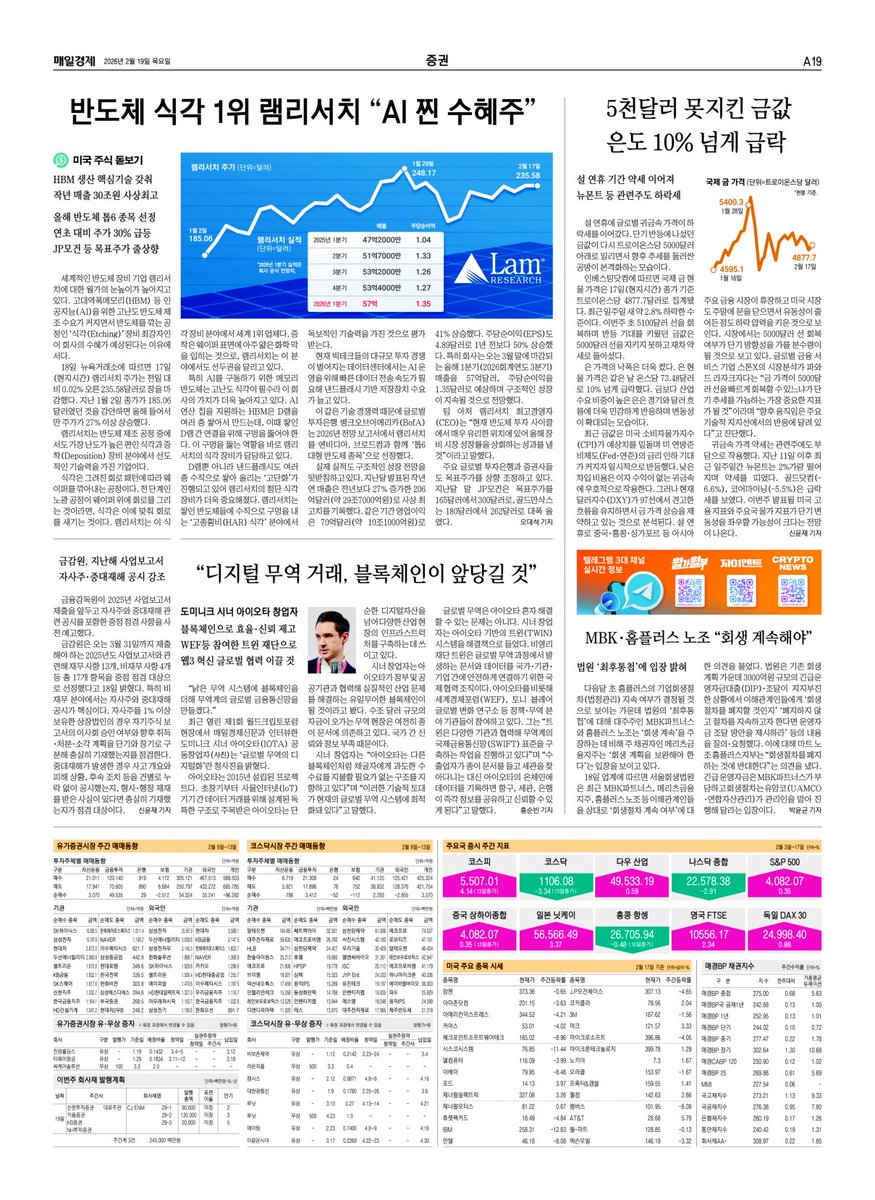
🇰🇷 Maeil Economy Newspaper published an article covering Dom’s speech on how IOTA will transform global trade and supply chains, positioning IOTA as a world leader in this space.
Real-world adoption is accelerating. More to come!
My followers keep asking me to dig into $IOTA. So I did. Again.
And it keeps getting stronger.
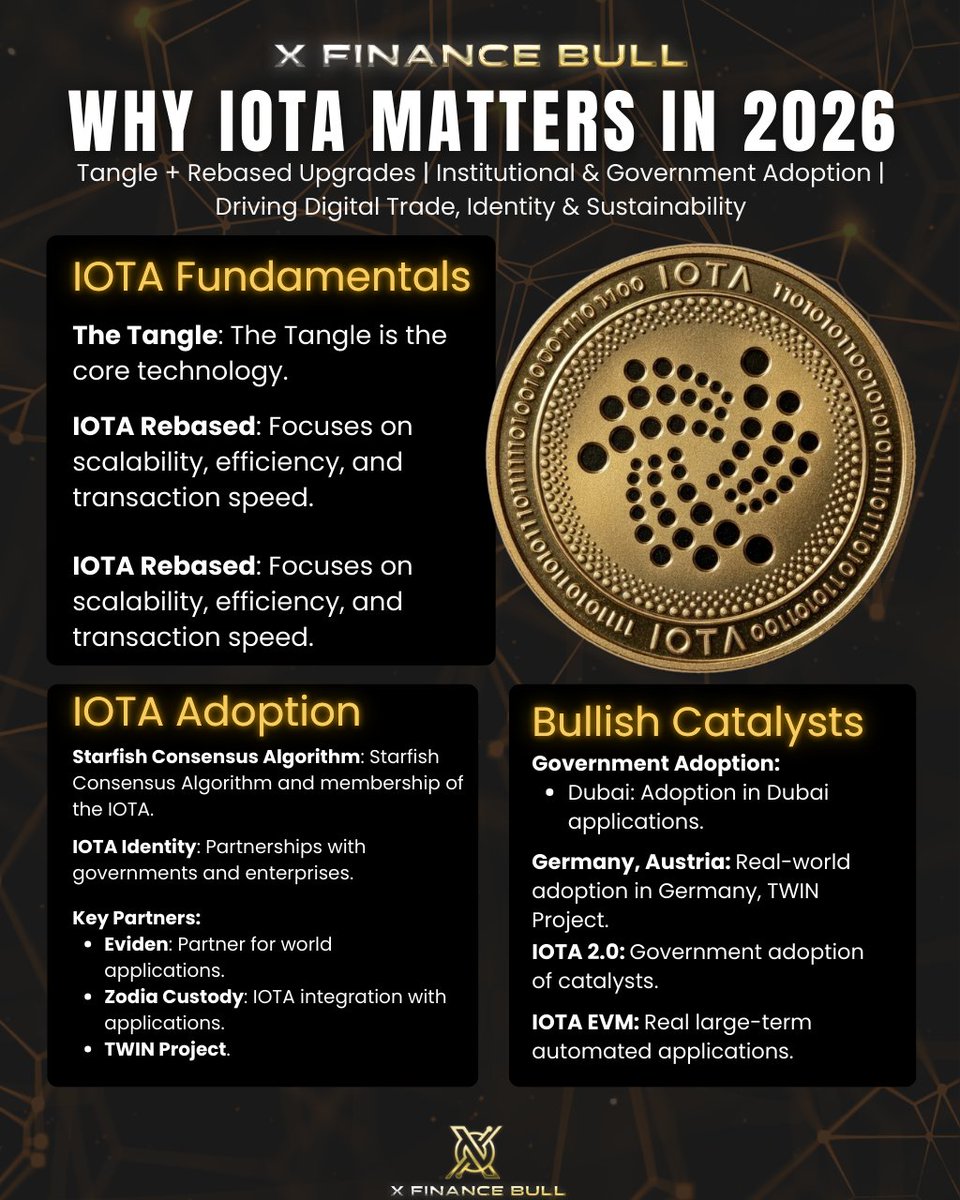
IOTA Rebased went live last year. Fully decentralized. 50,000+ TPS. Sub-second finality. The Coordinator is gone. This is a real Layer 1 now.
Starfish consensus is coming next. Built for even higher throughput and resilience under pressure. Enterprise-grade infrastructure.
But the adoption story is what got me. IOTA is a founding tech partner in ADAPT.
That's a continental initiative to digitalize African trade. Backed by the AfCFTA Secretariat, the Tony Blair Institute, and the World Economic Forum.
Three countries confirmed for mainnet deployment in 2026. Five more in pilot.
Kenya alone is projected to process 100,000 transactions a day on the ledger. Border clearance times already dropped from six hours to 30 minutes in pilot.
Zodia Custody is onboard for institutional access. BitGo providing US custody. LayerZero connecting IOTA to 150+ chains.
$IOTA isn't promising adoption. It's delivering it. At country level.
This is the kind of utility I've been talking about.
Bookmark this.
New on https://t.co/nvuhpbKyWi: our Sustainability page 🌱 Explore IOTA’s energy-efficient design and the sustainability metrics we publish (incl. MiCA indicators) with CCRI, helping builders and CASPs disclose environmental impact with confidence. https://t.co/vHnvsIuBx4