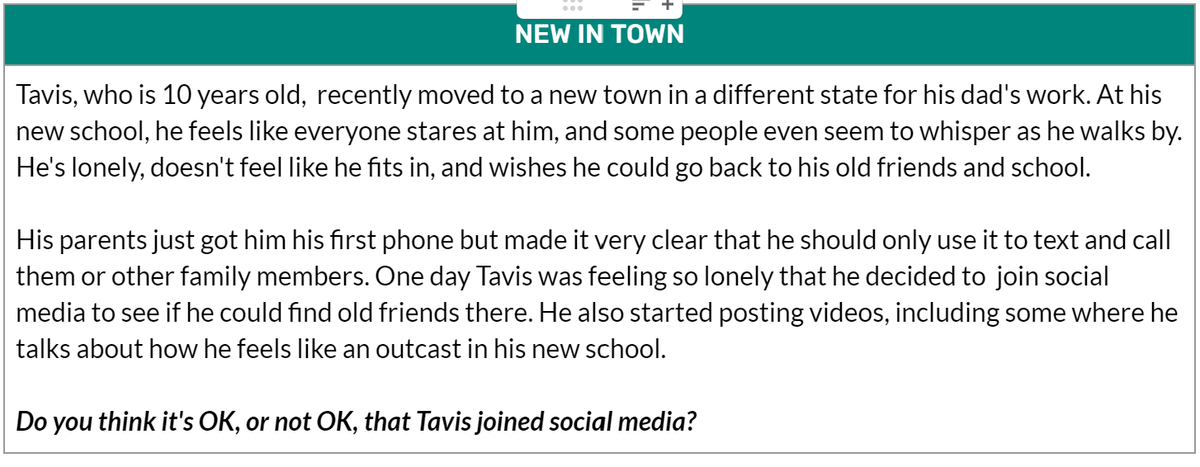
Today, my class is using Twitter to discuss their answers to the following social media dilemma. What do you think? #MrReidSM Material comes from @CommonSenseEd.
Awesome look at first amendment rights for students and when principals should step in when they go too far. Great work, students. Great responses Mr. Maiorana!
The P.A.S.S.S. Podcasters discuss First Amendment rights with guest Mr. ... https://t.co/iBVDdXt6Zh via @YouTube
For my Social Media Students today: We've covered quite a bit in our class so far this semester! Choose one topic we've discussed and, using just one tweet, explain it as though you were describing it to a friend. #MrReidSM
@domzemkosm@anthony_pittano Or, it's okay to form an opinion beforehand. Just make sure that opinion is malleable when you are faced with facts that disprove that opinion. #MrReidSM
@toriiarmes I may be speaking out of left field with this, but I think this is something some high schoolers and even middle schoolers have trouble with. Trying to explain to young minds what is funny and what is not funny is tough for someone older like me.
@anthony_pittano Excellent work! Yes, confirmation bias is a tough cookie to crack for all of us, and the first step to combatting it is to know that you have it. #MrReidSM
When I see the faces of my sophomores after telling them they have first amendment rights while in school, it just proves to me even more that the first step to empowering students is teaching them they DO have a voice. #firstamendment
@ryleemcbride811 I like how you mention news stations! Yes, leaning on local news stations or newspapers will certainly aid in figuring out whether events are real or not. Just be wary: Sometimes the news gets it wrong, too. Rarely though.