@NimitzVikings My classroom is ready for the 2024-2025 school year! Tomorrow is meet the teacher night and I can’t wait to welcome all my new students and say hello to last year’s 😎 #bestyearyet
JUST IN: Dallas Animal Services is asking for immediate help as its main shelter sits at 161% capacity right now.
An official said that's the worst it's been in more than 3 years.
It's almost as if the animals know what's happening when you walk by their kennels.
Hattie McDaniel accepted her Oscar at a segregated "No Blacks" hotel in Los Angeles for her role in "Gone with the Wind." She made history as the first Black American to win an Oscar. Sadly, all of the film's Black actors, including McDaniel, were prohibited from attending the film's premiere in 1939 at the Loew's Grand Theatre in Atlanta, Georgia. Clark Gable, one of the film's stars, refused to attend if Hattie wasn't allowed, but she convinced him to go without her. Even though McDaniel was eventually allowed into the hotel, she had to be escorted and was relegated to the back of the room, separated from her white co-stars.
On this day 161 years ago, Union and Confederate forces clashed at Antietam, near Sharpsburg, Maryland, in what would become the single bloodiest day of the Civil War. The two sides suffered a combined 22,727 dead, wounded, or missing.
https://t.co/GwzmHIvrCT
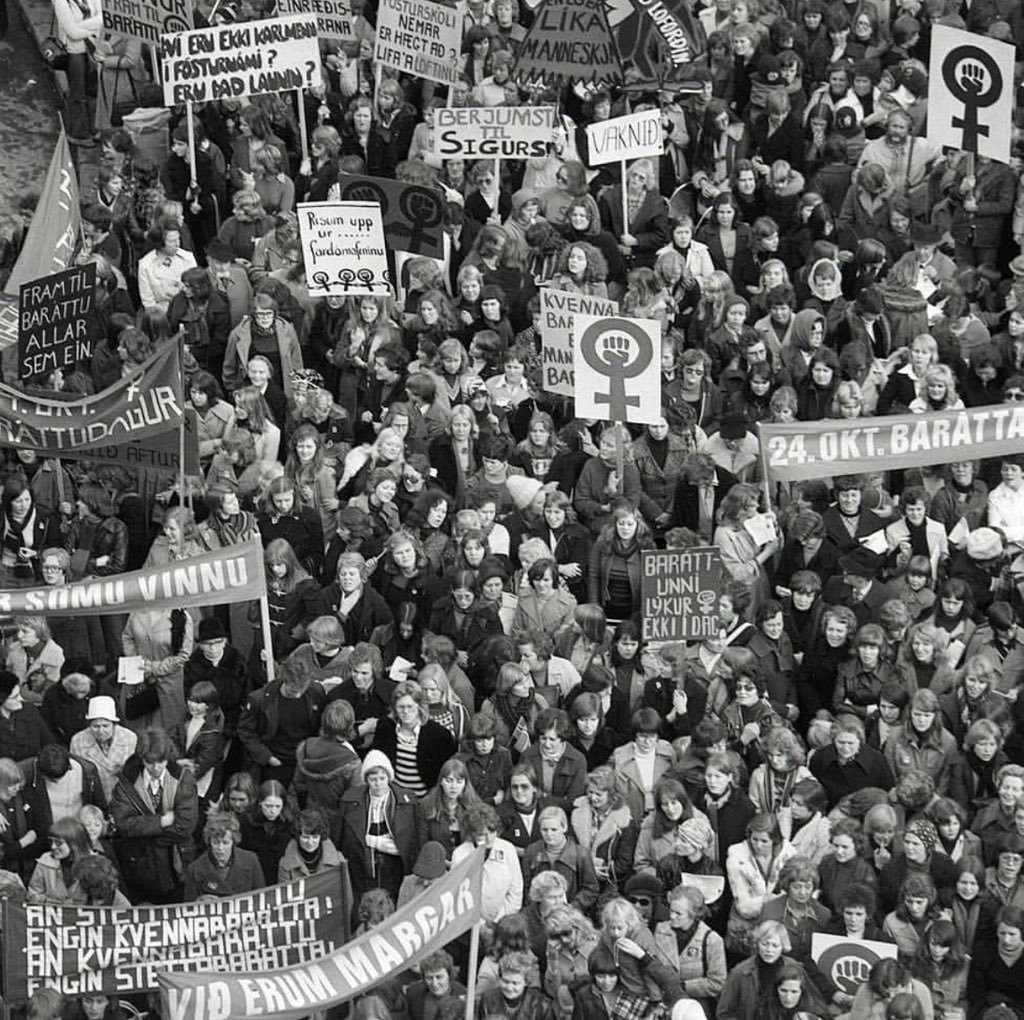
On October 24, 1975, 90% of the women in Iceland staged a strike for equal rights and pay. They ceased working, cooking, cleaning, and tending to their children, effectively bringing the nation to a standstill. The men faced significant challenges. Supermarkets quickly sold out of sausages due to their ease of preparation. Fathers resorted to bribing their older children to care for the younger ones, while some were compelled to bring their children to work, resulting in reduced productivity.
Numerous shops and small businesses operated at only half capacity. Schools had to close as a majority of the teachers were women. The printing of newspapers halted since the majority of typesetters were women. Flight cancellations ensued as most flight attendants were women, and bank managers had to assume teller roles due to the preponderance of female tellers.
One year later, Iceland enacted the world's first law guaranteeing equal rights for women. Four years following this legislation, Iceland made history by electing its first female president, Vigdís Finnbogadóttir, who served from 1980 to 1996, becoming the world's longest-serving elected female head of state.
According to the World Economic Forum, Iceland currently holds the top rank globally for gender equality, a position it has maintained for the past 11 years.
#OTD in #History, 1620, the Pilgrims aboard the Mayflower began their voyage to #America. This group of religious Separatists knew they couldn't both prosper and safely worship in Europe. Thus, it was with “great hope and inward zeal” that they looked toward the New World.
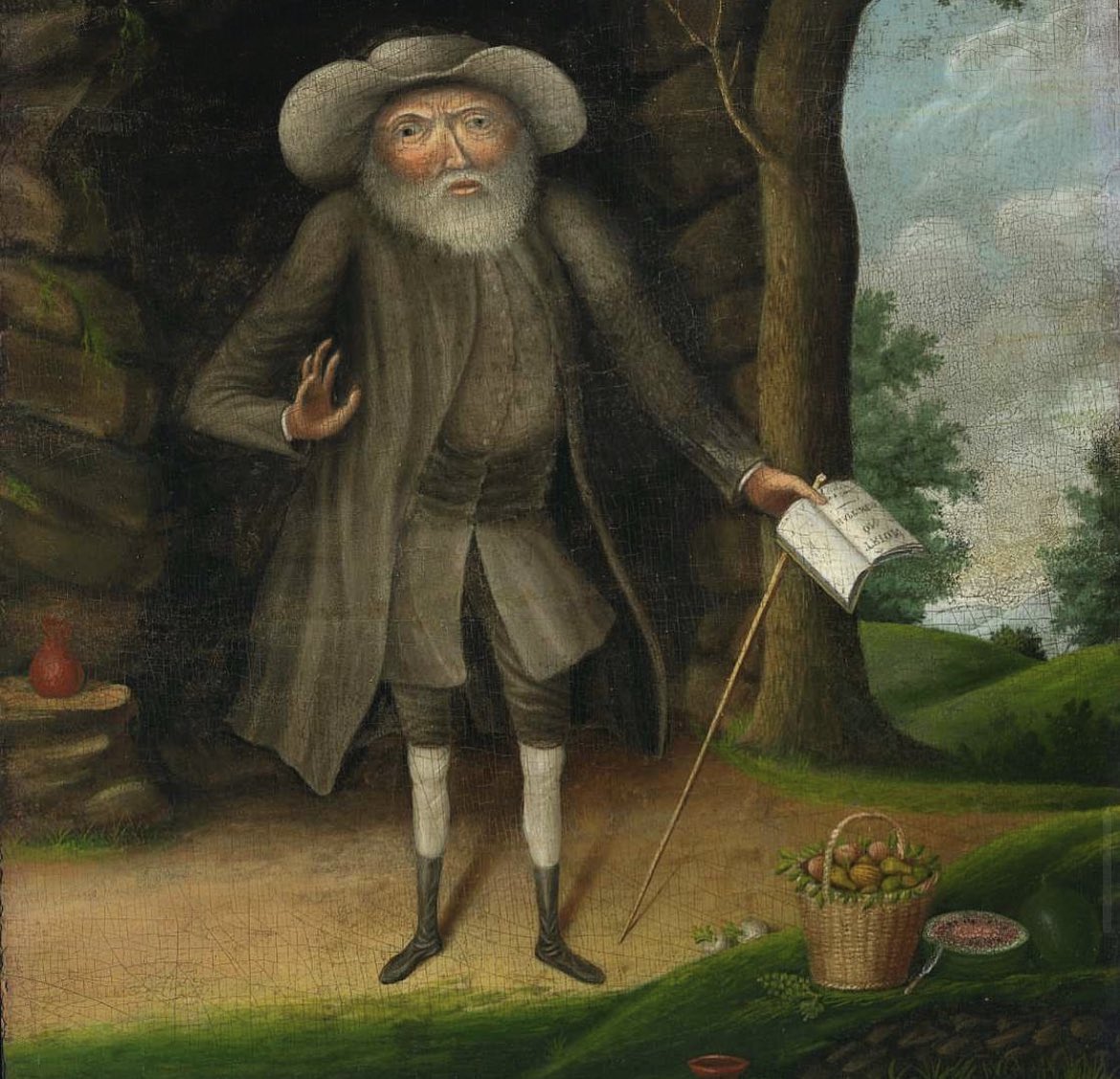
Benjamin Lay was a 4-foot-7-inch hunchbacked Quaker abolitionist. After witnessing the horrors of slavery firsthand while working in Barbados, Lay dedicated his life to abolishing it. In 1731, he was expelled from the Caribbean island by hostile slaveowners due to his anti-slavery activities. Lay settled in Philadelphia and continued his activism through pamphlets and speeches. In 1737, Benjamin Franklin published Lay's book, "All Slave-Keepers That Keep the Innocent in Bondage, Apostates," exposing the hypocrisy of prominent Quakers who enslaved people.
In 1738, Lay delivered a powerful speech denouncing slavery, concluding with the statement, "Thus shall God shed the blood of those who enslave their fellow creatures." He then pierced the Bible with a concealed bag of pokeberry juice, creating a dramatic spectacle. Lay was ejected from the church but lay on the doorsteps, forcing everyone to step over his "bloodied" body as they left. His efforts led the Philadelphia Society of Friends to expel members who were enslavers.
Lay also boycotted products made by enslaved people, including cotton or wool clothing, instead making his own clothes from flax. In one instance, upon discovering that his hosts enslaved people in the house, he exclaimed, "I will not share with thee the fruits of thy unrighteousness."
In one extreme act, Lay convinced his neighbor's 6-year-old son to come to his house. By evening, Lay informed the parents, "Your child is safe in my house, and you may now conceive of the sorrow you inflict upon the parents of the negroe girl you hold in slavery, for she was torn from them by avarice."
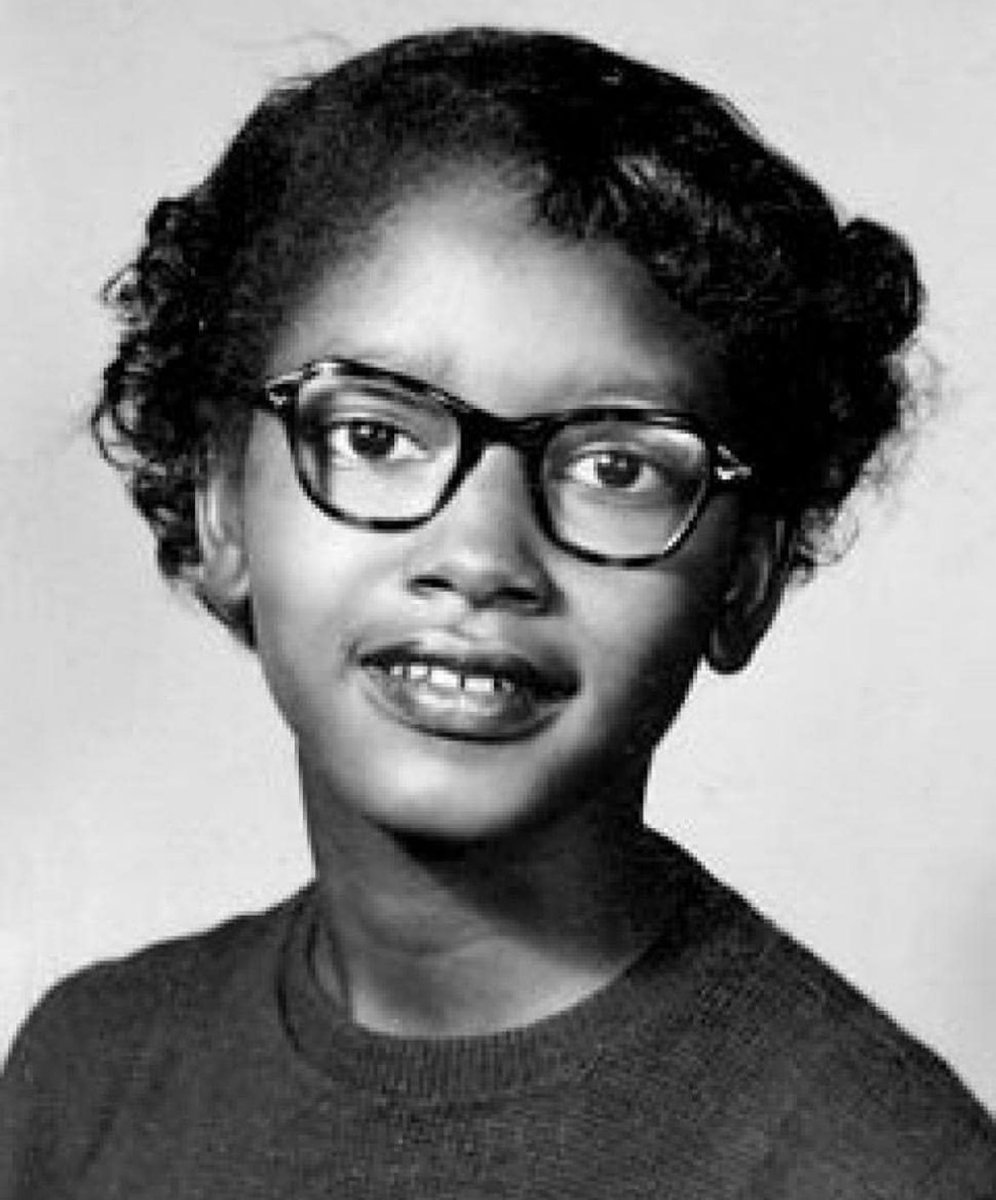
Claudette Colvin, at the age of 15 in 1955, refused to relinquish her seat to a white woman on a bus, asserting, "it's my constitutional right to sit here." This action occurred nine months before Rosa Parks' renowned protest. So, why did Colvin largely fade into obscurity while Parks became an icon of the Civil Rights movement?
Many of the "incidents" within the Civil Rights movement were, in fact, meticulously orchestrated by the NAACP. Colvin, being an unmarried, pregnant teenager at the time, led the NAACP to reenact the incident with Rosa Parks, a respected older woman in her community. The NAACP wanted to avoid choosing someone who could be easily discredited or attacked.
It's important to note that Rosa Parks' protest had a specific purpose: to challenge the notion of "separate but equal." In Montgomery, Alabama, buses at that time designated the front half for white individuals and the back half for Black individuals. If the "separate but equal" rule were true, once the white section filled, white passengers should have been turned away. However, this didn't happen. Instead, the bus driver expanded the white section and forced Black passengers to move back a row. Rosa Parks, not seated in the front of the bus but in the front of the Black section, refused to give up her seat. Her arrest highlighted that "separate but equal" was a false concept.
When asked years later if she would repeat her actions, Colvin expressed, "I feel very, very proud of what I did. I do feel like what I did was a spark and it caught on. I'm not disappointed. Let the people know Rosa Parks was the right person for the boycott. But also let them know that the attorneys took four other women to the Supreme Court to challenge the law that led to the end of segregation."
Pictured below is Marcy Borders, an American legal assistant who worked for Bank of America at its World Trade Center branch. She was born on July 19, 1973, and tragically passed away on August 24, 2015. Marcy Borders survived the harrowing events of September 11, 2001, when the World Trade Center was attacked by al-Qaeda.
Photographer Stan Honda captured an iconic image of her that day, earning her the nickname "Dust Lady." Reflecting on his photograph's legacy, Honda said, "Over the years, it has been strange for me to think that my photo has a lasting impact. I never imagined I'd have an image like that. I believe people relate to it because it depicts a single person trying to cope with the chaos of that fateful day."
In 2011, Marcy Borders revealed how the trauma of 9/11 led to ten years of depression and addiction. She described it as if her soul was knocked down with the towers.
Tragically, in August 2014, Marcy Borders was diagnosed with stomach cancer, which she attributed to exposure to toxic dust during the World Trade Center collapse. Despite not having undergone surgery and requiring more chemotherapy, her medical bills had already accumulated to $190,000. She couldn't even afford to fill her prescriptions. She firmly believed that her cancer was linked to the toxic exposure, stating, "I definitely believe it because I haven't had any other illnesses, like high blood pressure, high cholesterol, or diabetes."
Marcy Borders lost her battle with cancer and passed away on August 24, 2015.
“My best friend is a person who will give me a book I have not read.”
-Abraham Lincoln
Join the ranks of Presidents and First Ladies by diving into a favorite story this National Read a Book Day! 📚💫
Remote learning during the 1937 polio epidemic in Chicago was necessitated by the absence of a polio cure, coupled with its high contagiousness. As a result, school openings were postponed, and students were required to remain at home. Over 300,000 students in grades three to eight received their education through radio broadcasts.
According to David M. Oshinsky, a history professor at NYU, "The public was horribly and understandably frightened by polio. There was no prevention and no cure. Everyone was at risk, especially children. There was nothing a parent could do to protect the family. I grew up in this era. Each summer, polio would come like The Plague. Beaches and pools would close due to the fear that the poliovirus was waterborne. Children had to stay away from crowds, leading to bans on movie theaters, bowling alleys, and similar places. My mother gave us all a 'polio test' each day: Could we touch our toes and put our chins to our chest? Every stomach ache or stiffness caused a panic. Was it polio? I remember the awful photos of children on crutches, in wheelchairs, and iron lungs. And returning to school in September, seeing the empty desks where the children hadn't returned."
The last monarch (and first queen) of the Hawaiian Kingdom, Queen Lili'uokalani was born on September 2, 1838.
Lili'uokalani's reign was ended by a U.S.-backed coup in 1893, but she continued to fight for the Hawaiian people, culture, and traditions.
(📸: Library of Congress)
13,000 feet beneath the surface of the Atlantic Ocean, a joint American-French expedition discovered the wreckage of the RMS Titanic on September 1, 1985, 73 years after its famous sinking.
📸: NOAA (Public Domain)
Get up, it’s game day!! It is also Homecoming 2023! We are so excited for the first home game of the season at Ellis Stadium. Stick around after the game for a post game performance or Morpheus! #nimitznation#nimitzvikingband#ALLN#morpheus2023