Next-Level Instructional Coaching: What the Research Says
If we want to truly accelerate student achievement, instructional coaching cannot be an afterthought. The most effective schools make coaching a central driver of growth—deliberate, consistent, and transformational.
Here’s what the latest research and top authors tell us:
Jim Knight (“The Impact Cycle,” “Instructional Coaching”) @jimknight99
•Coaching should be weekly or bi-weekly and centered around teacher-identified goals.
•Coaches are partners, not evaluators.
“Teachers are more likely to change when they have choice, voice, and agency.”
Elena Aguilar (“The Art of Coaching”) @brightmorningtm
•Focus on emotional intelligence, trust-building, and teacher well-being.
•Use appreciative inquiry: build on strengths before tackling deficits.
Ask: “What’s working, and how do we build on that?”
Matthew Kraft (Brown University) @MatthewAKraft
•Frequent, sustained coaching increases student achievement more than almost any other form of PD.
•Even brief, consistent coaching every 2–3 weeks yields measurable impact.
His meta-analysis is a must-read for any district leader.
Paul Bambrick-Santoyo (“Leverage Leadership”) @paul_bambrick
•Video-based coaching and real-time feedback are high-leverage practices.
•Clear action steps, immediate implementation, and tight feedback loops are critical.
High-Leverage Coaching Practices
•Weekly mini-coaching sessions (15–30 minutes): Target one strategy, rooted in classroom walkthroughs or student data.
•Six-week coaching cycles: Co-plan, co-teach, model, observe, and reflect.
•Use video: Teachers film and reflect before debriefing with the coach.
What Makes It Next-Level?
•It’s about growth, not compliance.
•It’s grounded in trust and mutual respect.
•It happens regularly—not just when there’s a problem.
•It’s aligned to student outcomes, not just adult preferences.
Coaching done right is not about fixing teachers. It’s about unlocking greatness.
Let’s build coaching systems that empower every teacher to get better every week—for every student, every day.
#InstructionalCoaching #LeadershipMatters #TeacherSupport #EducationResearch #SchoolImprovement
Without a vision, your decisions are guided be the emotions and demands of the day. Everything is a reaction. Progress stalls.
When you have a vision, it guides your actions. "Based on where we want to be, what does that require of us in this moment?"
Vision creates clarity.
You don't get immediate results. There is no drive thru window to getting better. There is no shortcut or lifehack.
You show up. You commit to the process. You do the work. You get better.
Repeat daily.
🪵🪓
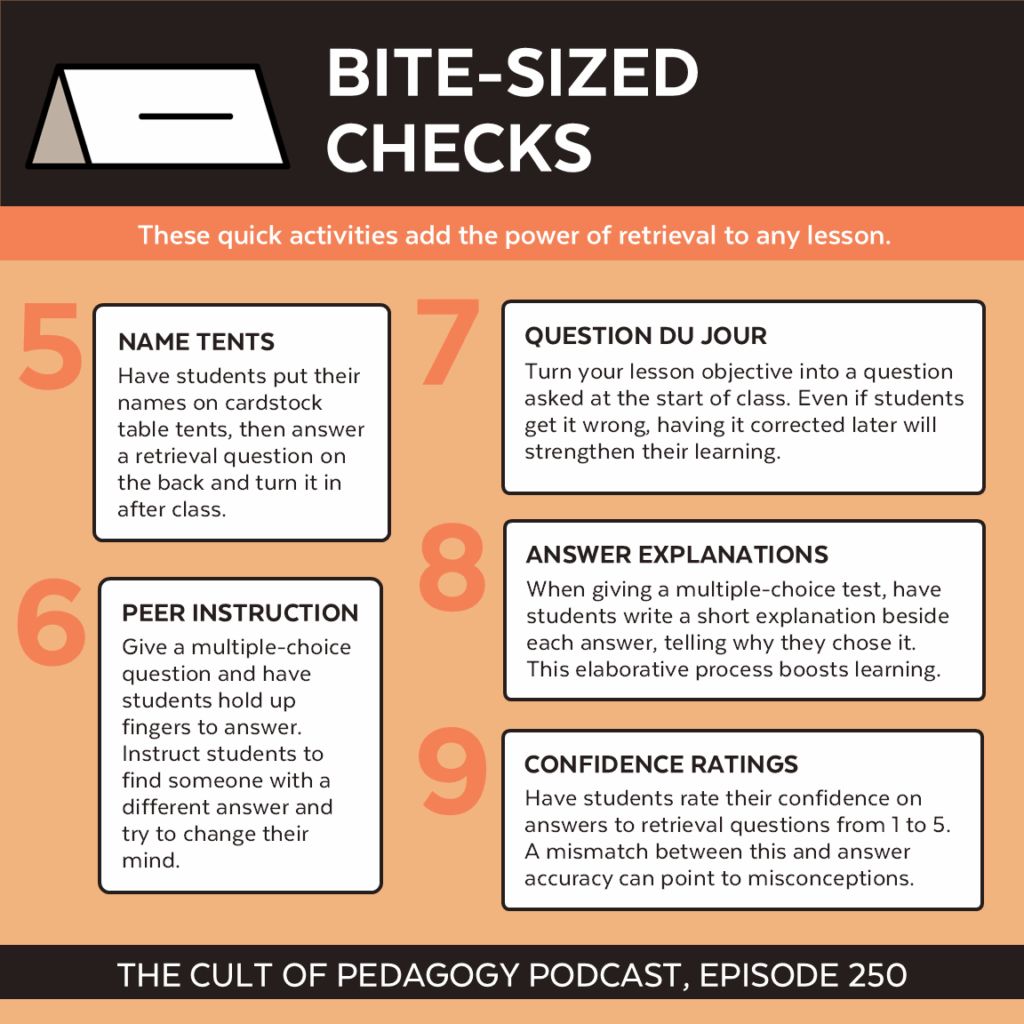
✏️ 9 Teacher-Tested Retrieval Strategies
From mini‐whiteboards to ‘Question du Jour’ and confidence ratings—here are 9 real‑classroom tactics that make retrieval practice fast, fun, and formative. Worth every minute!
https://t.co/ZClb5YAoYi via @CultofPedagogy#edutwitter #educoach #k12 #teachertwitter
A healthy culture doesn't guarantee a win, doesn’t guarantee you won’t face adversity or that things will always go your way.
Everyone gets tested. Everyone faces obstacles. Everyone falls down.
Culture determines how you respond to those moments. Build it on purpose.
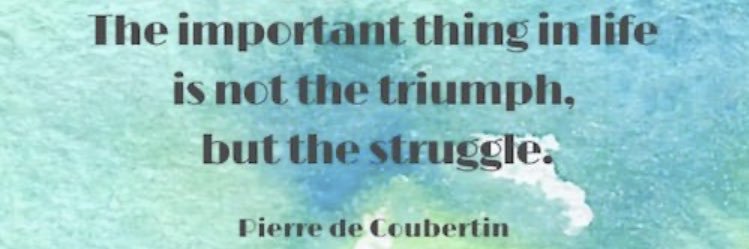
Struggle isn’t bad.
Failure isn’t bad.
Being uncomfortable isn’t bad.
Feeling disappointed isn’t bad.
These are the moments that refine you.
The journey isn’t supposed to be easy or feel good every day.
Stop running from the hard moments. Embrace them.
You don’t control your boss, your coach, your colleagues, your teammates, your team.
You control you.
Stop complaining about them and using them as an excuse to not bring your best.
Own your mindset. Own your actions. Own the way you show up. Be the standard.
“A Path to Follow” by Patricia Edward is a reflection of how we approach and educate students.
Children are who they are. They know what they know. They bring what they bring. Our job is not to wish that students knew more or knew differently. Our job is to turn each student’s knowledge and diversity of knowledge into a curricular strength, rather than an instructional inconvenience.
We can do that only if we hold high expectations for all students, convey great respect for the knowledge and culture they bring in the classroom, and offer lots of support in helping to achieve those expectations.
Your circumstances only have the power you give them.
The negative words someone said to you only have the power you give them.
Your failures only have the power you give them.
Your feelings only have the power you give them.
What you give attention to, you give power to.
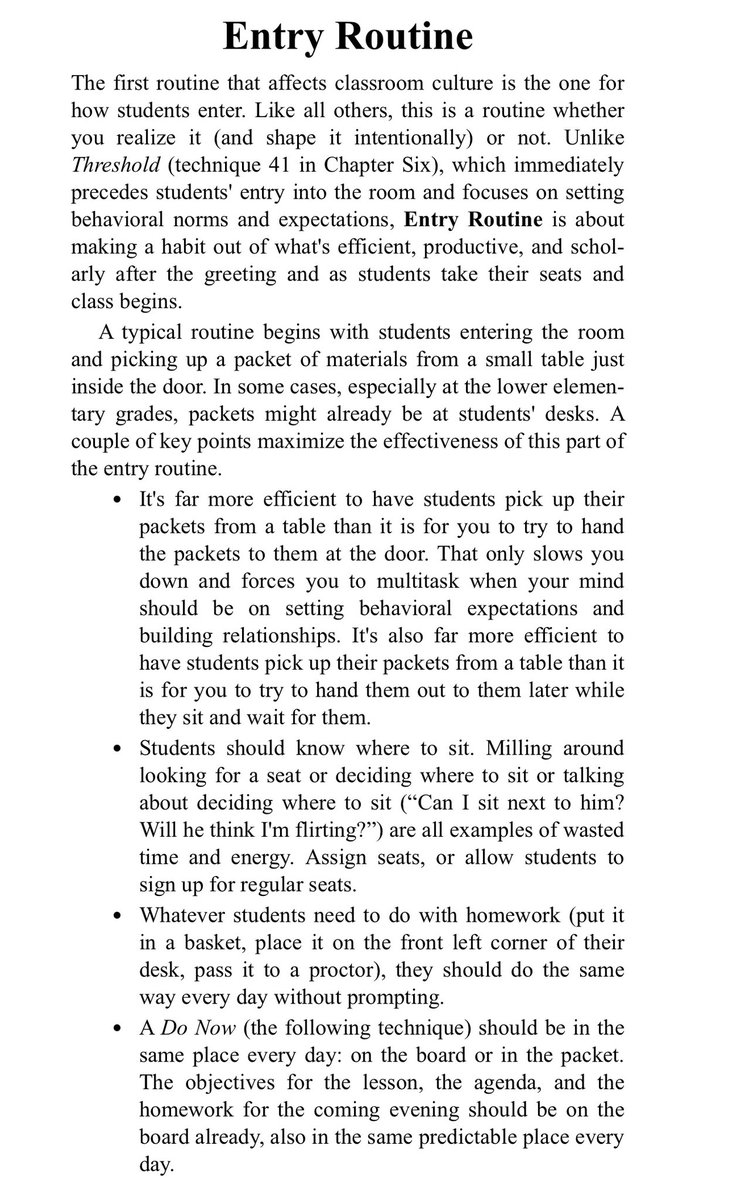
It is super important to have a solid Entry Routine!
“The first routine that affects classroom culture is the one for how students enter. Like all others, this is a routine whether you realize it (and shape it intentionally) or not. Entry Routine is about making a habit out of what's efficient, productive, and scholarly after the greeting and as students take their seats and class begins.”
Excerpt From
Teach Like a Champion, Enhanced Edition
Doug Lemov @Doug_Lemov #TeachLikeAChampion #ProceduresAndRoutines #EntryRoutine
Math folks, I think you're going to like this one! We just updated this resource with the top most played Math activities of all time on @Quizizz all sorted and categorized for you! 😀
https://t.co/8YSF0Muvap
For every single activity you'll also find:
👩🔬 A link to try as a student
📝 A printable worksheet link
Huge props to @TheMathJedi523 for creating this for everyone!
#edtech #teachertwitter #edchat #teachers #youcanwithquizizz #quizizz #mathteachers #quizizzformath
This specific step when factoring by grouping was a core memory of mine in high school math where I just memorized what to do and didn't understand what was happening. Here's how we can make sense of it.
What did you memorize in math but didn't understand?
Here are the first 2 minutes of my IGNITE! talk on why we need to promote students' productive struggle. Watch or download the full video here:
https://t.co/CxKIuFuFXD