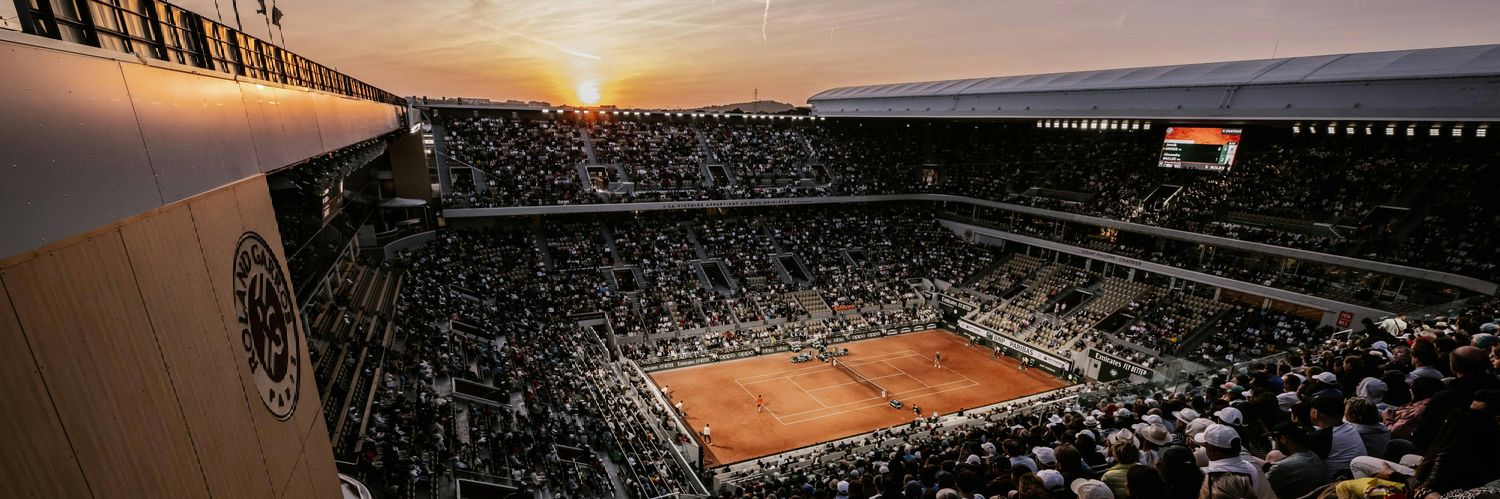
The hidden trend across the draw:
Players aren't winning by hitting through opponents.
They're winning by slowly taking away court position.
Deep returns. Heavy middle balls. Relentless recovery tests.
It doesn't look spectacular on TV, but the players who keep forcing one extra defensive movement are the ones quietly taking control of this tournament.
What casual viewers missed at Roland Garros yesterday:
The tournament is no longer separating players by shot quality.
It's separating them by recovery quality.
A lot of contenders can still produce elite tennis for 3-4 games. The difference now is who can repeat the movement, decision-making, and patience after 2 hours of physical stress.
Week 2 is becoming an endurance filter.
#RolandGarros
Underrated factor: Kostyuk’s return game.
She consistently neutralized first serves, attacked second serves, and denied Świątek the easy forehand patterns that normally drive her clay-court dominance.
The result was a rare sight in Paris: Świątek spending most of the match reacting rather than dictating.
Marta Kostyuk’s win over Iga Świątek was decided by initiative.
On a court where Świątek usually controls rally shape, court position, and tempo, Kostyuk repeatedly took the ball early, compressed time, and forced the four-time champion into reactive tennis.
#RolandGarros #IgaSwiatek #Kostyuk
The match turned at 5-5 in the first set. Up to that point, the contest was finely balanced.
Kostyuk elevated in the biggest moments, captured the set, and immediately carried that momentum into the second.
From there, confidence and court control flowed almost entirely in one direction.
Naomi Osaka reaching the fourth round at Roland Garros wasn’t defined by power—it was defined by patience.
Iva Jovic repeatedly forced her into longer rallies, movement exchanges, and uncomfortable clay-court patterns, but Osaka resisted the urge to overhit. Instead, she trusted deeper returns, higher-margin forehands, and disciplined point construction.
For years, impatience was her biggest clay-court obstacle. Today, she won because she solved the match tactically rather than trying to overpower it.
#RolandGarros #Osaka #Jovic
One narrative that may already be outdated:
"Experience wins long Slam matches."
Increasingly, recovery capacity is winning them.
The players gaining ground in Paris aren't necessarily producing higher peaks. They're maintaining their level longer when matches become physical, repetitive, and emotionally exhausting.
That's where this tournament is heading.
What casual viewers missed at Roland Garros yesterday:
The biggest story wasn't that João Fonseca beat Novak Djokovic.
It was how he did it.
Most young players try to rush legends off the court. Fonseca got calmer as the match got bigger. The longer it went, the more he trusted rally tolerance over shotmaking.
That's a very different signal than raw talent.
The scoreboard hid a tournament-wide trend:
A lot of contenders are no longer trying to dominate every rally.
They're managing energy.
Higher net clearance. Safer second serves. More neutral-ball exchanges.
Several players advancing comfortably already look like they're thinking about Week 2, not Round 3.
The most shocking part wasn’t the comeback itself. It was Fonseca’s composure late.
Against the greatest pressure player of the modern era, a teenager kept serving aggressively, attacking second serves, and trusting his forehand patterns deep into a fifth set.
Djokovic managed the match early. Fonseca eventually overwhelmed the match itself.
João Fonseca’s biggest achievement tonight wasn’t the shotmaking. It was the mid-match emotional adjustment.
Down two sets, he stopped trying to hit through Novak Djokovic every rally and started constructing points with patience, margin, and heavier forehand pressure. The match completely changed after that.
#RolandGarros #Fonseca #Djokovic
Djokovic controlled the first half structurally:
elite return depth
tempo manipulation
backhand stability
emotional calm under chaos
But as the match extended in brutal conditions, the physical balance shifted. Fonseca started owning baseline territory while Djokovic’s recovery and serve protection gradually declined.
What stood out most wasn’t overwhelming shotmaking — it was patience.
Świątek solved the match by reclaiming rally geometry piece by piece rather than trying to overpower it immediately. That ability to stay tactically calm when rhythm disappears remains one of her biggest strengths on clay.
Linette made this far more tactical than the scoreline suggests. Early on, she flattened exchanges, redirected quickly through the middle, and denied Świątek easy forehand setup time.
For a set, the court felt compressed and Świątek never fully settled into her usual clay rhythm.
#RolandGarros #IgaSwiatek
The match changed once Świątek stopped forcing offense and started rebuilding the court structurally.
More forehand height. More depth through the middle. Longer neutral exchanges.
Linette’s contact points gradually became more uncomfortable and the territorial balance slowly shifted.
Świątek vs Linette is less about shotmaking and more about territory.
Linette can absorb pace, redirect cleanly and stay emotionally composed for long stretches. But against Iga on clay, the real problem is what happens after the first few neutral balls.
The rallies stop resetting.
Świątek keeps layering heavy forehand pressure, keeps reclaiming baseline position, keeps forcing higher contact points until the court starts feeling smaller and smaller. That’s where her clay dominance becomes suffocating.
Linette’s challenge isn’t simply defending well. It’s preventing the match from becoming a continuous cycle of positional erosion.
If she starts conceding space behind the baseline repeatedly, Świątek’s forehand patterns begin controlling not just rallies — but the emotional rhythm of the match itself.
#RolandGarros #IgaSwiatek
What casual viewers missed at Roland Garros yesterday:
A lot of players aren’t losing control of matches because of shotmaking.
They’re losing control because long clay rallies are speeding them up emotionally. You can literally see the patience disappear — rushed second serves, early trigger forehands, shorter point construction.
Paris is exposing emotional endurance more than tennis level.
#RolandGarros
The biggest adjustment wasn’t bigger shotmaking — it was structural.
Sabalenka stopped forcing low-percentage angles, attacked returns earlier, and compressed rallies through the middle of the court.
From 5-5 in the first set onward, the physical intensity and baseline pressure became too much for Jacquemot to sustain.
Jacquemot made this match far more competitive than the scoreline suggests. For a set, she absorbed Sabalenka’s pace well, redirected early through the middle, and used the crowd energy intelligently to disrupt rhythm.
The match changed once Sabalenka simplified her patterns and started controlling court position more decisively.
#RolandGarros #Sabalenka
And psychologically, the match became brutal.
At 5-1, Sinner looked emotionally untouchable.
A few games later:
frustration appeared,
service rhythm disappeared,
between-point tempo accelerated,
certainty vanished completely.
Meanwhile Cerúndolo kept growing calmer and clearer tactically with every extended rally.
That’s why this comeback felt so shocking.
Not because Cerúndolo suddenly played spectacular tennis.
Because he recognized the match had become physical before Sinner emotionally accepted it himself.
Sinner lost his legs.
Cerúndolo immediately changed the match around it.
Jannik Sinner led Juan Manuel Cerúndolo 6-3, 6-2, 5-1.
Then the match stopped being about tennis structure and became about physical survival.
For over two sets, Sinner completely controlled the court:
— suffocating return depth
— dominant backhand exchanges
— effortless baseline territory
— total tempo ownership
Cerúndolo looked overwhelmed.
Then Sinner’s movement suddenly collapsed in the Paris heat.
The recovery speed disappeared.
The forehand lost weight.
The serve stopped shortening rallies.
And the entire match ecosystem changed instantly.
#RolandGarros #Sinner #Upset #Cerundolo
What impressed me most was Cerúndolo’s tactical maturity once he sensed the physical decline.
A lot of players would start overhitting against an injured opponent.
He did the opposite.
More height.
More crosscourt movement.
Longer rallies.
Heavier middle balls.
He stopped trying to hit through Sinner and started making him survive physically point after point.
That adjustment won the match.
The hidden story of the collapse:
Sinner kept trying to play normal-tempo tennis long after his body had stopped responding normally.