Every time a bottle, food pack, nylon bag, or any waste is thrown from a vehicle onto the road, it may seem insignificant. However, when thousands of people do the same, our streets become littered, drainage channels become blocked, and the environment suffers.
What you throw away today can contribute to:
Flooding caused by blocked drains and waterways.
Environmental pollution and unpleasant surroundings.
Health risks from disease-causing pests and contaminated water.
Increased government spending on waste evacuation and road maintenance.
A negative image of our beautiful city.
A clean Lagos is not the responsibility of government alone - it is a duty we all share. Dispose of your waste properly, keep a waste bag in your vehicle, and use designated waste bins.
What you do: Throw waste on the road.
What you cause: Pollution, flooding, and environmental degradation.
What you should do: Keep your waste until you find a proper bin.
Keep Lagos Clean. Protect the Environment. Save Lives.
#CleanerLagos
BREAKING 🇳🇬🪖: Nigerian troops rescue 360 abductees, mostly women and children, during a coordinated operation by Special Forces and the 26 Task Force Brigade in Borno State. The successful mission has been hailed as a major achievement by the country's security personnel.
360 lives rescued in one singular operation no commendation from armchair and social media Generals to Nigerian Troops until there's little setback.
🫡🫡KUDOS, MORE SUCCESSFUL OPERATION AHEAD.🫡🫡
BBC YORUBA called to hear my academic story. It didn't feel real until the cameras started rolling. Within 48 hours, I began receiving calls and support from across the globe. Some even requested video calls with my parents and generously offered assistance.
A proof that God can turn a story into a testimony overnight.
https://t.co/vofk3ml0eD
https://t.co/EwZEhn9Oqt
Videos like this do not get retweeets and engagements because it isn’t bad news.
Residents of Gulbi community
In Niger state seen hailing the Nigerian Military after a total clear out of terrorists from their area.
Peace has been restored.
This Eid Al-Adha, our hearts are heavy. Over 40 innocent children, some as young as 2 years old, remain in the hands of marauders while mothers endure unbearable pain and uncertainty
It is Eid… but our children need to come home.
May Allah protect them and return them safely.
MESSAGE BY THE FIRST LADY OF THE FEDERAL REPUBLIC OF NIGERIA, HER EXCELLENCY, SENATOR OLUREMI TINUBU, CON, ON EID EL-KABIR 2026.
On this occasion of Eid el-Kabir, I extend my warmest greetings to all our Muslim faithful across Nigeria and in the diaspora.
Eid el-Kabir is a special time for reflection on the enduring values of sacrifice, obedience, faith, and compassion. It reminds us of the importance of selflessness and total devotion to the will of God.
As we celebrate, I encourage all Nigerians to embrace peaceful coexistence and to live in harmony with one another. Our strength as a nation lies in our unity, mutual respect, and shared commitment to building a society where love and understanding prevail.
Let us also remember the essence of this day by extending a helping hand to our neighbors, especially the vulnerable and less privileged ones among us. These acts of kindness and generosity can renew hope and bring comfort to many.
Let us continue to pray for our dear nation, for sustained peace, stability, and prosperity.
Eid Mubarak!
~ 𝐒𝐞𝐧𝐚𝐭𝐨𝐫 𝐎𝐥𝐮𝐫𝐞𝐦𝐢 𝐓𝐢𝐧𝐮𝐛𝐮, 𝐂𝐎𝐍
𝐅𝐢𝐫𝐬𝐭 𝐋𝐚𝐝𝐲 𝐨𝐟 𝐭𝐡𝐞 𝐅𝐞𝐝𝐞𝐫𝐚𝐥 𝐑𝐞𝐩𝐮𝐛𝐥𝐢𝐜 𝐨𝐟 𝐍𝐢𝐠𝐞𝐫𝐢𝐚
Pregnancy gets 9 months of attention. Labor gets a hospital stay. Postpartum gets one 15 minute checkup at 6 weeks.
But postpartum is the longest medical event of your life. Your hormones don't return to baseline for at least 6 months (longer if you are BF). Your pelvic floor takes a year (at least). Your bone density takes longer. Your brain is remodeling itself for years. You're metabolically recovering for as long as you breastfeed.
We have completely undercounted what this season actually is. And too many women are doing it all alone.
This is actually a brilliant observation that deserves a proper answer. You are not wrong about what you are seeing. But what you are describing is exactly how languages disappear without anyone noticing.
Adamawa alone has over 40 documented languages. Bura, Vere, Chamba, Gaanda, Lala, Bacchama, Bata, Marghi and more and no they are not variations as you pointed out.
But most of them are slowly being swallowed by Hausa and Fulani because those are the languages of trade, mobility and survival.
So yes, your Borno security guard speaks Shuwa Arabic and your Sokoto okada man speaks Hausa and they understand each other perfectly. That does not mean only one language exists. It means one language won the economic argument. This is what linguists call language assimilation. The dominant language does not erase the others overnight. It just makes them less useful for daily survival until the younger generation stops learning them entirely.
Now here are the facts. Ethnologue, which is the world's most authoritative database on languages, currently documents 520 living indigenous languages in Nigeria alone. Not dialects. Languages. Nigeria has also already lost 12 indigenous languages or more to extinction. Gone forever.
The Middle Belt is where this becomes undeniable. Plateau State alone has over 50 distinct languages. Keyword "Dinstinct".
Benue has Tiv, Idoma, Igede and more. Taraba has communities that cannot understand their neighbours two villages away without a translator. Your Yoruba example actually proves the point perfectly. The fact that a Yoruba person can move across the Southwest and be understood is evidence of one dominant language absorbing regional variations over centuries. That process happened. It is still happening everywhere else in Nigeria right now.
Now I am willing to bet you have never heard of Hyam, Ngas, Mwaghavul, Berom, Amo, Buji, Sura, Anaguta, or Irigwe from Plateau State. Or Kilba, Huba, Bura-Pabir, and Chibok from Borno. Or Mumuye, Jenjo, Yukuben, and Wurkum from Taraba. Or Tur, Nyandang, Kugama and Taram further into the riverine communities nobody talks about. Or what about Igala, Ebira, Bassange, Bassa-Nge, Kakanda and Oworo from Kogi alone. I have not even touched Rivers, Cross River, Bayelsa, Edo, Ondo, or Nasarawa yet. You want to know exactly where each of these is spoken? You will have to tour Nigeria for that. And I promise you, this country will humble you in ways no map ever could. The 500 languages are not cap. Most of them are just quietly dying (Bura has an estimated 11,000 speakers with most young Bura people now not able to speak the language) while we debate whether they exist. And that is the real conversation Nigeria should be having.
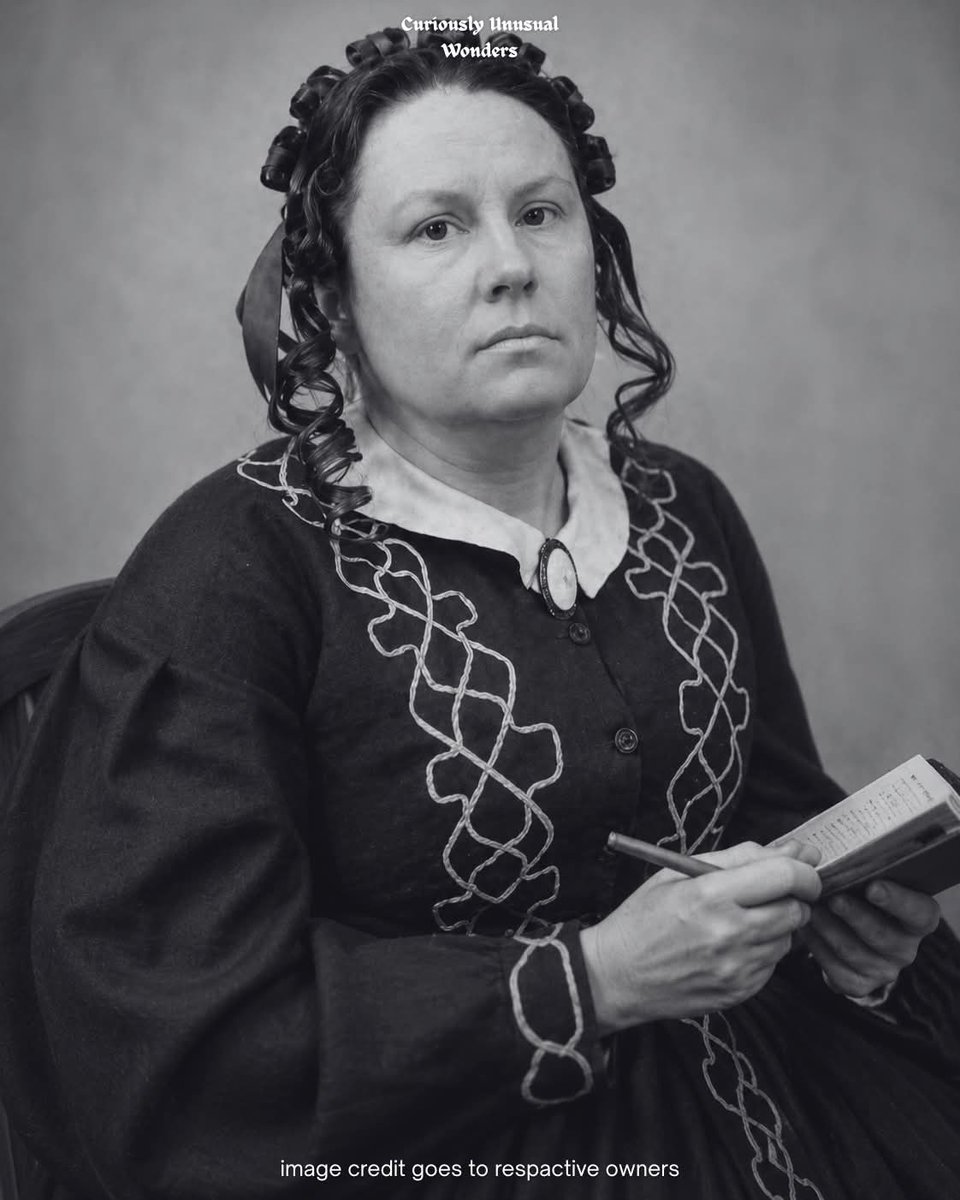
The story of Elizabeth Packard. Although we are no longer tossed into asylums (we are simply dismissed as arrogant and troublesome), the struggle for women to be seen and heard still continues till date.
In May 1860, she kissed her six children goodbye. She thought about the dinner she would cook later. She thought about the laundry. She thought about the quiet life of a mother in Illinois.
She had no idea that when the front door clicked shut, it would stay locked for three long years.
Her husband, Theophilus Packard, was a respected minister. To the neighbors, he was a man of God. But inside their home, he was a man who could not stand a wife who thought for herself. Elizabeth Packard liked to read.
She liked to debate religion. She had her own opinions about life and faith. In the 19th century, for a woman to have a brain was considered a danger.
Theophilus decided to end the argument once and for all. He didn’t need a crime. He didn't need a witness. In those days, the law in Illinois said a man could commit his wife to an insane asylum without any evidence or a public hearing. He simply had to say she was "disturbed."
One morning, a group of men arrived at her home. They didn't listen to her logic. They didn't care about her tears. They dragged her away to the Jacksonville Insane Asylum. Elizabeth was 43 years old, perfectly sane, and suddenly a prisoner.
When she entered the asylum, she expected to see people who needed medical help. Instead, she found a warehouse of "inconvenient" women. There were wives who had argued with their husbands about money. There were daughters who refused to marry men they didn't love. There were women who were simply too loud or too independent.
"This is not a hospital," Elizabeth realized. "It is a cage for the unwanted."
The doctors tried to break her spirit. They told her that if she just admitted her husband was right and she was wrong, she could go home. They wanted her to say she was crazy for wanting her own thoughts. Elizabeth looked them in the eye and said, "I cannot buy my liberty by a lie."
She didn’t give up. Instead, she started to write. She hid scraps of paper in the linings of her clothes. She tucked notes under floorboards. She recorded every abuse, every scream in the night, and every story of the women around her. She became a secret journalist inside a living nightmare.
After three years, she was finally released, but her husband locked her in a room at home. He planned to move her to another asylum in a different state. This time, Elizabeth’s friends helped her get a message to a judge.
A trial was finally ordered to determine if she was actually insane.
The courtroom was packed. Theophilus was confident. He brought "experts" to say that her religious doubts proved her mind was broken. But then, Elizabeth stood up.
She didn't shout.
She spoke with the calm power of the truth. She explained her beliefs. She showed the jury that having a different opinion is not a disease.
The jury only needed seven minutes. They came back with a single word: Sane.
Elizabeth walked out as a free woman, but she found that her husband had taken everything. He had sold their furniture, taken her money, and disappeared with their children. She was alone and penniless.
Most people would have disappeared into the shadows. Elizabeth did the opposite. She spent the next forty years traveling the country. She stood before the legislature and demanded new laws.
She said, "A woman's mind is her own, and the law must protect it."
Because of her, states changed their laws. They made it illegal to lock a person away without a fair trial and a medical exam. She turned her private pain into a public shield for thousands of other women.
She proved that even if you take away a woman’s home, her money, and her children, you can never truly take away her voice.
Your words carried me through difficult moments.
Above all, I thank God Almighty for His grace, preservation, and favour.
I remain committed to the progress of Ikeja Federal Constituency and the unity of our great party, APC.
— Barr. Olufunke Rekiya Hassan 3/3
After consultations with stakeholders and party leaders, I have decided to step down my aspiration for the House of Representatives in support of Rt. Hon. James Faleke.
This is not a loss... 1/2
Being cleared & officially standing as an aspirant for 2027 despite opposition & discouragement is a victory in itself.
I am deeply grateful to party members across the grassroots, friends,family,and everyone who supported,encouraged,and prayed for me throughout this journey. 2/3
As a woman I am extremely aware that the reason I have my rights is because a woman somewhere got up, got MOUTHY, organised, raged, made herself INCREDIBLY inconvenient until things changed for the better for all of us. Which is precisely why I see women who uphold the patriarchy as traitors to all women.
Between August 2024 and July 2025, the Lagos State Domestic and Sexual Violence Agency attended to 8,692 cases, and is currently averaging 400 cases per month.
Guess where it’s happening?
Your estate. Your place of worship. Maybe your street.
Abuse thrives in silence.
0-8000-333-333
SGBV - It Concerns Us All!!!
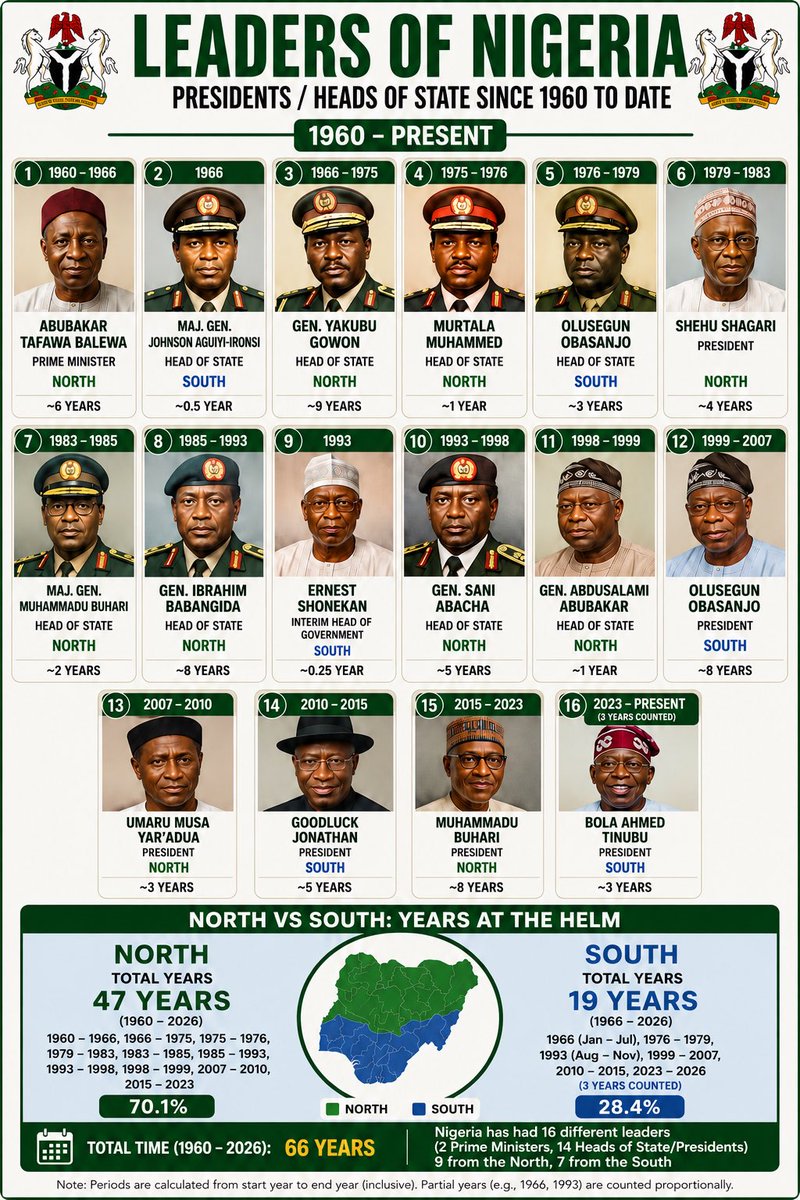
Make this go viral instead, as it reflects the accurate numbers that they are trying to hide. Nigeria didn’t begin in 1999.
Playing regional victim after ruling a country for 47 years out of the 66 years of her entire existence is diabolical.
I first met Clark Reynolds when he was just three years old at our Black History Month reception at the White House.
Over the last ten years, it's been wonderful getting updates about his life through his letters. Check out how he’s doing now: