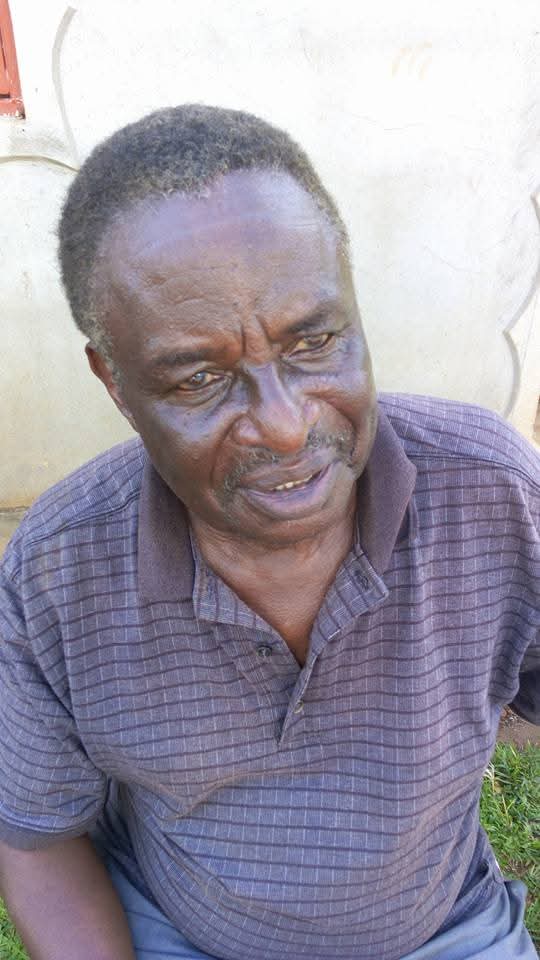
The Dr Matthew Lukwiya story you never hear about.
A few days ago, I saw someone talking about Heroes Day and mentioned Dr. Lukwiya among them. It made me realise that most of us know him simply as the doctor who died treating Ebola patients at Lacor Hospital in 2000, and not much else.
I felt slightly guilty for not knowing more about a man who seems to transcend history, so I went looking for the full story of Dr. Matthew Lukwiya. What I found was a man who had spent the twenty years before Ebola practising exactly the kind of courage that the outbreak would eventually demand of him.
This is what many of us didn’t know about Dr. Matthew, as he was lovingly called.
1/10
Ugandan beans are some of the best in the world. Vanilla beans, that is.
What were you thinking @ZeeroBrain? Vanilla beans!
@shaaka777 they say Ugandan beans have the best flavor for ice cream.
It's hard for me to explain to those outside #Uganda just how irritated the Ugandans are to be lumped in with DRC for the #Ebola epidemic. As of this writing, there have been hundreds of deaths and over 1000 cases in Congo, whereas Uganda has had only 9 cases -- three Congolese, four medical workers who treated them, one driver who drove them, and one other known contact. Only one person has died in Uganda, a Congolese.
So when WHO and Al Jazeera talks about the Ebola epidemic in "Congo and Uganda," it's like saying because there are wildfires in California, you should cancel a trip to the Grand Canyon because some Californians lit a campfire there. Yes, it is possible it *could* spread and you have to be vigilant, but these two situations are nowhere near the same magnitude.
As of this writing, the only Ugandan death has been the tourism industry.
Saturday, November 1963.
Namirembe Cathedral.
20,000 guests gathered as Uganda's bachelor prime minister married Miria Kalule.
Jomo Kenyatta flew in.
Martin Aliker stood as best man.
The Kalule family, once wary, now accepted Obote as their son-in-law.
For one day, a wedding promised what politics could not.
The streets of Kampala hummed with celebration.
Just over a year after independence, the Prime Minister was finally getting married.
Loudspeakers carried the service to the crowds outside the cathedral, where thousands pressed against the grounds to witness a union that was never merely private.
Archbishop Leslie Brown presided as the thirty-seven-year-old Obote exchanged vows with Miria Kalule, a daughter of Buganda's Protestant elite.
Kenya's Jomo Kenyatta added regional weight to the occasion, and Martin Aliker, Obote's confidant, stood beside him as best man.
The political subtext was unmistakable.
Obote's UPC was locked in an uneasy coalition with Kabaka Yekka, and marrying into Mengo society was a gesture that carried meaning beyond romance.
For a northern politician whose party had challenged the old order, taking a Muganda bride from the heart of the Buganda establishment was itself a negotiation.
Miria stood beside him, representing connection to the very community his government had clashed with during the independence struggle.
Her family, who had once viewed the engagement with deep trepidation, had now accepted Milton as their son-in-law.
The cathedral's ancient stones witnessed the formal joining of a northerner's ambition and a kingdom's daughter.
The reception at Lugogo Stadium Hall dazzled.
Three thousand VIP guests toasted with champagne at tables decorated with fresh carnations flown from Kenya.
Outside on the cricket field, thousands more celebrated under open sky, consuming over sixty thousand bottles of beer.
The twenty-five-thousand-pound price tag, partly borne by Obote, reflected political necessity: a wedding of this scale affirmed that Uganda's leader could command both tradition and modernity.
For the guests, it was a spectacle of national pride.
For the politicians watching, it was a carefully staged performance of unity in a country already fractured along regional and ethnic lines.
As the couple cut their towering cake beneath the stadium lights, the celebration transcended personal union.
This was a national event, a statement that Uganda's bachelor leader had chosen a path that blended personal life with political symbolism.
The wedding bands exchanged at Namirembe were, in a sense, a treaty, a public promise that the UPC and Buganda could coexist, at least for a little while longer.
Yet even as the champagne flowed, the old tensions did not disappear.
Within three years, Obote would turn against the Kabaka, abolish the kingdoms, and drive the Buganda establishment into open rebellion.
Miria, who had walked down the cathedral aisle as a symbol of bridge-building, would find herself trapped between her husband's state and her family's loyalties.
But on that November Saturday, none of that was visible.
The twenty thousand guests saw only the joy of a leader settling down, the elegance of a First Lady, and the promise of a nation still young enough to believe that weddings could heal what politics could not.
For one day, Kampala held its breath and celebrated, and the photograph of the couple cutting their cake became the image of a Uganda that, however briefly, felt whole.
The wedding was a treaty as much as a vow.
For one day, the alliance held.
What does it mean to celebrate unity in a cathedral, knowing the forces that will one day tear it apart are already in the room?
#UgHistory #Obote @UPCSecretariat@AkenaJimmyMP
Veteran UBC sports journalist Charles Byekwaso has passed on. He died at Namutamba Health Centre Three this morning.
The veteran sports commentator is rembered for relaying the 1978 Afcon event in Ghana and other big sports events. Burial arrangements will be communicated later.
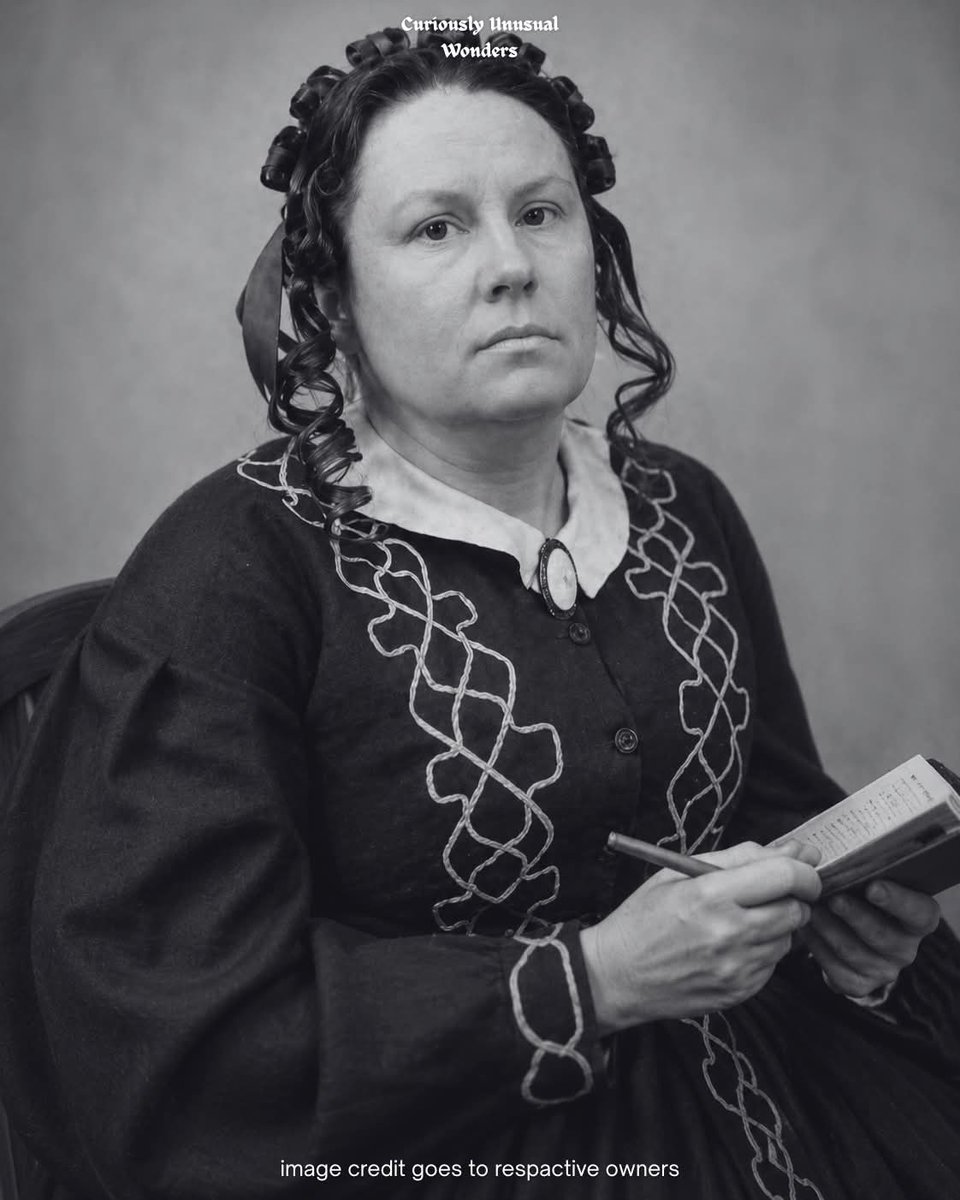
In May 1860, she kissed her six children goodbye. She thought about the dinner she would cook later. She thought about the laundry. She thought about the quiet life of a mother in Illinois.
She had no idea that when the front door clicked shut, it would stay locked for three long years.
Her husband, Theophilus Packard, was a respected minister. To the neighbors, he was a man of God. But inside their home, he was a man who could not stand a wife who thought for herself. Elizabeth Packard liked to read.
She liked to debate religion. She had her own opinions about life and faith. In the 19th century, for a woman to have a brain was considered a danger.
Theophilus decided to end the argument once and for all. He didn’t need a crime. He didn't need a witness. In those days, the law in Illinois said a man could commit his wife to an insane asylum without any evidence or a public hearing. He simply had to say she was "disturbed."
One morning, a group of men arrived at her home. They didn't listen to her logic. They didn't care about her tears. They dragged her away to the Jacksonville Insane Asylum. Elizabeth was 43 years old, perfectly sane, and suddenly a prisoner.
When she entered the asylum, she expected to see people who needed medical help. Instead, she found a warehouse of "inconvenient" women. There were wives who had argued with their husbands about money. There were daughters who refused to marry men they didn't love. There were women who were simply too loud or too independent.
"This is not a hospital," Elizabeth realized. "It is a cage for the unwanted."
The doctors tried to break her spirit. They told her that if she just admitted her husband was right and she was wrong, she could go home. They wanted her to say she was crazy for wanting her own thoughts. Elizabeth looked them in the eye and said, "I cannot buy my liberty by a lie."
She didn’t give up. Instead, she started to write. She hid scraps of paper in the linings of her clothes. She tucked notes under floorboards. She recorded every abuse, every scream in the night, and every story of the women around her. She became a secret journalist inside a living nightmare.
After three years, she was finally released, but her husband locked her in a room at home. He planned to move her to another asylum in a different state. This time, Elizabeth’s friends helped her get a message to a judge.
A trial was finally ordered to determine if she was actually insane.
The courtroom was packed. Theophilus was confident. He brought "experts" to say that her religious doubts proved her mind was broken. But then, Elizabeth stood up.
She didn't shout.
She spoke with the calm power of the truth. She explained her beliefs. She showed the jury that having a different opinion is not a disease.
The jury only needed seven minutes. They came back with a single word: Sane.
Elizabeth walked out as a free woman, but she found that her husband had taken everything. He had sold their furniture, taken her money, and disappeared with their children. She was alone and penniless.
Most people would have disappeared into the shadows. Elizabeth did the opposite. She spent the next forty years traveling the country. She stood before the legislature and demanded new laws.
She said, "A woman's mind is her own, and the law must protect it."
Because of her, states changed their laws. They made it illegal to lock a person away without a fair trial and a medical exam. She turned her private pain into a public shield for thousands of other women.
She proved that even if you take away a woman’s home, her money, and her children, you can never truly take away her voice.
A few plots of land for sale. You could be in the next big thing after air bn b Destination cottages/ Hit me up.
I have 3 remaining plots of Kibanja 50 by 100 ft each going for sh 15 million each.
Amazing views planes in sky, airport, lake Victoria, valleys, endless sunsets and fresh pollution free wind from the lake Victoria.
Call or WhatsApp 0772641028
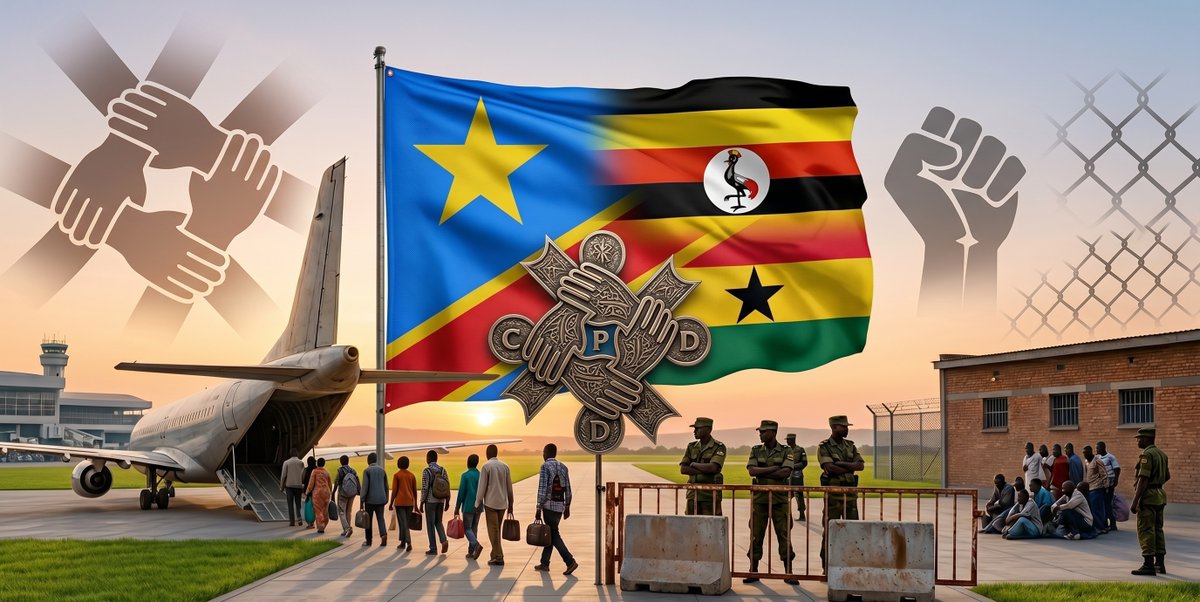
We Africans are a puzzling lot. Uganda welcomes third-country deportees from the US, but is simultaneously pushing a Protection of Sovereignty Bill to denationalise its own citizens living abroad as “foreigners”. DR Congo accepts American deportees while denying citizenship to its own Tutsi populations, branding them as outsiders.
Ghana serves as a transit hub for US rejects but remains aggressive in expelling undocumented West African neighbours, often pushing them across borders without due process. These nations preach "national sovereignty" while systematically stripping rights from their own neighbours and citizens, for diplomatic crumbs.
With the #LondonMarathon taking place tomorrow, we have to throw it back to Stephen Kiprotich making history on these same streets! 🇺🇬🥇
Uganda’s first Olympic marathon gold at #London2012#Olympics
When 1,000 African Americans emigrated to Alberta from 1909 to 1911, they established many communities.
One of those communities was Amber Valley.
The settlers and their descendants had a deep impact on Alberta, and Canada's, history.
He Chose to Stay
He was the only one who stood up.
The plane had landed in Entebbe in 1973, but no one moved. Passengers leaned over and whispered to him, “This is not Nairobi. Sit down.”
Uganda was unraveling. People were fleeing.
And here he was, young, newly graduated, with a future wide open, faced with a defining choice.
Stay seated.
Or step into uncertainty.
John chose to get off that plane.
A bus carried him from Entebbe to Makerere University, where he began his journey as an assistant lecturer. What followed was not a straight path. He would later be forced to leave. You’ll have to listen to the podcast to find out why…..
But he later came back to Uganda.
By choice.
And he stayed.
Uganda became home, not just a place he lived, but a place he committed to. A place he would eventually call his own, as a citizen.
He immersed himself in the richness of its cultures, shaping thinking on the role of culture in development. He taught. He built. He founded two civil society organizations and, importantly, handed them over.
He was also central to developing the the Quality Assurance Mechanism (QUAM), which is a commitment to accountability within Uganda’s civil society.
And yet, when he reflects on his life, he does not begin with any of these.
He goes back to primary school, to the values that anchored him early: service, goodness, and responsibility to others.
He has carried these values across decades, across borders, across seasons of leaving and returning.
He still holds these values, and hopes we will too.
#FootprintsPodcast #LeadershipAndLegacy #ChosenBelonging
@CivLegacy_F