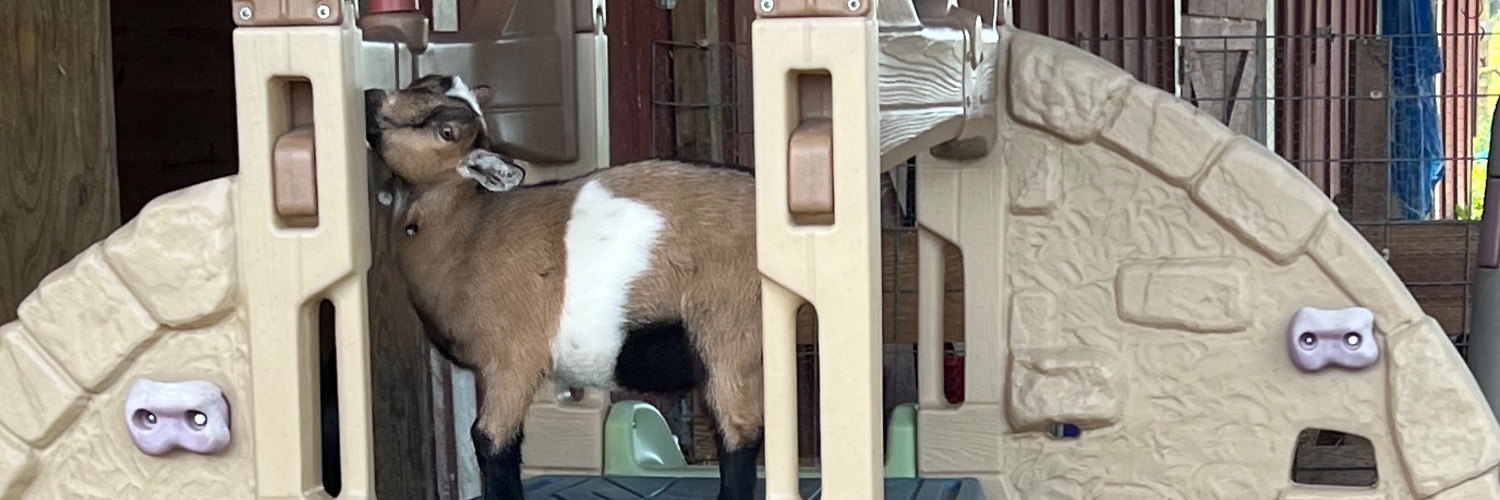
I am at the moment writing a lengthy indictment against our century. When my brain begins to reel from my literary labors, I make an occasional cheese dip.
It's live: https://t.co/9dWvFfcaWE. 10 subjects, 3,300+ standards-aligned items, an adaptive engine, an AI tutor built to ask rather than answer. An IRB-supervised pilot is planned for this fall. Built solo, evenings and weekends, by a teacher. That's the story.
Teachers will recognize this: the kid who can't finish 10 practice questions just spent the weekend mastering a video game with a wiki, a discord, and a grind loop. The motivation exists. School software ignores it.
My bet, built after 16 years in the classroom: mastery is the toll, creation is the reward. Adaptive practice on real standards unlocks a creative studio with an audience of classmates. The license-test model, not the worksheet model.
All EdTech money went to two buckets: content delivery and admin tools. The third, student motivation, sits empty. My bet after 16 years teaching: mastery is the toll, creation is the reward. Live now, 10 subjects, IRB pilot this fall. https://t.co/9dWvFfcaWE
"Student-centered" has come to mean "centered around what we imagine the student wants." The actual student usually wants to be told what to do, helped to do it well, and respected when they finish. Try that for a week.
The most valuable thing a teacher can do for a struggling student isn't extra help. It's belief, plus structure, plus refusing to lower the bar. In that order. The lowered bar is the cruelty.
Unpopular opinion: leaderboards are good, actually. Many leaderboards on many axes is the play. When there are 12 ways to be first at something, almost every kid is first at something. Single-axis ranking is the cruelty. Multi-axis competition is the gift.
Working hypothesis from my dissertation: the strongest predictor of a teacher's AI adoption isn't tech skill or training. It's how many ed-tech promises they've watched die. Skepticism is a rational response to a track record.
Most ed-tech is built for the buyer (district admin), not the user (the teacher and the kid). You can feel it in five clicks. The whole stack is wrong, and no UX polish fixes the orientation.
Gregarious started with a question: what would an ed-tech platform look like if it were built by a teacher who actually liked teaching? Not optimized for admin dashboards. Not designed to replace anyone. Just respectful of the actual work.
Yearbook day reminds me: half of what students remember from school is who was around them, not what we taught. The relationships are the curriculum. The curriculum is the excuse for the relationships.
Teaching speech and debate has taught me more about writing than my MA program did. Watching a 14-year-old discover that "because I said so" isn't an argument is one of the best things in my job.
Education should be hard, on purpose, and then loving about the difficulty. Anything softer is a betrayal. Anything crueler is a different kind of betrayal.
Education should be the place where a kid finds out they're capable of more than they thought. Almost everything else we do in schools is downstream of getting that one moment to happen reliably.
To ed-tech founders: the teachers who say no to your demo aren't being difficult. They've been burned by six platforms before yours, and they're protecting their attention. Your job is to be worth the trust they no longer give freely.
Three years into studying it, I'm convinced: teacher AI adoption isn't a training problem. It's a fatigue problem. Every time we hand teachers a platform that gets sunset in 18 months, we make the next adoption harder. The skepticism is earned.
A teacher in a hard zip code who moves students from the 30th percentile to the 50th is doing more work than a teacher in an easy zip code whose 90th-percentile students stay at 90. Our scoreboards don't see this. They should.
Ranking schools by raw test scores is like ranking baseball teams by total runs without considering opposing pitching. Growth above replacement is the metric that respects the kid in front of you.
Adaptive learning that only adapts difficulty is missing the point. The thing kids actually want is to make stuff. Adapt the difficulty so they can earn the making. That's the loop.