My latest law review artcle "Securitizing the University" just dropped. It interrogates the university's relationship to US nat'l security both historically & since Oct 7. This relationship is at the heart of attacks against unis over the last 2 yrs /n https://t.co/KLWuHLYhvx....
and holding BS congressional investigation when there are FAR more important things for Congress to deal with, like ending all aid to Israel and the illegal war unleashed on Iran.
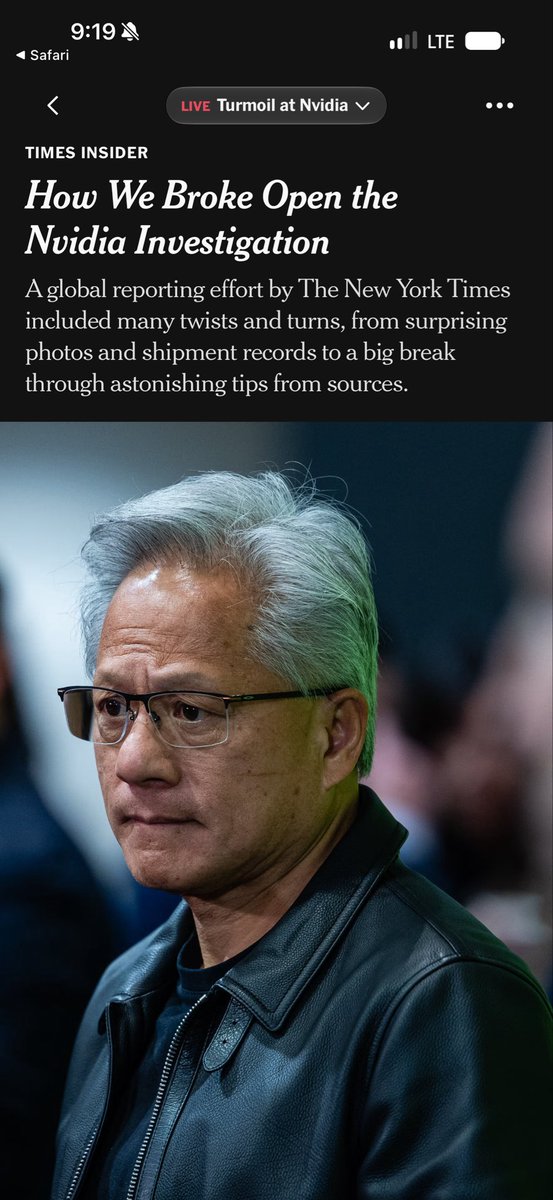
This is a distortion of natl security. This is an effort by the US to maintain control over the most important technology in a generation for the sake of maintaining its hegemonic power over the world. Huang wanted to make AI accessible. The US wants the opposite
It may mean other countries get to have access to AI tech and that global US economic power will lessen but that’s already happening. It’s certainly not a justification for ginning up fear…
Last week, @NYTimes was bragging about getting Jensen Huang fired, today they publish a 3 paragraph article announcing his reinstatement. Fun to watch the NY Times eat crow but wish it happened for more important things like shilling for genocide
Hang on, @Ed_Miliband, the ICJ *has* ruled—the duty to prevent genocide arises when the risk is known, not when the genocide has actually happened, let alone when the ICJ comes to a definitive judgement on the matter 7 or so years later.
So when are you going to act on the ICJ’s warning of risk of genocide in Gaza, issued in January 2024?
Israel flunkies before the ICJ Myanmar ruling: it's not a genocide unless the ICJ rules that it is.
Israel flunkies after the ICJ Myanmar ruling: The ICJ is a fake court.
With no warning, explanation, or recourse available, @X suspended @TheCradleMedia's account. We are a MEDIA organization, ffs. We're not on this platform spouting offensive drivel. Check our feed and tell us what frigging rule we "violated." And then get some DISCIPLINE back into your business.
Whether the absence of individual criminal cases here helped free the ICJ from its past constrained thinking both further reflecting the mistakes it made in Bosnia/Croatia & also suggesting the downsides of pursuing individual liability separate & apart from state responsibility
I still haven’t found time to read the Myanmar judgment but we should consider how the ICTY case law helped shape/constrain the ICJ’s approaches in Bosnia & Croatia case, and esp how it facilitated the importation of individual liability into the state responsibility context
Prompted by this commentary of Marko Milanovic:
I understand why the ICJ’s judges, constrained by judicial precedent, have respected the distinction between forced displacement (euphemistically called ‘ethnic cleansing’) and genocide, even when faced with a case where over 700,000 were terrorised into flight while 10,000 were killed and many more mutilated or raped.
But viewed from outside the rarified framework of international law, these were two sides of the same enterprise of the Myanmar regime. In the kind of holistic conception of genocide that Lemkin originally advocated, these are better seen as dimensions of a single genocide.
Therefore, I struggle to grasp why academic legal commentators should make this distinction a hill to die on. In the Myanmar case, most of the contortions in the Court’s judgment arise from their attempts to square this circle—while denying the integral character of the violence drives the minority opinion towards atrocity denial.
No one has commented on the contradiction in the Court’s representation of forced displacement as distinct from the genocide, while making the return of the displaced the first item on the agenda of reparations for—genocide. This surely exposes the fiction involved in the exclusion of the displacement from the genocide,
Milanovic’s focus on how this judgment has (and hasn’t) changed the international law of genocide is understandable. But it is equally important to use this moment as an opportunity to examine the structural limitations that it reveals.
Which was wholly inappropriate in my view. Of course there are other problems with those judgments as well and the deep criticisms that received undoubtedly influenced the court (as reflected in some state interventions in Myanmar). But I’m left wondering…
Imagine being a Bosnian and reading that the ICJ said the forced displacement of Rohingya showed genocidal intent bc it looks similar to the forced displacement of Bosnian Muslims but knowing the same ICJ said the ethnic cleansing of Bosnians was not evidence of genocidal intent
This is a deeply-confused editorial that grossly misrepresents what the ICJ said or how anything it says departs from past practice. In particular, the norm that the duty to prevent genocide is triggered when a serious *risk* of genocide becomes known is nothing new.
The International Court of Justice has ruled that Myanmar committed genocide against the Rohingya people, killing at least 10,000 people. It marks the first time the United Nations’ highest court has held a state responsible for genocide.
“Never again” means little unless the world comes together to defend human dignity, hold perpetrators accountable and protect the persecuted.
We thank people and government of The Gambia for refusing to let the world look away. More than 1 million refugees remain displaced. They will not be forgotten. The Rohingya people deserve justice.