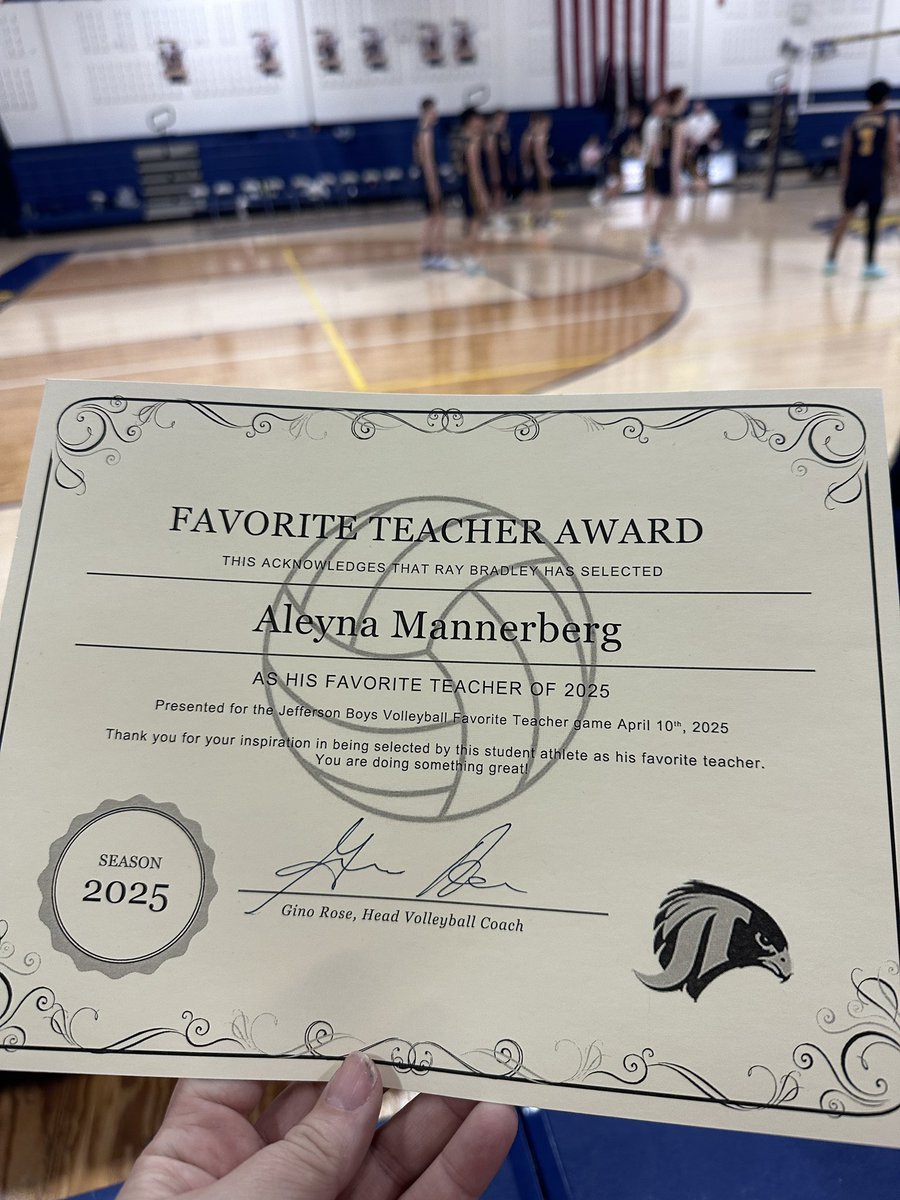
@JTHSFalcons is the proud recipient of @CollegeBoard's Female Diversity Award for AP Computer Science Principles. Research shows that female students who take #APCSP in high school are more than five times as likely to major in computer science in college.
The 2026 AP Computer Science Principles Exam scores:
5: 10%; 4: 23%; 3: 30%; 2: 21%; 1: 16%
The 2026 AP Computer Science Principles exam was taken by 163,000 students, ~1% of the U.S. high school population.
AP Computer Science Principles Multiple-Choice Questions (MCQ):
• Students showed superb mastery of questions that assessed their understanding of abstraction in program development: students achieving AP 4s and AP 5s generally answered 100% of these questions right, and students earning AP 3s typically earned at least 75% of these points.
• Students performed at similarly high levels on questions related to computing innovations. Students attaining AP 4s and 5s typically earned more than 90% of these points, and students attaining AP 3s typically earned more than 75% of these points.
• The most challenging MCQ content for students focused on code analysis. These questions differentiated AP 5s, who were typically able to earn 100% of these points, from AP 4s, who typically earned 90% of these points, from AP 3s, who typically earned 70% of these points, from students receiving AP 2s, who typically earned 50% of these points.
AP Computer Science Principles Free-Response Questions (FRQ):
The AP CSP free-response section consists of a Create Performance Task and two Written Response tasks.
The free-response questions are available here: https://t.co/tjXitzc0YG
Create Performance Task, the Program Design and Development task:
This task — the cornerstone of AP CSP's project-based learning model — required students to create an original program that incorporated a student-developed procedure, list manipulation, selection, and iteration, and then document their work through a video, a Personalized Project Reference, and written responses. This project has 6 points possible, and contributes 30% of the overall AP score. Students achieving AP 5s generally earned all points possible, students achieving AP 4s earned all but 1 point, and students achieving AP 3s earned all but 2 points.
Written Response Prompt 1, about Program Documentation, asked students to describe one piece of documentation that would be appropriate to include with or in their program and explain how another programmer could use that documentation to better understand a specific code segment. This prompt assessed students’ understanding of appropriate uses of program documentation, including acknowledgment of code segments written by someone else or descriptions of what a code segment does or how it works. Earning this point was one of the most telling differentiators of AP scores of 3+ from AP scores of 1 and 2, as students achieving AP 3+ scores consistently earned this point, whereas other students did not.
Written Response Prompt 2, a three-part response based on each student’s own Personalized Project Reference, asked students to reason about how their program’s iteration works, how erroneous behavior can occur with some inputs, and how their use of data abstraction manages complexity:
Part A, about Iteration and Loop Termination, asked students to identify the variable(s) that control when the first iteration statement in their procedure stops, give specific values that cause the loop to terminate, and explain why those values produce termination. Students who understand the relationship between their loop structure and the variables that control it were best positioned to answer this precisely. 46% of students earned this point, which required them to identify the specific variables and values controlling an iteration statement and explain why the loop terminates.
Part B, about Procedure Test Cases, asked students to write a specific procedure call with accepted arguments that would cause their procedure to behave incorrectly, describe the incorrect behavior, and explain why it occurs. If no such call could exist, students were asked to explain why this was the case for their procedure. This prompt tested students’ ability to analyze their own code and identify edge cases, boundary conditions, or logical gaps that might surface in real-world testing. This point was the most challenging to earn, as it required students to identify specific argument values that would cause their own procedure to behave incorrectly and explain why — a genuinely rigorous testing and debugging exercise that mirrors the work of real software engineers. Accordingly, earning this point differentiated students achieving AP 4s and AP 5s, who were typically able to earn this point, from students earning AP 3s, did not typically earn this point.
Part C, about Data Abstraction, asked students to explain how their list uses abstraction to manage complexity in the program, then describe how the relevant code segment would need to change if the list were removed — or explain why the same behavior would be impossible without the list. This prompt asks students to reason about the fundamental benefit of data structures as an abstraction mechanism, connecting a specific design choice in their own code to a broader principle of computer science. 43% of students earned this point —which required students to explain how their use of a list manages the complexity of their program.
Students were best prepared for their exam-day written responses when their programs contained elements they understood well and could explain accurately, including how data are stored and used, how their procedure worked, and how their code used selection and iteration to produce its intended result. Well-designed programs gave students clear, authentic opportunities to engage with the concepts assessed by the exam-day prompts.
All subjects' AP score distributions for 2026 will be posted here when available: https://t.co/OrkaQhPZYO.
Big congrats to the 142 educators accepted into the Spring 2026 Certified Educator Cohort! We can't wait to collaborate and learn with you. 🎉
#CertifiedEducators#Spring2026#ComputerScience
Thank you all so so so much!
So this is where it starts to get really competitive.
I need to stay in first every week until May 1st.
Can we do it?
https://t.co/cuHdYc0W64
#AmericasFavoriteTeacher
I can’t believe the support or express my gratitude to the level it deserves.
Thank you all so much for not only voting day in and day out, but keeping me in the first place position!
I made it to Top 10! Next is Top 5!
https://t.co/Id0Spd0QTR
Thank you all so much for voting for me and getting me into the Top 15!
I know this competition is long (literally ends May 1st if I go the long run), but I appreciate all of your kindness.
Still first, but would love to see the votes still!
https://t.co/cuHdYc0W64
Any & every vote counts! I would really appreciate you voting for me for America’s Favorite Teacher. As a teacher who puts ideas of growth, expansion, & creativity, I feel I would do the title justice!
You can vote at https://t.co/cuHdYc0W64
Thank you all so much in advanced!
Another 2x the vote day! This round ends tomorrow night. Today could make or break the Top 10! Keep the votes coming! Thank you all soooo much! https://t.co/cuHdYc0W64
Any & every vote counts! I would really appreciate you voting for me for America’s Favorite Teacher. As a teacher who puts ideas of growth, expansion, & creativity, I feel I would do the title justice!
You can vote at https://t.co/cuHdYc0W64
Thank you all so much in advanced!