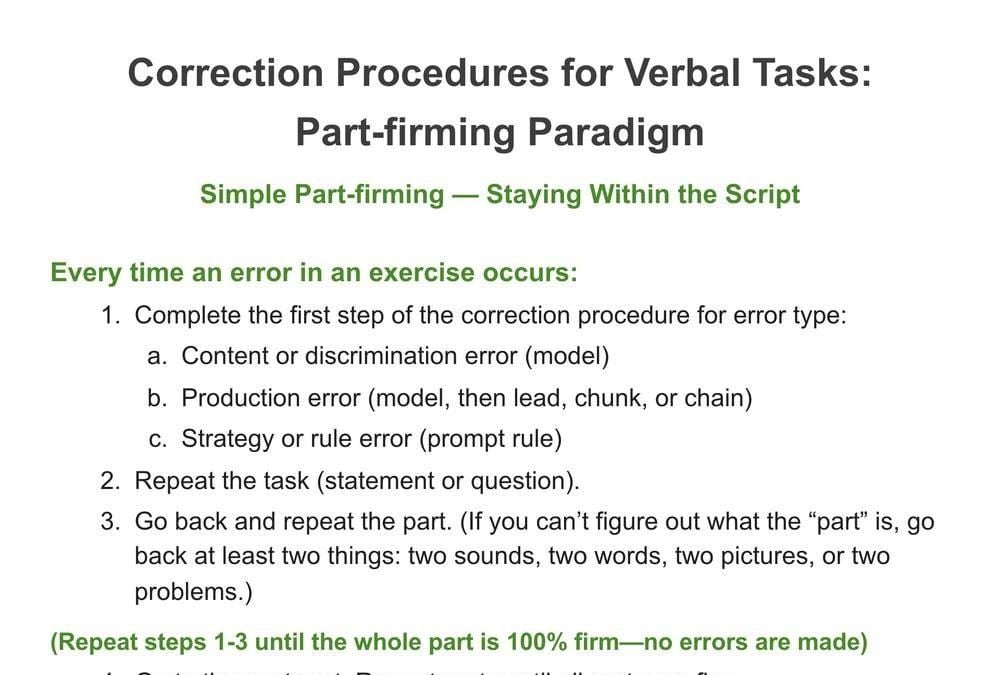
If a student doesn't have to correct their mistake, they won't. Showing the right answer and moving on lets them skip the work. In Direct Instruction, the student fixes the mistake and then proves it.
A new little wrinkle I’ve added to our Turn and Talk routine is finishing with a three-second countdown and then calling all students to put their hands up, leading directly into cold calling.
I like how the “all hands up” move effectively re-harnesses student attention after their conversation with a partner. It seems to work better than simply counting down to get their attention back on me and then beginning to cold call.
When all hands go up, students are already prepared to be called on, and, more importantly, they’re thinking about what they’re going to say based on the conversation they just had. It creates a much more seamless transition from partner talk → retrieval/thinking → cold call.
AI didn’t replace my teaching - it expanded it.
From multilingual access to creativity and reduced test anxiety, these classroom moments show what purposeful AI use can look like.
#AIinEducation#StudentAgency#EdLeadership#AIandLearning#EdTech
https://t.co/Ge0DZ1pEJ3
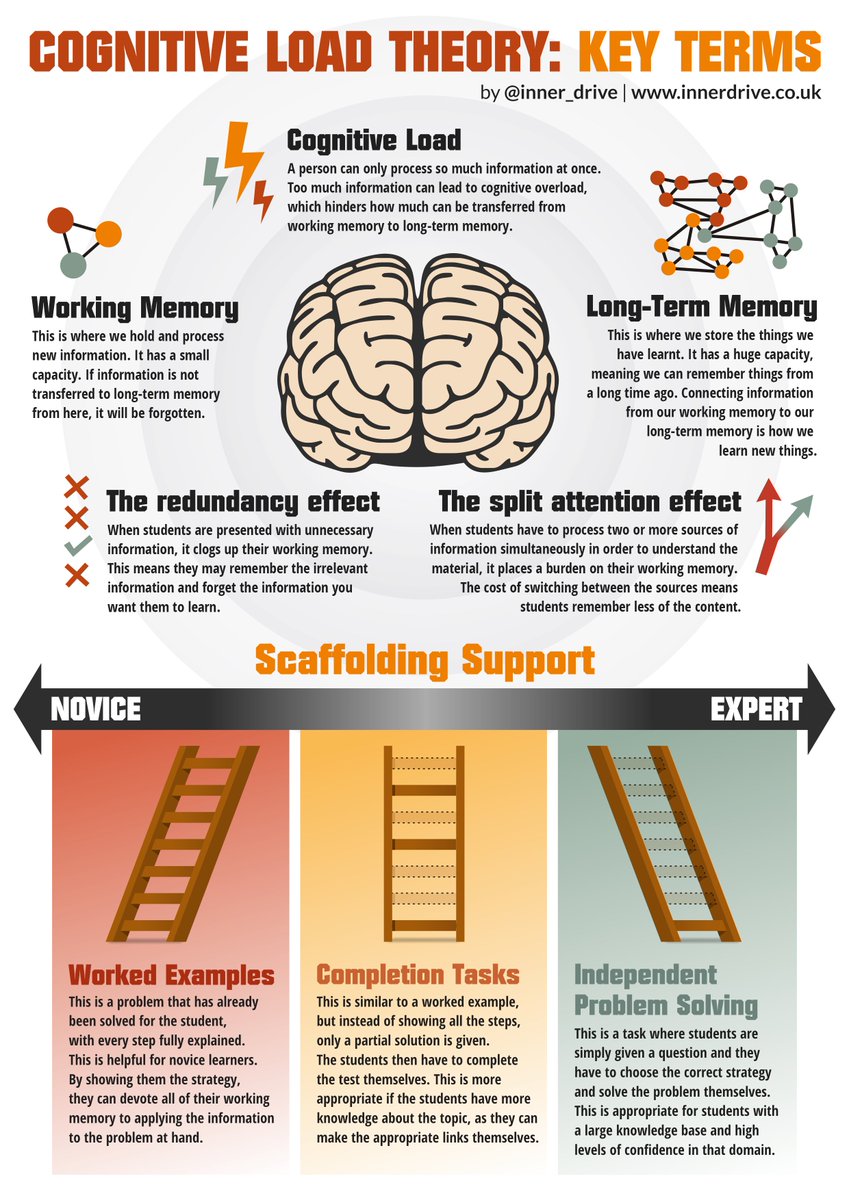
The I–We–You model works because it matches how the brain actually learns.
I → reduces cognitive load with clear modelling
We → builds strong mental models through guided practice
You → only then do students work independently with confidence
It’s not hand-holding. It’s cognitive science: novices need clarity before autonomy.
When we get the sequence right, students don’t just “get it” - they own it.
If a new teacher comes within your sphere of influence and they want to know the “secret” to great teaching, show them this clip and give them a copy of Rosenshine’s principles of instruction to read. That’s it. Start there and build your procedures and routines accordingly.
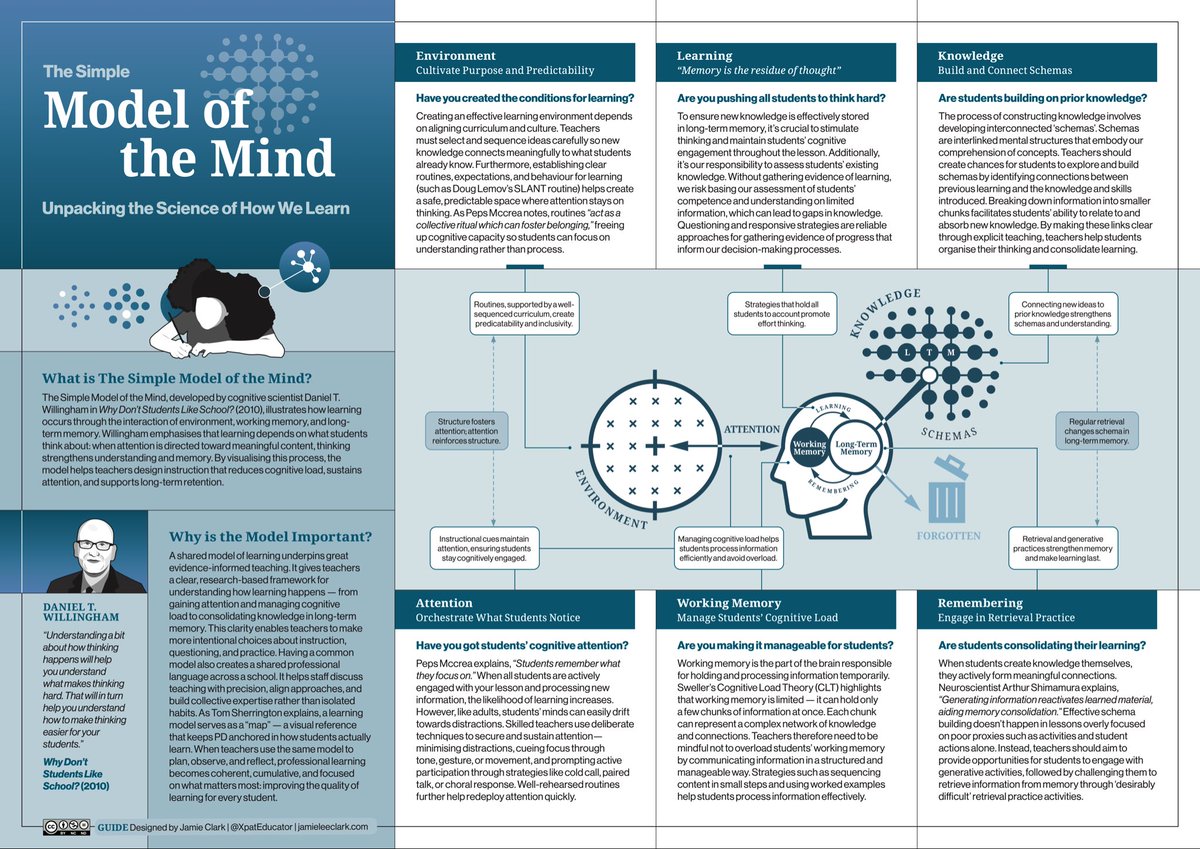
🧠 THE SIMPLE MODEL OF THE MIND! This NEW one-page guide breaks down how we learn, drawing on key principles from cognitive science. It provides a clear, research-based framework to guide instruction, manage cognitive load, and build shared professional language.
Inspired by Dan Willingham and @olicav
A teacher can’t plan instruction that truly supports learning if they don’t understand how learning happens.
I’ve been there. My lessons were packed with fun, engaging poor proxies for learning. Very little learning happened.
Not anymore. What changed? Cognitive science.
This post is about how I plan lessons from scratch, what we get right and wrong about lesson planning, and the great paradox of lesson planning:
In a perfect world, it wouldn’t even exist!
@GTavernetti@SciInTheMaking@StamStam193@learnwithmrlee
https://t.co/lIj51y3JiK
Free Explicit Morphology Instruction resource guide for students in Grades 9-12?! YES PLEASE! 🥳
Check out this Intensive Intervention Practice guide from @NCLIILearning:
https://t.co/WTZYVhfem3
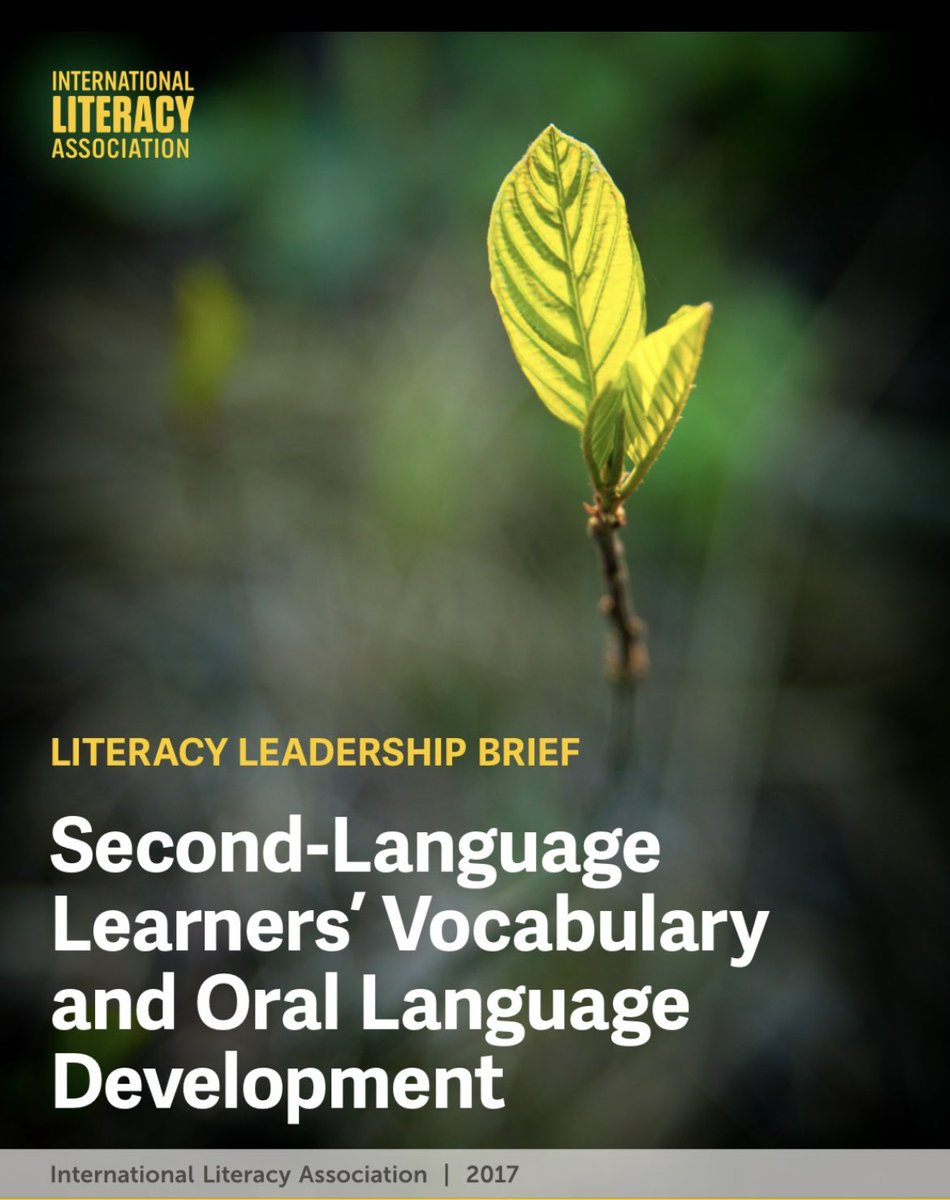
“Oral language proficiency is critical for advancing second language learners’ academic success; vocabulary is a particularly critical aspect of oral proficiency.” @ILAToday
A must read for all L2 and teachers of #MLL learners.
https://t.co/Va08WCukH7
Are you in Grade 7 to 12 and are interested in attending the TLAC this May 18 to 23 at Camp White Pine in Haliburton?
If so, complete the Expression of Interest Form by November 10 to be entered into the lottery!
Learn more: https://t.co/W7qMvFW9mY
The updated #UDL Guidelines are here...but what that does that mean for the teachers, coaches, and administrators who are implementing Universal Design for Learning in their classrooms and schools?
We break down the biggest changes here: https://t.co/sS9g4ns4Yh
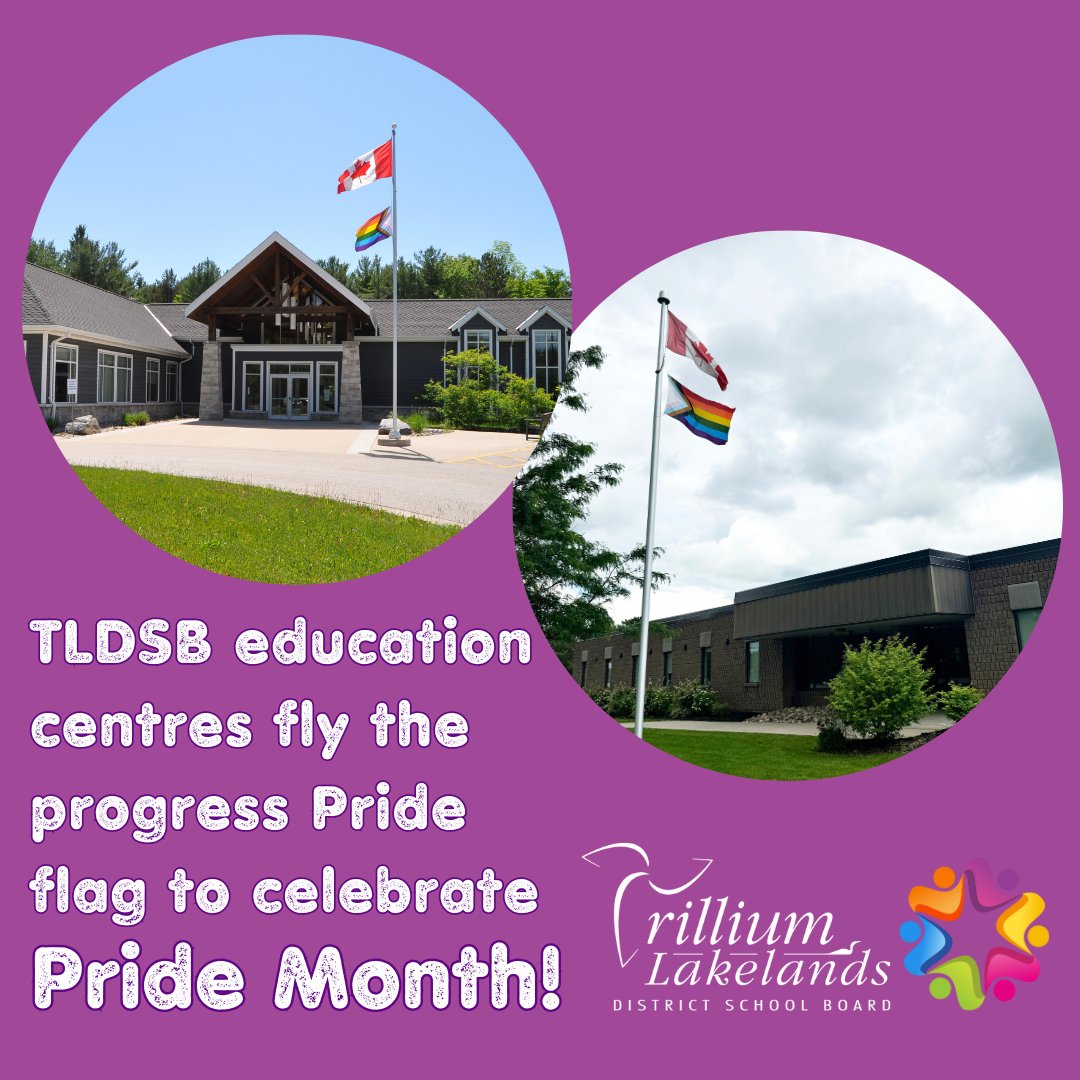
During June, TLDSB ed centres & schools are flying the progressive Pride flag to highlight our commitment to ensuring equity, dignity, well-being, diversity, and inclusion of the 2SLGBTQIA+ people in our community! Learn more about our flag protocol at: https://t.co/EoXrXpSdE2