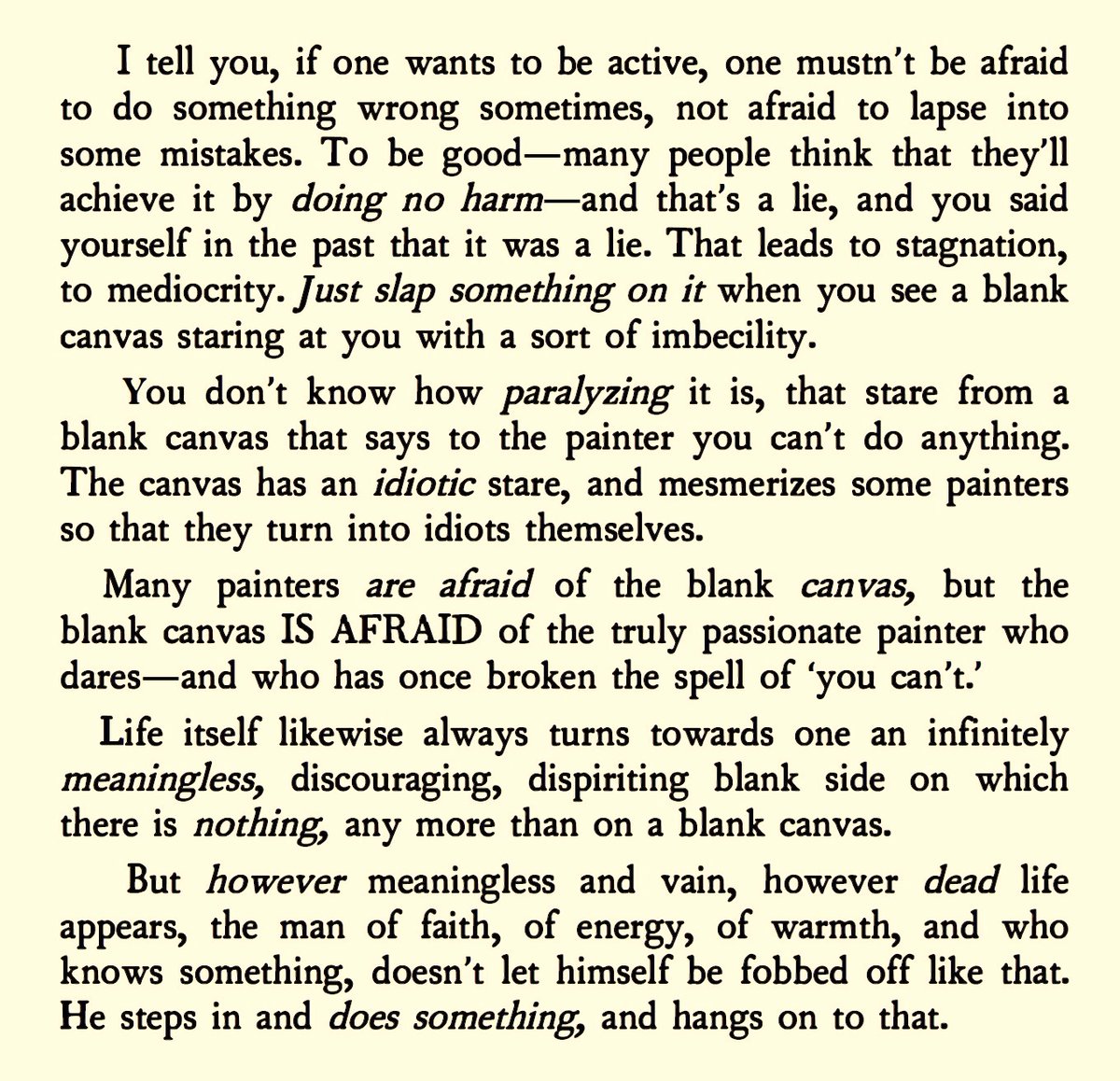
Major cheat code for life: Stop dragging yesterday into today. The argument. The mistake. The missed chance. It’s already gone. Stop reliving it. Learn fast. Forgive yourself faster. Move forward. Life happens in the direction you face.
Whenever you cannot decide, it is important to remember that it is often better to make a wrong choice, learn from it and move on than sit in the purgatory of analysis paralysis. That’s the real torture.
There's a physicist at Stanford named Safi Bahcall who modeled this exact principle and the math is wild.
He calls it "phase transitions in human networks." When you're stationary, your probability of a lucky event is limited to your existing surface area: the people you already know, the places you already go, the ideas you've already been exposed to. Your opportunity window is fixed.
When you move, your collision rate with new nodes in a network increases nonlinearly. Double your movement (new conversations, new cities, new projects) and your probability of a serendipitous encounter doesn't double. It roughly quadruples. Because each new node connects you to their entire network, not just to them.
Richard Wiseman ran a 10-year study at the University of Hertfordshire tracking self-described "lucky" and "unlucky" people. The single biggest differentiator wasn't IQ, education, or family money. Lucky people scored significantly higher on one trait: openness to experience. They talked to strangers more, varied their routines more, and said yes to invitations at nearly twice the rate.
The "unlucky" group followed the same routes, ate at the same restaurants, and talked to the same 5 people. Their networks were closed loops. No new inputs, no new collisions.
Luck isn't random. Luck is surface area. And surface area is a function of movement.
The lobster emoji is doing more work than most people realize. Lobsters grow by shedding their shell when it gets too tight. The growth requires a period of total vulnerability. No protection, no armor, soft body exposed to the ocean.
That's the cost of movement nobody posts about. You have to be uncomfortable first. The new shell only hardens after you've already moved.
I’ve learnt that as an adult, the one thing you should possess dearly is INTENTION. You have to be intentional about building relationships, routines, showing up & most importantly, be intentional about creating time to REST.
There will always be something that wants your time.
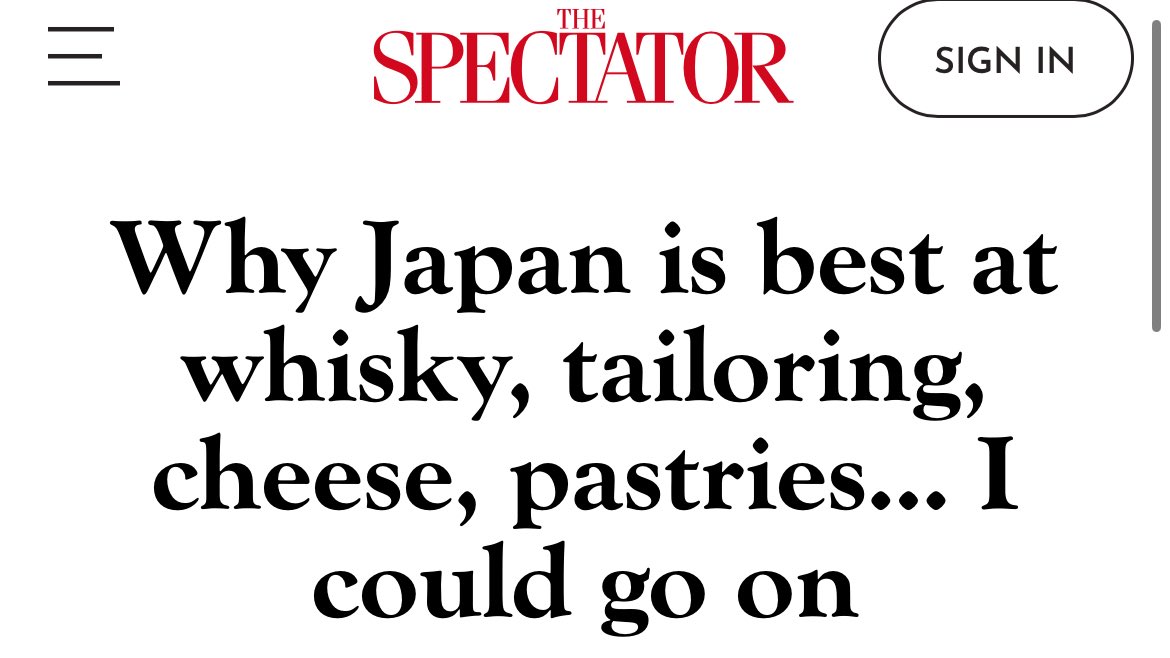
When the Japanese decide to master something, whether it’s cars, cameras, animation, knives, or yes, whiskey and craft cheese - they will perfect it into its final Platonic form.
How do they do it?
Obsession with kaizen (continuous improvement). And they will apply themselves relentlessly - without ego - to incremental refinement.
This is in contrast to the attitude of “Cha bu duo" (差不多), a Chinese phrase that means "close enough” or "more or less," which leads to cutting corners, a mindset and attitude that is common in China. In contrast, the cultural default in Japan is that “good enough” is never good enough.
The Chinese concept of 差不多 is a result of the Year Zero Mao introduced and decades of brutal communism, but it does lead to faster innovation compared to the slower kaizen method.
These days, the Japanese beat Scotland at the whiskey game, make the best pizza, and their cheesemakers in Hokkaido win the top global awards.
The Shokunin spirit (craftsman mindset) infuses Japanese culture with a respect for becoming a true master of one thing. You see this whenever you visit Japan.
A 21 yr old baker in Osaka might spend 10 years just learning how to shape croissants before he’s allowed to touch the dough at a top shop. That level of apprenticeship and pride in technique is rare elsewhere.
It’s not just Japanese autism but Japanese neuroticism that makes them obsessed about supply-chain control and ingredient quality. They’ll fly in Piemonte flour for pizza, Isigny butter for viennoiserie, or specific Scottish peat for whisky, then control every variable (water source, barrel toasting, humidity in aging warehouses) to a degree that’s just detrimental to profit margins.
We should thank the Japanese for their cultural operating system. It enriches everything it borrows from elsewhere, and then masters it.
This is why the world loves traveling to 🇯🇵