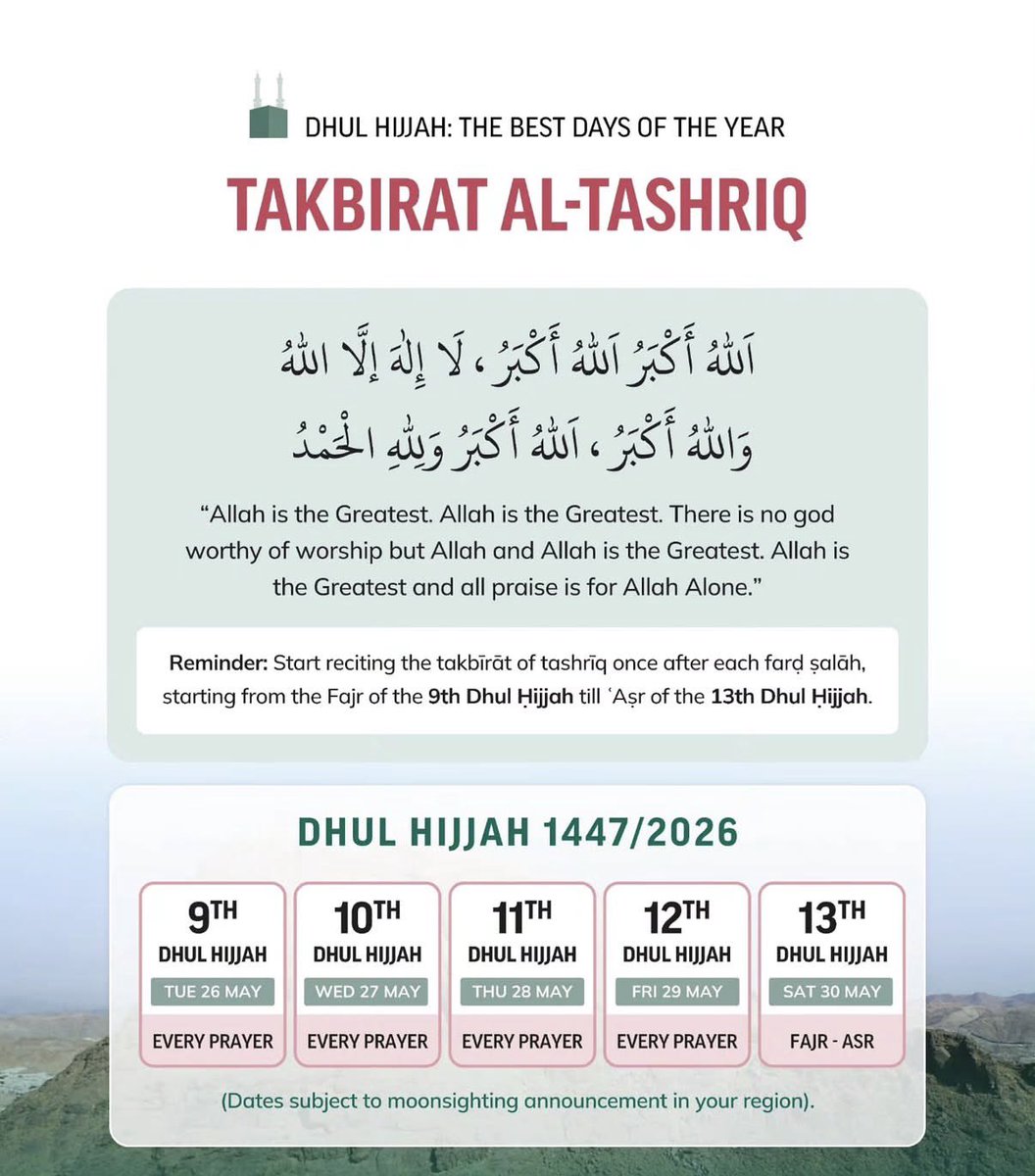
The true beauty of Eid is in the worship, du’a, fasting, dhikr, and growing closer to Allah throughout these blessed days.
May Allah accept our عبادات, sacrifices, and du’as, forgive our shortcomings, and grant us barakah, peace, and steadfast iman.
Ameen.
Eid Mubarak .
O Allah, make what is within me better than my outward appearance and make my outward appearance righteous. O Allah, I ask You for the righteousness of what You give to people of property, family, and children without being misguided or misguiding others.
Three powerful du'as for RIZQ
Allahumma inni as'alukal-huda wat-tuqa wal-afafa wal-ghina.
Allahumma inni as'aluka 'ilman nafí'an, wa rizqan tayyiban, wa 'amalan mutaqabbalan.
Allahummak-fini bihalalika 'an haramika wa aghnini bifadlika 'amman siwak.
اللَّهُمَّ إِنَّي أَعْوذُ بِكَ مِن الحَوْرِ بَعُدَ الكُوْرِ
TRANSLITERATION
Allähumma inni a'üdhu bika min al-hawri ba'd al-kawri.
TRANSLATION
O Allah! I seek refuge in You from rolling back after rolling forward. (from returning to a worse state after being in a good state).
اللَّهُمَّ إِنَّي أَسْأَلُكَ الْهُدَى وَالتُّقَىْ وَالْعَفَاف وَالْغِنَن
TRANSLITERATION
Allāhumma inni as'aluka al-huda wat-taqwā wal-'afafa wal-ghinā.
TRANSLATION
O Allah! Indeed, I ask You for guidance, piety,
chastity, and contentment (true independence and sufficiency).
رَبَّ إِنَّي مَسَّنِيَ الضُرُّ وَأَنْتَ أَرْحَمُ الرَّاحِمِينَ
TRANSLITERATION
Rabbi inni massani ad-durru wa anta arhamu ar-rahimin.
TRANSLATION
My Lord! Indeed, adversity has touched me, and You are the Most Merciful of the merciful.
(Surah Al-Anbiya 21:83)
That did not make anyone evil. It made them human.
Wallahi, studying the Seerah changes so many assumptions we inherited culturally. You begin to realise that many things we shame today were approached with far more balance, wisdom, and compassion in the Prophetic tradition.
Divorce during the time of the Prophet ﷺ was not treated with the stigma many Muslims attach to it today. People remarried. Life moved on. They understood that marriage is an institution built on companionship, mercy, and compatibility, and sometimes incompatibility is reason enough for separation.
Prophet Ibrahim عليه السلام also advised his son to divorce his wife. Do you think the noblest of Allah’s creation would engage in something inherently condemned in the way culture portrays it today?
Unfortunately, this particular hadith has been heavily weaponized by culture and tradition, stripped of proper context and understanding.
How can something Allah permitted and created as a mercy be described in a way that implies it “shakes His Throne”? Do people truly reflect on what they are implying when they say that?
The Prophet ﷺ divorced Hafsah, the daughter of Umar ibn al-Khattab, before revelation came down revealing that she’s his wife in jannah and to take her back.