HOY viernes entradas agotadas para el Planetario San Cosmos y quedan MUY pocas entradas para mañana sábado 25 de julio.
Te recomendamos comprar tus entradas de manera online en https://t.co/HlnUYoK7CN, ya que no se venderán entradas en puerta para los horarios agotados.
🌟 ¡Planificá tu visita al Planetario San Cosmos!
Por la alta demanda de vacaciones de invierno, te recomendamos comprar tus entradas online en https://t.co/HlnUYoK7CN
🎟️ Hoy jueves: agotado
⚠️ Viernes: pocos lugares por la tarde
✨ Sábado y domingo: horarios disponibles🚀
Es hooooy es hoooy 🤓✨🚀
Armá tu dupla after office y llegá al primer planetario digital de 🇵🇾 para asombrarte el doble 😉
Reserva nomas ya en https://t.co/HlnUYoK7CN
🚀 ¡Estas vacaciones de invierno viví la #AstroEscuela en el Planetario San Cosmos de MuCi!
Aprendé astronomía de forma dinámica e interactiva con expertos. 🌌
📅 14, 15, 21 y 22 de julio | 14:00 a 15:00
💰 Early Bird: G. 120.000 (hasta el 10/7)
🔗 https://t.co/HlnUYoK7CN
Por el Día del Padre, el Planetario de San Cosmos tiene 2x1: con 1 sola entrada ingresan 2 personas de forma directa 🤓✨
📅 Domingo 21 de junio
🕑 De 14:00 a 20:00 h
Reserva tu lugar en https://t.co/HlnUYoK7CN💻✨
El médico y biólogo austríaco Karl Landsteiner inició sus experimentos clave en 1900, y más adelante estableció el sistema de grupos sanguíneos ABO (A, B, AB y O) en 1901 🤓
Haciendo las transfusiones de sangre seguras 🤯
En 1930 ganó ✨el premio novel de Medicina✨
#NobelPrize laureate Karl Landsteiner made a discovery that continues to save countless lives every day. He discovered and classified ABO human blood groups, which made safe blood transfusions possible.
#WorldBloodDonorDay
Protegete, vení a vacunarte contra la influenza GRATIS😌✨
📆 Miércoles 3 de junio | De 09:00 a 15:00 h
📍Frente al planetario San Cosmos
Tenes que llegar nomas 🙌✨
Este finde realizamos el programa La Lupa de
@Telefuturo
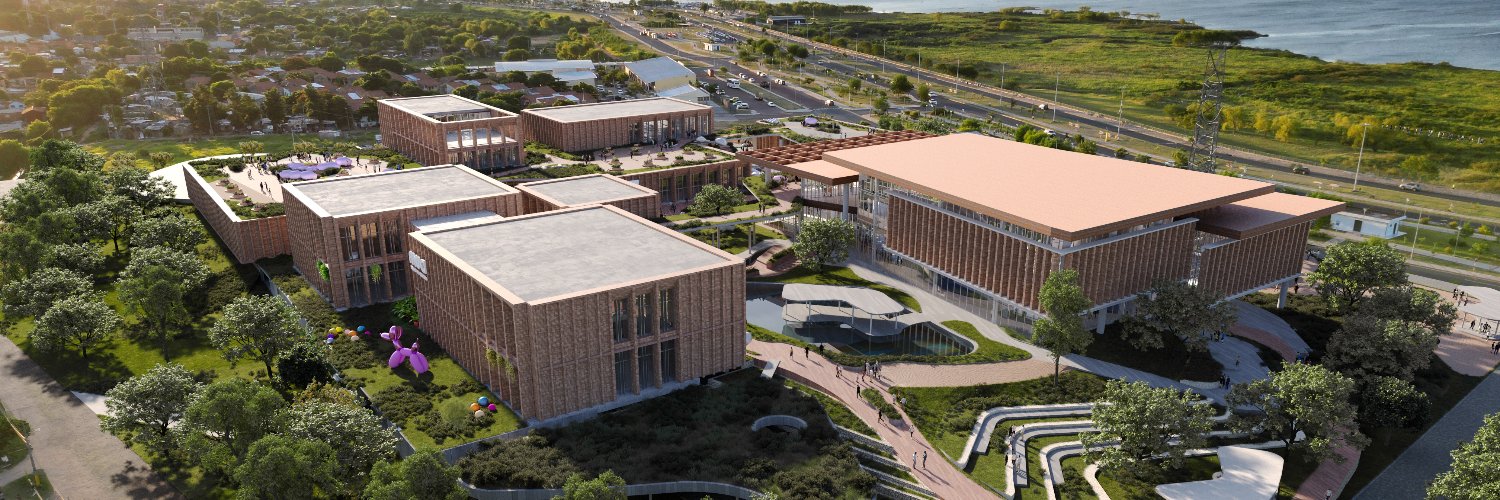
desde nuestra futura casa! Mostramos los avances del futuro Museo de Ciencias en la Costanera de Asunción. Mirá el bloque 2 completo acá!
https://t.co/iZYzLRO3yY
Este finde realizamos el programa La Lupa de @Telefuturo desde nuestra futura casa! Mostramos los avances del futuro Museo de Ciencias en la Costanera de Asunción.
Mirá el bloque 1 completo acá!
https://t.co/BBJZ99PU0e
HOY cumplimos 1 año de la palada inicial del Museo de Ciencias Interactivo de Paraguay! 🇵🇾 ✨🤓
¡El tiempo pasa volando! 😆
Cada vez estamos más cerca, 2028 te esperamos con ansias 🤩
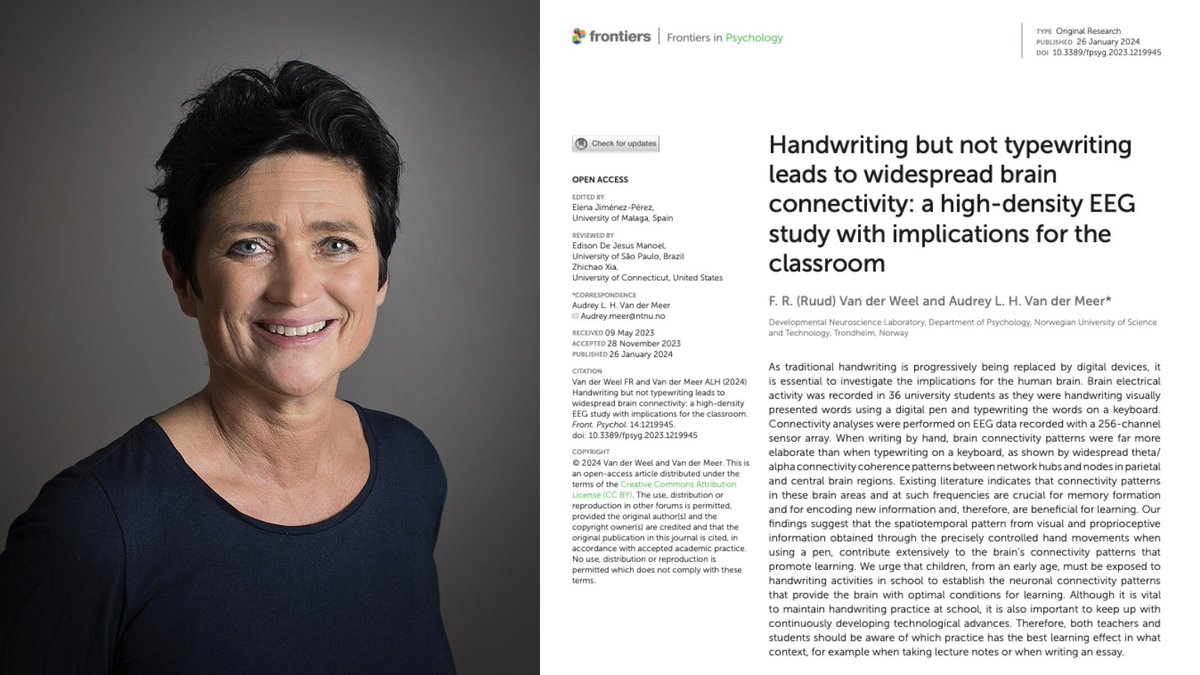
Una neurocientífica pasó 20 años demostrando que escribir a mano activa todo el cerebro al mismo tiempo. Escribir en teclado apaga la mayoría de esas conexiones 🤯
¿Hace cuánto no escribís a mano? Escribí algo hoy
A Norwegian neuroscientist spent 20 years proving that the act of writing by hand changes the human brain in ways typing physically cannot, and almost nobody outside her field has read the paper.
Her name is Audrey van der Meer.
She runs a brain research lab in Trondheim, and the paper that closed the argument was published in 2024 in a journal called Frontiers in Psychology. The finding is brutal enough that it should have changed every classroom on Earth.
The experiment was simple. She recruited 36 university students and put each one in a cap with 256 sensors pressed against their scalp to record brain activity. Words flashed on a screen one at a time.
Sometimes the students wrote the word by hand on a touchscreen using a digital pen, and sometimes they typed the same word on a keyboard. Every neural response was recorded for the full five seconds the word stayed on screen.
Then her team looked at the part of the data most researchers had ignored for years, which is how different parts of the brain were communicating with each other during the task.
When the students wrote by hand, the brain lit up everywhere at once.
The regions responsible for memory, sensory integration, and the encoding of new information were all firing together in a coordinated pattern that spread across the entire cortex. The whole network was awake and connected.
When the same students typed the same word, that pattern collapsed almost completely.
Most of the brain went quiet, and the connections between regions that had been alive seconds earlier were nowhere to be found on the EEG.
Same word, same brain, same person, and two completely different neurological events.
The reason turned out to be something nobody had really paid attention to before her work. Writing by hand is not one motion but a sequence of thousands of tiny micro-movements coordinated with your eyes in real time, where each letter is a different shape that requires the brain to solve a slightly different spatial problem.
Your fingers, wrist, vision, and the parts of your brain that track position in space are all working together to produce one letter, then the next, then the next.
Typing throws all of that away. Every key on a keyboard requires the exact same finger motion regardless of which letter you are pressing, which means the brain has almost nothing to integrate and almost no problem to solve.
Van der Meer said it plainly in her interviews.
Pressing the same key with the same finger over and over does not stimulate the brain in any meaningful way, and she pointed out something that should scare every parent who handed their kid an iPad.
Children who learn to read and write on tablets often cannot tell letters like b and d apart, because they have never physically felt with their bodies what it takes to actually produce those letters on a page.
A decade before her, two researchers at Princeton ran the same fight using a completely different method and ended up at the same answer. Pam Mueller and Daniel Oppenheimer tested 327 students across three experiments, where half took notes on laptops with the internet disabled and half took notes by hand, before testing everyone on what they actually understood from the lectures they had watched.
The handwriting group won by a wide margin on every question that required real understanding rather than surface recall.
The reason was hiding in the transcripts of what the two groups had actually written down.
The laptop students typed almost word for word, capturing more total content but processing almost none of it as they went, while the handwriting students physically could not write fast enough to transcribe a lecture in real time, which forced them to listen carefully, decide what actually mattered, and put it in their own words on the page.
That single act of choosing what to keep was the learning itself, and the keyboard had quietly skipped the choosing and skipped the learning along with it.
Two studies. Two countries. Same answer.
Handwriting makes the brain work. Typing lets it coast.
Every note you have ever typed instead of written went into your brain through a thinner pipe. Every meeting, every book highlight, every idea you captured on your phone instead of on paper was processed at half depth.
You did not forget those things because your memory is bad. You forgot them because typing never woke the part of the brain that would have made them stick.
The fix is the thing your grandmother already knew.
Pick up a pen. Write the thing down. The slower road is the faster one.
Si el universo comenzó con el Big Bang, ¿qué existía antes? Y si la respuesta es «nada», ¿puede existir siquiera la nada?
Éste tipo de preguntas no nos dejan dormir por las noches 🥲💤💫