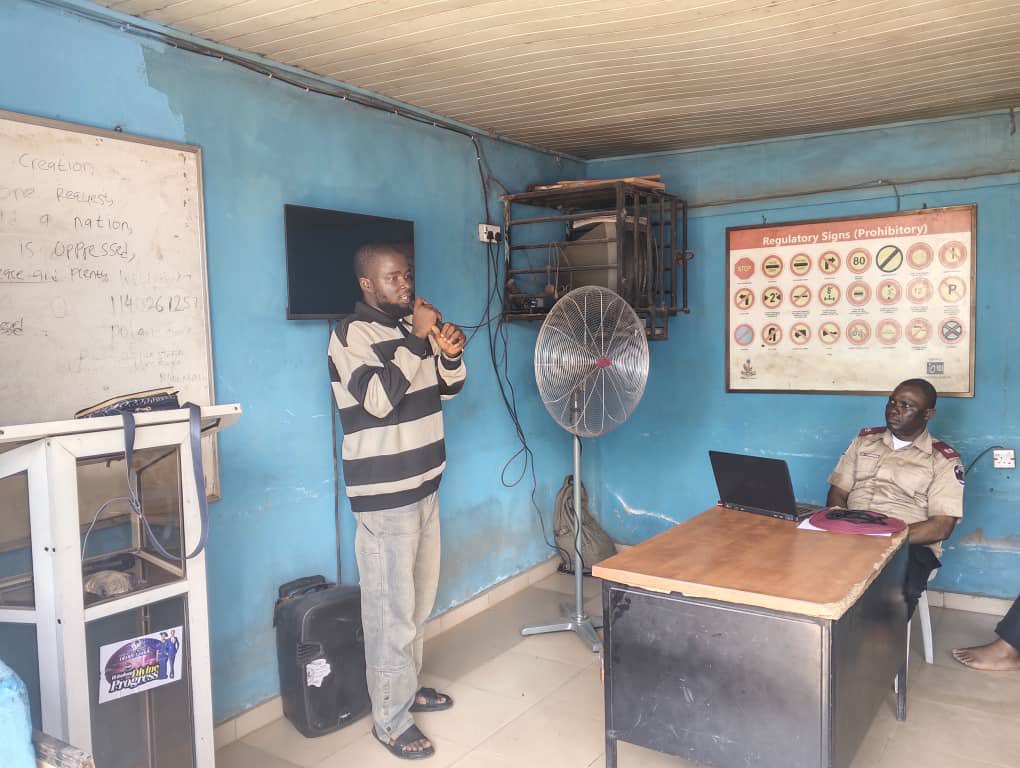
Started July with impact. 🚦🛡️
Today, I delivered a cybersecurity awareness lecture at the Federal Road Safety Corps (FRSC). Cybersecurity starts with awareness, and every informed user is one less opportunity for cybercriminals.
Looking forward to more opportunities to educate, inspire, and strengthen our digital resilience.
One of the easiest ways to understand neural network training is to understand batch size.
Suppose you have 1,000 samples and a batch size of 100.
That means:
• 10 batches
• 1 epoch = all 10 batches processed once
• 10 forward passes
• 10 backpropagations
• 10 weight updates
Batch size determines how often the model updates its weights during an epoch.
#MachineLearning #DeepLearning #AI #GradientDescent #NeuralNetworks #DataScience
Epochs vs. Learning Rate 🧠
Two hyperparameters that can significantly impact your neural network’s performance:
🔹 Epochs = The number of complete passes through the training dataset.
Too few → Underfitting (the model doesn’t learn enough).
Too many → Overfitting (the model memorizes instead of generalizing).
🔹 Learning Rate = The step size used during gradient descent to update model parameters.
Too high → May overshoot the optimal solution.
Too low → Training becomes slow and may take much longer to converge.
Finding the right balance between these two hyperparameters is essential for building models that learn efficiently and generalize well.
#MachineLearning #DeepLearning #AI #NeuralNetworks #DataScience
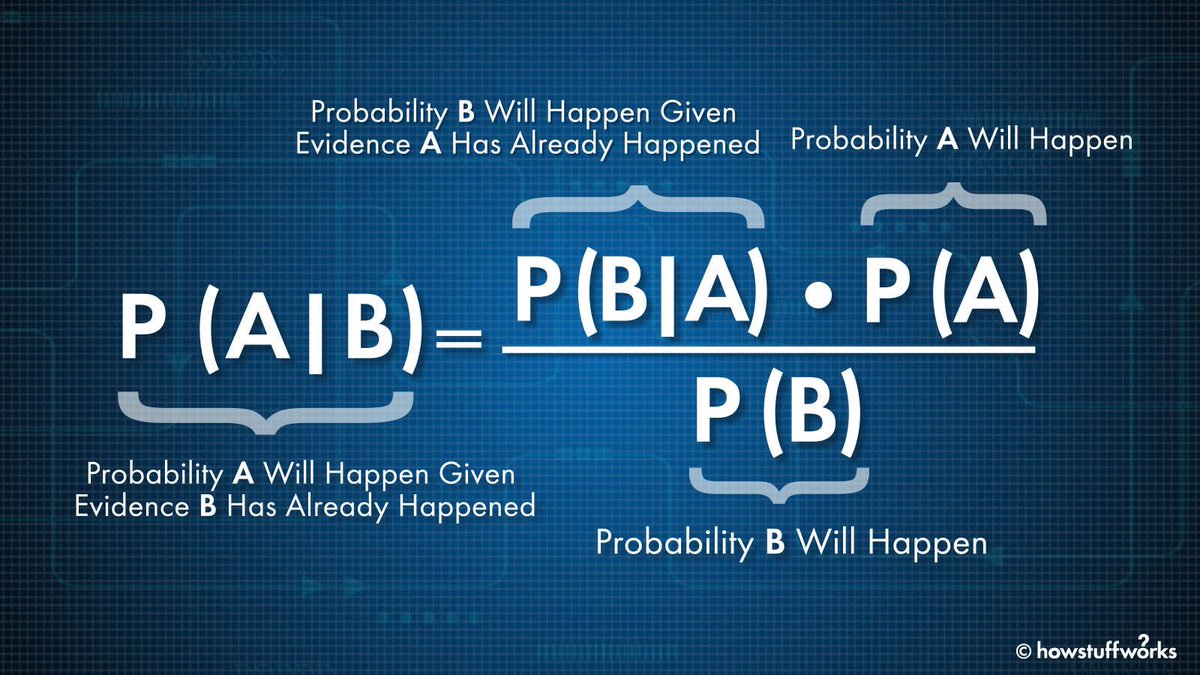
Maybe I need to update the Oracle with Bayes 😅. Football is dynamic, and Bayesian methods allow probabilities to adapt as new information becomes available.
MB Oracle opens the 2026 World Cup with a correct prediction . Mexico gets the job done against South Africa and starts the World Cup with three points. One prediction down, many more to go. ⚽🌎🇲🇽
#WorldCup2026
Interesting to see how closely my World Cup Oracle aligns with current FIFA football rankings and expert predictions. 👀
Different methods, similar pattern.
Maybe the data is trying to tell us something… ⚽🔮
#FIFAWorldCup2026#MachineLearning#FootballAnalytics
Just a quick disclaimer: MB Oracle is not associated with any betting platform. It is purely a data-driven project built out of my passion for football and machine learning.
The model uses historical international match records, Elo ratings, recent team performance, goal-scoring trends, defensive records, win/loss patterns, and tournament simulations to estimate outcomes. As we all know, football is one of the most unpredictable sports, so the predictions should be viewed as probabilities rather than guarantees.
I’ll continue improving the model by incorporating more real-time factors such as injuries, suspensions, squad changes, team strength, player availability, live match updates, and other contextual variables that can influence results.
The objective is not to predict football with certainty, but to explore how data and machine learning can be used to model one of the world’s most exciting sports.
For the love of football and ML⚽📊
I built MB Oracle, a machine learning framework that predicts the 2026 FIFA World Cup winner using Elo ratings, xG modelling, Poisson regression, and 10,000 Monte Carlo simulations.
Top predictions:
🇪🇸 Spain (25.78%)
🇦🇷 Argentina (21.67%)
🇫🇷 France (10.05%)
Best match prediction model:
✅ Logistic Regression + Elo
✅ 60.01% Accuracy
Code & methodology 👇
https://t.co/ns1nQnMiP6
#MachineLearning #FootballAnalytics #DataScience
Cybersecurity is a field that tests your discipline every day. Imagine having access to 2,000+ bank records and still choosing integrity over opportunity. That’s the kind of responsibility the profession demands.
Why do CNNs dominate image classification while traditional feedforward neural networks struggle?
Because CNNs don’t treat every pixel equally.
🔹 Convolution layers learn features such as edges, textures, and shapes.
🔹 ReLU introduces non-linearity, helping the network capture complex patterns.
🔹 Pooling reduces dimensionality while preserving important information.
🔹 Flatten converts feature maps into a format suitable for classification.
🔹 Fully Connected layers combine learned features.
🔹 Softmax outputs class probabilities for the final prediction.
CNNs first learn what matters in an image before making a prediction and that’s what makes them so effective.
#MachineLearning #DeepLearning #AI #CNN #ComputerVision
CNNs don’t just see pixels , they understand relationships between them. That’s why they outperform traditional neural networks in image classification.
https://t.co/bnmwEiARjq
Machine learning neurons are built around three key components: weighted sums, bias, and activation functions. While weights and bias learn patterns, activation functions decide how a model learns them.
Without activation functions, neural networks become simple linear models and struggle with complex data. The challenge is not just knowing activation functions but understanding where they fail and why newer ones emerged.
For example, Sigmoid suffered from the vanishing gradient problem, limiting deep learning performance. Tanh improved this by centering outputs around zero, making learning more stable and often useful in hidden layers or sequence tasks. ReLU, however, became a game changer due to its simplicity and speed, making it the go-to choice for hidden layers in deep neural networks and computer vision models.
The question shouldn’t be “Which activation function is best?” but “Which problem was it designed to solve?
Human intuition is bad at probability when new evidence changes the situation.
What if it’s true… but what if it’s not false because it’s true… but what if it was actually false and looked true?
Probability always feels confusing 😂