Wanted to ignore this and move on, but let me give my two cents.
1 - Money is not the end-all, be-all. A lot of people out-earn their husbands and the marriage still works. Just be a good person and find a good person.
2 - Out-earning someone today doesn’t mean you’ll out-earn them for the rest of your life.
3 - There’s more to life than money, dude. I like this quote: “Life is the business of making memories.” Look for someone you like and get busy making memories with them; money will take a back seat.
O Allah, I take refuge in You from anxiety and sorrow, and I take refuge in You from weakness and laziness and I take refuge in You from cowardice and miserliness and I take refuge in You from the burden of debts and from being over powered by men.
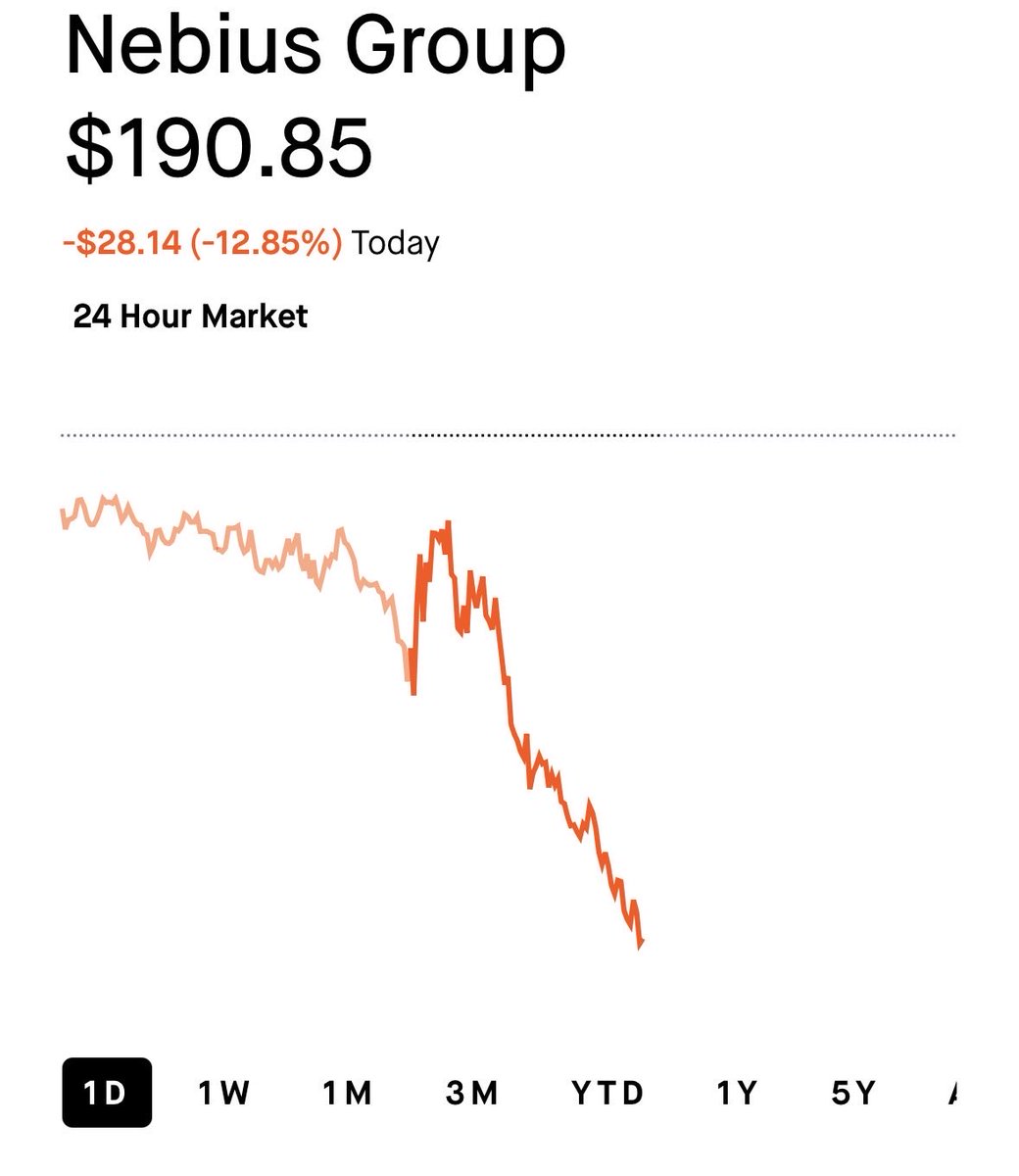
So we’ve really reached the point where Burry is moving stocks? $NBIS
I wouldn’t be surprised if he’s already closing his short position as we speak.
-RM
Will the market tank when Dangote Refinery gets listed?
The simple answer is yes. There will likely be an impact, and we could see a broad-based sell-off. However, I think the extent of that sell-off may be overstated.
If Dangote Refinery lists at a $50bn valuation, it immediately becomes one of the largest listed companies in Africa. Assuming about 10% is floated, the IPO could raise roughly $5bn, making it by far the largest equity issuance in Nigerian history.
Institutional investors do not have unlimited cash.
Many pension funds, mutual funds, insurance companies, and asset managers will likely:
Sell portions of their existing holdings → Raise cash → Subscribe to the IPO
Suppose a fund has ₦20bn invested and ₦1bn in cash. If it wants to invest ₦5bn in Dangote Refinery, it only needs to sell about ₦4bn of its existing holdings. That selling pressure can temporarily depress prices.
However, this is largely a one-time reallocation of capital, not a permanent destruction of demand. Once allocations are complete, the forced selling largely disappears (that is, if the selloff has not even happened in June sef).
That said, there is another point that deserves more attention.
If Dangote Refinery enters the NGX All-Share Index with a significant weight, index funds, benchmarked pension mandates, ETFs, closet indexers, and other benchmark-aware investors will all need to own it.
To maintain benchmark weights, they will have to reduce exposure to other holdings. That creates mechanical selling across many existing large-cap stocks.
But there is also another side to the story.
The Nigerian market is much deeper than it was a few years ago. There are now several sources of demand that simply did not exist at the same scale before.
✑ Retail participation has improved materially.
✑ PFAs continue to receive monthly pension contributions.
✑ Foreign investors may return for such a landmark listing.
✑ The NGX is actively encouraging greater cross-border African participation.
So while domestic fund managers may sell existing positions to fund their allocations, they are unlikely to be the only buyers.
A better way to think about this is that there are two opposing forces.
Force 1: Structural demand shifts towards Dangote Refinery
Suppose the NGX looks like this today:
✑ Banks: 30%
✑ Cement: 20%
✑ Telecoms: 15%
✑ Oil & Gas: 8%
✑ Consumer: 10%
✑ Others: 17%
Now assume Dangote Refinery lists and immediately accounts for 25-30% of the index. Every benchmark-aware fund now needs to own roughly that weight.
A manager who previously held:
✑ GTCO: 8%
✑ Zenith: 7%
✑ MTNN: 10%
may permanently reduce those positions to:
✑ GTCO: 5%
✑ Zenith: 4%
✑ MTNN: 7%
Those weights may never return, simply because Dangote Refinery now occupies a meaningful portion of the portfolio.
So yes, there will likely be a permanent reallocation of capital.
Force 2: New money continues entering the market
Fund managers do not operate with fixed pools of capital forever.
Every month:
✑ Pension funds receive new contributions.
✑ Mutual funds receive fresh subscriptions.
✑ Insurance companies collect premiums.
✑ Foreign investors may allocate capital.
✑ Retail investors continue buying.
Suppose a fund grows from ₦100bn to ₦120bn over the next year. Even if Dangote Refinery continues to represent 25% of the portfolio, the remaining 75% has also grown in absolute terms.
Immediately after the IPO:
✑ Dangote Refinery: ₦30bn
✑ Other stocks: ₦90bn
One year later, assuming assets grow to ₦150bn while maintaining the same portfolio weights:
✑ Dangote Refinery: ₦37.5bn
✑ Other stocks: ₦112.5bn
Notice what has happened.
Although the percentage allocation to the other stocks is lower than before, the absolute amount invested in them has actually increased because the overall pool of capital has expanded.
That is why I do not think this will be the armageddon many people expect.
Yes, there will likely be short-term selling pressure. Yes, there will be a structural reallocation of capital towards Dangote Refinery.
But over time, as fresh capital continues entering the market, much of that pressure should be absorbed. The long-term outlook for the broader market is therefore likely to be far less severe than many currently fear.