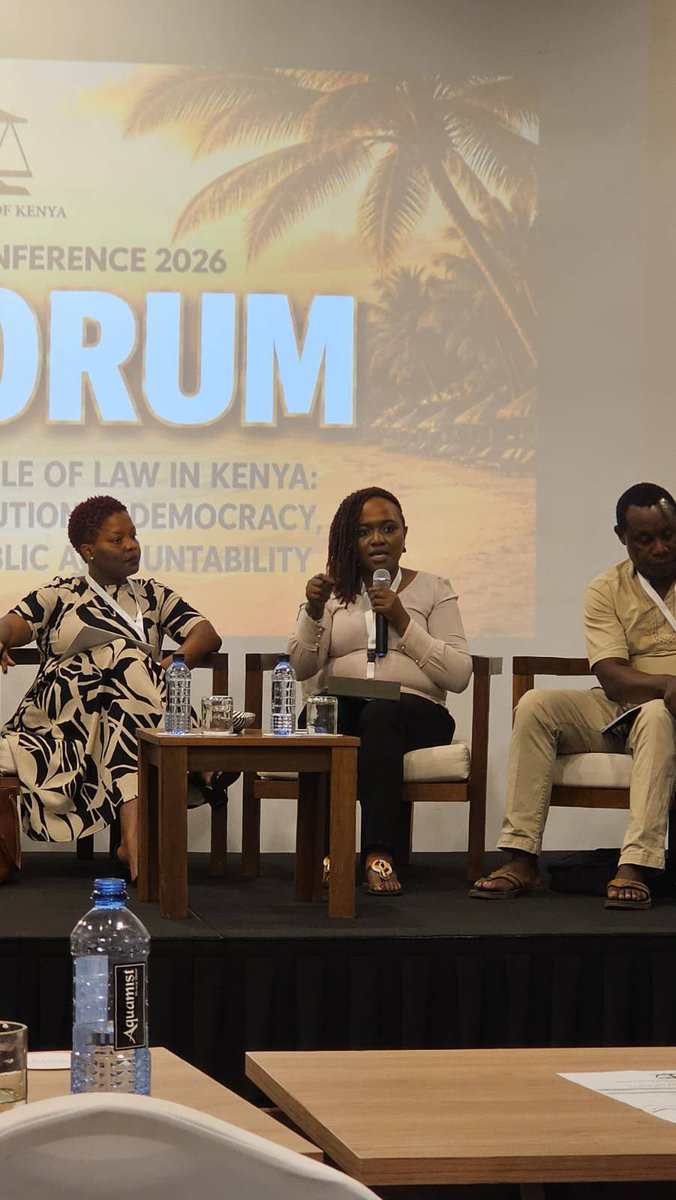
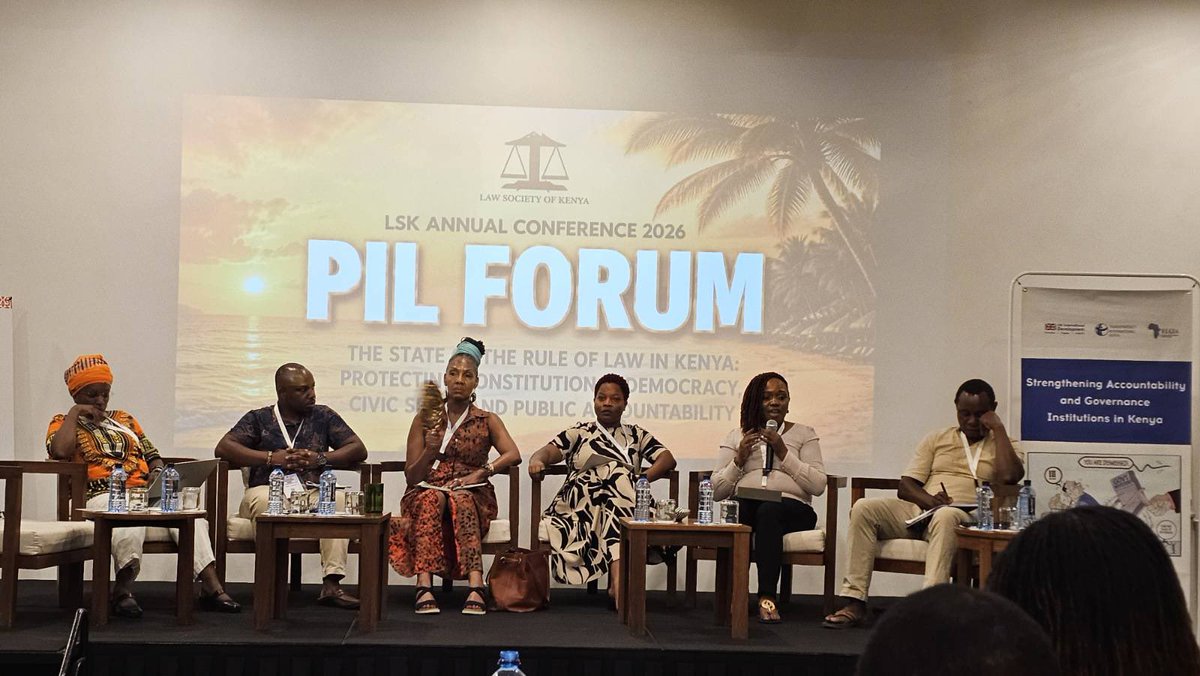
Diana described Article 1 as a “power of attorney” given by citizens to those in power and reminded us that citizens can demand accountability when that power is misused.
That accountability becomes even more urgent when we look at Kenya’s debt.
“We are borrowing 3.5 billion a day, and we paying 6.4 billion every day.”
Think about that: billions borrowed every day, while even more is being spent on repayment.
Every new loan has consequences beyond the current government. It becomes a future tax burden and affects the resources available for public services and development.
For citizens to meaningfully engage with Kenya’s debt, knowing the total figure is not enough.
“Don't tell us that we have a 13 trillion debt. For meaningful engagement on our debt, we need those contracts.”
Diana called for access to the debt contracts so that Kenyans can interrogate how debt was acquired, how it entered the country, how it was utilised and how it will be repaid.
Because public participation without access to information is not meaningful participation.
And accountability cannot stop at the ballot box.
#LSKAnnualConference #PILForum #SocialAccountability #DebtJustice #PublicDebt #PublicParticipation #Accountability
At the LSK Annual Conference PIL Forum, Diana Gichengo, our Executive Director, challenged us to think about what happens between elections.
Kenya voted in 2022. The next election is 2027. But can citizens afford to wait five years to demand accountability for decisions being made today?
“So social accountability, public participation is what we do in between the electoral periods.”
Article 1 gives citizens the foundation to remain active participants in governance, not just voters at election time.
The Power We Entrust
Titus Gitonga, Programme Coordinator at Transparency International Kenya (@TIKenya ), connected the fight against corruption to a fundamental constitutional question: who holds power, and how do citizens exercise their sovereignty?
Corruption is the abuse of entrusted power for personal gain. That entrusted power runs throughout our Constitution and Chapter Six places integrity at the heart of how public power should be exercised.
“As citizens, through our social contract, we've given a lot of power to the institutions that we have established under the Constitution.”
But accountability does not only happen in courtrooms.
Citizens can also act through the court of public opinion, by demanding information, sharing knowledge, questioning decisions and making the social contract visible in the spaces where we live and work.
“You do not have to craft a lengthy litigation to go to courts.”
The Constitution gives citizens power. The question is whether we are using it.
#LSKAnnualConference #PILForum #SocialAccountability #ChapterSix #Constitutionalism #AntiCorruption #Accountability
Electoral integrity isn't built on signed laws alone it happens at the polling stations, in the verified registers, and through an active public that refuses to look away.
A reform on paper is just ink until citizens demand transparency at every count. Without constant public oversight and transparent execution, electoral safeguards remain theoretical. Democracy is sustained by participation, not passive reliance on policy.
kaa rada!!
Constitutional guarantees are only as strong as the citizens enforcing them. Standing by our Constitution means standing by active vigilance where it matters most
Kuwakumbusha tu: the 2010 Constitution didn't just give us rights it handed us responsibility. Article 1 places sovereign power directly in the hands of the people.
#Hatujasahau #WananchiRada #ReflectionFriday
“The vision that we are launching and the discussion will be seen to be around political survival, rather than national posterity and development."
- Diana Gichengo, Executive Director, TISA
Kenya’s development agenda has historically been swayed by short-term political motives rather than lasting policy goals.
With power never guaranteed to any sitting administration, launching a multi-decade vision right before an election risks framing national development as a tool for political campaigns and survival, rather than a genuine, constitutionally anchored plan for the nation's future generations.
How closely do you track your own expenses?
Now imagine this: your taxes are also your money. Every road, hospital, school, water project,
or public facility is funded by resources you contribute. That gives you both the right and the
responsibility to know how those resources are being used.
Did you know that the Access to Information Act gives every Kenyan the legal right to request
information held by public institutions? The Act gives effect to Article 35 of the Constitution
and empowers citizens to seek information that promotes transparency and accountability in
public service.
Have you noticed a stalled hospital, an unfinished school, or an incomplete infrastructure project
in your community? Don't just walk past it. Request information. Ask for progress updates.
Demand accountability.
Earlier this week, TISA, under the KAS TUNU Project, facilitated a capacity-building session in
Eldoret for Civil Society Organizations (CSOs), Community-Based Organizations (CBOs), and
citizens, equipping them with practical knowledge on the Access to Information Act and how it
can be used to hold public institutions accountable.
The training sparked immediate action. Participants committed to submitting Access to
Information (ATI) requests to the relevant duty bearers to seek updates and accountability for
public projects in their communities. Several participants came prepared with photographs of
stalled projects in their localities. As they examined the publicly declared funds allocated to
these projects, they voiced concerns that weak accountability mechanisms and poor leadership
had contributed to delays and the abandonment of critical public investments.
Inspired by the session, participants pledged to put their newly acquired knowledge into practice
by using the Access to Information Act to demand transparency, track public expenditure, and
advocate for the completion of projects that directly impact their communities.
Their commitment
demonstrated that empowered citizens are not only informed they are ready to act.
Every question asked strengthens accountability. Every information request reinforces
transparency. Every informed citizen brings us one step closer to better governance.
Track It. Question It. Demand It.
In partnership with @TISAKenya and @TIKenya.
Jointly supported by @EUinKenya and @KAS_Kenya
#TrackItQuestionItDemandIt #AccessToInformation #ATI #CitizenAccountability
#Transparency #PublicParticipation #GoodGovernance #OpenGovernment
FREE EDUCATION OR FREE HEADLINES?
Education is a right, not a campaign giveaway.
Every election cycle, the promises get bigger. Every budget cycle, the money is nowhere to be found.
"Free university education" sounds fantastic, until you ask one uncomfortable question: Where is it in the budget?
You can't fund universities with microphones, press conferences, and applause. You need appropriations, legislation, and sustainable revenue.
We've asked for systemic reform and financial discipline. Instead, we're handed declarations dressed up as policy.
If there is no legal framework, no budget allocation, and no credible financing plan, then it's not a reform, it's a political press release.
Students don't graduate on promises. Universities don't pay lecturers with speeches. And rights don't depend on the generosity of politicians.
Declarations are not budget allocations. Stop selling headlines as policy.
Viva! Viva!
To everyone who stood with us, spoke up, prayed, amplified our voices, and defended our shared civic space.
Ahsante!
Solidarity forever. Eternal vigilance. We keep the watch. We hold the line.
THE LAKE REGION HAS SPOKEN. CIVIC SPACE MUST BE PROTECTED.
This week, civil society organizations, residents, and human rights defenders came together to condemn the escalating violence, intimidation, enforced disappearances, arbitrary arrests, and shrinking civic space across Kenya.
The statement reaffirmed solidarity with all those defending democracy, human rights, and constitutional freedoms, including The Institute for Social Accountability (TISA) and other organizations facing intimidation for their work.
The statement also strongly condemned the attack on St. Stephen's Cathedral, Kisumu, and all actions that undermine the sanctity of religious institutions as safe spaces for worship, refuge, humanitarian support, and peaceful civic engagement.
For years, St. Stephen's Cathedral has opened its doors for citizen assemblies on public debt, governance, accountability, taxation, and Kenya's future. Alongside the Diocese of Kisumu, it has remained a courageous voice for justice and democratic dialogue.
An attack on civic space is an attack on democracy itself.
#ProtectCivicSpace #DefendDemocracy #TGIF
This week, Kenyan women came together to collectively condemn the escalating attacks on civic space.
Women, mothers, farmers, hawkers, workers, and community leaders stood united in rejecting the growing climate of fear created by intimidation, unlawful surveillance, office raids, enforced disappearances, and the continued targeting of civic actors.
One message rang loud and clear:
"Government, si hatuna bunduki, sisi hatuna hizo mapanga za kwenda kupigana. Tunaenda kupeleka sauti zetu."
They expressed deep concern that a country where citizens fear asking questions is a country where corruption flourishes unchecked. They called on the Government of Kenya to immediately end all intimidation, harassment, surveillance, and attacks against civil society organizations, human rights defenders, and citizens working to promote accountability, transparency, and justice.
The fear, " kama civil society wana wa attack who are we?"
As one woman boldly declared:
"Kama mimi binafsi, mimi nitasema sitaogopa. Nitaongea."
Viva women, viva! Viva civic space, viva!
#ProtectCivicSpace #DefendDemocracy #WomenForJustice #Accountability #HumanRights #Kenya
Dear @IEBCKenya
Kenyans are already doing your job by documenting and exposing alleged voter bribery.
Will you investigate these allegations? Or will this evidence also be ignored?
How much evidence do you need before you disqualify a candidate? If voter bribery has no consequences, it only encourages more of it.
The law should protect the integrity of our elections not reward those who undermine them.
#StopVoterBribery #ProtectOurVote #IEBC #Accountability
YOU Looked for us? Intimidation Won’t Stop Us.
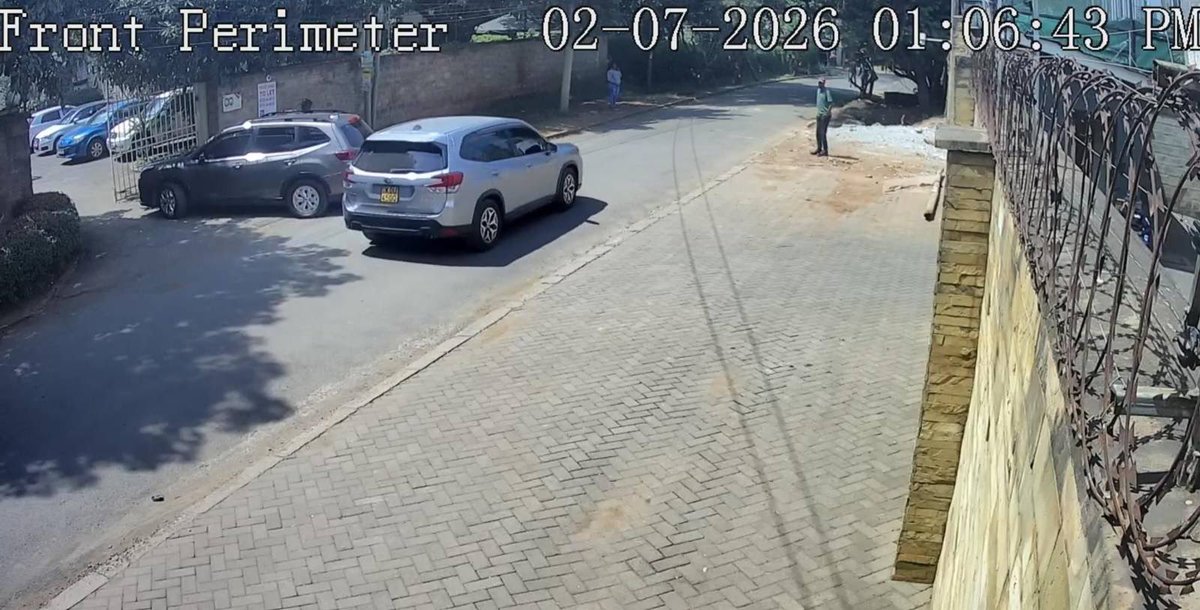
On 2 July 2026, TISA offices were subjected to what appeared to be a coordinated surveillance operation involving three heavily tinted Subarus and multiple unidentified men.
1.(Dark Grey Subaru): Carried five heavily built men. They attempted to gain access to the compound claiming they were there to see a lawyer, but couldn't name a contact person.
2.(Light Grey Subaru): Carried four men dressed in black, acting as immediate backup.
3.(Green Subaru): Acted as a third perimeter vehicle driving past slowly minutes later.
When challenged by security, they could not explain who they had come to see, rolled up their windows to conceal their identities, and drove away.
If the intention was to intimidate us, you failed.
If the intention was to remain covert, you failed even more.
We will not retreat, blink, or compromise. No amount of surveillance or intimidation will deter us from defending the public interest, tracking public resources, and demanding accountability.
To those behind these theatrics: Kwani si hufanya? Si hufanya nini kwani?
And we will continue to declare, loudly and consistently: Kenyans must gain budget literacy. An informed citizen is the strongest safeguard against corruption, impunity, and economic injustice!
⚠️Hands Off Our Churches. Hands Off Our Democracy!
We strongly condemns the attack on St. Stephen's ACK Cathedral, Kisumu. Places of worship must remain safe sanctuaries for prayer, reflection, and the pursuit of truth not targets of intimidation or violence.
For TISA, St. Stephen's Cathedral holds a special place in our work. In 2024, the Cathedral graciously hosted our Citizen Assemblies, providing a space where citizens came together to engage in meaningful dialogue on governance, public finance, and accountability. The Anglican Church of Kenya has continued to be a steadfast partner in advancing civic participation, justice, and the public good.
We cannot allow goonism to silence the voice of accountability in our country. Attempts to intimidate churches and other institutions that courageously speak on matters of justice and governance undermine our constitutional freedoms and democratic values.
We will not relent in our collective pursuit of justice, accountability, and a Kenya where every citizen can participate freely without fear of intimidation or violence.
Video credit @ntvkenya
We are officially 20,000 strong. Active citizens & fellow taxpayers, Asanteni sana.Follow us across our platforms for more updates:
LinkedIn: https://t.co/by0HAeysD4
Instagram: https://t.co/tvtUq2rc2E
Facebook: https://t.co/jC8myHKTee
TikTok: https://t.co/My5wsBWpI4
#TISA #SocialAccountability #ActiveCitizens #20KStrong
🚨 Where Are They?
Six people arrested during the June 25 demonstrations remain unaccounted for more than 24 hours later. They have reportedly not been presented before a court, and their whereabouts remain unknown.
Every arrested person has the constitutional right to be informed of the reasons for their arrest, access legal representation, and be presented before a court within the time provided by law.
We stand in solidarity with their families and all those demanding answers. We call for their immediate disclosure, due process, and respect for constitutional rights.
#FreeOurComrades #RuleOfLaw #Justice
🧵 Thread alert: Snap shot of a high-stakes advocacy meeting with National Assembly representatives and Women MPs.
We are staring directly at a hard truth: hunger isn’t accidental in Kenya. It’s shaped by choices in budgets, in priorities, and in who gets to sit at the table when decisions are made.
Women are at the center of food systems as producers, workers, and caregivers, yet they are still shut out of land ownership, affordable credit, and meaningful influence over the policies that affect their survival.
So what do we actually want to see?
We want commitments that are championed by representatives who get it: budget lines that can be tracked, land and finance reforms that women can actually access, and accountability systems that name, follow, and fix failures not just report them.
#Ronaldo
#AccesstoInformation.@HakiKNCHR
Where can the public access the Reparations Framework Report?
Victims, survivors, their families, and the Kenyan public should not have to rely on summaries and speeches to understand a process of this magnitude. The report should be published in full to enable public scrutiny, informed engagement, and meaningful participation.
Its findings and recommendations are particularly important as Kenya continues to grapple with the need for a clear legal framework on reparations that centres victims' rights, accountability, recognition, and justice.