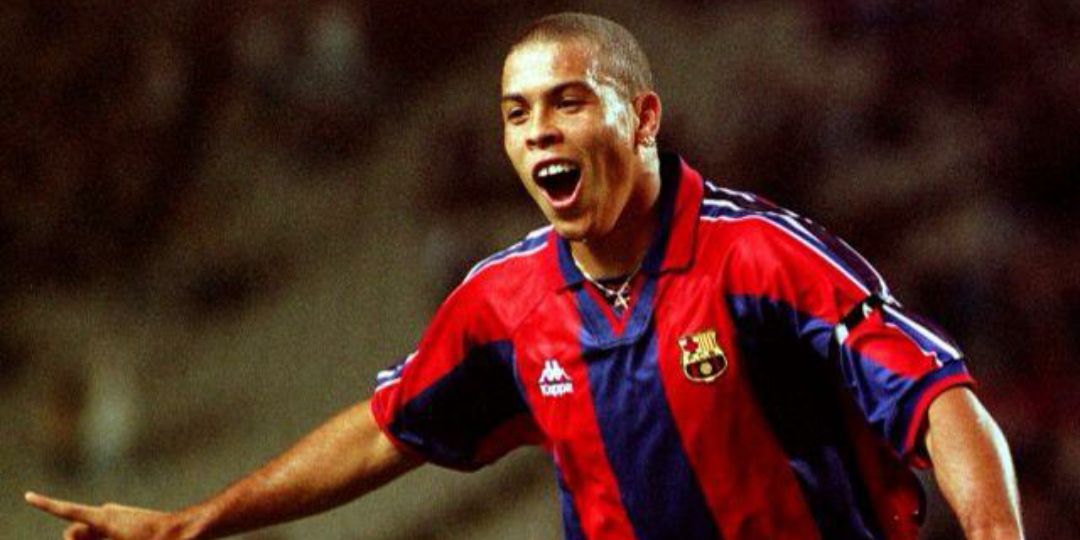
After four years full of challenges and hard work, it's time to move on.
I leave with the feeling that the mission is complete. 4 seasons, 3 championships.
I will never forget the love I received from the fans from my very first days.
Catalonia is my place on earth.
Thank you to everyone I met along the way during these beautiful four years.
A special thank you to President Laporta for giving me the chance to live the most incredible chapter of my career.
Barça is back where it belongs.
Visca el Barça. Visca Catalunya 💙❤️
@fcbarcelona
Jordan Peterson’s role in changing the public conversation about religion is undeniable.
The point he made here (2018) was arguably his most important.
What sits atop the hierarchy of your values is your “God.”
In this way, everyone is religious.
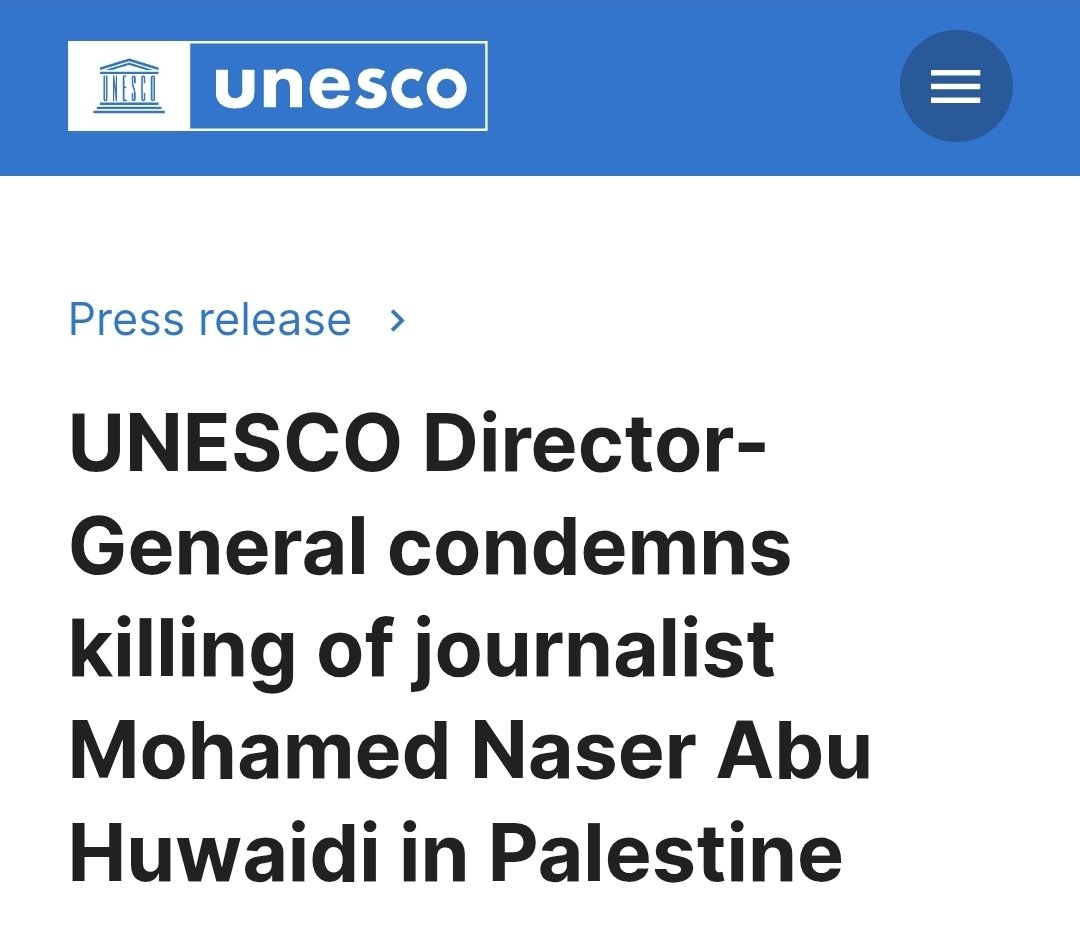
On January 12th 2024, UNESCO condemned Israel for killing a "journalist" in Gaza named Muhammad Abu Haweidi.
It was also reported by WaPo and @pressfreedom.
Today, Palestinian Islamic Jihad announced that he was one of their commanders.
Odds on a retraction or apology?
Zero.
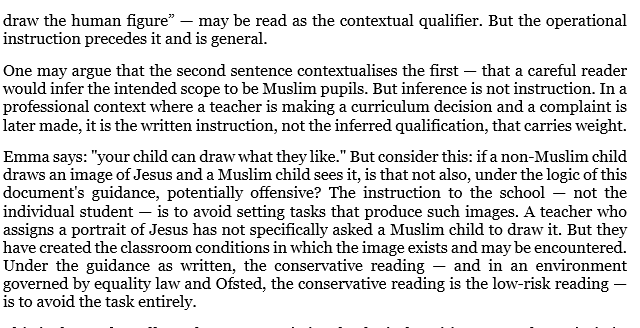
@Jason2bartlett Hi Jason, I’m glad you’re settled and assimilating. But I’d love to understand - what does white mean in this context? Are white people the only people that have assimilated? And fed into that culture that has sprung forth? Isn’t the culture, rather, foundationally Christian?
@lilgiusbox@Jumpon260711@sidlowe You’re really not engaging with the substance of anything. That’s your business, sir. Is Trump an angel? No.
Did Trump threaten the lives of the Iranians or simply make a statement on the basis of what’s happened in the last week? Yes. If you don’t want to see it, remain blind.
@JuanG_Arango Yes, because they literally won’t be the safe. The IRGC threatened their lives. I respect your journalism, but you’re blinded by your Trump hate.
@Jumpon260711@lilgiusbox@sidlowe Yes - read the context. What happened with the Iranian women’s team in Australia? What did Trump say about that? What did the Iranian government say about players defecting? In that case, would it be true that their lives are at risk if they play the World Cup?
@lilgiusbox@Jumpon260711@sidlowe You’re not following. Iranian government said the players will not play. If the team defies the Iranian government, their lives are, by dint of such defiance, at risk.
The Trinity was invented by Constantine at the Council of Nicaea
So goes the accusation now the reply...
This argument was popularised by the classical Muslim commentator on the Quran, Ibn Kathir. He was poorly educated in terms of history, but his claims about the council and the role of St Constantine still echo in Muslim circles, because many read his commentary on the Quran and so trust him on Christian history. While he might have been a good commentator on the Quran, does it follow that he was an expert on Christian history? I am sure you can see one does not follow from the other.
So, let’s talk briefly about this topic, which has been studied exhaustively by countless Church historians, and whose books we recommend you read. The First Ecumenical Council of Nicaea (Iznik in modern colonised Turkey) was called in 325AD by Constantine the Great (at the time an unbaptised catechumen – people would delay baptism until the end of their life in this period of the Church). He called it to gain the consensus of all the Churches on a number of vexed questions. 1800 Bishops were invited with their retinues, with a maximum of 318 Bishops attending with their retinues. They came from the whole of Christendom, with the exception of Britain. Pope Sylvester of Rome was among the invited but did not attend, instead sending legates on his behalf. The popular presbyter, Arius, argued that Christ was created out of nothing, then through him GOD the Father created all else. This was immediately sanctioned as heresy by his Bishop, Alexander, and out of 318 attending Bishops, only two supported Arius’s position. The others all, sided with Alexander - on the issue of the unity of essence between the Father and the Son.
This first ecumenical council of Nicaea produced a total of 20 canons covering a wide range of topics, as well a proclamation of belief and anathemas on a wide range of issues including:
•Settling the calculation of the date of Easter (its attempt to settle the matter failed)
•The Meletian schism
•The validity of baptism by heretics
•The Proper consecration of bishops
•Prohibition of clerics lending money at interest
•Prohibition of bishops, priests and deacons to move from Church to Church.
•The elevation of Jerusalem and Alexandria over other bishoprics in their regions.
•Promulgation of canon law.
•The status of lapsed Christians in the persecution under Licinius (which had ended after Constantine’s campaigns against him and the Edict of Milan in AD313)
•The nature (created or of one with the Father) of the Son – which is the topic we are discussing here.
The Council laid out parameters of language like a train track, or fences of acceptable discourse, to keep the church from error. Within these boundaries there is room for movement, so long as we do not burst outside of them. The aim was to shut down speculation and discourse about the Son that could lead to wrongful worship of GOD based on a wrong understanding.
Arguments followed three lines of logic:
•Tradition: what happens, and has always happened in my diocese, with particular reference to baptismal examinations and confessions of the catechumenate, and what was taught in catechisms. Appeals to creeds like Old Roman Creed (2nd century).
•Scripture: relevant passages from Scripture – see other topics.(The canon of Scripture was not decided at this point; but Christians were pretty much using the same collection of books).
•Philosophy: what logically followed from each preposition. If the Father was eternal as Father, then of whom was He the Father?
The council produced a creed, which is quoted below. This creed should be thought of like a map to a piece of land; the two are not the same and you can always have a better one. The question is, does the map accurately describe the topography? The creed describes the beliefs of Christians, it is not ‘making’ the beliefs of Christians anymore than a map of a garden makes a landscape. However, it is correcting the ‘map’ offered by Arius which was misguiding people. I’ve added my own commentary in bold type for your edification:
The creed proclaimed and Anathemas:
‘We believe in one God, the Father Almighty, Maker of all things visible and invisible
Do you think this is all the Church could say about its beliefs about the Father? Of course not, but the beliefs about the Father were never in dispute, and so the assertions are of a bare minimum nature, due to the fact everyone agreed.
and in one Lord Jesus Christ, the Son of God, the only-begotten of the Father, that is of the substance of the Father
notice the creed said the same thing here in two different ways – showing what was being disputed
God of God and Light of light; true God of true God; begotten, not made, consubstantial
Homoousias is the word used in the original Greek it means of ‘the exact same thing’; notice again the repetitive refrain hammering home the point that the creed was supposed to communicate to people as a way of guarding them from speaking/thinking in other ways
with the Father: by whom all things were made, both which are in heaven and on earth: who for the sake of us men, and on account of our salvation, descended, became incarnate, and was made man; suffered, arose again the third day, and ascended into the heavens, and will come again to judge the living and the dead. [We] also [believe] in the Holy Spirit.
Notice how utterly scant the original creed was on the Holy Spirit, yet they felt compelled to include Him while discussing GOD! Clearly the Holy Spirit was believed by all parties and was not in dispute. Here the creed proper ends and a list of anathemas follow. So this means the creed was trinitarian in nature expanding only on the disputed issue
But the Holy Catholic and Apostolic Church
Note the assumption behind the creed about the authority of the Church
anathematizes those who say “There was a time when he was not,” and “He was not before he was begotten” and “He was made from that which did not exist,” and those who assert that he is of other substance or essence than the Father, or that he was created, or is susceptible of change.
Note the hammering down on ideas on the teaching of Arius; and the shutting down of tracks of thought that had been identified as leading into error.
Due to the Council of Nicaea and the work of Athanasius and the Cappadocian Fathers, between 325 and 391 the Arian heresy died out; in the east – but was carried into the west by the Visigoths. It was revived in modern times by Jehovah’s Witnesses in America.
We want to be clear about what the Council did not do, noting that these are not controvertible points historically speaking, despite what you might find through a lazy Google search:
•It did not invent the Trinity or even discuss the doctrine, but one aspect of the doctrine[HA9.1]. The question, “should we believe in the Trinity?” was never discussed.
•It did not create the canon of scripture – though commemorative Bibles were produced and presented by Constantine as a gift to the Church.
•It did not dispute that there was a Father or a Son.
•It did not dispute that the father and the Son shared a unity – though it did discuss how they are united.
•It did not dispute whether Christ is fully human or whether the Spirit is divine. The idea that the Spirit is not a divine person had already been rejected - along with Modalism.
The idea that the Council created a doctrinal consensus that had not previously existed, is a modern fiction - one popularised in the last 100 years by German academics, who have been utterly refuted. The historians of the time never saw it that way.
The question discussed supposes two competing views about the relationship between the father and Son, which itself concedes that the Orthodox view existed before the Council. The Council was called to end a fractious debate within the Church of Alexandria (note the specific geography to the debate – it was not a dispute in Britain). Bishop Alexander had his earlier corrections of Arius, which were issued before the Council, popularised by the Council.
So what did St Constantine, the first Christian Emperor of Rome, actually do in connection to the Council:
•He called the first ecumenical council – (before this there had only been local synods). Every Bishop in the Roman world was invited - this had never been attempted before because no- one but an emperor had the means to make it happen. It was at the behest of a Bishop of the Church Hosius of Cordoba, who himself had hosted a local synod looking into the troubles in the region of Alexandria before Nicaea.
•He organised it along the lines of a Roman senate.
•He enforced its decisions with his secular authority - this had not been done before – however, again, it was the Church that encouraged him to do this.
•He observed the Council and sat in on its meetings.
•He funded the Council and gave it his patronage and support to the bishops travelling to it.
•Any political motives he is said to have, are the popularised speculations of German scholarship and are disputed: it was the Church that invited Constantine to get involved, both with the Donatist schism and this one.
A summary of some key and other points:
A consensus was reached in less than a month and Arius’s views were deemed heretical. The conclusions were written into a creed with relevant anathemas being given. Arius was exiled by the Emperor. The arguments hung around two philosophical terms: homoousias (of the same substance) and homiousias (of a similar substance). On June 19th the Nicene Creed was signed by all but two Bishops (notice these Bishops also could not be bullied). Debate raged more upon the best words to use to capture the conclusion of the Council than upon the nature of Christ. The Church saw these issues as important, and they impressed upon Constantine the importance of dealing with these issues, and to use his imperial authority to make it work. Constantine is recorded to have kissed one of the blind Bishops - as all Bishops at the Council were ‘confessors’. Christians who had suffered at the hands of the Emperors before and contemporaneous to Constantine. The bishops at Nicaea had all been criminalised for the faith during the time of persecutions, which was ended by St Constantine. This is evidence, therefore, that they were not the compromising types, and shows that it is silly to say that ‘new beliefs were invented at the Council’. They were not people who would simply go along with whatever the Emperor had said (as Ibn Kathir believes) – they had defied other Emperors. It was the Church, that encouraged the state to impose its will, not the other way around. The Church wanted to affirm the unity of GOD, whereas Arius divided GOD and broke away the son from the divinity of the Father, therefore he lost the debate. This showed the backdrop of orthodox of belief as Bishop Alexander won the debate against Arius. Bishop Nicholas punched an Arian bishop as he was so enraged by their beliefs - he was nearly removed from his office for doing this.
In summary, the council of Nicaea did not invent the Trinity. The Trinity was what was defended at the council of Nicaea against an erroneous teaching that contradicted it. The council was funded by St Constantine, but he did not and could not play any significant role is setting out the doctrine, which is what the bishops brought with them. These Bishops had been persecuted by emperors for their beliefs, immediately prior to the council, so they were not the kind of people to be bullied into adopting something they did not believe in already.