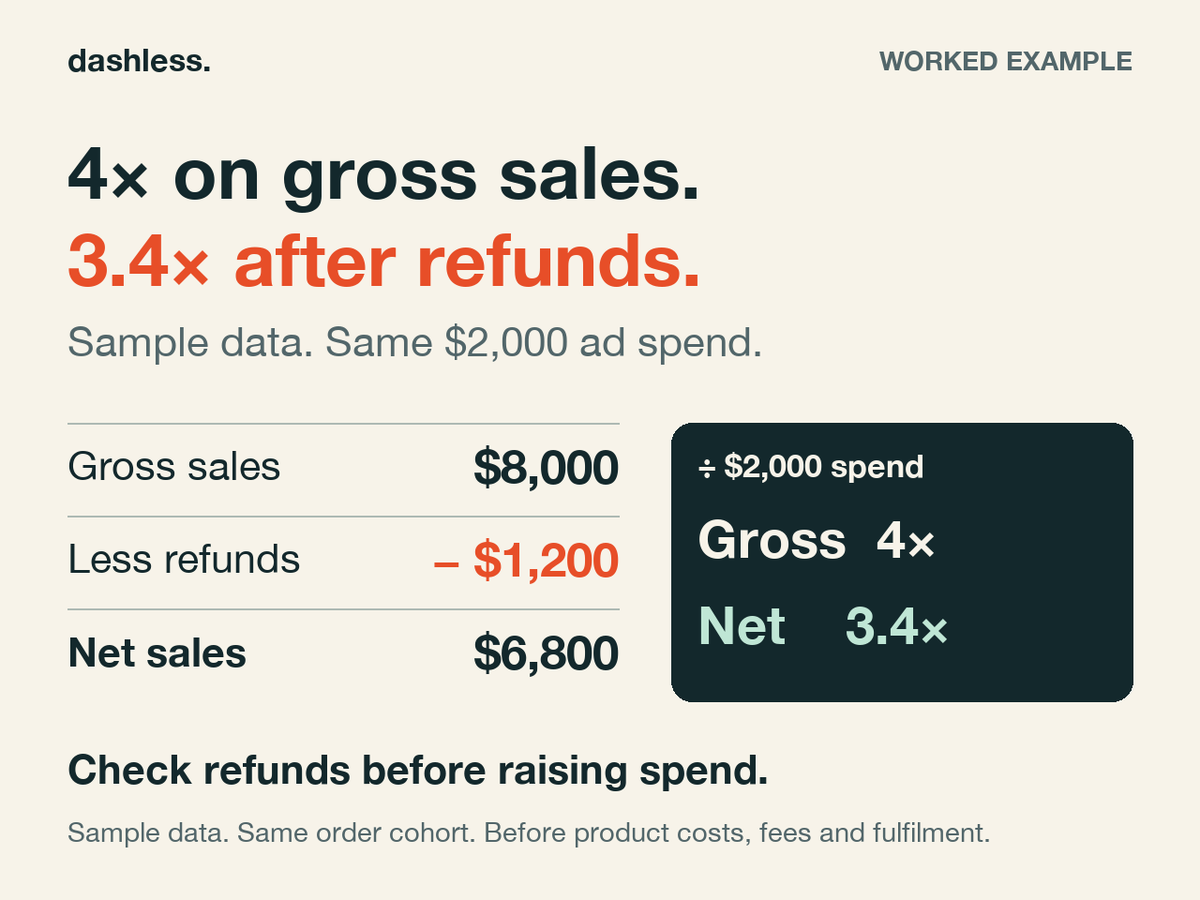
Sample: $2,000 spend, $8,000 gross sales = 4×. Refund $1,200 from those orders and it becomes 3.4× on net sales.
I’d reconcile the same orders before increasing spend. That still leaves product costs and fulfilment to check.
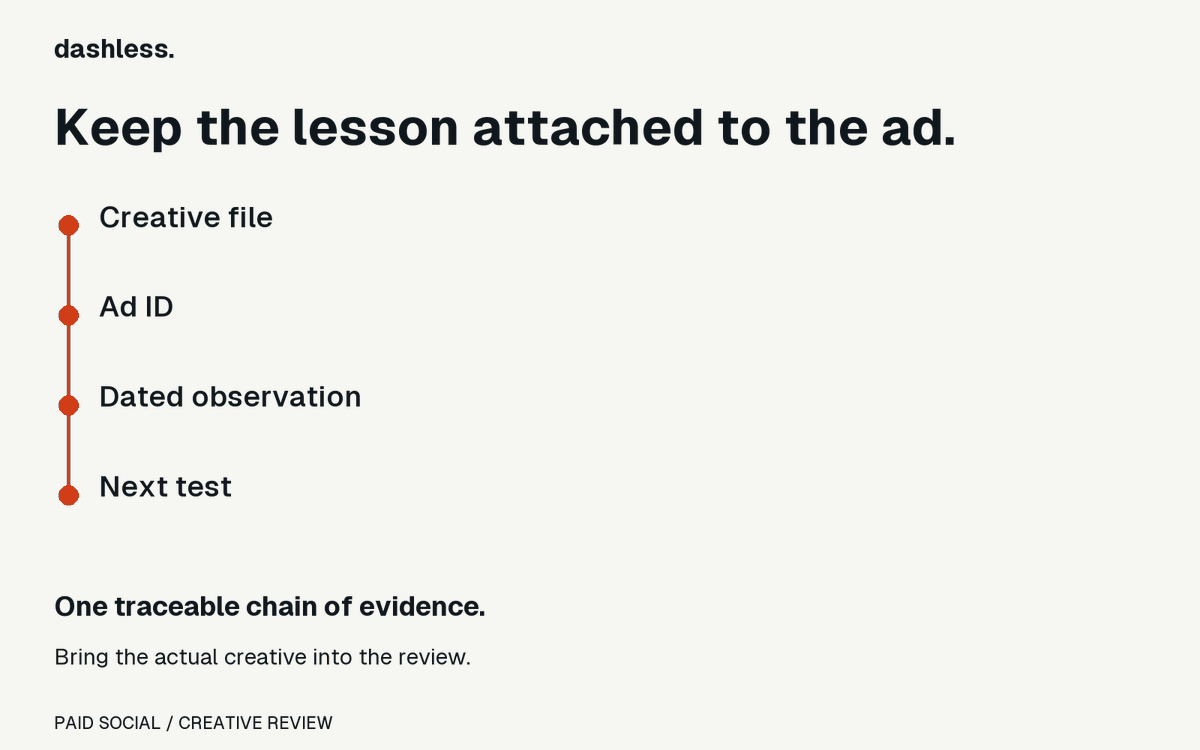
The creative file, ad ID and lesson should travel together.
Otherwise the next buyer inherits the account and has to reconstruct why anything was made.
A dated observation and a proposed next test turn an asset folder into useful team memory.
If a weekly report changes no decision, what job is it doing?
I'd finish with the observation, the next action, who owns it and when we'll review it.
What's one decision your last account review actually changed?
One ad shows 4x ROAS on $50 spend. Another shows 3x on $500.
Neither ratio tells me what the next $100 will do.
What evidence would you want before choosing which ad gets more budget?
Hypothetical example.
A report that ends at "conversion rate is down" leaves the next person to solve the whole problem again.
Add the page, dated evidence, person responsible and next check.
My standard for an agency handoff: someone can act on it without another meeting.
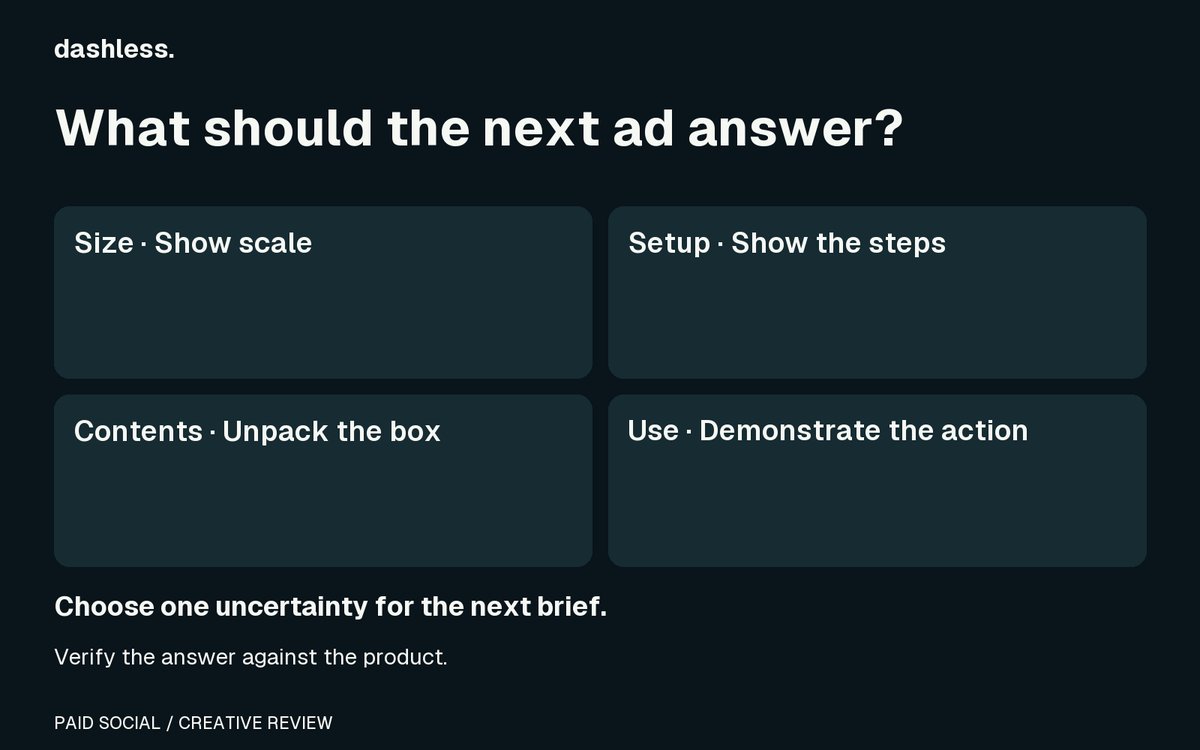
I'd build the next ad around one unresolved buyer question.
Will it fit? Show scale.
Is setup difficult? Show the steps.
What arrives? Open the box.
Which question gets missed most often in briefs for your category?
Two purchases are enough to check the arithmetic. They're thin evidence for declaring a winner.
Here, one ad spent $40 and the other $400. That's $20 versus $200 per order.
I'd keep the cost, sample size and time window together before deciding what happens next.
Before blaming Meta for a sudden change, I'd open the store's change log.
Price edits, expired offers and missing sizes deserve a look alongside delivery data.
What's the most easily overlooked store change in your weekly ad review?
"Make the video better" gives a creator almost nothing to work with.
"Show whether the bottle fits inside the bag, then show its dimensions" gives them a shot to film.
A useful brief connects a buyer's doubt to something the camera can prove.
Clicks doubled. Orders didn't.
I'd want the traffic mix and any offer or page changes before calling that a creative win.
What would you pull up first to investigate?
Hypothetical example: 1,000 to 2,000 clicks, with 20 orders in both periods.
Before commissioning ten more hooks, follow your current ad through checkout on a phone.
If the ad promises a bundle, the page shows a single item and the cart needs a mystery code, fix that journey.
A better opening can't explain an offer that disappears.
"final_final_v7" is a terrible memory system for an ad account.
Put the product, angle, format and version in the name. Keep the ad ID beside the source file.
Then leave one sentence explaining what changed. Your next creative review starts there.
A 3x ad and a 1x ad don't automatically make a 2x account.
In this example, the 3x ad gets 90% of the spend. Combined ROAS is 2.8x.
I'd rather see spend and revenue totals than an average of the ratios. The weighting is part of the story.
You get 1,000 product visits, 100 add-to-carts, 40 checkouts and 20 orders.
You have one hour to investigate.
Where do you start, and what would you check before blaming the ad?
Hypothetical store. The funnel alone doesn't tell us the cause.
Before calling last week's ads better, check what the comparison includes.
A sale weekend against three ordinary weekdays tells a different story from two complete, comparable weeks.
Dates, promotions and attribution settings belong in the same conversation.
Changing the hook, offer AND landing page can be a sensible commercial move.
It also makes the result harder to explain.
Before calling something a creative test, write down the question you expect it to answer. A win you can't interpret is harder to repeat.
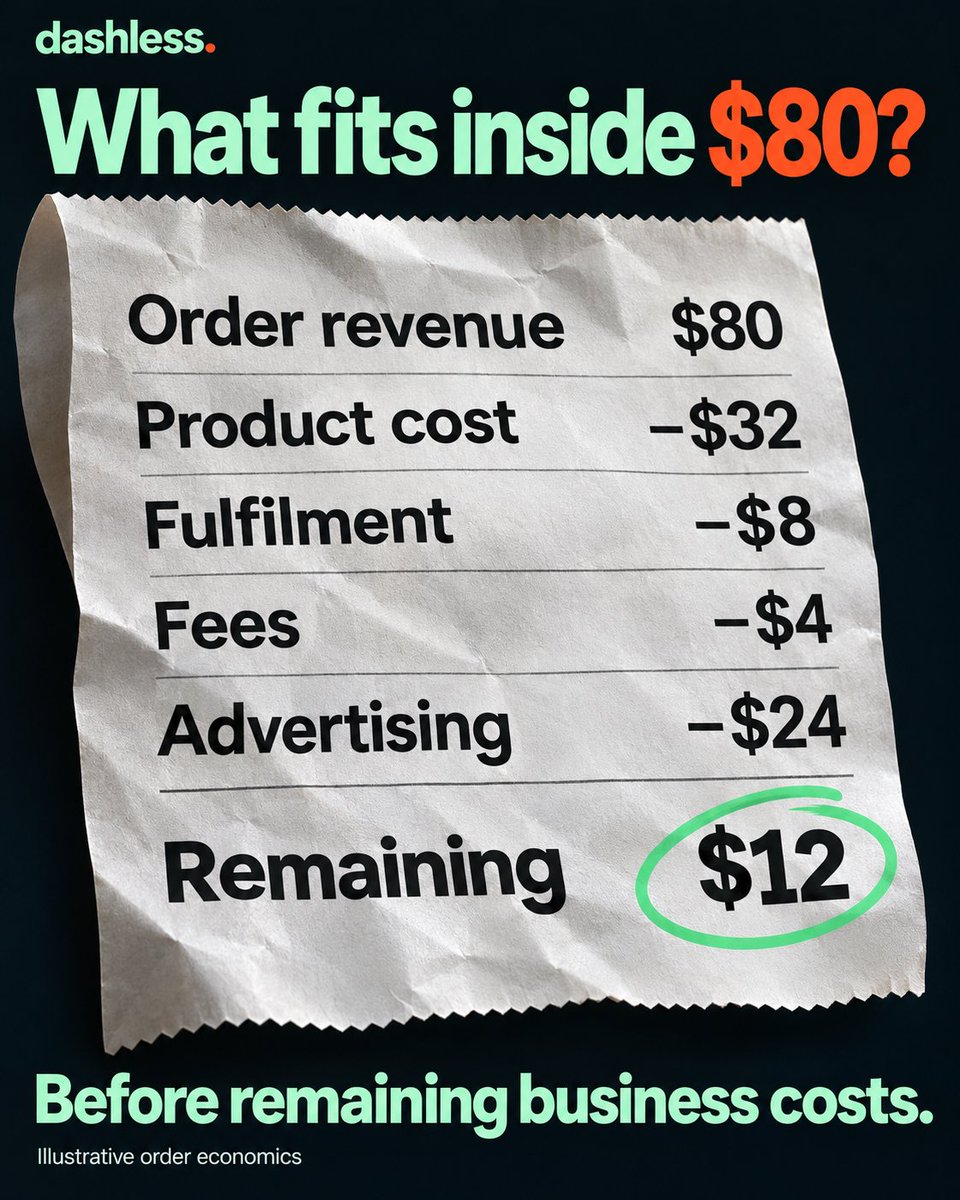
An $80 order can leave $12 before the rest of the business gets paid.
That's why I'd bring contribution margin into a ROAS review before increasing spend.
Which cost is most often missing from the acquisition conversation on your team?
Example in the graphic.
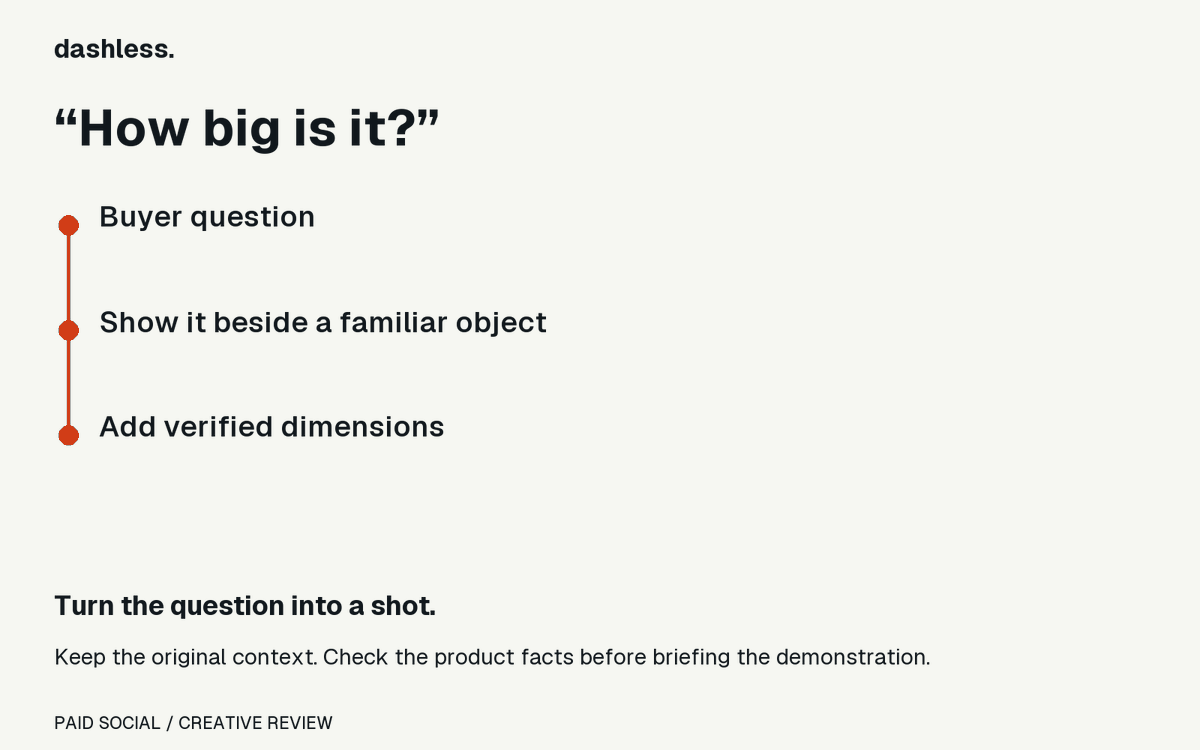
"How big is it?" is already a creative brief.
Show the product beside something familiar. Put the verified dimensions on screen.
What's one question your customers keep asking that your ads still don't answer?
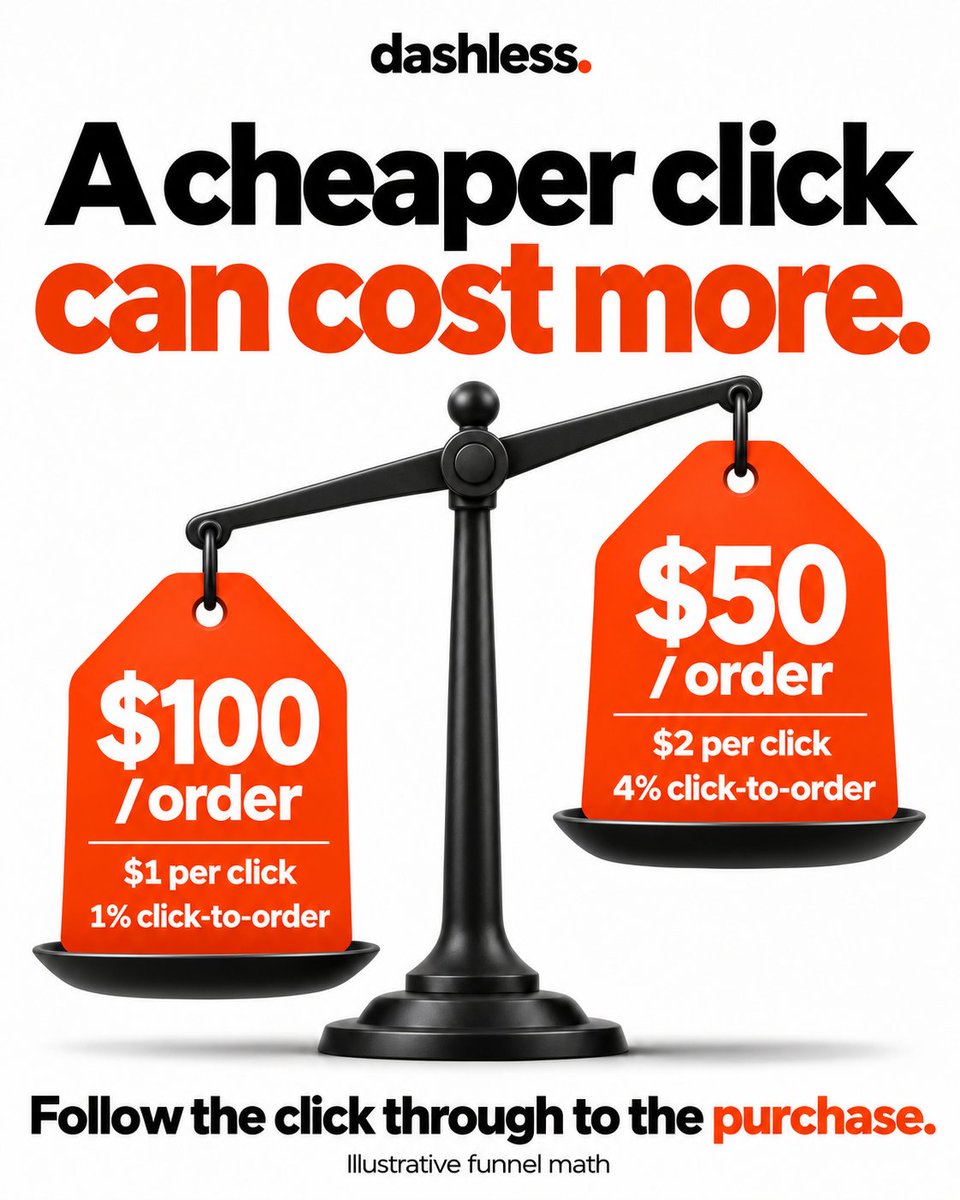
I'd take the $2 click in this example.
It buys a $50 order. The $1 click buys a $100 order.
A cheaper visit is only useful if the economics survive the rest of the buying journey. CPC alone is a poor reason to kill an ad.
For a cold audience, I'd test the product doing its job before a logo reveal.
The question: can someone explain the product after the opening shot?
Which opening would you test first: the name, the problem, or the product in use?
Illustrative demo.