Founder & Developer of Crypto Hub | Building CAPIT AI Security, CHUBE access tools and SCRT rewards on Solana | Web3 security, automation & community tech
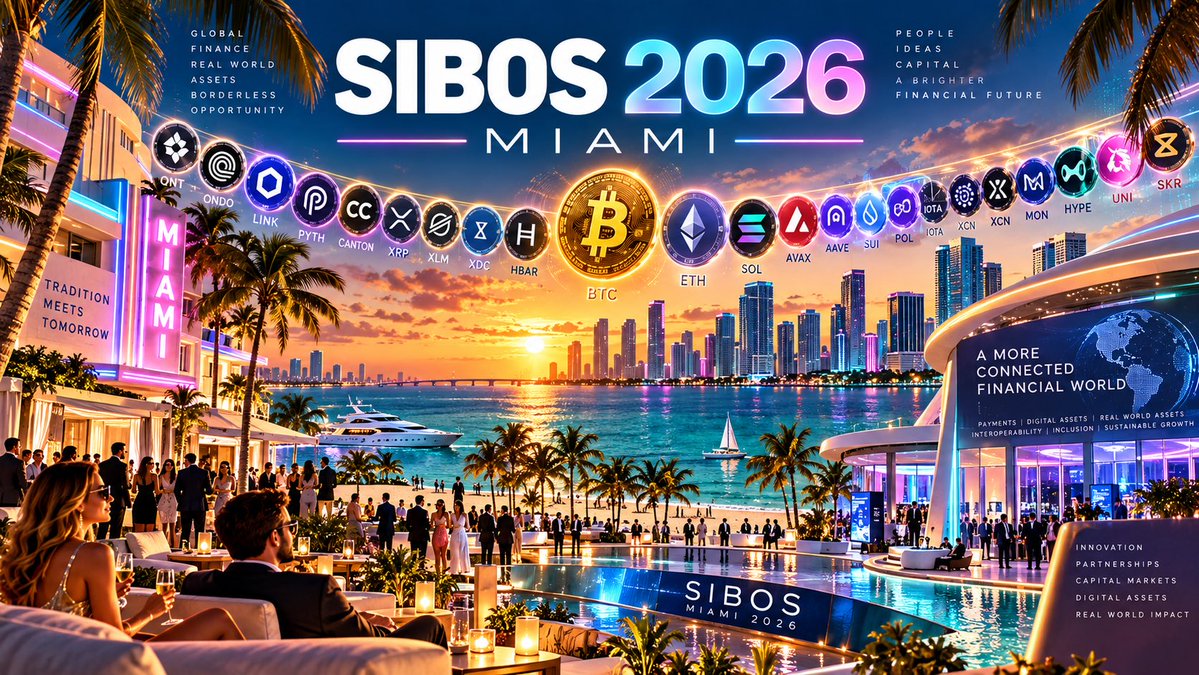
🚨 SIBOS 2026 IS OVER. NOW I’M WATCHING H1 2027.
This is where I stop looking at SIBOS itself as the catalyst.
The conference ended today.
Now I want to see IMPLEMENTATION.
Because the language wasn’t just:
“Blockchain could do this.”
It was:
Interoperability.
Tokenization.
Liquidity.
Always On.
Trust.
Implementation.
And H1 2027 already has things I’m watching closely. 👀
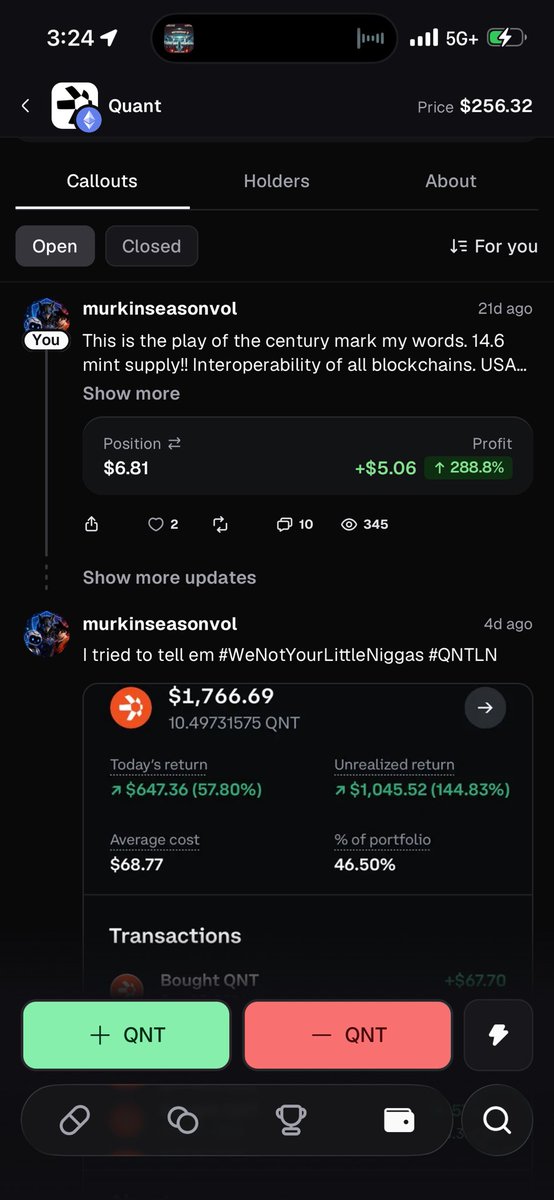
$QNT — The Clearing House says its On-Chain Money Initiative is expected to become available to participating financial institutions in H1 2027.
Tokenized bank deposits.
Treasury management.
Liquidity.
Cross-border payments.
Digital asset settlement.
$XLM — DTCC expects DTC-tokenized assets to become available on Stellar during H1 2027.
Now we’re talking about traditional securities moving into public blockchain infrastructure.
$CC — Canton isn’t waiting on the first experiment anymore.
DTCC tokenization, Treasuries, collateral and repo infrastructure are already moving toward production.
$LINK — SWIFT already has banks preparing live tokenized-deposit activity.
Now I’m watching whether Chainlink’s CRE/CCIP infrastructure becomes part of those recurring institutional workflows.
$ONDO — tokenized stocks, ETFs and securities are moving deeper into regulated custody, settlement, collateral and global distribution.
And Ondo already has its 2027 Summit scheduled for February.
Then we get to:
$ETH
$SOL
$HBAR
$AVAX
$SUI
$MON
and the other execution layers
Because once the assets are tokenized, somebody has to answer:
Where do they live?
Where do they settle?
Where does the liquidity go?
Where does the actual transaction execute?
That’s why I believe H1 2027 may be a SHOW-ME period.
2025–2026 gave us:
Pilots
→ Proofs of concept
→ Partnerships
→ Standards
→ Infrastructure
Now I want:
Production
→ Banks
→ Tokenized deposits
→ Securities
→ Collateral
→ Settlement
→ Liquidity
→ RECURRING USAGE
That is the difference.
SIBOS also made something else clearer to me:
This may not be TradFi vs DeFi.
It may be:
Traditional Finance + Digital Infrastructure.
The old system doesn’t have to disappear overnight.
It can connect to the new one.
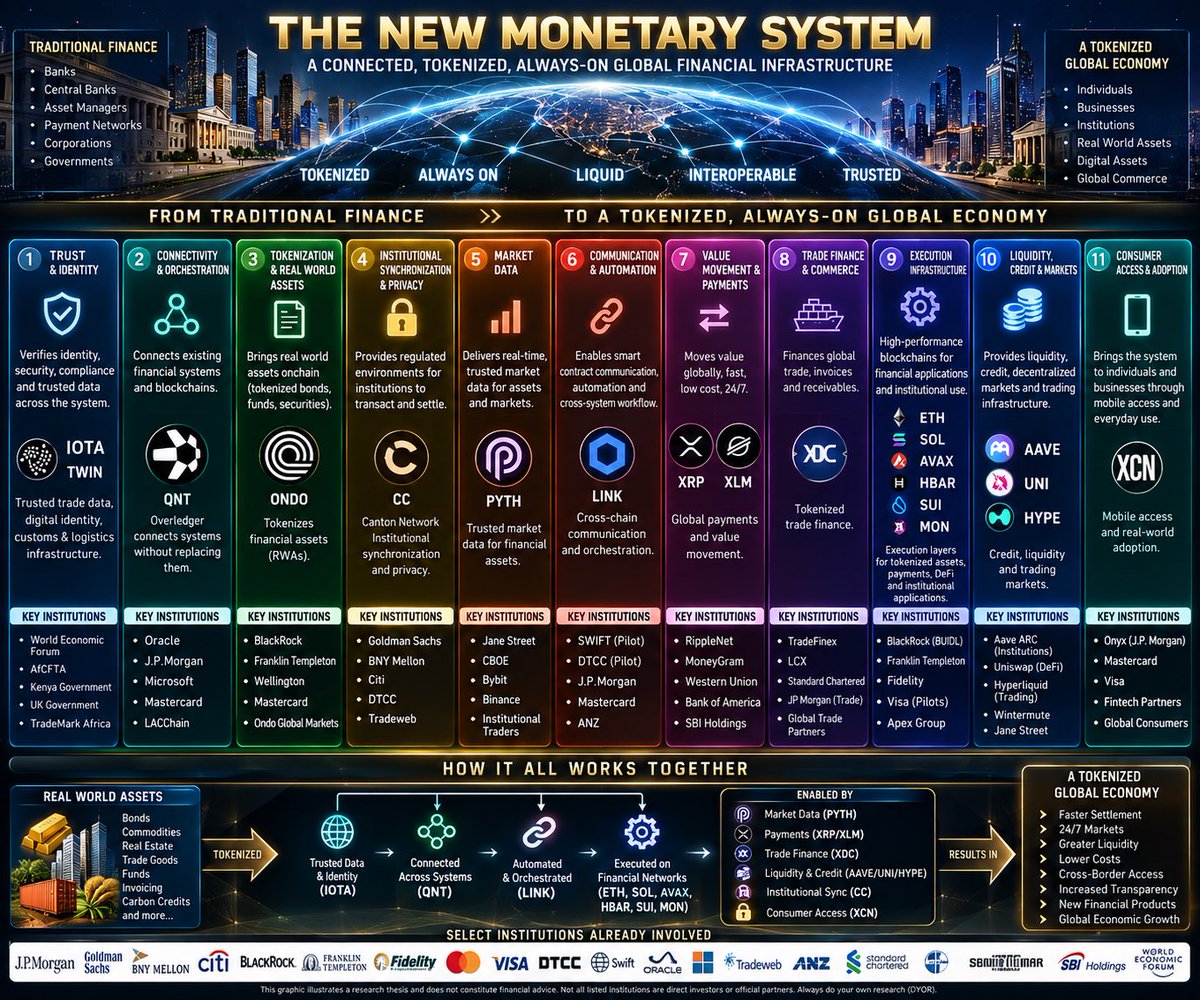
And that is exactly what my New Monetary System thesis has been about.
But now comes the most important question for every project:
DOES THE USAGE ACTUALLY REACH THE TOKEN?
That’s what separates a good story from an actual investment thesis.
I’m not looking for another announcement now.
I’m looking for production.
SIBOS 2026 gave us the blueprint.
H1 2027 may show us who actually gets used. 👀🔥
Now the real research begins.
DYOR.
🚨 $XDC IS STARTING TO MAKE MORE SENSE TO ME.
The deeper I study this New Monetary System, the more I see XDC filling a different lane than XRP or XLM.
This looks like trade finance infrastructure.
Not just moving money.
Moving the actual commerce behind the money:
Invoices
Receivables
Letters of credit
Trade documents
Working capital
Supply-chain finance
Cross-border settlement
Now look at the trust network around it:
SBI
TradeFinex
R3
Deutsche Telekom
UOB
HashKey Cloud
Republic
Circle / USDC
That matters to me.
Because global trade is full of risk.
Banks and companies have to know:
Is the invoice real?
Did the goods ship?
Who owns the receivable?
Has it already been financed?
Who is responsible for payment?
Can the transaction settle securely across different systems?
That is why TRUST matters so much here.
And XDC also lines up with the same themes we keep hearing across finance:
Tokenization
Interoperability
Liquidity
Always on
Trust
Now the token side matters too.
$XDC is used for network gas.
Validators have to lock XDC.
Transaction activity can burn XDC through fees.
So there is a documented connection between network activity and the token itself.
That makes the thesis easier for me to understand:
$QNT = connects the systems
$ONDO = puts investment assets onchain
$CC = institutional synchronization + settlement
$PYTH = trusted market data
$LINK = communication + orchestration
$XRP = liquidity + settlement
$XLM = global financial rails
$XDC = tokenized global trade finance
The world does not only need a way to move money.
It needs a way to finance the goods, invoices, documents and businesses that create those payments in the first place.
That is why $XDC has a place in my New Monetary System thesis. 👀🔥
DYOR.
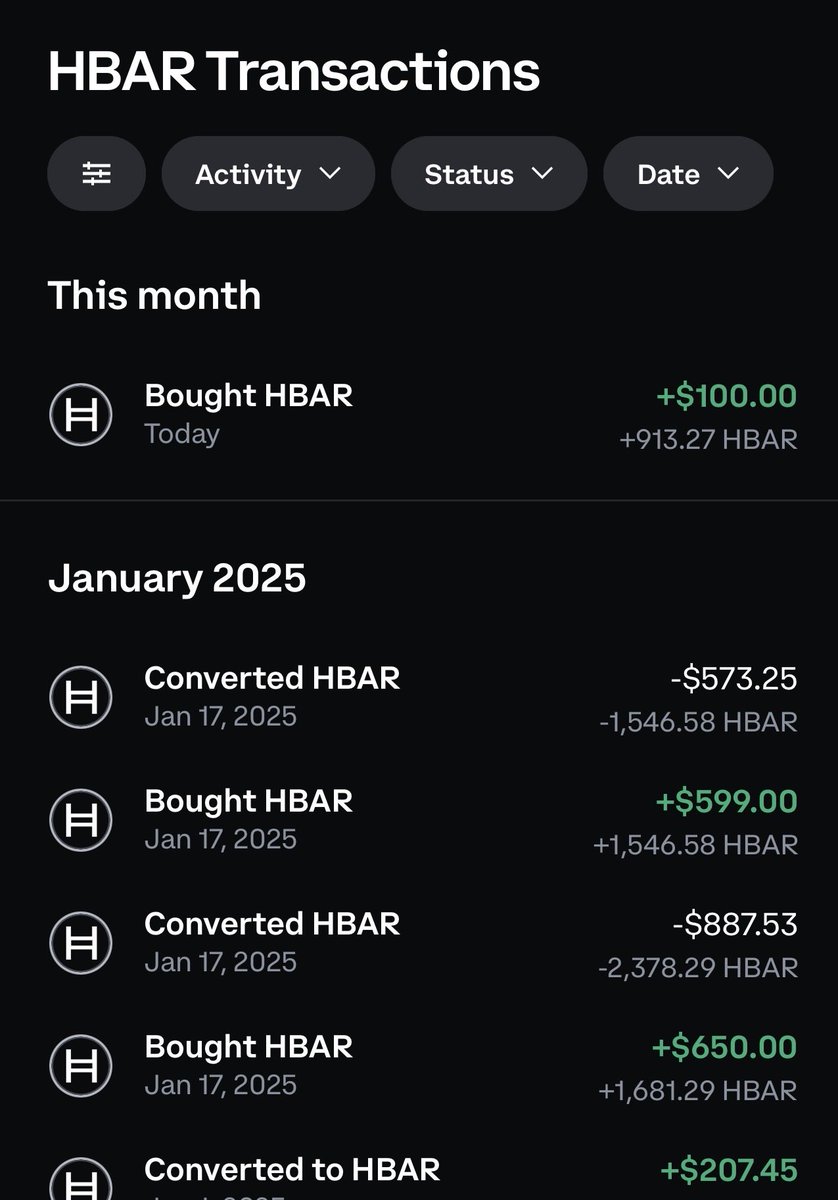
🚨 I JUST GRABBED A $100 STARTER BAG OF $HBAR.
The deeper I study this New Monetary System, the more Hedera makes sense to me.
What caught my attention isn’t just the tech.
It’s the TRUST structure.
Look at the names that have been involved around Hedera:
Google
IBM
Shinhan Bank
Standard Bank
Nomura
Deutsche Telekom
Dell
Chainlink Labs
and more
These aren’t just random logos.
Some of these institutions have participated in governance, infrastructure, nodes, stablecoin pilots, tokenization and real financial use cases.
And HBAR fits the same themes we keep hearing:
Interoperability
Always On
Liquidity
Tokenization
TRUST
The role I see for Hedera:
Trusted enterprise execution + tokenization + programmable financial infrastructure.
And $HBAR itself has network utility through:
Transaction fees
Staking
Network security
That matters to me.
My New Monetary System stack keeps getting clearer:
$QNT = connects the systems
$ONDO = puts assets onchain
$CC = institutional synchronization + settlement
$PYTH = trusted market data
$LINK = communication + orchestration
$XRP = liquidity + settlement
$XLM = global financial rails
$XDC = global trade finance
$HBAR = trusted enterprise execution + tokenization
I FOMO’d a little 😂 but only grabbed a starter bag.
Now I watch the thesis.
DYOR. 👀🔥
🚨 THIS IS HOW I SEE THE NEW MONETARY SYSTEM NOW.
I came into crypto wanting to make money.
I ain’t understand the system, the risk, the technology or what was really changing behind the scenes.
The more I started studying it, the less I started looking at green candles and the more I started looking at who is building what, who trusts them and why institutions keep coming back.
Then SIBOS really made it click for me.
They kept talking about the same things over and over:
Interoperability. Always on. Liquidity. Tokenization. TRUST.
That’s when I started putting everything together.
I don’t believe one blockchain is going to run the whole financial system.
I believe it’s going to be a stack.
$BTC = digital reserve / trust layer
$QNT = connecting financial systems
$ONDO = bringing real-world assets onchain
$CC = institutional privacy + synchronization
$PYTH = trusted market data
$LINK = communication + orchestration
$XRP = liquidity + settlement
$XLM = global financial rails
$XDC = trade finance
$IOTA = trusted trade data + identity + customs
$ETH = foundational settlement
$SOL = high-speed execution
$AVAX = custom institutional blockchains
$HBAR = enterprise execution + tokenization
$SUI = programmable financial assets
$MON = high-performance execution
$POL = payment + settlement infrastructure
$AAVE = lending + credit
$UNI = liquidity + exchange
$HYPE = 24/7 markets + derivatives
$SKR = mobile access + device trust
$XCN = emerging banking/payment infrastructure
And the biggest thing I learned?
Good tech by itself ain’t enough.
Banks, governments and institutions are not moving billions and trillions of dollars, private documents, securities and collateral through somebody they don’t trust.
So now when I research a project I ask:
Who built it?
Where did they come from?
Which banks and institutions already know them?
Who invested in them?
Was it one pilot or did they come back again?
Did testing turn into production?
And most importantly…
Does all that adoption actually reach the token?
Because a company can win without the token winning.
That changed the way I research crypto.
I’m not just asking which coin can pump.
I’m asking what job does this project perform in the financial system being built?
We already digitized the way we SEE and SEND money.
PayPal. Cash App. Venmo. Apple Pay.
Now I believe we’re moving toward digitizing the actual assets and infrastructure underneath it.
Stocks.
Treasuries.
Funds.
Bank deposits.
Trade documents.
Collateral.
Payments.
Everything becoming programmable, connected and available 24/7.
The old financial system was built for a different generation.
The world we live in now never closes.
Our phones don’t close.
The internet doesn’t close.
Global business doesn’t close.
So why would the future financial system?
That’s my thesis.
The future may not be crypto replacing finance.
It may be the financial system itself becoming tokenized, interoperable, liquid, trusted and always on.
I’m just trying to understand where every piece fits before everybody else sees the whole picture.
That’s the New Monetary System. 👀🔥
DYOR.
🚨 SOMEONE ASKED ME TO LOOK INTO $IOTA… SO I DID.
The deeper I looked, the more I realized money is only one side of global finance.
The other side is trusted information about the real-world trade behind that money.
That is where I see IOTA.
Think about what global commerce needs:
Customs
Shipping documents
Digital identity
Supply-chain data
Trade verification
Cross-border coordination
Before a bank finances a shipment, it needs to trust the information behind it.
Who shipped it?
What was shipped?
Where is it?
Who owns it?
Did customs approve it?
Are the documents real?
That is why IOTA caught my attention.
Its work around TWIN, TradeMark Africa, Kenya, customs infrastructure, digital identity and cross-border trade puts it in a very different lane from most crypto projects.
I see the distinction like this:
$XDC = finances global trade
$IOTA = helps prove and coordinate the trusted data behind global trade
And $IOTA itself has direct network utility through:
Gas
Staking
Network security
Storage deposits
Fee burning
So my New Monetary System stack keeps getting clearer:
$QNT = connects financial systems
$ONDO = tokenizes financial assets
$PYTH = trusted market data
$LINK = communication + orchestration
$XRP / $XLM = value movement
$XDC = trade finance
$IOTA = trusted trade data + identity + customs/logistics infrastructure
Money cannot move confidently if nobody trusts the documents and information behind the transaction.
That is why $IOTA has a place in my thesis. 👀🔥
DYOR.
🚨 WHY I’M WATCHING $POL.
The deeper I study this New Monetary System, the more I see Polygon becoming something bigger than just an Ethereum scaling chain.
I see it moving toward:
Payments
Settlement
Tokenized assets
Cross-border money movement
Always-on financial infrastructure
And look at the names showing up around that ecosystem:
Mastercard
PayPal
Revolut
Stripe
Meta
Bank of England testing
That matters to me.
Because if the future of finance becomes:
Tokenized
Always on
Liquid
Interoperable
Trusted
then the payment layer has to move just as fast as the assets do.
That is where I see $POL.
My New Monetary System stack keeps getting clearer:
$QNT = connects systems
$ONDO = tokenizes assets
$PYTH = trusted market data
$LINK = communication + orchestration
$CC = institutional synchronization
$XRP / $XLM = value movement
$XDC = trade finance
$AAVE = credit
$UNI = liquidity
$HYPE = trading markets
$ETH / $SOL / $AVAX / $HBAR / $MON / $SUI = execution infrastructure
$POL = always-on payment settlement + aggregated blockchain infrastructure
And $POL itself has direct utility through:
Gas
Staking
Network security
So the question I’m watching is simple:
Can Polygon turn massive payment and stablecoin usage into durable network demand for $POL?
Because the future may not feel like “using crypto.”
It may just feel like money moving instantly, globally, and 24/7 in the background.
That is why $POL stays on my radar. 👀🔥
DYOR.
🚨 WHY I’M WATCHING $SUI.
The deeper I study this New Monetary System, the more I see Sui filling a very specific role:
Programmable financial assets + high-speed execution.
What caught my attention is the team.
A lot of Sui’s core builders came from Meta’s Diem/Novi project, where they were already thinking about digital money, security, payments and financial-scale infrastructure.
Then you add people with backgrounds tied to R3 and Goldman Sachs.
That matters to me.
Because if finance becomes:
Tokenized
Always on
Liquid
Interoperable
Trusted
then institutions need more than a fast blockchain.
They need assets that can carry their own rules:
Who can hold them
Who can transfer them
How they settle
How they behave
How compliance works
That is where Sui starts to make sense.
We’re already seeing pieces of that direction with:
Figure / YLDS
tZERO
Tokenized securities
DeepBook liquidity
Institutional standards work
And $SUI itself has direct utility through:
Gas
Staking
Network security
Governance
Onchain liquidity
So the path I’m watching is simple:
More regulated assets
→ more financial activity
→ more Sui usage
→ more demand for network security and execution
My New Monetary System stack keeps getting clearer:
$QNT = connects systems
$ONDO = tokenizes assets
$PYTH = trusted market data
$LINK = communication + orchestration
$CC = institutional synchronization
$XRP / $XLM = value movement
$AAVE = credit
$UNI = liquidity
$HYPE = trading markets
$ETH / $SOL / $AVAX / $HBAR / $MON = execution layers
$SUI = programmable financial assets + high-speed execution
The tech is strong.
Now I want to see more institutions move from testing to production. 👀🔥
DYOR.
🚨 USDC — THE DIGITAL DOLLAR LAYER.
The deeper I study this New Monetary System, the more I realize not every important piece is supposed to “go up” in price.
Some pieces are supposed to move value.
That is where I see $USDC.
USDC is designed to stay around $1 while giving the dollar something the old system struggles with:
24/7 movement
Onchain settlement
Global access
Programmability
Interoperability
And look at the trust infrastructure around it:
BlackRock
BNY
Standard Chartered
Visa
Mastercard
Circle
regulated banking infrastructure
That matters.
Because if the future is tokenized, then we don’t just need tokenized stocks and Treasuries.
We also need tokenized money to buy, sell, settle, lend, borrow and move between those assets.
That is how I see the stack:
$ONDO = puts the asset onchain
$PYTH = tells the system what it is worth
$LINK = helps systems communicate
$AAVE = allows lending against it
$UNI = provides liquidity
$ETH / $SOL / $AVAX / $HBAR = execution environments
$USDC = the digital dollar used to settle it
And here is the important distinction:
I am not looking at USDC like an investment token.
I am looking at it like money inside the system.
The old world digitized how we VIEW and SEND dollars.
The next step may be making the dollar itself internet-native and always on. 👀🔥
DYOR.
@zero1911777 Why must people always comment under someone’s post something negative or a ridiculing type of comment if you don’t like it move on I shouldn’t even have to explain myself
🚨 WHY I’M WATCHING $XCN.
The deeper I study this New Monetary System, the more I see Onyx trying to position itself around banking, payments, settlement and institutional blockchain infrastructure.
What makes $XCN interesting to me is that the token is actually built into the network:
Gas
Staking
Governance
Network security
Fee burning
That is important.
Because I don’t just want to see adoption around a company.
I want to understand how that adoption can reach the token itself.
The other part I’m watching is the technology history.
Onyx recently acquired technology from Chain, a company with past relationships across major financial names like:
Visa
Citi
Nasdaq
Capital One
Fiserv
State Street
MUFG
Fidelity
Now, that does NOT mean all those institutions automatically became Onyx partners.
But it does mean Onyx inherited technology with real institutional history behind it.
So now the question becomes:
Can Onyx turn that history into real production adoption on the new network?
That is what I’m watching.
My New Monetary System stack keeps getting clearer:
$QNT = connects systems
$ONDO = puts assets onchain
$CC = institutional synchronization
$PYTH = trusted market data
$LINK = communication + orchestration
$XRP / $XLM = value movement
$XDC = global trade finance
$HBAR = enterprise execution
$SOL / $ETH / $AVAX = execution + settlement layers
$AAVE = onchain credit + liquidity
$XCN = emerging banking + payment infrastructure
The tech is there.
The token utility is there.
Now I want to see the institutions show up in production. 👀🔥
DYOR.
🚨 THE OG. THE TRUST LAYER. $BTC
Before tokenization.
Before DeFi.
Before stablecoins.
Before institutional blockchains.
Before all of these new financial rails…
There was Bitcoin.
$BTC showed the world that digital value could exist without a bank, without a CEO, without a company, and without needing permission from one central institution.
That is why I see Bitcoin differently inside my New Monetary System thesis.
$BTC is not trying to do everybody else’s job.
It doesn’t need to be the fastest chain.
It doesn’t need to tokenize stocks.
It doesn’t need to be the oracle.
It doesn’t need to run every financial application.
Its role may be much simpler:
Digital scarcity.
Neutral collateral.
Reserve value.
24/7 settlement.
TRUST through the protocol itself.
And now traditional finance is building around it:
BlackRock
Fidelity
CME
regulated custody
ETFs
options
institutional derivatives
Bitcoin didn’t change to become institutional.
The institutions changed their infrastructure to meet Bitcoin.
That tells me a lot.
My New Monetary System stack has many different layers…
But the OG may still sit underneath all of it as the trust layer for digitally scarce value.
$BTC 👑🔥
DYOR.
🚨 WHY I AM HOLDING $SKR
We’ve spent a lot of time mapping the backend of the New Monetary System:
Banks
Tokenization
Settlement
Liquidity
Data
Execution
But none of that matters if everyday people don’t have a secure way to access it.
That is where I see $SKR.
The phone may become the front door to the entire system.
Wallet
Identity
Payments
Tokenized assets
Trading
Lending
24/7 access
all from the device we already carry every day.
That is why Solana Mobile caught my attention.
And the trust model is different here.
It is not only about trusting a bank.
It is about trusting:
The device
The wallet
The app
The hardware
The identity
The transaction
$SKR helps coordinate that mobile trust layer through staking, Guardians, governance and ecosystem incentives.
My New Monetary System stack keeps getting clearer:
$QNT = connects financial systems
$ONDO = tokenizes assets
$PYTH = trusted market data
$LINK = communication + orchestration
$CC = institutional synchronization
$XRP / $XLM = value movement
$AAVE = credit
$UNI = liquidity
$HYPE = trading markets
$SKR = mobile access + device trust
The old system made us go to the bank.
The new system may put the bank, the wallet, the market and the assets directly in our hand.
That is why I am holding $SKR. 👀🔥
DYOR.
🚨 $UNI IS STARTING TO MAKE MORE SENSE TO ME.
If the future of finance is tokenized, then putting assets onchain is only half the job.
Those assets still need:
Liquidity
Markets
Buyers
Sellers
Price discovery
24/7 exchange
That is where I see Uniswap.
Look at what is already happening around it:
BlackRock / BUIDL
Securitize
Robinhood Chain
Tokenized stocks
Permissioned pools
Stablecoins
Real-world assets
That matters to me.
Because once stocks, Treasuries, funds and other assets are tokenized, somebody has to give those assets a market.
That is where $UNI fits my New Monetary System thesis:
$ONDO = puts assets onchain
$PYTH = prices them
$LINK = helps systems communicate
$AAVE = lets people borrow against them
$HYPE = builds derivatives markets
$UNI = gives tokenized assets decentralized liquidity + exchange
And the token side is getting more interesting too.
Uniswap protocol fees can now feed into a mechanism where UNI is acquired and burned.
So the path is clearer:
More trading
→ more protocol fees
→ more UNI demand
→ more UNI burned
That is what I want to see.
The future financial system does not only need tokenized assets.
It needs markets around those assets.
That is why $UNI has a place in my thesis. 👀🔥
DYOR.
Look, I’m not you. I can have all the information in the world. It does not mean that what I know is going to be true until you have confirmation that would you have been researching is clearly acting out then don’t push it telling people that oh this is gonna do this. This is no that’s not how you market.
🚨 $HYPE HAS A VERY SPECIFIC JOB IN MY NEW MONETARY SYSTEM THESIS.
The more I study Hyperliquid, the less I see it as just another crypto exchange.
I see it as a potential 24/7 market layer for the onchain financial system.
Because once assets become tokenized, the system still needs somewhere for people and institutions to:
Trade
Hedge
Manage risk
Provide liquidity
Use derivatives
Discover price
That is where $HYPE starts to make sense to me.
And now institutional infrastructure is beginning to connect around Hyperliquid:
Ripple Prime
Talos
BitGo
Anchorage Digital
That matters.
Serious market participants need more than speed. They need custody, compliance, risk controls, liquidity, prime brokerage, and access that doesn’t shut down when traditional markets close.
What also caught my attention is the token itself.
Hyperliquid has a clearer connection between usage and $HYPE than many projects I’ve researched:
Trading activity creates fees.
Those fees can purchase HYPE.
Purchased HYPE can be burned.
Then you add:
HYPE staking for HIP-3 markets
HYPE for validators
HYPE staking tied to trading discounts
HYPE as gas on HyperEVM
So I can actually see how activity on the network connects back to the asset.
My stack now looks like this:
$QNT = system connectivity
$ONDO = asset tokenization
$CC = institutional synchronization
$PYTH = trusted market information
$LINK = communication + orchestration
$XRP / $XLM = value movement
$XDC = trade finance
$AAVE = credit + lending
$HYPE = 24/7 trading + liquidity + price discovery
Tokenizing financial assets is only part of the equation.
Those assets still need markets.
That is the part of the New Monetary System where I’m watching $HYPE. 👀🔥
DYOR.
@Sinkycano You’re just talking I got receipts. I have been pushing this for a while now you’re just now realizing the same way I’m just now realizing you.